
Photograph by Ramon Haindl / Connected Archives
words by miranda green
Merriam-Webster’s word of the year for 2025 was “slop”: low-quality, AI-generated content. That feels apt.
If the public wasn’t fully aware of AI when it entered the lexicon roughly three years ago, it is now impossible to miss. AI-created commercials aired during the NBA finals. Google pushes Gemini into searches. You can’t miss the scourge of anthropomorphized polar bears and cute “amphiblets” on social media feeds. At least 35 million people pay for pro subscriptions to OpenAI’s ChatGPT.
There’s a real argument that AI will unlock advances across science, technology, and business. But this brave new world of 12-fingered, AI-generated images and deepfake videos is coming at a steep cost to our pocketbooks—and our environment.
Americans got a collective reality check last year when electric bills soared across the United States. Those rates are still climbing, and a central culprit is what’s driving AI, cloud storage and crypto mining: data centers.
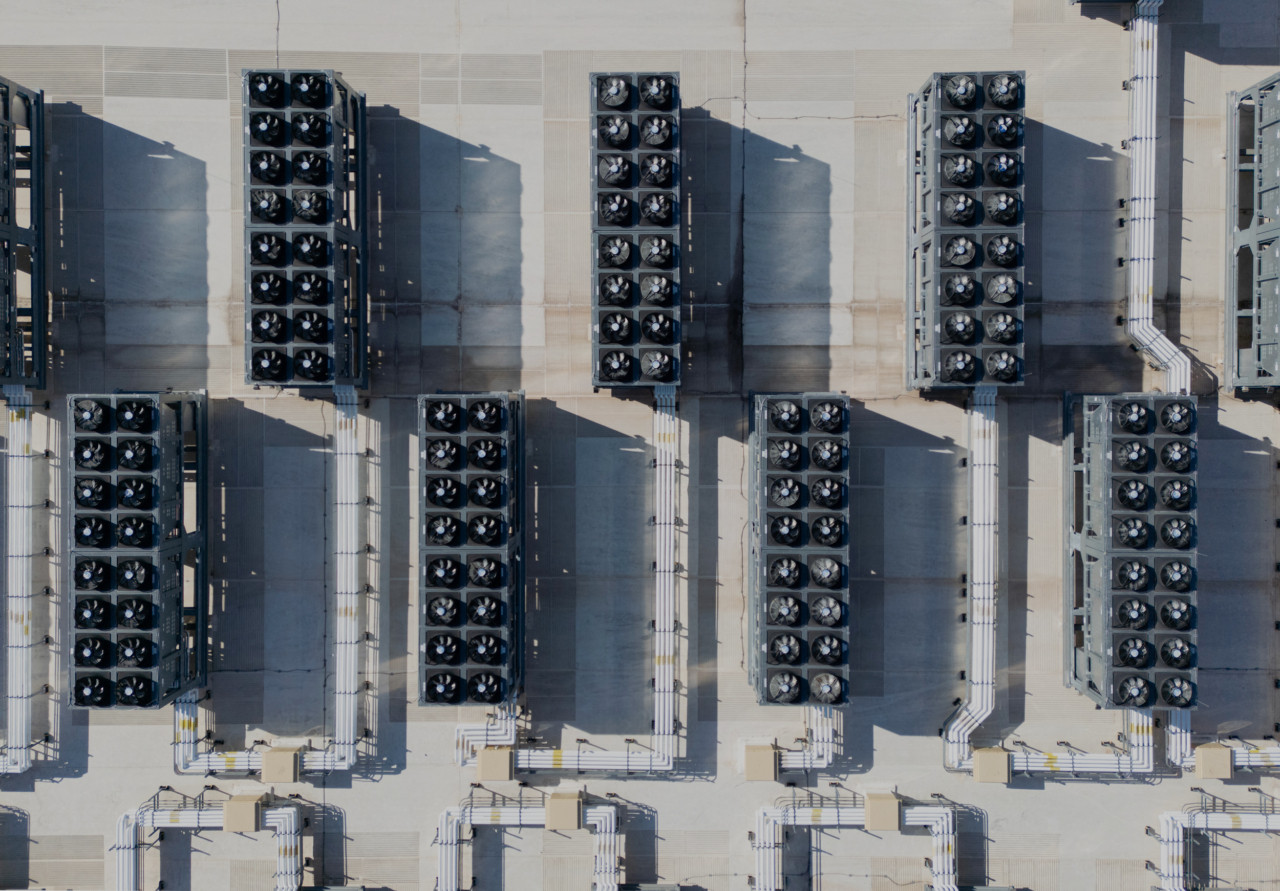
There are now roughly 4,000 data centers operating across the U.S., with another 3,000 planned or under construction.
They exist in every state, often hidden in plain sight—warehouses on former farmland in Ohio, unused office buildings in downtown Los Angeles, shuttered malls in Louisiana. You might not notice them, but you’re paying for them.
Nationally, average electricity rates have risen more than 30% since 2020. In 2025 alone, bills climbed faster than the national average in Virginia (13%), Illinois (16%), and Ohio (12%)—all states with heavy data center concentrations.
Data centers evolved and expanded quickly, with few checks, says Abe Silverman, an assistant research scholar at Johns Hopkins’ Ralph O’Connor Sustainable Energy Institute.
“A data center can go from [being] a field to [consuming] a city’s worth of electricity in two years. That’s just unprecedented,” says Silverman.
Tech companies have pushed aggressively to scale AI since ChatGPT’s debut, often taking advantage of states and counties that offer tantalizing tax breaks. Virginia was an early adopter and now hosts the largest cluster of data centers in the country, with 663 operating and nearly 600 more planned. Texas ranks second.
The energy footprint is already enormous. In 2023, U.S. data centers consumed about 4.4% of the nation’s electricity—more than the state of New York uses in a year. That demand has exploded: Estimates suggest data center grid demand rose 22% in 2025, and this year could reach nearly 76 gigawatts—enough to power roughly 40% of U.S. homes.
Historically, utilities haven’t judged or regulated how electricity is used. The rates they set per kilowatt hour don’t distinguish between, say, a factory using a huge portion of the grid or a small household.
“Utilities are really deeply ingrained in that they don’t make value judgments over their customers’ use of energy,” Silverman says. “Utilities do not want to be in the business of saying, ‘Hey, you’re just using that electricity to play video games, so you have less social utility than, you know, an orphanage.’”
But data centers may force a reckoning.
President Trump last week took to Truth Social to blame Joe Biden for rising power prices and vowed to work with tech companies so American households don’t foot the bill for data centers. On Friday, governors from 13 states joined Energy Secretary Chris Wright and Interior Secretary Doug Burgum in urging PJM—the nation’s largest grid operator—to rein in costs.
At the state level, Virginia Gov. Abigail Spanberger rode cost-of-living concerns to victory last fall, pledging to make tech companies “pay their own way.” Democrats see energy prices as a ticket to voters in this year’s midterms.
Even tech companies are starting to acknowledge the problem. Microsoft Vice Chair Brad Smith wrote in a post last week that it would be “unfair and politically unrealistic” to ask the public to shoulder AI’s electricity costs, and that tech firms should pay for the demand they create.
None of this points to slowing data center growth. In fact, the Department of Energy last fall pushed regulators to speed up data center connections to the grid. Meeting that demand will mean more power plants.
To power the data centers, some companies are reviving nuclear facilities. Others are building their own gas turbines. States like Georgia are keeping aging coal plants online. Clean energy options could be on the table, but Trump has already fought actively to derail some of the biggest offshore wind options. So, more energy likely means more emissions.
“Increased demand is being met through burning fossil fuels and through fossil fuel power plants, especially gas,” said Michael Cork, a postdoctoral research fellow in biostatistics at Harvard University. “We know that that leads to higher emissions of harmful air pollutants that are directly linked to heart and lung disease.”
In a paper, Cork’s lab found that 56% of current U.S. data center energy consumption was derived from fossil fuels, which generated more than 2% of U.S. emissions in 2023.
What’s even less visible is water usage. Data centers need just as much energy to cool down as they do to run their computer systems. In other words, data centers use lots of clean water.
Some cities are already feeling the squeeze. In The Dalles, Oregon, for example, Google data centers in 2024 accounted for nearly 33% of the city’s water use after tripling consumption in just five years. Facing shrinking reserves, the city is now exploring additional water sources in the Mount Hood National Forest.
How AI will reshape society remains an open question, but how its data centers will reshape our energy system is no longer theoretical.
Last year might have been the year of “slop,” but hopefully 2026 is the year of action—before the costs and emissions rise beyond recognition.
Join our membership community. Support our work, receive a complimentary subscription to Atmos Magazine, and more.
AI’s Energy Reckoning Has Arrived