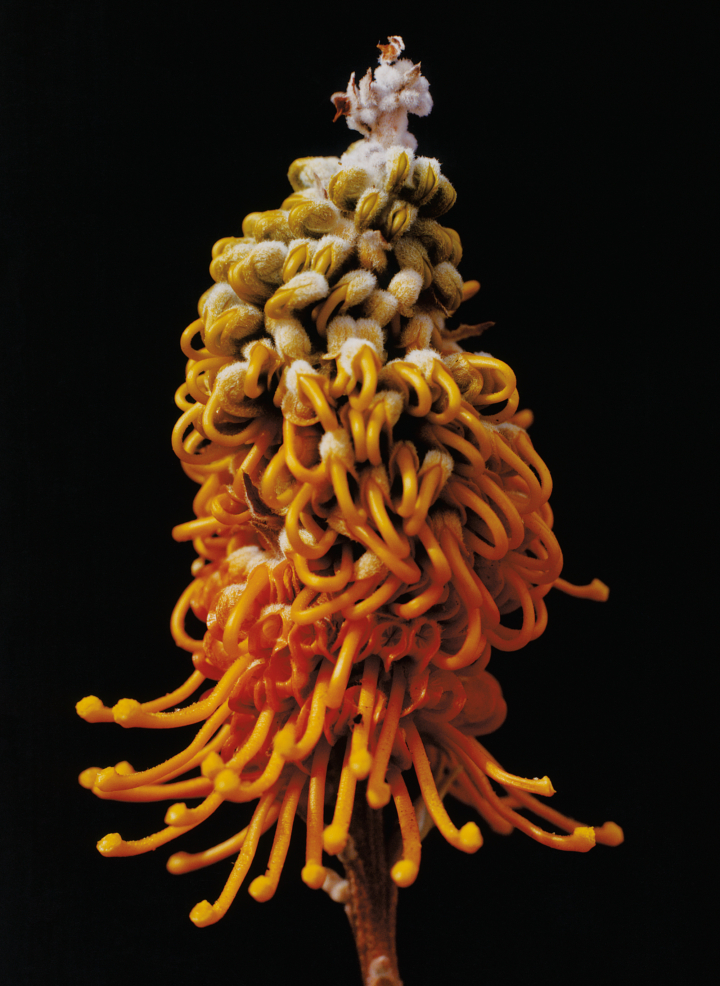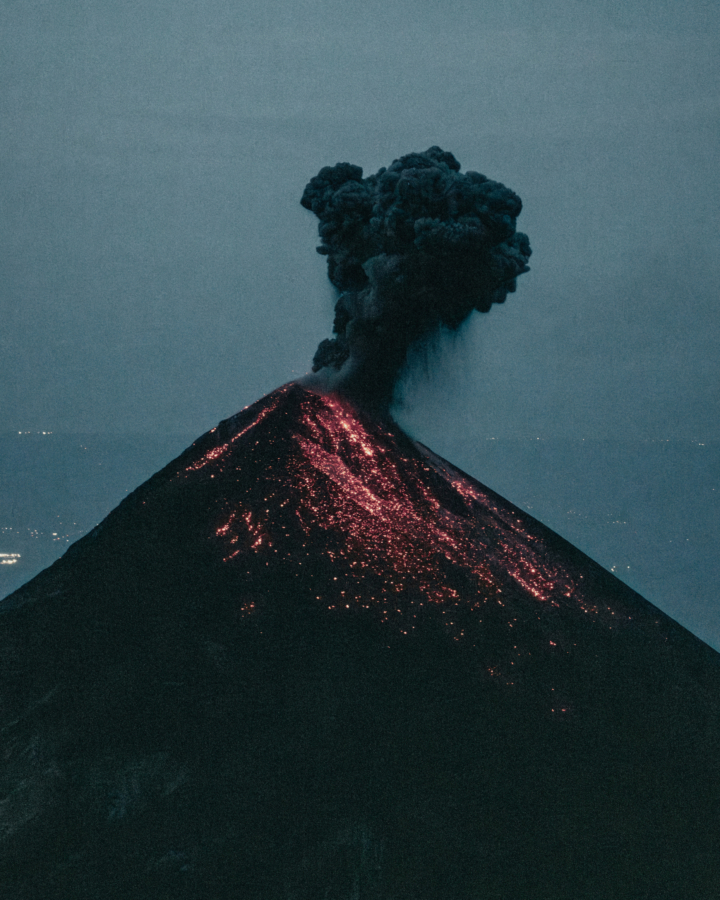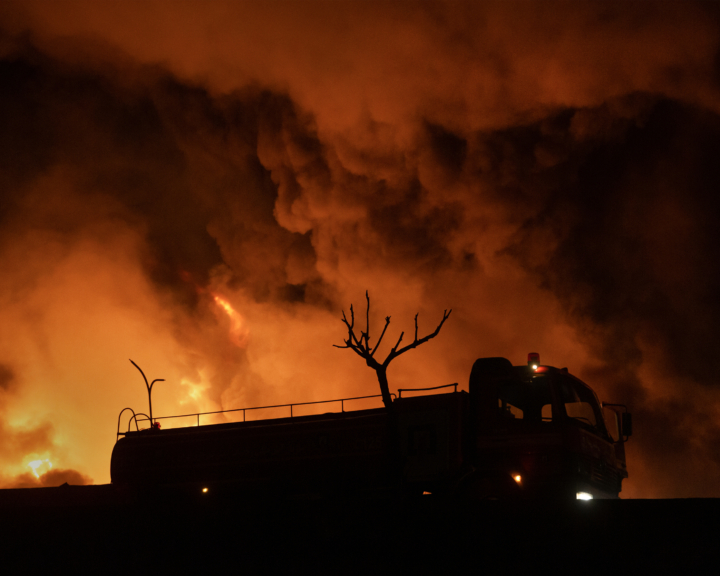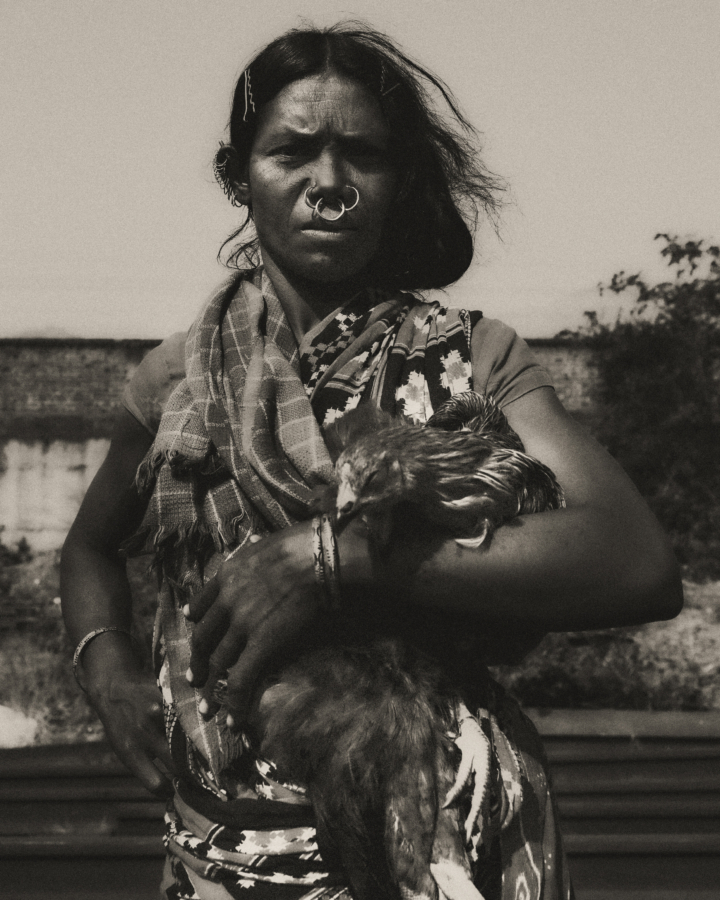
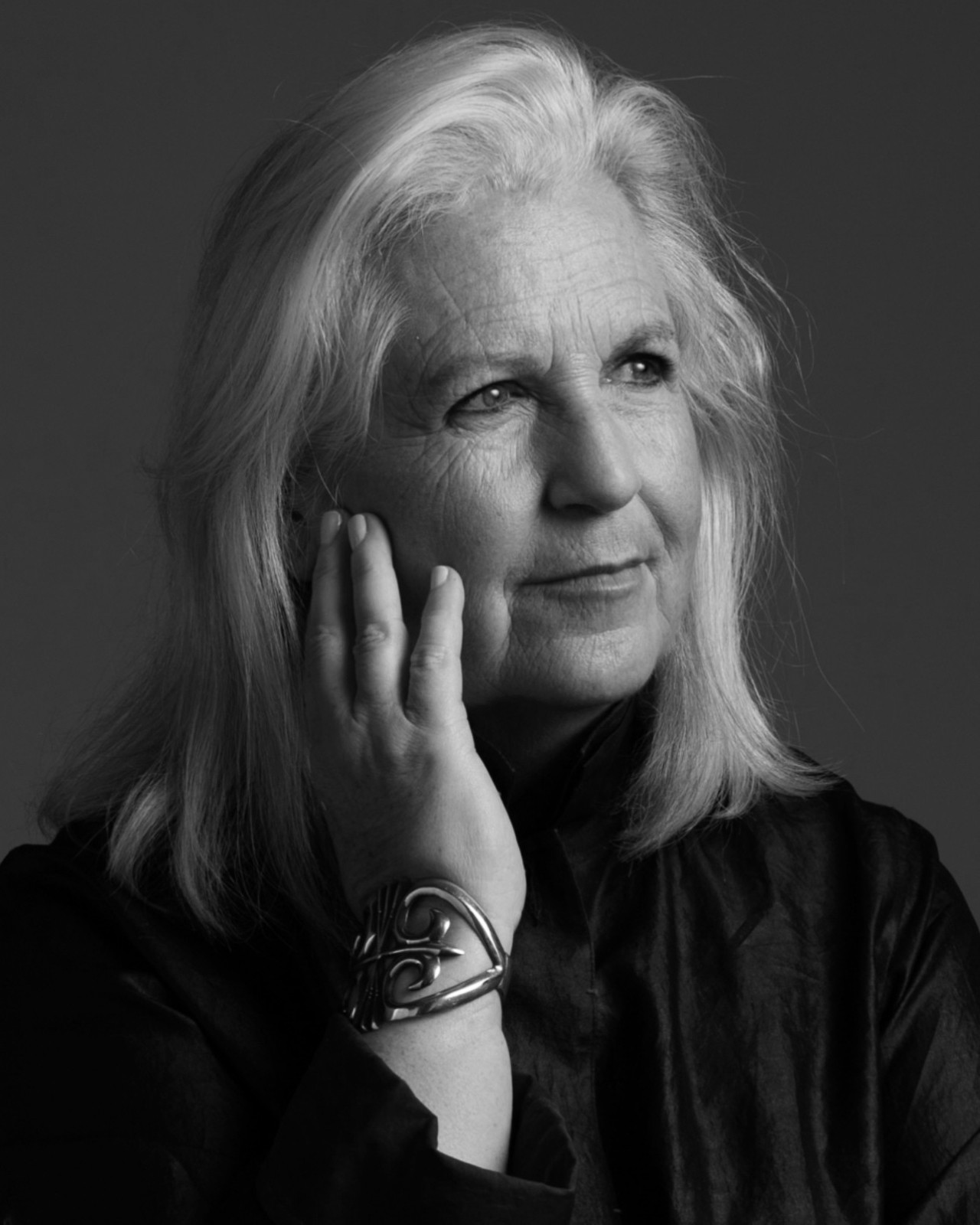
Photograph by Charles Negre
To never miss an episode of The Nature Of, be sure to follow here.
Willow sits down with award-winning author Terry Tempest Williams to explore the spiritual dimensions of attention, climate change, and our relationship with the living world. Together, Willow and Terry look at what it means to live with our eyes open in a time of unraveling and revealing. From a desert ant carrying a single blossom across the sand to the story of a beloved oak tree lost at the Harvard Divinity School, they reflect on mysticism, grace, and the quiet practice of noticing. If attention is a form of prayer, then perhaps the work of our time is learning how to see. This conversation is a true meeting of souls, and an invitation to meet the holy ordinary as it finds us: what Terry calls The Glorians.
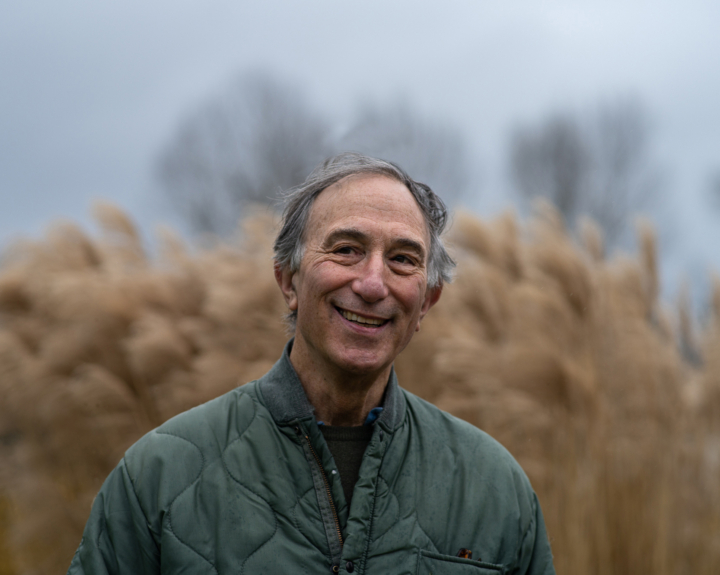
Terry Tempest Williams is the award-winning author of 17 books of creative nonfiction, including the environmental classic, Refuge: An Unnatural History of Family and Place. Among her other books are Leap; Finding Beauty in a Broken World; When Women Were Birds; The Hour of Land: A Personal Topography of America’s National Parks; and Erosion: Essays of Undoing. Her work has been translated and anthologized worldwide. She is a member of the American Academy of Arts and Letters and is currently the writer-in-residence at the Harvard Divinity School. She divides her time between Cambridge, Massachusetts, and Castle Valley, Utah.
Terry Tempest Williams
Who are we, if we are not speaking from the heart? Who are we if we are not exposing our dreams and following them?
Narration
I don’t think I have ever cried within the first minute of meeting someone, but Terry Tempest Williams is not just anyone. She’s a giant in the environmental movement. She’s the writer in residence at the Harvard Divinity School, and she’s written over 17 books. Her newest book, The Glorians, is what we’re here to talk about this week. Now, if you don’t know what a glorian is, you’re not alone. Terry didn’t either until the word came to her in a dream. But after I read this book, I felt certain that the glorians are exactly what the world needs right now. They offer a way of seeing everything and everyone that crosses our path as sacred.
Terry
In that moment, I thought, “This is a glorian.” And that really was the first moment when I thought, “They’re everywhere. And can we pay attention?”
Narration
I’m Willow Defebaugh, and this is The Nature Of, where we look to the nature of our world for wisdom and ideas that change the way we live. For this week’s episode, I sat down with Terry Tempest Williams to talk about her new book, The Glorians. This conversation was a true meeting of souls. I walked in holding her book in my hands, and it turns out she had mine in hers.
Willow Defebaugh
Hi, Terry.
Terry
Willow, I cannot tell you what this means to me.
Willow
Oh, I can’t tell you what this means to me.
Terry
I mean, seriously, I’ve been crying all morning. This is so powerful. As far as I’m concerned, this is sacred text. So I really just have to say that before we begin.
Willow
Thank you so much. I don’t think I’ve ever cried within five minutes of starting a conversation.
Terry
Nor have I. Nor have I.
Willow
I had the thought to myself when I was on my way into the studio this morning that it was strange that we were talking for the first time, because I feel like I’ve been having this conversation with you reading your book, and it felt so affirming when you read from someone who, I think you can tell, sees the world in a similar way to you. That is just the greatest gift in the world.
Terry
And that’s how I come to you. Same thing.
Willow
Well, thank you so much for being here and being on the show. I cannot imagine a more perfect guest for our audience, and I know this will mean so much to them. Your book, The Glorians: I just absolutely devoured it. It spoke to me, and I would love, as a starting point, for you to just explain: What is a glorian, in your own words?
Terry
Willow, I don’t know.
Willow
The way I knew you were going to say that.
Terry
I mean, this is the thing that haunts me. I had four definitions. I thought they were strong, clear, true definitions of what a glorian was. And at the last minute of the last hour, I pulled them. Because what I realized, I really don’t know. But when I meet them, I do. And that may sound like a cliché, but who am I to say what a glorian is? It came to me in a dream, part of the collective unconscious. How do we speak of the ineffable? How do we even speak of Earth? How do we speak of one another? To me, what a glorian has become when I recognize that moment, person, animal, place, emotion. It’s when my attention is completely focused, and I disappear. And what remains is a marrying of presence.
Willow
I love that you removed the definitions from the book. I think that that’s so perfect. When you are at home in Utah, you are visited by so many glorians. And I loved reading about so many of them. I was wondering if you could choose one and tell us a story.
Terry
It was spring. The [desert] willow outside our door was absolutely laden with blossoms, these magenta blossoms that are about the size of our little finger. And they had all just burst open that morning, and it was so beautiful. It was like this burning bush. So I thought, “I have to get my camera.” So I ran in to get my phone to take the picture, and when I came out, all of the blossoms were gone. This wind had come up and just blown them all off, and they were all strewn across the porch. And we had this magenta porch, and I thought, “Oh, this is so beautiful. I need to go get a basket so that I can save them and bring them inside.” So I go into the kitchen, bring out a basket.
Another wind came and had blown them all off the porch, and talk about a lesson in attachment. And then I saw one long blossom, and I bent down to pick it up, and it moved. And as I looked closer, it had six legs. And it was this small, tiny ant that was carrying this blossom in its mandibles, who knows where. And I decided, what do we have in the pandemic but time? So I followed the ant, and it scurried across the south side of the porch. It turns, it starts going north. I keep following it. I see where it’s turning, and I think that’s going to be it. It’s going to fall off the porch. That will be over. Just as it’s making that descent, three ants come, join this ant, help carry this blossom over up, down onto the desert floor.
They disappear, and the ant continues. I see where it’s heading. I think it’s heading toward the prickly pear patch. This is that it’s going to be impaled. The blossom will be torn over. Just as it starts going up over into this green prickly pear patch, three more ants come join, pick up the blossom together up, down, around, over each spine. It continues until it’s off the patch. They disappear once again. And there it is on a straightaway path, which I continue to follow. By now, it’s about 20 or 30 minutes. And I see, rising from the desert floor, this clay-covered fist. It’s where the ant colony is. It continues on its way. I’m behind trying not to bother. It turns, it goes up this steep, steep hill. It’s a very large ant colony.
Pushing, pushing, pushing. This wee little thing, it gets up on top and scurries over to where the opening is. At that moment, it lays down its pedal. Dozens and dozens and dozens of ants come. Within seconds, they’ve all cut this petal into tiny, bite-sized pieces. They disappear into the colony, and I imagine that they’re lining the path to the queen. In that moment, I thought, “This is a glorian.” And that really was the first moment where I thought, “They’re everywhere. And can we pay attention?” And when Simone Weil says, “Attention is a prayer.” Again, that not only became my devotion, but I realized it’s how I have wanted to live my life. And this sharpened that, deepened it, broadened it, and brought it into a place of spaciousness, grace, unplanned, unwarranted, freely given.
Willow
And it’s almost inextricable from the context of this being the pandemic. The fact that everything was ground to a stop and suddenly, as you said, there was nothing but time to pay attention. Then suddenly, the phrase you use—the holy ordinary—starts to reveal itself everywhere. And I love that you go on this journey and you find it’s not just other species. There’s glorians in interactions with other people, and truly everywhere.
Terry
And I think it’s that focused attention when we’re really present. And I think, as difficult and as terrifying as the pandemic was, it did give us time. And it did allow us to focus our attention in ways we hadn’t, because we needed it. We needed connection. We didn’t leave Castle Valley for almost two years. I never was lonely because there was so much life around us. Going down to the Colorado River, rather than boats and boats and boats of rafts and tourists and visitors, it was a parade of animals. It was an otter. It was muskrat. It was mergansers and Canada geese and great blue heron and coyote and bald eagles. I mean, it was just an array of life. And I kept thinking, “Where do they hide when all the humans come?” So I think, like everything, it was the full range of emotion. And the pandemic brought us to our knees in terms of grief and loss and confusion and disorientation and terror. It also brought us to our knees to embrace the Holy Ordinary, which is a term that the Gnostics used.
Willow
The phrase you just used also of bringing us to our knees. I come back to that phrase so often. I think so many people are feeling and wondering what they can do in this moment and how they can be of service. And it’s not the end point, but I do think allowing ourselves to fall to our knees, allowing ourselves to be brought to our knees is its own action. If we don’t feel what’s truly happening, then I don’t know how we can really, truly become agents of any kind of action or service. And so I think sometimes it’s enough. I say this to myself like a prayer, like it is enough to let myself fall to my knees.
Terry
I so agree with you. There’s something about the gesture and again, surrendering. Growing up in the Mormon church, prayer was about asking for me. Growing up as a child, it was, what do I want? What do I need? And it was also gratitude. What am I thankful for? But now prayer, the gesture of being on my knees, is really about listening. What are we hearing? What voices are coming to us from our ancestors, from our own heart, from the dream world, from our instincts and intuitions. And I find that gesture, whether it’s within our home or on the ground matters, and is an incredibly generative space.
Willow
And when you’re at home in the desert, I mean, you witness so many of the manifestations of the climate crisis up close as well. I mean, you describe the fires, the floods. In reading, you really kind of get the full biblical picture.
Terry
And it’s scary. It’s terrifying. It’s out of our hands. It’s out of our control. And again, what are the appropriate gestures? For me, I couldn’t look away. I could not look away. And you hear about dumb deaths. You think, “What were they thinking?” Standing on the edge. But in a way, on the fifth flood after four in a matter of weeks, I thought, “I want to see this from the beginning.” And I just stood on the edge of this chasm. It was huge where the floods had roared through what was once an arroyo. And when we first moved here 30 years ago, you could just step across it. Now it’s a 30-foot chasm, and it’s wide and deep, and you smell it before you hear it, you hear it, before you see it. And when it turns that corner, it is with a velocity of such power and force.
You feel like you’re staring into the face of God, and it is not human. I could not look away until all of a sudden the ground beneath my feet was slipping and I thought, “Oh my God.” And I ran into the house, and what does one do? It was roaring right through our house, 30 feet. I thought we were going to lose everything. There was something about the presence. I didn’t know what else to do. I just got a pan, turned on the faucet, filled it with water, put it on the stove, turned on the stove, peeled beets, put the beets inside and boiled beets until they were soft enough. And I sat on a stool and watched the flood go by. And it wasn’t until the next morning, stone silence, the world washed away, the world washed anew that I went and followed the path of water to see what remained.
The ants were back up, the prickly pears were a green I’d never seen. The signatures of heron, coyote, badger with the long nails, the splayed hands of lizards were all in the sand. And as I walked back up, I thought, “I’ve never seen that shadow before.” And suddenly I was walking through it, and I realized in a matter of minutes in that last flash flood, a canyon had been created right in our backyard, 40 feet long, 10 feet wide, 12 feet high. And I sat with my back against that newly exposed earth and just listened, looked, felt, and suddenly I saw what I thought were floaters. As you get older, you get these floaters in your eye. And I thought, “What’s happening here?” And then I realized it wasn’t my eye. It was like black glitter, black confetti all around.
And as I stood up and looked, and saw what was falling, they were the bodies of dead ants. And I realized that that 12-foot wall was an exposed cross-section of the ant colony. We know the ants from the top-down. We don’t know them from the side. And what they were doing was pushing out their dead, making room for the living, and they were closing off those walls. And just as the bodies of the ants were reaching the ground, on the other side were darkling beetles, and they were eating the ants. And then, as they were walking out of this newly formed canyon, the ravens were overhead, dining on the beetles, this trophic cascade that is life. And you think: We are part of that life.
Willow
For anyone who is listening, I’m curious what advice you might have for them about keeping their eyes peeled for the glorians in their own life. And how did you arrive at this point in your life where attention became this prayer for you, and that your eyes were so fully open to the world around you in this moment? Because I know it didn’t just start with the pandemic.
Terry
Believe me, there are days my eyes are closed. There are so many days where I think, can I even get up? I think we’re all in this place of deep questioning. It’s scary, but as we’ve seen in Minneapolis, it’s the cruelty on one hand, and it’s the absolute love and resistance on the other. And how do we bring these two hands together in prayer? I don’t have any advice. I don’t have any answers. I have so many questions, Willow. But what I do believe is I believe in birds. I believe in Earth. My grandmother gave me a bird book, The Peterson Field Guide to Western Birds, when I was 5. And she took her red pen that she always read with and put three lines, and she whispered, “I love you. That is our secret.” And until she died at 86, I carried that bird book with me whenever we went and whatever bird we saw, whether it was a Western tanager or a house sparrow or a vireo, I would write down where we saw it and what the date was so that in a way she gave me a book of glorians.
And then, I think like all of us, we face death, we touch death, we sit with death, we witness death. And I think when my mother was diagnosed with breast cancer, and I was 15 years old, it was too painful to look ahead because she may not be there. And it was too painful to look back because I wanted things how they were. And so the only place I could stand in relationship to my mother and to the world around me was with my eyes wide open in the present. And I think my own personal mantra is if I’m present, I will know what to do, and it doesn’t have to be planned. It doesn’t have to be worried about. It’s just, if I am present with you, then we will know where to go, what to do, how to be, because that’s the only thing we can count on.
Willow
If I am present, I will know what to do. I’m going to take that one with me. I’d love to talk a bit about your time at Harvard Divinity School because the story of the Divinity Tree, it’s a throughline of this book, and it is what had me sobbing multiple times. And I would love for you to just tell everyone who’s listening about the story of the tree.
Terry
It still makes me weep. And as a writer, as you well know, it’s hard to tell a story that belongs to everyone. And I’m scared to have my colleagues read this because I don’t know how they will feel about it. It’s complicated, right? But the story is this. I was invited to come to the Harvard Divinity School in 2017 after losing my job at the University of Utah for purchasing oil and gas leases as a protest. Tim DeChristopher did that eight years earlier. He spent two years in prison. Brooke, my husband, and I did it eight years later legally, and yet there were consequences, and I appreciated the Divinity School offering me a place to be. And the dean, Dean Hampton, said, “We have students. What they’re interested in is climate. Will you come?” And when I got there, he said, “What is the question you were bringing us?” And the question I brought without thinking, because he wanted it in that moment, straight from the heart, was, “What are the spiritual implications of climate change?” So that’s the backdrop.
It’s now 2018, during that year—well, let me say, the first person, first being I met at the divinity school was the Divinity Tree. It’s this venerable oak that has been there for centuries [roughly 150 years]. I like to think that Ralph Waldo Emerson knew that tree when he gave his radical talk at Divinity Hall. For a year, I had watched children under that tree. I had watched scholars study under that tree. I’d watched lovers kiss under that tree. I saw it in all seasons. The beauty of the structure of that tree, the community that was part of that tree, whether it was squirrels, whether it was the pair of red-tailed hawks, creepers, nut hatches, insects, butterflies, it was a vibrant place. That tree became my soulmate. And every day I walked by, I put my hand on its trunk and said hello, and I felt something come back.
In the fall of 2018, there was a mural in the foyer with an architect’s rendering of what the expansion of the divinity school would be. It was beautiful. There was light, there was glass. This was to be built to create an interfaith space, as well as to make a more sustainable structure. The Divinity Tree was not part of that drawing, and it was an enormous presence, and the students were alarmed. And when there was a public gathering for students and faculty and staff to talk about this new architectural design and remodeling, the first question asked was, “Where’s the Divinity Tree? Where is this standing red oak?” And it was brought to the community that it was in the way, that it would be cut. And for weeks, months, there was so much discussion. There were protests, there was unrest. Long story shorter, the decision was made that the tree would be cut, and the students asked, and those who felt aligned with the tree, that if the tree was going to be killed, that we had the right and honor of witnessing, and that took place.
And in between that, there were Tibetan prayer flags. There were Hindu rituals. There were arias sung. There were offerings made. There were Christmas lights strung. It was a sacred site. The night before, I got locked out of what we call God’s Motel. It was cold. It was late. It was 1 in the morning. I couldn’t get in, no security. And I decided, I’m dressed warmly enough. I will go sleep with the tree. And I slept with the tree with my head on the roots and my hand on the trunk as I knew. And what I heard in my own heart, and as a writer, you know your own vocabulary were not my words. What I heard was, “I am fine. My absence will be my presence. My absence will be my presence.” The next morning, it took four hours to kill what it took 200 [roughly 150] years to create, and it was brutal. Limb by limb, a noose floating across with the crane of this gothic facade of this venerable institution, the body of the tree laid before us with crime tape around it.
And we were told we could not touch the tree. We could not be with the tree’s body. Thirty minutes gone, someone took it away. We were told it was going to be used for firewood in Maine. Five years later, I get a call. “My name is John Monks. I have the body of the Divinity Tree.” He literally told me, he said, “Terry, I’m a normal person.” I’ve never met this man in my life. And I said, “I trust you.” And he said, “No, I was carrying these slabs of the Divinity Tree, knowing that I could sell them for a lot of money because there was a story there. And I heard in my own heart, ‘Take me back to the divinity school.’ And I discounted it, and I took all of the pieces in. And the last piece, if there was a scream in my heart, it said, ‘Take me back home where I belong.'” The story is in the book in detail.
What I can tell you is that in December, a round table of the Divinity Tree was brought back to the school, and it is now the tree room where students can put their hands on the tree. They see a story of beetles, of carpenter ants. They see a story of many more years that the tree could have lived, that both stories can be true, and that this is now a round table where we have hard, difficult conversations, where we don’t deny our difficult histories, and where we can come together to create a new way of being, a new way of seeing, “My absence will be my presence.” That space is now where fire salon has been held, where students have spiritual conversations about climate collapse. It’s where students come and really talk about spiritual activism, spiritual ecology, and the students that are coming to the divinity school know the story of the tree.
It is being told generation after generation every four years. That’s what we couldn’t have seen. That’s what we couldn’t have known. And the sister tree that is still there, when the Divinity Tree was cut, I remember a group of us came over to give our regrets to the sister tree. Would you believe me when I told you it was wet with sap? What deaths communicated. And now the dean and his wife can see the benefit of their actions without telling anyone they gathered 100 acorns. They took them to the arboretum, they were planted, they grew, they were tended, and now there is a descendant tree underneath the sister trees for the next generations to come. Do I wish the tree had not been sacrificed? Absolutely. But this is where we are. These are the stories that we stand in the middle of. We can’t know the outcome. These are also the stories that heal us, where we can come together, forgive each other, hold each other, and remember the absences of that which we have taken, their presence, ancestors.
Willow
And transmuted into our presence, being more present, actually present here. I mean, I cannot think of a more potent, fitting answer to the question that you set out at Harvard to explore, of what are the spiritual implications of climate change? That story, that is it. It’s loss and it’s heartbreaking. And also, it’s a story of something being made from what was broken, and it’s whole and real, and it doesn’t shy away from the grief or the pain, but also there is beauty in it too. There’s a moment you describe also, of Robin Wall Kimmerer and Richard Powers being there, and you’re all standing and paying respects to the tree. And Robin says, “This is murder. It must be named.” And Richard speaks about an idea that’s really at the heart of the The Overstory, which is the idea of unsuicide and the idea—well, actually, I would love for you to speak to that and why that resonated with you, because it’s so central to his book and to this moment we’re in as a species, the idea of committing unsuicide.
Terry
Witness matters, and both Robin and Richard were witnesses, and both of them named what I couldn’t. Robin put her hand on the body of the divinity tree and said, “This is murder.” None of us dared say that. We all felt it. And when Richard Powers speaks to unsuicide, where the scientist talks about the act of unsuicide, we are committing suicide.
Willow
It was based on Suzanne [Simard, forest ecologist] also.
Terry
Yes. Yes. And my brother took his life. They found my brother on his knees. He hung himself. Every time they cut one of those branches and put that noose on, that was my brother. And that was my haunting. What haunted me was who took the noose off my brother’s neck. Unsuicide. We know how to kill. We know how to destroy. We’re all complicit, but what does it mean to live? What does it mean to say no? What does it mean to gather together in the name of community and devote ourselves to life, to love? And love is grief. And I think if we allow ourselves to grieve, we move through something where there really is an undefinable joy. And maybe that too is where glorians dwell.
Willow
As we talked about, the book really, in this epic documentation, begins at the start of the pandemic. And you have this moment where you describe a feeling of unraveling. There was this image of you frantically searching for the definitions of unraveling, and you came to one of them being to reveal, to reveal what’s underneath. And I thought, what a fitting word for what this decade has been so far and what this feels like of, yes, there’s this unraveling quality of our grief, but what it’s revealing underneath is the love. It’s the love that is the reason for the grief. Where are you at in this process of unraveling? Do you feel like you’re still unraveling from that moment when you started writing this book?
Terry
Every day. Every day. Every hour. It’s disorienting. But I don’t think, I feel. And what’s coming to me now is not holding back. And I realize I’ve been holding back my entire life to be legitimate, to be taken seriously, to not just be patted on the head in a governing council meeting at the Wilderness Society and ask a question and have them say, “Oh, that’s so beautiful. What a nice poet. What a nice little writer.” And then they go on to the economics or the politics. And I think in the conservation movement in particular, we’ve relied on the language of the law and the language of science, and both matter. Thank heavens for the Endangered Species Act, thank heavens for climate scientists. And there is the language of love. And I just don’t think we can hold back anymore because that’s what has brought us to ruins—is that we haven’t had a language of the heart. We haven’t spoken as you have about reverence, about awe, about enchantment, about darkness and love and grace.
Willow
When you describe this feeling of, that you’ve held yourself back for so much of your life, that struck such a chord in me. When I started writing about all of this, it’s been like this endless shedding process of feeling like—I remember at the start, I felt like if I talk about spirit, if I talk about love, if I talk about these things, I’ll never be taken seriously within the context of conservation and science and all of these things, realizing how deep that conditioning is that separates us from our hearts.
We’re talking about the heart of the world that beats in all of us, and understanding how much we have been conditioned to not talk about it. Our most recent guest was Suzanne Simard, the forest ecologist. And she was talking about this from the perspective of being a scientist. We spoke five years apart, the first time and then five years later. And she just felt so free this time. And I asked her what changed, how was she feeling? And it was that she feels like she’s set herself free of not feeling like she can’t talk about these things, a feeling like she can’t talk about the heart of the forest.
Terry
I mean, imagine.
Willow
Imagine. And that’s the thing. I think when layers get peeled back, you have this moment where you’re like, I can’t even believe that I had that mask on or that that was there.
Terry
I remember my father, I wrote a book years ago called Refuge: An Unnatural History of Family and Place. And it was terrifying to give it to my father because he lived through this story, but we lived through it in very different lenses and very different relationships. My mother, his wife. And when I gave it to him, he—I mean, if I’m telling the truth, I gave it to him on my way to New York and said goodbye. And when I got to the hotel, this red light was flashing and I thought, “Oh no, someone’s died.” It said, “Call home immediately.” So I called my father and I said, “Are you OK?” And he said, “No, you’ve turned me into a god damn hot head, and you said I cried.” And I said, “But dad, you did cry.” And he said, “I don’t want that known.” And I said, “What are you afraid of?” And he said, “I’m afraid that the men I work with will see that I’m weak and I don’t want them to know about my tears.”
And I said, “Dad, what kind of human being are we if we don’t cry? Who are you when you lose your wife and the mother of your children if you aren’t weeping?” And he eventually let go. But I think about, who are we if we are not speaking from the heart? Who are we if we are not exposing our dreams and following them? Who are we if we do not speak, as Hélène Cixous says, the language women speak when there’s no one here to correct us? And I would say, as human beings, who are we if we do not speak the language we all speak to each other in our night vision for fear of how we will be seen? And so we speak in the dark. And as you so beautifully say, in Overview, the dark is the most fertile space. It’s not the stars, but the space between the stars, and it’s time. It’s time because our lives and the lives of this beautiful blue planet we call home depend on it.
Willow
So it is time. I wanted to circle back to the word that you brought in coherence and you offer this beautiful definition, emphasizing the hear, spelling it, H-E-A-R, in the middle. And how can we cohear with the living world once more through listening?
Terry
I think there is a reciprocity, a cohesion, a cohearence that we are seeing each other, that we are hearing each other, that we are responding to each other, not just our own species. We are not the only species that lives and loves and grieves on this planet. We’ve all had experiences with our own pet kin, with our own cats, our own dogs, snakes, whatever. There is a response. The Earth is a responsive organism, and we are part of that organism. We are just one species of many, as we know. I believe that what is mysticism, but paying attention? We’re all mystics. If we take the time, if we listen, if we realize there is a real world and it is responding. I remember out at Great Salt Lake, we had a group of students from Harvard there and we had one of the politicians who was directing the future of Great Salt Lake come talk to us.
He said, “No species has ever been saved by the Endangered Species Act.” And there was this thundering that was rising from the ground up, and it got louder and louder, and we turned toward the east and 600 bison were stampeding toward us. And we all just stood up, and this politician turned to the students in the middle of the stamp that was coming right toward us and the lake: “I stand corrected.” And you cannot convince any of us, including the most conservative, that the bison weren’t saying, “Not true, not true.” I just love that. Again, the glorians, the response, we can create a new way of being in the world, and that again is a story of cohesion.
Willow
And the language of the world and the buffalo answering.
Terry
Again and again and again.
Willow
Have you had any encounters with glorians since you finished the book that stand out to you?
Terry
This conversation is a glorian. You are a glorian, and I am not just saying that, but I really want to bear witness to how we impact each other and how vibrant these conversations are and how terrifying it is to be vulnerable. I have been so nervous for this conversation.
Willow
Me too.
Terry
And I think, what is wrong with me? I have found a sister, I have found a new soul on the planet, and we find each other. Again, if you ask me what’s my definition today of a glorian, it’s when we truly meet with another being, whether it’s one of our own species, whether it’s an ant, whether it’s the Divinity Tree, or whether it’s hand-on-stone feeling that vibrations that Castleton Tower feels, the Castleton Tower has a pulse. Scientists have told us that. This 400-foot sandstone monolith has a pulse. We have a pulse. To me, it is this vibrational cohesion that has a pulse.
Willow
What’s coming through to me right now is this line that you shared with your students, I think at the start of the pandemic, which was: Finding beauty in a broken world is creating beauty in the world we find. And I’m just feeling very grateful for the beauty that you create in the world.
Terry
Thank you so much, Willow. I know this is the first of many conversations to be had, publicly and privately.
Willow
Likewise. I’m so grateful. Thank you so much, Terry.
Narration
This conversation was a real catharsis for me, and I hope it was for you too. As you walk away from this episode, I invite you to think about the glorians you’ve experienced in your own life, and, moving forward, to stay open to them today, tomorrow, and the rest of your life. Because I promise you, they’re there. The Nature Of is an Atmos podcast produced by Jesse Baker and Eric Nuzum of Magnificent Noise. Our production staff includes Emmanuel Hapsis and Sabrina Farhi. Our sound designer is Kristen Moeller. Our executive producers are me, Willow Defebaugh, Theresa Perez, Jake Sargent, and Eric Nuzum. Atmos is a nonprofit that seeks to reenchant people with our shared humanity and the earth through creative storytelling. To support our work or this podcast, see our show notes or visit atmos.earth/biome. That’s A-T-M-O-S.earth/B-I-O-M-E. I’m your host, Willow Defebaugh, and this is The Nature Of.
Join our membership community. Support our work, receive a complimentary subscription to Atmos Magazine, and more.
Uncovering the Holy Ordinary with Terry Tempest Williams