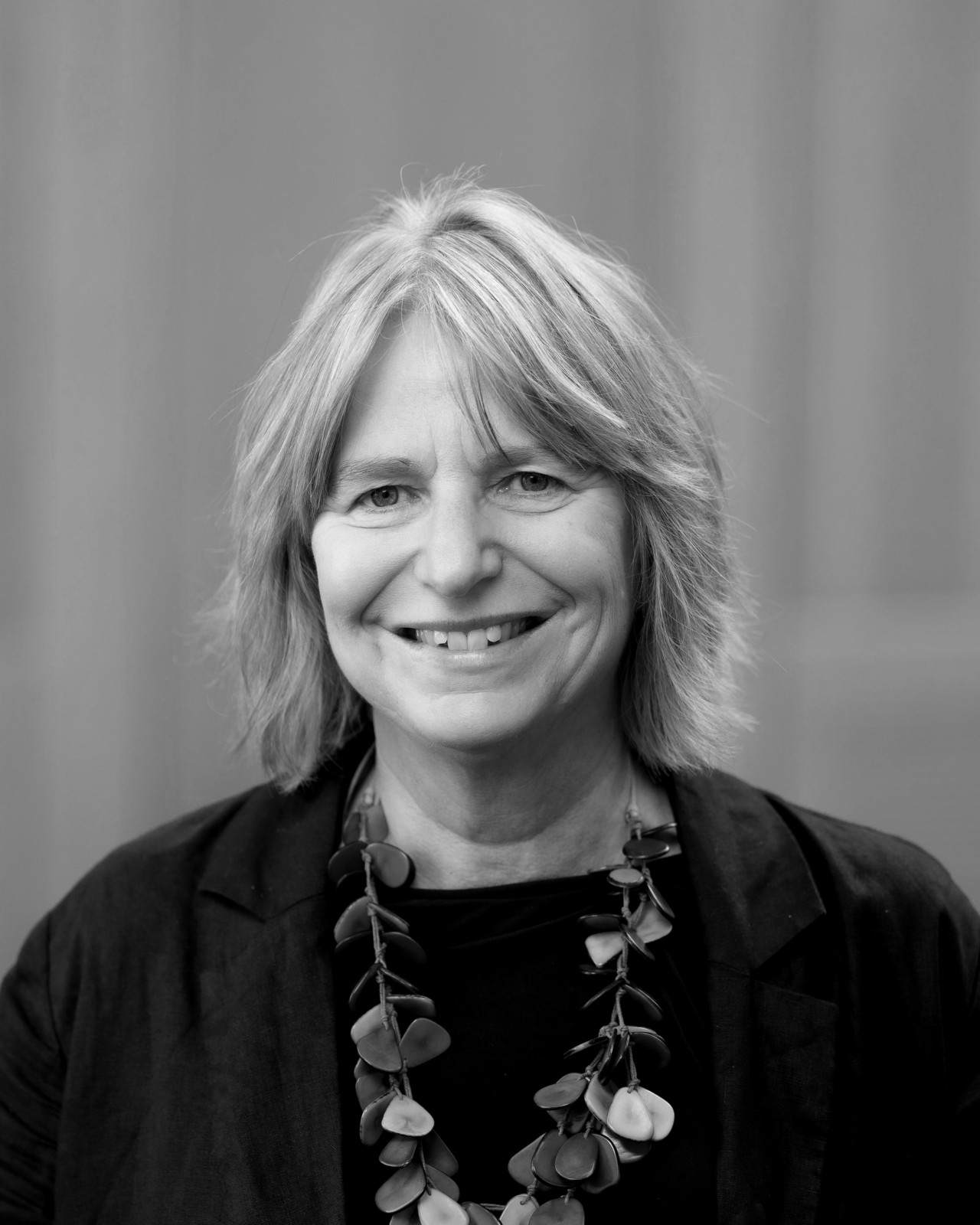
Photograph by Charles Negre
To never miss an episode of The Nature Of, be sure to follow here.
What if the forest is not scenery, but kin? In this episode of The Nature Of, Willow speaks with forest ecologist, Suzanne Simard, about the hidden networks that connect trees beneath our feet and what those relationships reveal about our own. Drawing from decades of research and her new book When the Forest Breathes, Suzanne reflects on mother trees, shared breath, and the responsibility of caring for forests in a time when they desperately need us—and we need them.
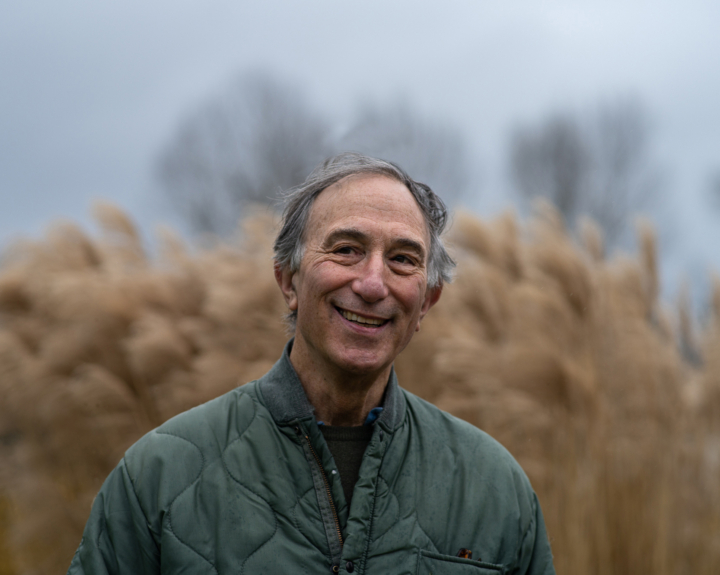
Dr. Suzanne Simard is a Professor of Forest Ecology at the University of British Columbia and leads the Mother Tree Project and Program. Her research—showing that forests are cooperative, connected networks—has revolutionized forest ecology. Her TED Talk has reached millions, and her bestselling book Finding the Mother Tree continues to capture global interest. Dr. Simard’s highly anticipated sequel, When the Forest Breathes: Renewal and Resilience in the Natural World places nature’s own cycles of renewal at the center of a powerful vision for forest futures and is now available for pre-order. Named one of TIME’s 100 most influential people in the world in 2024, she champions regenerative forestry rooted in Indigenous knowledge.
SUZANNE SIMARD
When we’re walking in the forest, and we feel this sensation of deep reverence and deep connection when we remember our breath, breathing in and out with the forest, of course, it’s going to have an emotional response because it is about us and our survival and who we are as people.
Narration
Every time I walk through a forest, I think of Suzanne Simard. In our conversations over the years, she has changed the way I think about forests. She’s the scientist whose groundbreaking research has helped show the world that forests are not collections of individual trees, but living communities. They share resources, communicate underground, and even sustain one another across generations. Her TED Talks have been viewed over 10 million times, and she inspired my favorite character in my favorite book, The Overstory by Richard Powers. For this week’s episode, I was so excited to dig into her new book, When the Forest Breathes, which goes even deeper into our kinship and our relatedness with forests.
Suzanne
We’ve been around trees as long as we’ve been here, and so we’re meant to be together.
Narration
I’m Willow Defebaugh, and this is The Nature Of, where we look to the nature of our world for wisdom and ideas that change the way we live. This week, I’m sitting down with Suzanne Simard to talk about trees as our ancestors, what they have to teach us about regeneration amid hardship, and what it means to be your own mother tree.
Willow Defebaugh
Suzanne Simard, welcome to The Nature Of. It’s such an honor to have you here.
Suzanne
Thank you, Willow. This is the first interview, actually, about the book with you. And that was true with Finding the Mother Tree, too. You were the—
Willow
That’s right.
Suzanne
—inaugural interviewer, and so that’s exciting. That really makes it real. Yeah.
Willow
Good. I’m glad we have a little ritual going.
Suzanne
Yeah, we do. You and me, Willow.
Willow
Perfect.
Suzanne
Yeah.
Willow
Well, last time I saw you, we were walking through a magical forest together in British Columbia, and you said something that really stuck with me. And I’m going to try my best to recall exactly what you said, but it was something to the effect of, “The trees are our ancestors, and they’re waiting for us to return to them.” And I felt that just land in my body in such a profound way. So, as an opening to this conversation, I would love for you to just speak a little bit to that idea.
Suzanne
When I say those things, I feel the same thing in my soul. We’ve been around trees as long as we’ve been here, and so we’re meant to be together. The trees are literally breathing out oxygen, or creating oxygen that we are breathing in. They created the atmosphere in which we could survive and evolve ourselves. And so, because we’ve always been part of trees and interdependent like that at that very visceral breath sense, we’ve been stewards and we’ve been shapers of the forest.
And our evolutionary history of how we’ve shaped and stewarded those forests has been a beautiful relationship, a symbiosis unto itself. But in the last couple of hundred years, as our populations have grown, there has been more disregard, I would say, of that history, that historical—that interdependency among humans. We’ve kind of forgotten where we came from in a sense. And so when I say the trees have missed us, it’s because we need to get back to that evolutionary understanding of how we need them.
They are our life support systems, and they need us to look after them in a really heartful and careful sense. And so we have to get back to that wisdom, that knowledge that we have deep in our DNA of how to care and steward these forests. So yes, we need to return, but we need to return in a really intentional and heartful way.
Willow
And I love that you chose When the Forest Breathes as the name for your new book. I was wondering if you could, just, for anyone who might be discovering your work for the first time in the show, if you could speak a little bit more to the mother trees, which were such an important part of your first book.
Suzanne
I coined this term, mother tree, to represent as a metaphor for the big old trees in a forest, the mature trees, the elder trees, because they provide seed for the next generations, and they also provide a habitat for the new forest coming up. They’re kind of like the stewards or the shepherds for the next generation. So they really do serve as the mothers of the forest. And so I thought the name was very apt. At the time, we were investigating the connections, the fungal mycorrhizal connections in the soil that trees create, at least in the forest that I work in, the Douglas-fir forests of Western Canada, that they create and they actually connect with each other and communicate with each other. And it turned out, in investigating these webs of life that connect species together—different species even—of trees, that the biggest trees in the forest, these older trees, what I called the mother trees, were the central hubs of that network.
It actually makes a lot of sense because these big old trees have huge crowns, like big photosynthetic areas. They photosynthesize at prodigious rates, and then that energy gets redistributed through their bodies and into the roots and into the mycorrhizal fungi, which are fungi that help bring up water and nutrients from the soil in exchange for this photosynthesis, and they really connect with the whole ecosystem. And so, because they’re the energy centers of the forest and the reproductive engines of the forest, if you will, because of their ability to set seed, and also the stewards of the forest in that they protect the plants and trees coming up, it really is a name that sticks with people, the mother trees. It’s a metaphor.
And it turns out, though, that that metaphor is actually universally known in many cultures around the world, in that mother trees, grandmother trees, father trees, grandfather trees, elder trees, parent trees, these terms are throughout culture and even in religions around the world, because of that understanding that they’re the great connectors, the energy connectors, or you could even think of them as the spiritual connectors between people and the spirit world. That really is how a lot of people do see these old trees and their really important role for people and our spiritual wellbeing.
Willow
Yeah. And it’s interesting that your work—and, really, uncovering the interconnectedness of these trees—it was so revolutionary to Western science. And as you’re pointing to, I love the reframe of, “Well, for most people around the world, that’s understood.” And yet we also have to underline that it really was revolutionary, a lot of what you found.
Suzanne
I think you’re right, especially in this modern context that as Western science developed, there was a great separation of mind and body, of spirit and body, and it was kind of reducing we as people—and not just we as people, but our whole ecosystems into parts—really separating them out so we could understand the parts. And so that was really the development of the reductionist way of seeing the world. And it was really helpful in advancing science in a very rapid way, but in that process, we forgot—or we lost our understanding—that out of all those parts emerges as a whole, and that whole, as much as Aldo Leopold said, is much greater than the sum of the parts. And so that’s why it seems revolutionary now, is because we’ve been through this Age of Enlightenment, where we became reductionists and forgot that there’s actually more to it.
Why wouldn’t they be connected together? I mean, trees live beside each other for hundreds of years, if not thousands of years. They’re in a community. They need to be in a constant connection and communication in order to live as a community, out of which come these emergent features like vitality and productivity and the ability to mitigate climate change, for example.
Willow
It literally feels like missing the forest for the trees, right? It’s breaking things into such small parts, which, as you say, it does help us study and understand them, but then we’re missing a holistic picture. What does it look like in your eyes to move from a reductionist science to a more relational science?
Suzanne
It’s very freeing. I mean, I honor and I owe a lot of my success to the discipline of science: the scientific method. It is really a powerful and beautiful method that we have created as people to try to understand our world. And we’ve made huge advances. And not to disregard any of that, it is incredible what we’ve discovered, but at the same time, it can be kind of restricting for our imaginations of what’s possible if we’re so tethered to the rules of the scientific method. We can’t let it hinder us. We can’t let it hinder our imagination of what is possible. There is a role, and scientists have identified these roles amongst themselves for quite a long time, but there are great advancements that really require a lot of imagination, and a lot of curiosity, and freedom to ask those questions that might not have grown out of the very strict discovery process of the scientific method.
So those advances are very important. Then there’s another role of science, which is to fill in the gaps as you go along; to validate, verify, expand the knowledge of that great advancement. There is a role for that, too. And I think that sometimes we get so caught up in that secondary role that we forget that we can also be curious, that we can also make great advancements by freeing ourselves from that scientific methodology and just go and try things and follow your intuition. Because the intuition of a human being is much greater than that deterministic, logical, plotting way of discovery. The intuition is more like the part of the iceberg that’s sitting below the surface of the ocean—it’s massive and it’s powerful. We can’t lose that because that’s where we make the greatest discoveries.
Willow
Beautifully said. So much of what you’re saying resonates, I think, also as someone who is trained as a journalist: We’re taught to be objective, to create distance, to separate. And so much of the taboo that exists within Western science is not anthropomorphizing nature, for example, and keeping very clear, rigid lines that separate us from every other species. I mean, look where that has led us. And it’s actually, I think, such a beautiful moment in a lot of ways for science because with Atmos, we just decided, “Yeah, well, we are going to tell stories about the spirit of the forest alongside stories about the science of the forest.” And I speak with a lot of scientists who describe that same feeling of, just feeling so free. I remember I was talking to a geologist once and she was like, “Yeah, I want to talk about the fact that rocks are my teachers.” And I think that there is kind of an exciting moment a little bit in Western science, of maybe breaking free of some of those constraints.
Suzanne
It’s really important for people to come back to what brought them to this study in the first place, which is that great curiosity about the world. Those questions that were in you when you were young are still the most important questions, right? It’s like, to never lose that, there is a sense of freedom in the discipline itself as well, but not to become so confined by it that you cannot go back to those original intuitive questions that drove you to do that study in the first place.
Willow
Yeah. It’s a balance, right? It all comes down to balance. Your new book is all about The Mother Tree Project, which you founded, and I was really blown away by the massive scale of the project. So I would love for you to just speak a little bit to the scope and what you set out to find.
Suzanne
So as we know, climate is changing very quickly. The velocity of climate change is far greater than how trees and plants and animals can adapt, and so, therefore, they have to move. And if they can’t move, then we need people to help them move. And so this project covers this massive climatic gradient to help us understand, one, how can we move trees and plants to keep up with the velocity of climate change, but also to try different ways in working with the forest to welcome these new migrants, these new recruits, as they try to move northward, as we help them move northward, survive, and establish and become part of the forest.
Another thing we wanted to do, because in Western Canada where I live in British Columbia, in particular, the dominant way that we harvest forests is to clearcut them. And the reason that they’re clearcut is because it’s financially very lucrative to do that. And in some cases, it matches the ecology of the ecosystem, but in most cases it doesn’t. And so we wanted to find different ways where we can still work with the forest to get the things we need from it without taking everything down. And so in this climate gradient, we’re testing different methods of leaving trees behind even as we thin out the forests and get some wood that we might need for our homes, or even to tend the forests to reduce, for example, fuel loads or open up habitat for other species to come in that like open spaces.
The design at each of our nine locations was to try these different ways of doing some harvesting while opening up the forest, but leaving trees behind. And we particularly focus on the big old trees, what we call the mother trees. They’re the legacies that provide the seed for the next generations. They protect the new recruits that are coming in that are migrating. They protect new regeneration, the plants, the animals. So the idea was to leave them in different amounts and configurations to aid in the recovery of the forest, aid in the migration of plants as climate changes, while at the same time allowing people to get what they need and steward the forest with great care.
Willow
I was speaking the other day with Robin Wall Kimmerer, who has also been on this show, and we were talking about the necessary migration of a forest and she referred to it as helping the trees walk. And I thought that was so-
Suzanne
How beautiful.
Willow
So beautifully put.
Suzanne
So beautifully put. Yeah.
Willow
You mentioned that you are testing in these nine different sites, you’re testing, OK, if this percentage of these old elder trees, these mother trees are left behind, how does that help the forest regenerate? So what did you find in conducting these experiments?
Suzanne
One thing we found is that every ecosystem, every place, there are people and all the creatures [that] are interacting with that ecosystem is unique. It’s like every person is unique, so is every piece of land. And just like with people, we can’t treat them all the same way. We have to listen to the land. We have to listen to what the trees are telling us and be open to it. And this has been a mistake that we’ve made in forest management, I would say, not just in Canada, but around the world. More and more, as people move away from the forest and into the cities and so on, we lose our connection, and we hand over the stewardship of the forest to other people that might not be listening to the forest. But when we listen, we find out that each place is unique. So that’s the first lesson that the forest has taught us.
And so, depending on where we were in our nine forests that covered that climate gradient, we got different answers about, how should we leave these old trees behind? How many? But in general, if we look at—So I mentioned that our sites go from hot and dry to cold and wet. It’s what we call an aridity gradient, a gradient of how arid the forest is, how dry it is, and also how cold it is. As the forest ecosystem became more stressed by climate. So in the hot, dry ecosystems, there’s a lot of drought stress. There’s big, long periods where plants can’t get enough water to actually live out their lifecycle. And then at the other extreme, we have these really cold sites where you can have frost that can happen anytime in the summer.
And so in those really stressful environments, climatically stressed environments, we found that seedlings really struggle. One of our discoveries is that then they really, really need these mother trees to be around for them in the dry, hot ecosystems to bring water up from below and redistribute it to the seedlings that are growing up around them. They’re tending the young, basically. They’re redistributing that water so there’s enough to drink. In the cold, frosty ecosystems, the old trees are really important at reducing the amount of frost because the canopy they provide actually warms up the air at nighttime. You don’t lose as much heat from the soil, if you will, to the sky when there’s trees that are covering the forest. And so that protects the seedlings that are growing up around them. So in these really cold environments, especially when we’re migrating seedlings from southern climates to northern climates, when we’re purposely moving them, they’re really vulnerable to things like unseasonable frost. And so these mother trees will protect them by providing that canopy. So those are a couple of important discoveries.
Willow
There’s a beautiful metaphor in there, also, that in these climate-stressed environments, you need the old stewards of the forests; their wisdom becomes more crucial.
Suzanne
Yes.
Willow
You have to navigate wildfires, it seems pretty frequently in doing this project, increasingly. There’s a specific story in the book where you’re with your daughters and you’re fleeing. And I even recall this moment where you’re running and there’s a gray wolf running as well. Can you take us to that moment?
Suzanne
Yeah. So this was actually the very first site that we established in the Mother Tree Project. It’s near Williams Lake. And we had been working all summer establishing this experiment. It’s a lot of effort to account for every species, every tree, every individual, every bit of soil. So we’d spent a lot of time, a lot of money, in establishing this experiment. And we were in the forest on that dry, hot day, and there was a lightning strike just above on the ridge. The fire crept into the forest, and we had to run from the flames. And it was very scary. I think anybody who’s been in a fire or around fire knows how unpredictable it can be, how fast it can move, and how you really need to be super careful. And so we ran from the forest, and it burned down most of one of our replicates of that particular experiment. And so now it’s turned into, we’re looking at the aftermath of the fire and how the ecosystem is recovering from the fire.
Willow
How did it feel in that moment to see a forest going up in flames that you were working with intimately?
Suzanne
I felt a great deal of grief for that particular forest because we got to know it so well and we were so intimate with the trees and the plants. And just like in all communities, you’re intimately involved with all the forest around you, whatever the ecosystem might be. And then a fire comes in and burns; or a beetle—in my case as well, British Columbia lost most of its lodgepole pine forests in the 1990s due to mountain pine beetle outbreaks. There’s a grief associated with that loss. So there’s fear, there’s shock, and then there’s grief. And dealing with the grief, it’s a challenging thing as we watch forests kind of collapse from these conflagrations or these disturbances that are more severe than they used to be, and that they may not be as adapted as well as they were in the past because we’ve created more severe conditions.
Willow
You mentioned that you’re studying how the forest is recovering now. How is it recovering?
Suzanne
It really depends on what’s happened. So a severe fire is where you’ve lost most of the organic material from the forest, or the trees are burnt to a crisp. Maybe there’s a few sticks standing. The forest floor, which is the organic layer on top of the mineral soil, has been deeply burned. The roots might be burned, and those fires can actually continue on even through the winter and then erupt back in the spring. And if it’s a really thorough, severe burn that burns right down through the organic material and their trees are dead for vast areas, it takes a long time for those sites to recover because the seed sources have got to come in from far away, and they’ve got to establish in this very severe environment. When it’s not as severe, the communities do recover. The seeds come in. Within a year even, you can see plants starting to return, and the animals will slowly start to return, and eventually the forest will recover.
Willow
The cycle of life, death, and regeneration is a big theme of this book. One of my favorite illustrations of this is the relationship between salmon and the forest. Can you speak a little bit to this?
Suzanne
Yes. I think that is such a beautiful illustration of how people, in particular, are part of this great cycle. Salmon, of course, once were abundant along the West Coast, the Pacific Coast. When I talk to my Indigenous colleagues and friends, they talk about rivers being so thick with salmon that you could walk across a river on the backs of the salmon. One of the reasons that the salmon populations were so abundant was partly because of how people stewarded and looked after the salmon runs. And so along the coast, there are really old, ancient cultural traditions and technologies that were developed for looking after the salmon runs.
They would use a technology called the tidal stone trap, among many other technologies that they had developed for fishing for salmon. And so when the salmon are returning to spawn in the fall, they’ll come into an estuary, and then people have built these big, long tidal stone traps. They’re basically rock walls that can extend for hundreds of meters along an estuary. And when the salmon come in and then on the ebb tide, when the tide goes out, salmon become trapped behind these stone walls. And so the people would then passively collect the salmon, and then they would harvest them and use them for food.
But there were some key things that they did. And one of them was to always make sure that the big fecund adults, especially the females, would not be harvested so that they could travel upstream to spawn. And the same with the males. And so when you have big fecund parents, you create big fecund offspring. And so the offspring were always abundant and healthy. And then, if in certain years—because salmon runs vary over time—that the abundance, because they follow natural cycles, they have a four-year cycle; on those poor years, they would not fish. They would go to another stream or find another food source. And so they were very attuned to what was going on with the salmon populations, and adjust their behaviors to align with that, with the lunar cycles, with the cycles of the salmon, and adjust their techniques so that it always ensured there was abundance. Always abundance.
And so when the salmon went upstream to spawn, there was an abundance of salmon. And then the creatures that were living in the forest—the bears, the eagles, the wolves—would also be fishing, as would the people in some cases. And they would carry the salmon into the forest to eat them. And they would only eat a certain portion of the salmon, but a lot of the body got left behind because there was such abundance and they would eat their favorite parts. And so a lot of that salmon would decay into the forest floor and then get picked up by the mycorrhizal networks of the fungal networks of the trees and be absorbed. These salmon proteins and amino acids would be absorbed by the fungal roots, and actually transmitted straight into the trees. And so the salmon, and we can detect the heavy isotope of salmon nitrogen in these tree rings. And we can actually… If we had the resources, we could actually trace through the tree rings the abundance of salmon and how it changed over time.
And these trees would then also transmit the salmon nutrient through the forest, through these fungal networks. At least that’s what we were studying. And so really, the salmon abundance created abundance in the forest itself, which then provided a better habitat for the salmon. And then when there’s better habitat for salmon, that helps the populations of salmon, which helps the people. And so you can see this big closing of this circle of care, if you will, that created such abundance of salmon along the coast.
Willow
Hearing about forest ecology from you, there’s just such a sense of how delicately interconnected everything is. And I was hoping you could speak to a few more of the findings in this book from you and also your colleagues and friends who you work with on the Mother Tree Project that reveal even deeper connection within the forest.
Suzanne
One of the messages that I really wanted to convey about these connections and our stewardship of the forest is that we can also have a very positive impact, that we are agents of abundance ourselves. The salmon story really demonstrates that. And in our findings and the mother tree shows that we can be good stewards in looking after forests to enhance their productivity, to reduce their risk of being burnt up in a fire, to reduce their risk of dying as climate changes by helping migrate species, that we are actually amazing stewards of the forest. And it’s really up to us because we’re also the ones that are creating hardship through climate change. It’s really up to us to re-engage with the forest and work with it to restore that productivity, that resilience, and that spirit to these places.
The findings of the Mother Tree Project show, for example, that if you do careful logging and thin from below, you can protect all the forest-dependent plants and animals. You can actually have an intact forest while still taking some things out of it if you just are very careful and treat it as a craft. You can also protect the carbon pools in the forest. If you leave the big trees standing, most of the carbon in a forest is in the big trees, that you can actually do this work without actually creating a pulse of carbon dioxide to the atmosphere. You can actually protect the hydrology of the forest by doing this careful stewardship. So we’ve been able to show that. I think the most important thing is, it provides people with the understanding that we can do this. It might not provide you with the exact prescription for your forest. In fact, it won’t. What it provides is the principles on which to work with the forest in order to protect the legacies that will keep that forest intact and even more abundant than when you started.
Willow
There’s so much in there I want to pull out. First of all, I would love for you to speak—you referenced the carbon pools of clearcutting and why this practice is really so disastrous. Can you just speak a little bit to that?
Suzanne
Yeah. So when you do a clearcut, you take all the trees, basically.
Willow
What could go wrong?
Suzanne
What could go wrong? Exactly. You take all the trees and of that whole forest that you took, about a quarter of it ends up being a forest product. So three-quarters of it is either left on the site as slash or it ends up in a pile that’s burned, or it ends up as sawdust in a sawmill somewhere. So the vast majority of the forest is taken down and just left or discarded or burned.
And a small portion of it ends up as a forest product. The impact on the carbon cycle in that place is huge. First of all, when you take up all the trees in a temperate forest, that’s 50% of the whole carbon pool, if you will. The whole amount of carbon in that place is basically gone. Some of it is turned into these longer-term forest products, but they only last—they have a half-life, on average, of 25 years compared to a forest that, in some cases, lives for thousands of years. So it’s really creating this short-term product that is stored for a short amount of time. The vast majority turns into things like toilet paper and paper and doesn’t even last that long. So when carbon modelers account for the effect of clearcutting, they just assume that when you clearcut, poof, it disappears instantly into the atmosphere of CO2.
The second thing that happens is that it’s not just the aboveground part of the forest that is taken and emitted, but when you put big machines on the ground to harvest these trees, you’re actually disrupting the forest floor. That’s the organic layer that’s on top of the soil, the mineral soil, which is where all the life is. That’s where the mycorrhizals are. That’s where the soil food web is. That’s where the great carbon and nitrogen and water cycles are really active in that forest floor layer. And what we’re finding is that 60% of the carbon in that forest floor ends up disappearing immediately, as well. And we’ve really puzzled about, where did that go? Well, actually, it went to the atmosphere, but how? And what I came to was that when we put big machines on the ground, and we grind up this forest floor with the machines, and we’re moving around, that a lot of the carbon ends up being discarded into piles or ends up in streams and estuaries and out to the ocean, or it decomposes quickly.
And so that’s a massive loss. When you add up losing the whole aboveground pool plus losing 60% of the forest floor pool on average from a forest, if you look at the whole carbon budget of a forest, we’re losing between 60-70% of the carbon with the act of clearcutting alone. As we look towards resolving climate change, which I think we could do if we’re careful, we need forests as a natural solution to climate change.
In fact, countries like Canada are depending on forest health and the ability to sequester carbon as one of their No. 1 solutions. And yet here we are cutting down our forests and emitting massive amounts of carbon due to that act when we don’t have to do it. We could still extract some forest products, but we need to do it by leaving trees behind, being more careful.
And that actually requires more people in the forest doing this careful work rather than sending in these huge machines to just mow down the forest. It’s a revolution in how we deal with forests right now, but it needs to be done if we can actually count on forests to be natural solutions to climate change.
Willow
And what I appreciate so much in what you’re sharing is you’re not saying, “Hey, we can’t extract anything that we need from forests.” It’s just that we can do it in a way that also gives back, that is reciprocal. And it’s so cool to see how that is an evolution of your findings around the mother trees and how they can play an integral role in making sure the forest continues to thrive even as certain trees are removed. It is very inspiring, I think, for people to understand it doesn’t have to be this way. There are ways we can continue to have our needs met, but done so responsibly.
Suzanne
Yes, exactly. And I would say that if we don’t do it responsibly, we’re not going to get our needs met regardless. All of these ecosystems have evolved with us as stewards. People have always been in the forest. We’ve always been doing things. We do have needs from the forest, but we need to have carefully crafted practices that require a lot of knowledge, a lot of care, a lot of skill, a craft, really. It’s a craft. And just think of—there’s the huge need to do this stewardship. When we say the forests are missing us, they really are. They need help because when we don’t do things well, they suffer, and they need help. These ecosystems are going to heal, and we can help them heal by being careful and respectful, by giving back, never taking too much. These are all indigenous principles of how to conduct your life, but they all apply to the stewardship of forests.
Willow
So much space is occupied in our collective psyche around climate change, around everything that’s wrong, as opposed to what’s right and how do we get there. And I love that you’re modeling and showing there are a lot of different ways we can get there.
Suzanne
Yeah. Forests are under stress because the climate is changing, because it’s warming. Fossil fuel burning is the No. 1 cause. Making cement is another major cause. And then land use change is another cause. The three of those are the three big actors. Fossil-fuel burning is the No. 1 thing that we need to really deal with. Because if the climate heats up, we’re going to continue to have more fires and more disasters regardless of what we do in the forest. We can mitigate it, but we have to deal with the root cause of climate change. This is a grave situation, and we need to get serious about this and really invest in renewable energy sources. We really need to get serious about renewable energy. And if you look at the international panel on climate change, it identifies that as the first thing that needs to be done. We need to do good stewardship of the land, but that also has to happen at the same time.
Willow
Right. The book also navigates a number of your own personal losses as well. The loss of your mother, the unexpected loss of your colleague, Amanda, the professional critiques. How did the forest and your knowledge of forests help you process and work through some of that grief?
Suzanne
Whenever I’m under stress, I go to the forest because it’s a place where you feel better. We all know of our special place outside that brings us back, gives us that recovery moment. Personally, to help myself with my grief, I always went to the forest because that’s what I know. Breathing in the air, breathing in the senses, the stillness, the acceptance of the forest for us. The forest loves. I can hear the critics going, “How can the forest love?”
Willow
Forget the critics.
Suzanne
You feel like you belong, right? You belong there. And so I felt a great belonging and sense of peace. And so it taught me that from a personal level. But in the forest as a community, the young are brought up by the old. So it teaches a lot about community and that having connection is really important. So connection with the forest, connection with whatever you are connected to, your people, is really important in healing. I went with my children. I went with the people that really helped me feel whole. And that’s community. We need each other. We’re all social creatures and the forest is a social place and it’s full of social creatures too. And so that socialness, that society is what holds us up and that held me up during those moments.
Willow
And also, I think in reading what you write about forests and again, this theme of regeneration and recovery within them, you see how much also death is a part of a forest life. And I think that that is so heartening in our culture, where we think of death as this very isolating, alienating, scary, scary thing.
Suzanne
Yeah. None of us wants to die, but we do. And it’s a part of the cycle of life. And I think that the forest teaches us that. It shows us that every time you go in the forest. What you’re seeing is the whole lifecycle right in front of you. You see the birth, the growth, the aging, and the death, and then the recycling of the new all right in front of you, even though you feel like you’re in a place, but you’re actually in a cycle, a cycle of connection. And so you feel you are part of that little cycle in there, and that helps to understand our own cycles of birth, growth, aging, death, that it’s a natural thing. And yeah, it’s hard to come to terms with these big changes in your life, especially as you approach death.
And as I’m in—I’m 65 years old, I’m in the last decades of my life, and you kind of learn how to deal with that. You evolve to deal with it. You put in place the things that are going to make it easier. And when you can see it demonstrated right in front of you in the forest, the trees are teaching us how to carry out that cycle, that it gives you some tools and comfort, and know that you’re going to be recycled into something more beautiful in the next generations, whatever form that might take. That gives me a great deal of comfort and ability to move gracefully through the latter part of my arc of life.
Willow
And you’ve talked about how your journey with cancer took you to this place of seeing the medicine of the forest in a different way. And there’s that beautiful chapter on the yew tree.
Suzanne
Yeah. It’s an interesting tree because it lives in the shade of an old forest, generally with neighbors that are bigger than them. And in ecology, we always think about what is this reciprocal relationship between different creatures? If one creature is getting something from another, what do they give back? And so it turns out that the yew tree, because it lives in the shade and it becomes very old, it can live to 5,000 years old. I think the oldest one is in England, 5,000 years old. How do they live to such great ages under such shady circumstances where they can’t photosynthesize in prodigious amounts like their big neighbors? What is the reciprocity of that arrangement in that community? And so the yew tree actually produces enzymes to protect itself against the vagaries of living in such a stressful environment. And those enzymes are actually the very medicines that we as people use to fight our own illnesses.
So taxane, which is an enzyme in the yew tree, is actually the building blocks of paclitaxel, which is the cancer agent. We’ve turned it into a medicine that we can take in order to solve some of our own diseases. And for me, I got breast cancer in 2012, and I was given medicine of the yew tree as part of my treatment regime. And here I am today, I’m still here. I’m lucky. It worked for me. It’s kind of neat that the yew tree has created its own medicine, and it’s giving back to us the medicine that we can use for ourselves. And so what I did, I wanted to reciprocate to the yew tree. And I have a student, Eva Snyder, who’s finishing her doctoral studies, and we’re studying what the yew tree needs to produce amazing medicine. And so we’re looking at the community of trees around the yew tree to try to understand how that community shapes that little tree and helps it thrive, and therefore produce medicines that it reciprocates with us.
Yeah. It’s an interesting way to do science, is to think of how you can reciprocate with the knowledge that you’re given from these amazing trees.
Willow
Yeah. It’s so beautiful. I mean, the forest gave you life back, and you are giving so much back to the forest. You go into the scientific aspect: the peer-reviewed, scientific aspect, I’ll emphasize. But you also talk about, I think, what’s really underneath this, which is, you call it the cardinal sin that you committed of anthropomorphizing non-human species in naming the mother trees as such and talking about the trees in kin terms. So again, and this maybe kind of brings our conversation full circle, but it really just feels like with everything that we’re up against in really kind of facing this massive chasm we have created between ourselves and the rest of life on Earth, to take issue with that, with relational language or metaphorical language that would help people bridge those divides, it seems so counterproductive, but I’m wondering for you, what do you think it will take to get us past this taboo as Western science seems to see it?
Suzanne
I feel like, just like in the forest, that there’s different places and niches for all of us. It’s really important for people who are willing to step out on the limb, if you will, from whatever their discipline—like in my case, it’s science—and to relate, try to communicate what you found with the greater world. Because if we don’t try to do that, it gets stuck, that knowledge gets stuck and whoever is holding that knowledge, maybe it’s a library, literally, or maybe it is a policymaker that just can’t see past what the science is offering, that all they can see is like, “I got to look after all these other things and who cares about the forest anyway?”
And so I thought it was really important for me as somebody who grew up in the forest, who came from families of loggers, horse loggers, long, long family history, generations of it. And I had this visceral, intuitive sense about the forest, and as a scientist, to say, these discoveries are really important for everybody to know. And so then I decided I would go out of my discipline and communicate to the public. Not everybody is going to do that, but I think it’s really important that people who have that, to do it. We have to keep doing it. We have to keep acting. We have to be active. At this point with our climatic crisis, with respect to forests, we have to act now on protecting what’s left and to regenerating and restoring the damaged forest. That is one of the number one solutions to climate change. And so let’s get serious about that. And if we don’t understand it, then we need people to translate. And I feel like I can play a role in translating.
Other people who are scientists might not feel that way. They need to stay and do that amazing science, and that’s their role, and they choose that role. But I don’t think it’s helpful to really be hammering away that people who are trying to translate and say, “You didn’t use the language right,” or, “You shouldn’t use a metaphor,” or whatever. We need both kinds of people working together because we have a major crisis in front of us. And sometimes we might get it wrong. Sometimes the message gets a little garbled up, but the intent, the intent is to do better stewardship, to support our life support systems, the forests, the oceans, and so on. The intention is good. And so I really think we need to keep doing it, keep being active, keep translating, keep going, make mistakes. Yes, learn, then keep going. Yeah.
Willow
I love that. It’s a yes and. We need all of it.
Suzanne
Yes. Excellent.
Willow
Jane Goodall received flack for assigning names to some of the primates she was working with. Sometimes going out on that branch is just so important because it can really change things. And I love the lens of translation and how we reach people. It’s beautiful. So I want to turn one of your questions back around to you, which is, Suzanne, what is our wise path forward?
Suzanne
Yes. What is our wise path forward? So I think that we need to get back to our basic roots of who we are as human beings and humanity. And what are the moral roots, the moral wisdom that we live by that helps us move forward in a good way? And so those moral things, they run through all of us, they run through all of our societies, all of our cultures. And maybe they seem like they’re airy fairy, but they are actually the crux of it. So one of the wise paths forward is to treat our world with respect.
In forestry, in my profession, what we’re doing is not respectful. It’s not respectful to the forest. It’s not respectful to the people who live in the forest. It’s certainly not respectful of the ancestors who helped create these abundant places. That’s the first check-in. And if we’re not passing that first check-in, we need to change. And I would say that we’re not passing that mark right now. Respect. It seems like a platitude, but it’s real.
The second thing is, when we’re working with these ecosystems, to reciprocate with them. If they’re giving us a message that it’s too much, then we pull back. If the message is, “We need you to look after the salmon to enhance the health of the forest,” let’s work with the salmon. That’s a reciprocal relationship that is based on listening to and responding to the forest. We have a responsibility to do this. We’re human beings. We have responsibilities to the next generations, to Mother Earth herself, to us, our relationships. We’re responsible. We’re the ones who are responsible for this. We’re responsible for creating a mess, and we’re responsible for solving the mess. So let’s take that seriously. There’s a lot of knowledge, and there’s a lot of good will out there to do responsible acts of stewardship. And so we need to engage those things. We can do it. I really think that we can do it, but it does take those basic ingredients.
Willow
I think so, too. And I love that in a few different moments in this conversation, you pointed to the intuitive roots that I think we all possess of knowing what is right and what is important in this moment. And I think that is integral work of this point in time for our species is getting in touch with that intuitive knowing.
Suzanne
I agree.
Willow
In the book, you have this beautiful visualization of yourself as a mother tree. So, as a kind of closing meditation for our listeners, I was hoping that you could share that with us.
Suzanne
As a meditation, ground yourself. Imagine yourself as a tree. You have all the cycles and the connections of a tree inside of you. It’s in your genes. And so grounded like you’re the roots of the tree to the ground, to the soil, and breathing in that air that includes carbon dioxide, that includes water molecules in the air, and you breathe it in, and you create things from it in your body, that sugar, that energy. And then as you’re doing that, you’re breathing out and feeding the whole Earth, the whole planet Earth. You’re feeding all the creatures around you. As you grow and live, you can do more and more of that. You can become more of a tree, more of a giver, more of a shepherd and steward of all the creatures around you. And as you grow, embrace that power in yourself, right? Embrace your ability to be a powerful agent of change and goodness in the world.
And then as you age, there’s a power in that aging, too. There’s a great wisdom because you have so much to impart and give, and to embrace that role, that new role of yourself in society or whatever your community is, and give back. And as you’re aging and eventually what you will do is you’ll return to the ecosystem, and you return to what created you, what you created from the air, from the oxygen, and you become the substrate or the birthing ground of the next generations. So I invite you to all be the mother tree that you are because you are.
Willow
What a perfect vision for returning to the trees. Thank you, Suzanne, so much for your time and your wisdom.
Suzanne
You’re welcome. Thank you, Willow.
Narration
After listening to this episode, I hope you can understand why I was so excited to reconnect with Suzanne. As you move through the rest of your day or your evening, I invite you to think about what it means to be that mother tree in your own life and your own community. Who are the people that are relying on you for resources and support, and who are the people that you’re relying on? And maybe, if you have the time and the space, you might even reflect on all of this on a walk through the woods. I remember the first walk in the woods after I spoke with Suzanne, and it’s like my eyes were opened for the first time to the interconnectedness of everything that was around me, above me, and below me.
The Nature Of is an Atmos podcast produced by Jesse Baker and Eric Newsom of Magnificent Noise. Our production staff includes Emmanuel Hapsis and Sabrina Farhi. Our sound designer is Kristen Mueller. Our executive producers are me, Willow Defebaugh, Theresa Perez, Jake Sargent, and Eric Nuzum. Atmos is a nonprofit that seeks to reenchant people with our shared humanity and the earth through creative storytelling. To support our work or this podcast, see our show notes or visit atmos.earth/biome. That’s A T-M-O-S.earth/B-I-O-M-E. I’m your host, Willow Defebaugh, and this is The Nature Of.
Join our membership community. Support our work, receive a complimentary subscription to Atmos Magazine, and more.
Suzanne Simard: How to Be a Mother Tree