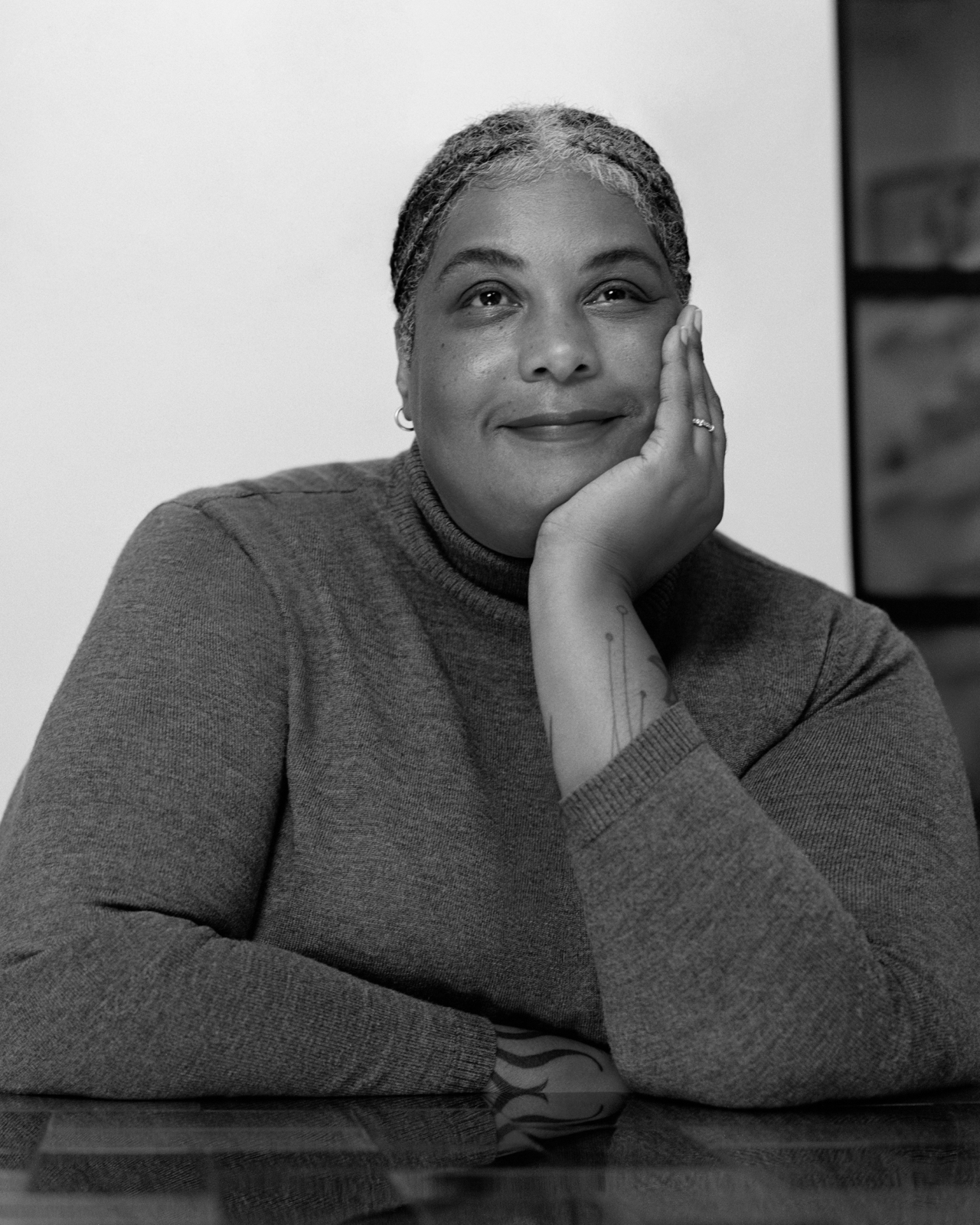
Photograph by Gleeson Paulino
To never miss an episode of The Nature Of, be sure to follow here.
Movements evolve the way ecosystems do—through tension, adaptation, and collective resilience. In this episode, Willow is joined by writer and cultural critic Roxane Gay to explore the shifting landscape of feminism. Together, they revisit the ideas at the heart of Bad Feminist, question what’s really in crisis, and trace the possibilities that emerge when we stop ceding ground and begin tending to a broader, more interconnected ecosystem of care. This conversation invites us to imagine feminism as a living practice—one that grows with us, holds us accountable, and makes room for all of our complexity as we work toward a more generous future.
Roxane Gay’s writing appears in Best American Mystery Stories 2014, Best American Short Stories 2012, Best Sex Writing 2012, A Public Space, McSweeney’s, Tin House, Oxford American, American Short Fiction, Virginia Quarterly Review, and many others. She is a contributing opinion writer for the New York Times. She is the author of the books Ayiti, An Untamed State, The New York Times bestselling Bad Feminist, the nationally bestselling Difficult Women and The New York Times bestselling Hunger. She is also the author of World of Wakanda for Marvel. She has several books forthcoming and is also at work on television and film projects. She also has a newsletter, The Audacity and once had a podcast, The Roxane Gay Agenda.
Narration
Is feminism in crisis? This question has been haunting progressives ever since 2022 when Roe v. Wade was overturned. Here to offer a reframe is Roxane Gay, one of the most important voices in feminism of the 21st century.
Roxane Gay
Feminism is not actually in crisis. Feminism is doing what it should do, and what’s in crisis is everyone else; in that, it’s not feminism’s fault that Roe v. Wade was overturned. It’s actually the fact that people didn’t listen to feminists.
Narration
My name is Willow Defebaugh and this is The Nature Of. Each week we explore the nature of our world through conversations that help us reconnect with ourselves, each other and the earth. This week we’re looking at the nature of feminism with Roxane Gay.
Something I love about this conversation is that Roxanne highlights how we re-strategize in this moment, particularly how we build broader coalitions and work together with people who we don’t necessarily share every view with. This is actually integral to Roxanne’s vision of feminism that she laid out in her seminal book of essays, Bad Feminist. Her vision for feminism is inclusive and expansive. Today she’s here to reflect on 10 years since the book’s release, how we can advance the cause of feminism, and create our own answer to Project 2025.
Willow Defebaugh
To start, I wanted to dive into some of your texts. And we’re going to look at The Portable Feminist Reader, which you edited, that came out this year. But before we dive into it, I want to reflect a little bit or open the space to reflect on Bad Feminist. How has the concept of being a bad feminist specifically evolved for you since first writing the book? What did it mean to you then versus now?
Roxane
The concept is largely the same. When I wrote the title essay in particular, I was thinking through my relationship to feminism and I was thinking about the ways in which I certainly fall short of feminist ideals, but I still wanted to create a space where I could claim feminism. And so part of it was tongue in cheek like, “Haha, I’m a bad feminist.” But part of it was also a repudiation of the kinds of feminism that have historically left behind the most vulnerable populations, whether it’s Black women or women of color more broadly, trans women, working-class women, lesbian and bisexual women, non-binary people. I mean, the list goes on and on and on. And if that’s good feminism, then I’m absolutely a bad feminist and that hasn’t really changed.
What has changed is that, when you put an idea into the world, you don’t get to control what people do with it. And one of the strangest, but should have probably anticipated it, things that has come out of the book being in the world is that people have taken it as a sort of carte blanche to do whatever they want and call it feminism. And part of this comes from girl boss feminism and choice feminism. And some people read into the text that, “Oh, I can make whatever choice I want and I’m still a feminist,” when no, you actually can’t. And so I’ve thought a lot more about accountability that yes, we can be flawed and yes we can make flawed choices, but we also have to figure out what are the mechanisms that we will use to hold ourselves and each other accountable for those choices? And also what are the firm boundaries around what can and cannot be considered feminist?
For example, I’ve had more than a few, I guess, conservative women who have come up to me and said, “Oh, I’m always going to be pro-life. Haha, but haha, I’m a bad feminist.” And I’m always like, “Girl, no, you’re not a feminist at all. You are just bad.” And so that’s where my thinking has gone.
Willow
Of course, what you’re describing feels so symptomatic of these times that you just questioning the idea of feminism is this militant, very rigid framework then leads to people running so far in the opposite direction and saying that anything can be feminism.
Roxane
And I get why I think that people want to think highly of themselves and want to think that they’re making great choices all the time and that they’re good people. A lot of conservative feminists like to say that “I choose to be a stay at home mom.” And it’s like, “Great, I choose that for you too, but what are the cultural ideas that we’re going to put into place that support your choice to do that? Such that when your husband leaves you, if that were to come to pass, you won’t end up in poverty?”
Which is the primary thing that happens, when women who choose to stay at home and do that work of raising their children are then suddenly abandoned by a husband who turns them in for a younger model without children to start over—whatever is going on there. And so oftentimes, these conversations stop there. People are not actually interested in the policy discussions and they call it handouts until they need one.
Willow
And then on the other side of things from people who are maybe claiming the term feminism or bad feminist specifically and using it to justify any kind of action or thought, there’s also people in 2025 who are still reluctant to claim the term feminism period. I mean, it’s laughable to think that people are unwilling to stand with a group that is simply asking for gender equality, but why do you think people still bristle with the term in 2025?
Roxane
They are afraid of going against the grain. They are afraid of causing just a little bit too much trouble. And for so many people, claiming seems like causing trouble when in fact it’s just claiming autonomy and claiming a sense of self and acknowledging that we have a lot of work to do to get toward a more equitable society. And that these are some ideas for how we might get there.
Willow
Just take a step back a second, even if the framework of or the idea of being a Bad Feminist hasn’t changed so much since you wrote the essays, obviously the landscape has changed so much. So how are you feeling about the state of feminism today? Small question.
Roxane
I don’t know. Honestly, I just don’t know. It’s not great. We’ve lost a lot of ground and what’s frustrating is that many feminist activists and especially activists who work in reproductive freedom spaces and similar social-justice-oriented movements have been telling us for a very long time that these are the things that are coming down the road and they’ve largely been ignored, or they’ve been called histrionic, and now here we are and it’s way worse than I think many people could have ever imagined, and it’s happening way faster. So feminism starts to feel more and more impossible as the people in power create more and more cultural sanctions against any kind of equity in this world. It’s overwhelming. And so, whereas it was already difficult for people to claim feminism, now it’s almost impossible for some people. The more empathetic side of me understands why, but it’s really frustrating.
But I also don’t think feminism is in crisis. There’s a lot of hand-wringing, especially among the pundit class and in social media circles, where people are doing all of these deep dives into why is feminism in crisis? Feminism is not actually in crisis, feminism is doing what it should do and what’s in crisis is everyone else; in that, it’s not feminism’s fault that Roe v. Wade was overturned. It’s actually the fact that people didn’t listen to feminists. The crises are external to feminism, but we are in a position as per usual where we have to be more reactive than proactive. And that can be really frustrating because we’re continuing to react and figure out, how do we mitigate the damage of this fascist regime? How do we protect as many people as possible? How do we ensure that people with uteruses have as much access to reproductive freedom and choice as possible?
And we can’t work on any of the other sort of goals of feminism because we’re just trying to bail water out of a ship that is riddled with holes. And so I think the challenges for feminism right now are largely external.
And while there are of course the internal challenges of not everyone being on the same page, and I think we see a lot of moral tests, and things that are a little too rigid. I’m really just not as concerned with those because that’s nothing new. That’s just humans being around other humans. We just have to do the best we can in terms of the way we interact with one another and the way that we not only hold each other accountable, but also have some grace for one another and the ways in which we might fall short or not be exactly on the same page, but that’s normal and I just refuse to get riled up about it the way that so many people are like, “Oh my God, what’s going to happen? Feminism is in crisis. We need to start over.” Like, no, we don’t. We need people to just listen and do instead of all of this intense self-analysis. Let’s move on.
Willow
I mean, I think that’s been the most frustrating thing since Trump was reelected. People being shocked when it’s like they literally published a plan, Project 2025 had a website, it was out there, nothing is—
Roxane
It was out there years before. And what’s so confusing to me, and I am actually writing about this right now, I don’t know if I’ll ever finish it, but I just can’t believe that to this day, Democrats haven’t come up with a Project 2026. It’s just bewildering to me. They [Republicans] came up with a 900-plus-page policy document with specific ideas, and the ideas are all abhorrent. They’re proud of them. They are not disassociating themselves from these ideas. And so why don’t people on the Left come up with their own set of policy ideas?
We keep telling people: Let’s follow the Left, let’s go left, because they’re not evil, which is subjective. It’s like, we can do better than just saying we’re not that bad. What are the things that we can do well? What are the policies we can promise?
But instead of just saying it’s not possible, look what Donald Trump is doing. He’s just like, “You know what? Let’s get rid of the Department of Education.” And he’s not sitting around wondering about how to do it. He’s just saying, “Figure it out.” And I feel like we can not aspire to the bottom, but we can have big and bold ideas and not necessarily know every single nuance of how we’re going to execute them and make some progress. What is unrealistic, expecting people to continue to eat shit? No, I think we can do better.
Willow
I mean, what we’re talking about here really gets to the core of something I’ve been thinking about pretty much constantly, which is strategy. I often think about things through the lens of the natural world; and in the natural world, organisms don’t sit there thinking, “Can I achieve this? Can I achieve this?” When challenges arise, life adapts. It adapts with strategy. And this sort of hand-wringing that you’re pointing toward, it’s in some ways strangely singular to our species and it’s not beneficial to this moment. And particularly because we are seeing, not just on the right, we’re seeing not just the very clear plan, but we’re seeing unfortunately effective strategy to make it happen. And personally, I was so heartened to see some people proving that we don’t need to be aiming for the bottom of the barrel, as you say.
Roxane
Yeah.
Willow
So, I want to talk a little bit about The Portable Feminist Reader, which you edited, which includes essays by everyone from bell hooks and Leslie Feinberg to Susan B. Anthony and Gloria Steinem. I was curious, how did you go about choosing the works and were you concerned at all about conflicting ideologies and what was that thought process like for you?
Roxane
I was just interested in creating a feminist reader that felt alive and didn’t primarily focus on ancient texts. Those texts are valuable. We need them. They exist, we should acknowledge them, and I do include some older texts, but contemporary feminism is alive and well. There are so many really exciting thinkers who are putting that work into the world, and I wanted to be able to showcase some of that. I wanted it to feel diverse and not just in the way of checking off certain boxes, but in a way that embraces how many different kinds of people are embodying feminist ideas in their work. And so I wasn’t worried so much about conflicting ideologies because those conflicts exist, and I think there’s nothing wrong with them and they’re very healthy to have these conflicting ideas. And I’m not talking about white supremacy versus decency. I’m talking about the sort of less extreme but still in conflict ideologies that we tend to see. I wanted this to be a conversation.
Willow
Is there one essay that stands out to you when you think back on the collection, one that really moved you or shifted your way of thinking?
Roxane
One of the pieces I really loved was Liz Huerta, who wrote an essay about working at Hooters, and I thought that was really smart and really charming. She’s very funny, but she often says the smartest things and she’s just endlessly interesting as a writer. And so to include a piece like that really was very memorable. I also really was glad to include Kimberle Crenshaw’s piece on intersectional feminism because so many people just use the word intersectional without really understanding where the idea came from, what the sort of foundational text about it was, and that it’s not, again, something where you can just, it’s not a salad bar where you can pick and choose the ideas, here’s what the ideas actually mean, here’s what they are, here’s how we can put them into practice. And so to be able to include a foundational text like that to just show in different points in time here are groups, how groups of women have come together to develop a set of principles—and the fact that feminists have done this time and time again, and yet we still don’t have a project 2026 or beyond. Astonishing.
Willow
To what extent do you feel that the reason we don’t have that project 2026 comes from this broader problem in progressive spaces, a broader inability to build bigger coalitions? It’s something we observe all the time, this idea that if someone else’s views don’t perfectly align with yours, then you’re not willing to work together.
Roxane
Well, that’s a huge part of it is the purity politics of it all. And we are just so rigid, and I’ve written about this, about how we’ve all become overly calcified like, God, there’s no room to breathe anymore and we’ve done it to ourselves. There are a lot of reasons for this, and many of them are completely understandable, but we’re never all going to be on the same page—and I don’t think we have to because we are on the same page about some of the bigger picture things. For example, fascism is bad. People shouldn’t be in concentration camps, people in Gaza shouldn’t be starving to death. Surely we can agree on these very basic things and we can differ on some of the other issues that we are all contending with. And so let’s focus more on what we have in common instead of what we don’t. And unfortunately we don’t see a lot of that, and it’s to our detriment.
And one of the many reasons why I don’t think we have a project 2026 is that Leftists tend to worship at the altar of consensus. And consensus, of course, is incredibly important, and I do think that group leadership and consensus are part of the way forward. But when I say consensus, what I mean is that they tend to rely on polls. What will people say about this instead of just doing it and then seeing how people react. And again, I’m not suggesting that we should be bulls in a china shop the way Trump is, just destroying everything because he can and because basically he’s not even running the country. I think that the one cue we can take is that solidarity matters because those Republicans don’t all agree, but they sure do march in formation most of the time, even if it’s symbolic.
We also, I think, underestimate the value of symbolic victories. And coming up with a robust project 2026, that would be a symbolic victory. It would be a great victory because it would show that we do have ideas, we do have ideas that are quite frankly, very popular and that speak to the greater good and that aren’t divisive and in fact are unifying. If everyone has food to eat, then perhaps there will be less crime and less strife. If everyone can feel safe living in society and their bodies and whatever gender identity they inhabit, people are going to be happier. Period.
Willow
How do you personally practice building bridges or being in collaboration with people who don’t share certain views or share certain values that are important to you?
Roxane
Well, when it’s not the Grand Canyon dividing us—because if it’s the Grand Canyon dividing us, there is no breach in that. A lot of people are like, “We have to talk to our Republican family members.” No, we sure don’t. We don’t at this point. If they choose to follow Satan, that’s a personal choice and we don’t have to do that. But when it’s people who are simply ideologically different and I haven’t always been good about this, and this is the thing I’m working on because the past couple years have just shown me we all have to get better or nothing is going to get better, I try to listen. So it’s like a lot more listening and trying to be less prescriptive because we tend to think we have all the answers. And instead, I find that if we’re a little less prescriptive and more conversational about, you know, what is the way forward, how can we collaborate, how can we listen to each other and come up with something that we can all live with?
Willow
Going back to the expansiveness piece, the Grand Canyon issues aside, which I wholeheartedly agree on, I think a lot of it comes down to the politics of moral purity: not even being willing to have the conversation. And I think it often hurts us. I think about this a lot with, biology is often weaponized against the trans community, and I’m someone who works, I run a nature magazine, I think about biology all the time, and the reality is that transphobes, they use just one word, biology, to argue that gender is binary or fixed. Nature tells a completely different story. I mean, female hyenas with phalluses, male seahorses that give birth. It’s just the amount of diversity when it comes to gender and sex is just, it’s staggering and beautiful. And so I think a lot about, like when do we cede ground too much by just avoiding these conversations altogether when actually having them sometimes might benefit us.
Narration
If you’re interested in learning more about the sexual diversity of what it means to be female in the natural world, I highly recommend reading the book Bitch: On the Female of the Species by zoologist, Lucy Cooke. In addition to exploring all of the different ways that a female can look like from a biological perspective in different species, she also looks at the different roles that the females of so many different species play. Some of our favorite species in the natural world are led by the female such as whales or elephants or lions. To me, that’s an example of feminism at work in the natural world.
Roxane
I think it’s interesting that you bring up trans discourse because it’s in such chaos right now, and of course that chaos is externally imposed. And I do think this is one of the areas where Liberals in general have ceded an insane amount of ground to everyone’s detriment. It’s criminal, what we’ve done, it’s criminal. It just is because I don’t know how on TikTok you are, but—
Willow
I’m not on TikTok, shockingly.
Roxane
Oh, well, it’s an adventure. I actually really love TikTok. But the misinformation there is very problematic. But there’s a whole community of trans people there who are trying to be the sort of every person trans person and who are like… There’s this one woman and she’s always like, “Biologically, I’m a man. I know this. Nothing will ever change this.” And there are so many creators that do this. And then in the comments people are like, “Oh my God, if all trans people were like you, I would love you.” And I just keep thinking, “They are not going to love you more if you lessen who you are. They are just not, it’s not going to happen.” And it breaks my heart every time I see her videos come across because I just think, “Do you really believe this? Is this what you have told yourself to cope? Is this what you have told yourself to survive?” Which, no judgment, but it just shows that it has seeped in to create people doing things that harm themselves. And we see it in a lot of marginalized communities.
We cannot cede the ground that we are not going to be inclusive, that we are not going to take on trans liberation as our liberation, which it absolutely is. And until we stop ceding this ground, we are never going to move forward. We are simply not. And I wish more Liberal people would recognize this, because you see so many of them who have some sort of public platform who love to talk about, “Oh, we went too far on the trans issue.” And I’m like, we didn’t go anywhere on the trans issue. What do you mean? So how could we possibly go too far? How could we possibly go too far? Look at the legislation across the country, look at the number of children who are being denied health care in, for example, Chicago of all places, one of the most liberal cities in the country. So really what did we do that was too far?
And I feel like more of us have to push back when these people say these absolute nonsense things that are not grounded in reality and like, “Oh, stop trying to shove it down our throats.” Dude, if you’re not trans, then it doesn’t matter. Mind your business, go home. And also you just got your legs lengthened. Shut the fuck up. I mean, sorry. I think about this stuff a lot and it’s just very frustrating that we cede ground in the hopes that they’ll love us more, and it never works that way. Respectability politics never, ever works for us. We just keep having to carve away more and more of ourselves no matter who we are, whether it’s about race or gender or sexuality.
Also, you see a lot of the queers who are like, “I’m not that kind of gay.” There’s this lesbian couple from the south on TikTok, and they’re always like, “We’re not that kind of lesbian. We don’t hang out with other lesbians.” And I’m like, you should not be proud of that. That is not something I would brag about personally, but it’s also really heartbreaking that this is what our world has done to us, has made us sort of silo ourselves and make all of these compromises in the hopes that we might be accepted.
Willow
And I mean, well, first of all, I just want to say I deeply, deeply appreciate that, and I deeply appreciate how much you’ve spoken out for a feminism that includes trans liberation and sees itself as intertwined. It’s meant so much to me, and I’m sure so many other trans women, so thank you.
Roxane
Oh, wow. I didn’t even know. Yes. Yeah, I think it’s the bare minimum that any of us can do. And I also know that even historically, trans women show up quite a lot for pretty much every group. And so I firmly believe that we can show up for trans women, and I hope I continue to do so.
Willow
Well, and as you point out, I mean feminism and trans liberation are really rooted in the same core struggle, which is a right to autonomy over our bodies, our identities, our lives. We talk about there not being one way to be a woman. There’s also not one way to be female. I mean biology, the natural world shows us that over and over again. And so I think like the TikTok—that’s exactly why I’m not on TikTok, by the way. I’m scared of getting those videos. But I mean, the danger of ceding that kind of ground is that the ground itself is so baseless.
Roxane
It’s not grounded in any kind of real science. It’s not grounded in any reality that is generous and humane. There’s the bigotry, which I don’t even know how we begin to address that, but a lot of it is about control and bringing people to heel and trying to dictate how they should live, how they should look, who they should date and marry, and whether or not they should have children. It’s bizarre that people want to have this much control over people’s personal lives, and I’m not even a saint. Sure. I’m sure there’s some ideas that I have that people might find odious. I can’t think of any, but you never know. But it’s just bizarre to me, and I hope that we find a more humane way forward. I think we will, but I also think it’s going to be challenging.
Willow
In this shared fight for autonomy, what feels the most urgent to you today and where do you see possibility?
Roxane
Part of me wants to say it’s all urgent because it is. I think the most urgent thing is for everyone to realize the ways in which all of our struggles are intertwined and that we are not shifting focus if we recognize that we have to focus on all of these issues, whether it’s about race, gender, sexuality, or any of the other ways in which we are different. The collective nature of the oppression that we are currently facing cannot be denied. And I feel like that’s incredibly urgent for people to recognize because what we’re seeing now, and this is certainly not new, is that when people feel like the oppression is starting to overwhelm them, they start to compromise and they start to cede ground. And before long, I think we’re going to realize that there’s no ground left to stand upon because we have ceded so much of it.
And so the most urgent thing we have to do now is to stop ceding ground and to say, “You know what? Yes, you’re right. We actually do believe that the way forward is inclusive. We do believe that diversity matters. We do believe that trans people have every right to bodily autonomy and to living lives as they see fit. We believe these things. We are not ashamed of these things. We’re not going to whisper about it. We’re not going to pretend we don’t believe these things.” If we don’t start by believing in something and standing for it, then what’s the point?
Willow
It occurs to me that a lot of the problem on the Left is that there’s people—I think about the intersection of principles and strategy. There’s people who have strong principles, but think that that alone is a strategy. And then there’s people who only have strategy, but there’s no principles behind it, or they’re abandoning principles. And it just comes back to why is it so hard to have our principles and strategize on how to achieve them?
Roxane
It’s a good question. I don’t know that there’s an answer, but what I do think is that we can pair these people together. OK, so you don’t have those principles, but you have some really great ideas about how we might execute these grand ideas. OK, let’s actually talk about that. I do think that those two positions are not as far apart as you might think if we are oriented in the same direction. And I am open to that because I tend to have the ideas and the beliefs, and I can write about them and I can stand up for them and stand behind them. But how we get from here to policy, how we get from here to cultural adoption, that’s a bigger jump. And there are people who are very good at figuring that out.
And so I don’t mind if someone says, “Hey, I love what you’re talking about. Here’s some practical ideas for how we could manifest that.” Watching sort of how political campaigns are run from the inside out. I’ve realized that a lot of times when we fight for social justice, there’s an impatience because the urgency is that people are dying now. People are being harmed now. So we don’t have time for incrementalism, and yet most cultural change is incremental. And so while we recognize the urgency, I think we also have to, I’m not suggesting we only move forward in increments. I actually think we’re at the point where we just need revolution, but we do have to recognize that some parts of change are slow and some parts of change are much faster. And we can do both. We can work with both of those modalities instead of just throwing out the baby with the bath water and saying “It’s all or nothing.” It’s actually not all or nothing.
Willow
I mean, that actually is how evolution unfolds in the natural world. I mean, you have smaller scale adaptations within a species for how it can survive, and that becomes larger evolutionary changes. So it happens both slow and fast, and I completely agree. We see people where if it’s not happening immediately, then throw it out. But I am, I love what you’re sharing around connecting the folks who have the principles with the people who are great at strategizing. I mean, that’s how we create our project 2026.
Roxane
Well, yeah, and the thing about people with principles, they’re not going anywhere. They’ve got those principles. They’re going to hold onto them forever in general, especially if they are good people. So I do think, yes, we can actually work together. We absolutely can, and I hope that we do.
Willow
Agreed.
I wanted to touch a little bit on—there’s this narrative, particularly in this country right now, and Trump’s supporter base and young men of progressive politics having pushed young men to radicalize. And we hear this all the time, and it’s nothing new, right? It’s like, “Oh, sorry, women ask for gender equality and we didn’t ask nicely enough. And so Joe Rogan is born into the world.” But where do your thoughts fall on this in terms of how do we balance the need for accountability without “radicalizing” people in the opposite direction? Or is that just something we shouldn’t even be entertaining?
Roxane
Well, I don’t know that we have a choice in terms of entertaining it, but every few years there’s a lot of cultural hand-wringing about the men. “Oh boy, what about the men? What do we do? They’re in crisis.” They’re not in crisis. Men are fine. And I don’t even say that casually. People often say, “Oh, you must hate men. You must have terrible men in your life.” I only have exceptional men in my life. The men in my life are extraordinary. And I think many people can say that the bad ones just really stand out. But we just have such a profound cultural hatred of women that anytime a man has any kind of psychic wound, we have to stop everything and tend to it. And what a lot of men today are contending with is that they aren’t able to do what their fathers and grandfathers were able to do, which is generally support a family on a high school education, maybe college, go on two vacations a year, own two cars, have some kids and also have some retirement.
I mean, everyone should have that without a doubt. But it’s harder now. And instead of looking at the real problem, which is billionaires, they want to blame women, and they want to blame equality, which we’ve never even achieved. And that’s unfortunate. And I think we have to continue to refocus the problem whenever this comes up like, “Oh, girls are doing great in school now, but the boys have fallen behind.” Why is that? Because it’s not because girls are getting more attention than boys. They never have and they never will. It’s because girls understand what they need to do in order to not only survive, but maybe thrive. We know we have to work harder. We know what’s expected of us, and I think a lot of women are raised in such ways, whether explicitly or implicitly, to do our best, to please, to make everyone happy. And so of course, we’re going to do well in school. I mean, come on. It’s just textbook.
And I have empathy for some of the concerns that young men raise. I do actually, but I have less empathy for others, like the crisis of loneliness as if women don’t get lonely too. The world is lonely. We are overly divided in a lot of ways. Technology is very isolating. People want to talk to chatbots instead of other people. People spend more time looking into their phones at concerts instead of looking at the stage. I mean, there’s so many things that technology has done to isolate us from one another. So yes, let’s talk about the loneliness crisis and what we can do to evade it. But the idea that you should hate women because you’re lonely and no woman will date you is ludicrous. And so I wish we could have more of those frank conversations because a lot of the young men who are so angry only talk to other angry young men. They are radicalized online and they see women as their enemy, as taking things from them, as not wanting them, but then they don’t want to do anything to make themselves wantable while then also expecting women to be 10s out of 10s.
Willow
I really appreciate that. A few times in this conversation you have examined, is this thing really in crisis, right? Feminism not in crisis. External forces are placing the state of women’s rights in crisis. So I really, in this age where we are very tempted to in social media culture, every single thing is a crisis, that actually really detracts from the very real crises that we are facing, including the climate crisis.
Roxane
And we focus on this supposed crisis and we don’t do anything about the actual issues, and we just get stuck in this thing, and then we address the crisis. And then two weeks later, it’s like, is Me Too in crisis? Oh my Lord. No, it’s not. People are just fatigued because accountability is not sexy.
Willow
I mean, at the very start of this conversation, you framed this moment for feminism, you said, we have lost some critical ground. And I think that framing is so important because if you just… Otherwise, the temptation to just say, “Oh, the whole thing’s in crisis, what do we do?” We’re running around with our heads cut off. That’s not productive for anyone. We’re talking here about just needing to regain ground and strategy, coming back to that.
But I wanted to ask you, you recently wrote a piece for Atmos about the intersection of reproductive rights and the climate crisis specifically. And I’m just wondering, for anyone who hasn’t read it, if you can just speak a little bit to that story and what inspired it for you.
Roxane
Yes. As I was thinking about writing that essay, I was just thinking about what could I possibly have to say about the climate crisis that hasn’t already been said? And as a feminist, I oftentimes think about reproductive freedom, but one component of reproductive freedom is access to birth control and access to abortion. But the other side of reproductive freedom is that many people do want to have children. They absolutely do. They love children, but we don’t have any societal systems in place to support people for having children whatsoever. We hate children culturally. People really hate children. They should be seen and not heard. They should stay under my thumb and not do anything that I don’t want them to do. They should be who I expect them to be or I’m going to disown them. And conservatives, in particular, are like, we believe in family values, but the minute a child is born, those values disappear. They are only interested in fetuses, which is actually a weird fetish.
And so I was thinking about that, and I was just thinking about how one part of thinking about environmental justice is thinking about reproductive freedom and that we should be able to promise people that they will bring children into a world where they can have fresh air and clean water and a sun that isn’t going to burn their skin the minute they step outside of their door. These are very simple things, and yet here we are. And so that’s where the story started because I was just very interested in thinking through that. Like reproductive freedom means being free to have children safely, and part of that is the social safety net, and part of that is a vibrant and thriving planet.
Willow
And I mean, the other side to it that it had me thinking about was just how cruel it is that the choice to not have children, it’s being taken away in some regards, and at the same time, so is the idea of having a thriving, livable future for those children to live in. And that just once again highlights that all of these causes are interconnected.
Roxane
Yes, yes.
Willow
So my last question for you is, in that story, you wrote about how much you’ve learned from the children in your life and your nieces specifically. What advice do you have for the next generation of bad feminists?
Roxane
They’re actually here right now. They talk non-stop. Oh my God. Last night we were flying home from Canada, and I turned to my wife and I was like, “When do they breathe?” I just don’t know. When they take a breath, literally the minute they pop open their little eyes, they start talking. They talk all day, all night. And then sometimes I’m like, “Are you talking in your sleep?” But anyway, moving beyond that, they’re adorable and I adore them.
And my advice to younger feminists and rising feminists is to actually not really listen to older feminists because I think every generation has to find their way. I do think you can look to your elders for guidance, and should, and I do think you don’t have to reinvent the wheel. So it’s like, understand where things are at with whatever it is that you’re passionate about. I also encourage them to recognize that you don’t have to solve all of the world’s problems. Pick one thing that you care about. Pick one thing that you can see through in some small way in your local community, and then we can build from there. People keep thinking it’s going to be top-down, but change here is going to be bottom-up. And so I would just encourage them to do that.
And also to just be generous with each other. I think we’ve lost so much of that generosity and we can get it back. And these younger people are so interesting and have such a different worldview, and so much of that worldview is kind of grim because they’re not inheriting a generous world. I think we can change that, and I think that they will lead that charge, and the rest of us should follow.
Willow
Not inheriting a generous world, but we all have the capacity to be generous nonetheless.
Roxane
We do, we do.
Willow
Beautifully said. Thank you so much, Roxane, for your time. Really, really lovely connecting with you. I hope to stay in touch.
Roxane
Thank you, Willow.
Narration
At the end of each episode, I offer a series of prompts for you to take into your everyday life. This week’s are: What is my relationship to the word feminist? Who in my life would be good to have a conversation with about feminism? And what does it look like to reclaim generosity and offer more grace to people whose views are different than mine?
Head to the show notes for more resources on what we discussed today.
Join our membership community. Support our work, receive a complimentary subscription to Atmos Magazine, and more.
Roxane Gay: How Feminism Grows From Here