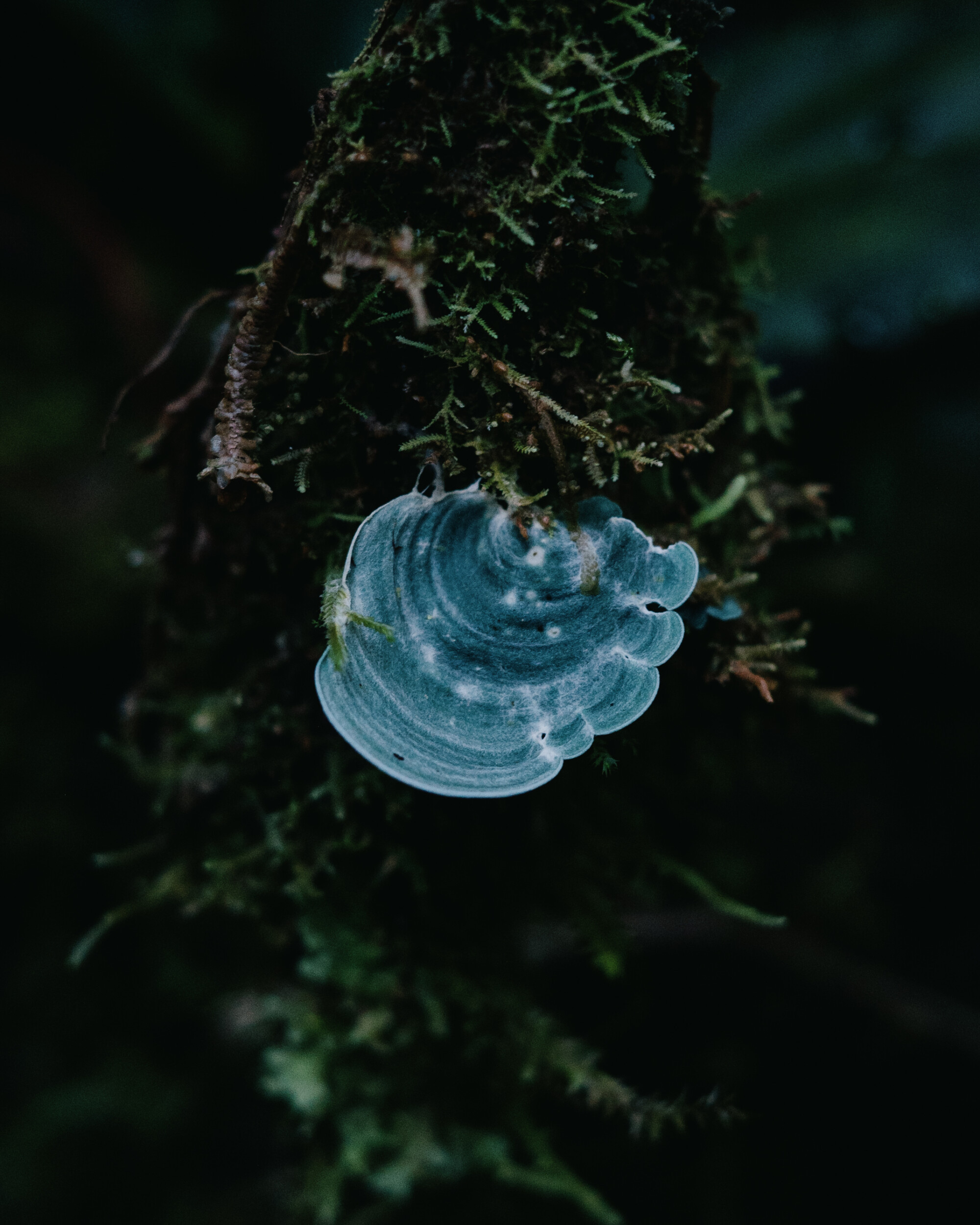
Photograph by Gleeson Paulino
To never miss an episode of The Nature Of, be sure to follow here.
Beneath our feet, fungi connect forests, turn death into life, and quietly sustain the world we live in. Mycologist Giuliana Furci has spent decades studying and sensing into them. In this conversation, she invites us to see life differently, not as separate individuals, but as a web of relationships that holds everything together. Together with Willow, she reflects on how learning to notice fungi can open our eyes to the hidden collaborations that make life on Earth possible.
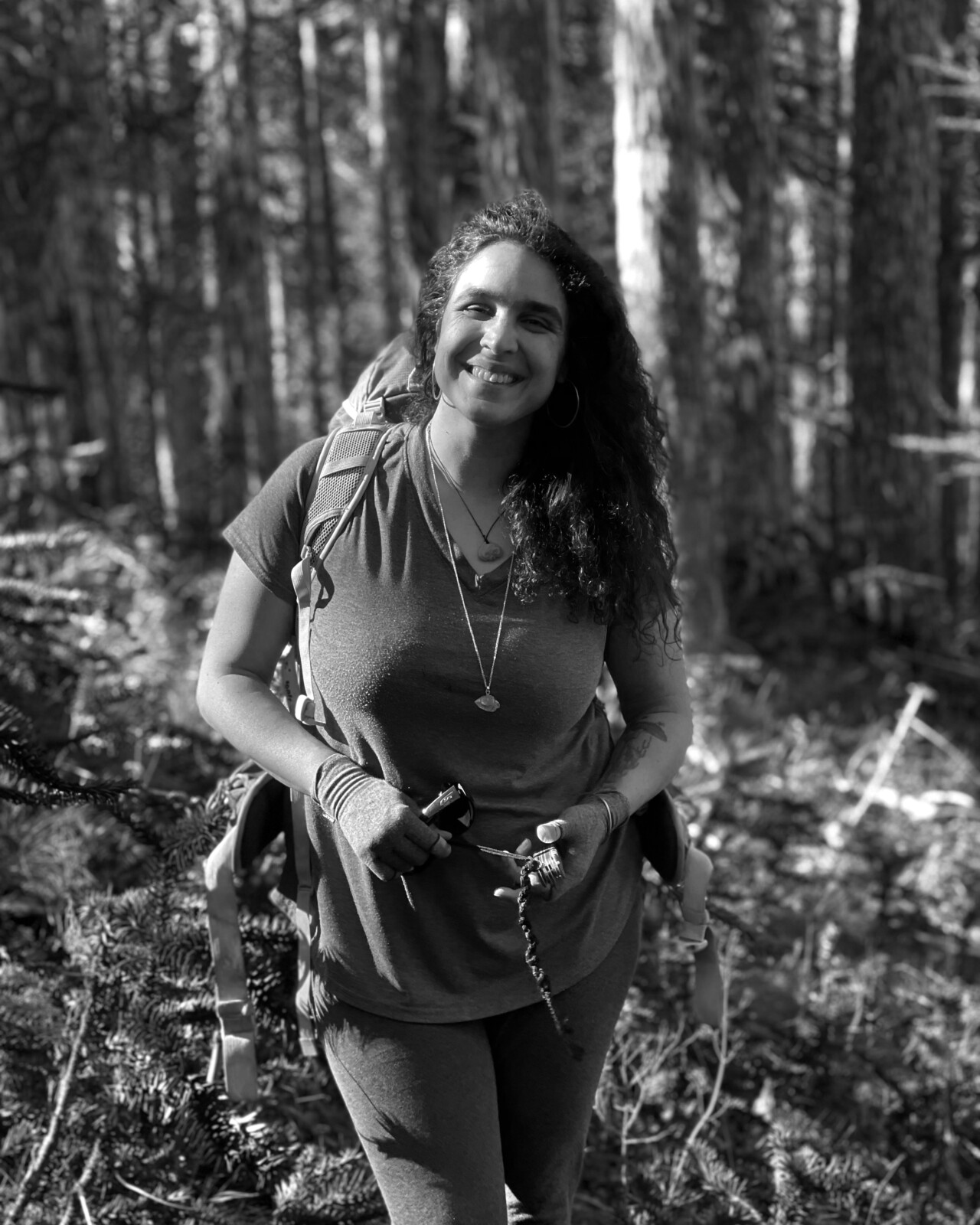
Giuliana Furci is a field mycologist, fungal activist, author, and foundress and director of the Fungi Foundation, the first NGO dedicated to fungal conservation in the world. She is an associate at Harvard University, a National Geographic Explorer, a dame of the Order of the Star of Italy, and the deputy chair of the IUCN Fungal Conservation Committee. Giuliana is the author of several titles, including a series of field guides to Chilean fungi.
She has co-authored publications that have redefined our relationship with fungi, including the publication that delimits the term “funga,” and the 3F Proposal – Fauna, Flora & Funga, and has spearheaded efforts such as the Fungal Conservation Pledge presented at the UNCBD COP16 by the governments of Chile and the UK.
GIULIANA FURCI
Essentially, fungi demonstrate that individuals don’t exist, that no one is without another. And I think they challenge false notions that we are individuals and that we are independent from other life forms.
NARRATION
Some scientists do more than study the living world: They learn to sense it. And Giuliana Furci is one of them. As a world-renowned mycologist and the foundress of the Fungi Foundation, she has spent over 26 years studying the beings who quietly hold our planet together. In that time, she’s honed an almost uncanny ability to sense fungi in the ecosystems around her, which can come in handy when she’s searching massive forests to find tiny mushrooms. She also has an enchanting gift for helping us open our eyes to the roles that fungi play in all of our everyday lives.
GIULIANA
The biggest invitation is to observe who you’re living with, who you are ingesting, who you are counting on to live as you live today, and you will be very surprised at how many fungal allies are involved in your every day.
NARRATION
I’m Willow Defebaugh, and this is The Nature Of, where we look to the nature of our world for wisdom and ideas that change the way we live. This week, I’m sitting down with mycologist Giuliana Furci to talk about the wisdom of decomposition and how we can all be a little bit more fungal.
WILLOW DEFEBAUGH
Giuliana, welcome to The Nature Of. It’s such a pleasure to have you. To get started, I wanted to set the record straight because I’ve heard many different things and I’m wondering from your perspective, is it fun-guy, is it fun-gee, fun-jy, fun-guh?
GIULIANA
Oh, what a good question, but a great way to start. And thank you very much for this invitation.
WILLOW
Of course.
GIULIANA
I’m very honored. Basically, the name of the kindom, and note that I say kindom and not kingdom, is fun-guy, or fun-jai or fun-gee, and I’ll get to that bit. And funga is the diversity of fungi, fungi or fungi in a given place or time. For example, fauna. Fauna is the diversity of animals in a given place or time, and the kindom is Animalia. Okay. Whether we say fungi, fungi, or fungi depends on where we are in the world. You can say it anyway. It’s just really important to say it.
Willow
Yes.
GIULIANA
Yeah.
Willow
I love your use of the word kindom. Beautiful, beautiful reframe. Language matters.
GIULIANA
Language creates reality. And if we were to use kingdom, maybe I’d prefer to use queendom.
Willow
Agreed. Do you have a favorite enchanting fungi fact that you love to blow people’s minds with?
GIULIANA
Well, most facts about fungi are mind-blowing. So, for example, one that’s pretty mind-blowing that is relatable to most people is about puffballs. And puffballs are a group of fungi that form these big balls that grow on land. And they are pretty well known for filling up with spores, hence the name puffballs. And many a child around the world has had the pleasure of kicking one and this spores releasing or throwing one at somebody. But the interesting thing about puffballs and, especially, giant puffballs, is that when they are young, they are edible mostly. Then, when they mature, the spores are used to treat wounds. So, they have a medicinal relationship with humanity. And then once they’ve sporulated, and all the spores have been dispersed, there’s a sterile base on which this puffball has been sustained. And that sterile base is used as tinder, as a fire starter. So, in one species, you have edibility, you have medicinal relationships, and you have the possibility to start fire.
Willow
Incredible.
GIULIANA
And that’s pretty mind-blowing.
Willow
Amazing. I was growing some pink and blue oyster mushrooms in my apartment a few summers ago, and it happened to be a summer that was extremely humid. And it was these blocks of mycelium, and you spray them with water every day for them to grow, and some other nutrients. And I woke up one morning, and they had just exploded. And they had really spread everywhere, all over my bookshelf where I was growing them. And I loved it. I was like, yes, try to spread across my apartment. That would make me so happy.
GIULIANA
Oh, that’s so cool. All white. They produce white spores. And beware for the books. If it’s very humid and the spores are there, they like growing on books, too.
Willow
Yeah. They might still be growing in my bookshelf. So, you study communities that in some ways are very unseen below the soil and yet are hugely supportive of entire ecosystems. For anyone who’s tuning in who maybe is newer to learning about fungi, can you share some of the key roles that they play within their ecosystems and habitats?
Giuliana
One of the ways of being a fungus is by forming a symbiosis with living plants. And the fungi that do that, and you’ll see that I use fungi, fungi, and fungi, I’ll be changing all the way through it—
Willow
Perfect. I’m with you.
Giuliana
—the fungi that form relationships with the living plants are in a symbiotic relationship, most of them are called mycorrhizal fungi, and they can live on or in the roots. They can live inside leaves and in different parts of a plant. Now, the symbiosis formed between mycorrhizal fungi and land plants was essential for life to be able to move outside of an aquatic ecosystem and form soils and live on land. And that was the case billions of years ago, and it’s the case today. When we see a tree, for example, a pine tree, we are not looking at an individual. We’re not just looking at the plant. We’re looking at a symbiosis of plants with fungi, with animals as well. But it’s the fungi on or in the roots of that pine tree that allow for the tree to live outside of water, to live on soil, to synthesize nutrients from the soil that plants can’t synthesize by themselves.
And these fungi are also extending the area of absorption of water for that plant, among other roles. And in turn, the plant is producing sugars through photosynthesis in the foliage and giving the fungus those sugars to be able to live in that symbiotic relationship. So, what is essentially happening is the possibility of plants to live outside of water. And therefore, every time you see a tree, what you’re seeing is a symbiosis with fungi and not an individual.
Willow
And through this symbiosis, how do fungi challenge our notions of individuality, and what is an individual, and what kind of lessons or takeaways are there in that for humans as a species?
Giuliana
One of the characteristics of fungi that is pretty much common across the board is that fungi live inside their food. They don’t ingest like animals do, and they don’t photosynthesize like most plants do, but they live inside their food, they grow throughout the food source, they secrete enzymes and sort of digest outside of their body, and then they absorb the nutrients that they’ve digested outside of their body. And so what fungal life graphically does is demonstrate that no one is without another. There’s no possibility for a fungus to be separate from another organism that is their food source. And so essentially fungi demonstrate that individuals don’t exist, that no one is without another. And I think they challenge false notions that we are individuals and that we are independent from other life forms.
Willow
Beautiful. A recent study from the Royal Botanical Gardens, Kew, found that there’s 2.5 million species of fungi, and of that, 90% are scientifically undescribed. Meanwhile, there’s 450,000 species of plants and only 11% are undescribed. Why do you think that is? Why does the fungal world still remain shrouded in mystery?
Giuliana
I think there are at least two main reasons. Firstly, fungi are organisms that are not always visible to the naked eye, whereas, for example, plants—most of them—are almost always visible to the naked eye. And so, to coincide with a fungus that isn’t visible all year round or every year, your chances are pretty low if you don’t know anything about them, if you don’t even know that they exist.
The second reason, also, I think, is that we haven’t known that a fungus is a fungus for as long as we’ve known that a plant is a plant. And so it was only in 1969 that the kindom of the fungi was described and delimited as an independent kingdom of life from animals and from plants. And so there’s been less attention and less knowledge around who they are and how they live. But going back to that first point of many of them not being visible to the naked eye, some ever. So, there are very many species of fungi, for example, that live in water, fresh water, marine ecosystems, and estuarine systems, etc. There are fungi that live in the soil. There are fungi that live inside plants, inside bodies of animals, and we never really can see them with the naked eye. And until we knew the differences with plants and animals that are cellular, we wouldn’t be able to know the difference by looking through a microscope. And then you have these fungi that produce mushrooms, for example.
Some fungi produce mushrooms that the only function of a mushroom is to produce and disperse spores. And some of these mushrooms are visible for 30 minutes, maybe once a year or once every 10 years, so you have to coincide. And that low chance of coinciding shows that every mushroom is magic and every encounter is magical. Yeah.
Willow
So, it’s an exciting time to be a mycologist, I would imagine.
Giuliana
Well, it’s definitely a busy time if you’re working in fungal conservation.
Willow
Right.
Giuliana
Yeah.
Willow
You were part of the 3F proposal to have funga recognized alongside flora and fauna. Can you share a little bit about that initiative and where it stands now?
Giuliana
Yeah. So, I’m one of the co-authors of the paper that delimits the term based on a paper that was published in 2018 and written by three mycologists from Latin America with the support of a professor in the United States. And so it’s a very powerful proposal that comes from South America that gave way to the 3F initiative, which is a coalition between Fungi Foundation, NYU School of Law, and Merlin Sheldrake, who’s a biologist from the U.K. And together, we’ve been working to help institutions and countries and others change wherever their language is referring only to fauna and flora as macroscopic representatives of life on Earth to the 3Fs, the fauna, flora, and funga. And so the proposal and the work that Fungi Foundation has been doing has transformed the 3Fs into a mainstream, and a lot of that work stands on pillars that have been put in place through the 3F initiative and a lot of work in coalitions.
Willow
And how does that connect or translate to conservation? Because I mean, it comes back in some ways to how this conversation began and you saying, “As long as you say it,” the importance of working funga into our vocabulary, particularly when we think about protecting the living world.
Giuliana
So, there are two very important things about saying the name of fungi or referring to funga. First of all, is that it’s a scientific fact that they are distinct from plants and animals, and that wherever we’re talking about just plants and animals, we are missing a third kingdom of life that forms microscopic organisms that is very, very important. So, there’s one thing that has to do a bit about justice, justice to these organisms, and actually facing the injustice of not mentioning them. It’s like not giving an author their credit. Who wrote this book? This person. Who shapes the living world? Well, all of these.
All that we’ve done as a species to try to stop the levels and the rate of loss of life, biodiversity, has been mainly based on efforts looking at plants and animals. And we’re not doing great. We’re actually not doing great at all. When we look at incorporating the third F into strategies and into decisions and legislation for this to happen, what we are proposing is that there’s a new way to look at what can be done. Why are fungi an opportunity? Basically, because they are inseparable from their habitats and their ecosystems. When we want to conserve a species of animal, in the majority of cases, we can move that animal, for example, to a zoo, and we can, in many cases, reproduce the animal and the animal maybe might thrive.
With plants, we can take the seeds, in many cases, to a botanic garden and seed banks, and we can conserve the species. But with many fungi, for example, the mycorrhizal fungi that live associated to a living plant, in order to protect them, we need to protect their habitat and their ecosystem. And that inseparability, fungi are a very important pathway to the conservation of natural spaces and natural habitats. And in my opinion, in many cases, a much more efficient way of facing conservation issues.
Willow
So, because fungi are so embedded within their ecosystem, in some ways, they are this symbol of the interconnectivity of the living world and why conservation can’t be approached in such an isolated way.
Giuliana
Yeah. And you know, Willow, I think there’s something important in a simple way of understanding is that fungi make systems ecosystems because ecosystems function in unison, lots of living beings working in different ways, but in a connected way. Mostly, the organisms that connect or that make interactions between species are the fungi. Another way of putting it is if we are going to make a cake and we have flour, we have sugar, maybe butter, if you’re not a vegan, you can’t make a cake unless you put a binding ingredient in, eggs or aquafaba. And fungi are like the eggs or the aquafaba in cakes. In an ecosystem without the fungi, the parts, the ingredients, don’t really combine.
Willow
They hold our world together.
Giuliana
They hold our world together.
Willow
You mentioned Merlin Sheldrake. I saw him speak over the summer and someone asked him this question of, “Rather than trying to anthropomorphize fungi, what does it look like for humans to become more fungal?”
Giuliana
Yeah.
Willow
I’m curious, what does that bring up for you?
Giuliana
When we look at them closely, and if we maybe adopt some of those learnings, our lives are made easier and happier. For example, that individuals don’t exist. That’s one. In us becoming more fungal, just the integration of the notion that individuals don’t exist would undoubtedly, I think, make the world a better place. Another one is that death, as we’ve been taught, doesn’t exist. The end of one life form is nothing other than the beginning of many other life forms. And fungi show that. For example, in the pink and blue oyster cultivation packs that you had, what’s in there is straw, right? Dead straw, dead plant. There’s nothing dead about it. It’s the substrate for a whole other way of life. And so fungi really challenged the notion that death is an end and that life is linear. And when one integrates the fact that we’re in a cycle, that life is a cycle, and wherever you place yourself in that cycle, there are beginnings, even at the end of one life, when there are many beginnings. And I think one lives in a better way when one understands and integrates those notions.
Willow
I couldn’t agree more. And it’s this binary that we have between life and death, where we see them as opposites, as opposed to death being the creative force that keeps life going. Fungi really are the ones that undo that binary. They illustrate that they are the ones that keep that wheel turning. It’s so beautiful because our Western notions of death are so isolating. When we think of death as being bodies and boxes and disconnected from the Earth, it is isolating us from the rest of the living world and fungi, which turn death into new life. They’re the decomposers within so many ecosystems. They make that bridge more beautiful. It’s a way of becoming part of everything else.
Giuliana
Yeah, that’s definitely the case for many types of fungi. And of course, there are those fungi that provoke the death of others, and of these many ways of being a fungus. But I would say I totally agree with you. And I think that this becoming fungal, there’s actually a really, really beautiful book that I highly recommend called Let’s Become Fungal. It’s a very beautiful book, a series of conversations mostly between women about how to become fungal.
Willow
Beautiful.
Giuliana
Yeah.
Willow
That is moving to the top of my reading list.
Giuliana
Yeah, I think you’d love it. Yeah.
Willow
Speaking of books, so Robert MacFarlane was on the podcast recently, and you’re featured prominently in his new book, Is a River Alive? And he mentioned on the show that you are a dowser and that you can sense where water is. Can you share about that? I mean, what is it like?
Giuliana
It’s inevitable. That’s the first thing. It’s not something you learn. It’s something that is with you. But yeah, it’s interesting. I didn’t always know I was a dowser. I was trying to locate a cabin I was building in Southern Chile and thought, “Oh, I’m going to check if there’s water around.” And so found out who the local dowsers were. And this lovely lady arrived, and she was dowsing with a branch of willow. We use willow. I used mostly willow to dowse, not copper, but copper also, but with willow. And suddenly she looked at me, and she said, “You’re a dowser too.” And I was like, “No.” She said, “I bet you are. Just try.” And I was like, “I mean, now let’s see what happens.”
And basically, I was holding this branch of willow, so it’s a bifurcated branch, and there’s just a force that moves that branch from your hands. You can’t stop that force from manifesting through the branch held by this body or through the body to the branch. I’m not sure how that works, but I would definitely say it’s inevitable, and it’s something new. And then I just started testing and learning. And then I started learning how to make calculations. How many meters deep is the water? Roughly how many meters per second would there be of a flow, etc., and the force of those underwater rivers? And it’s been lovely, but yeah, it just happens to you.
Willow
Incredible. People are out there saying magic isn’t real.
Giuliana
Yeah. Well, we used to be called, or we still are sometimes, water witches.
Willow
Yeah.
Giuliana
Yeah, the dowsers, water witches. Yeah.
Willow
Incredible. There’s a real sense hearing you talk about fungi that you’re sort of tapping into an attunement with them when you’re in the field. Is that a fair assessment? Do you feel like there’s kind of a dialogue happening in some way?
Giuliana
No, it’s an interesting question. I don’t have an answer with certainty. So, firstly, I’ve been working for the fungi for almost 26 years now, actually, next month, 26 years. It’s a very long time. So, there’s definitely a relationship, a very intimate, profound relationship. And I have a sensorial sensitivity to many of their life forms. I’m not sure if it’s something extraordinary, totally, and I’m not sure how much experience influences that. After spending so much time in their home with them, you start to feel in your body what home environment they like, for example. And so that had been my explanation for a long time of what was happening to me in Chile or in other places where I collect a lot, where I spent a lot of time, where I can feel them. And that feeling could also be that experience, right?
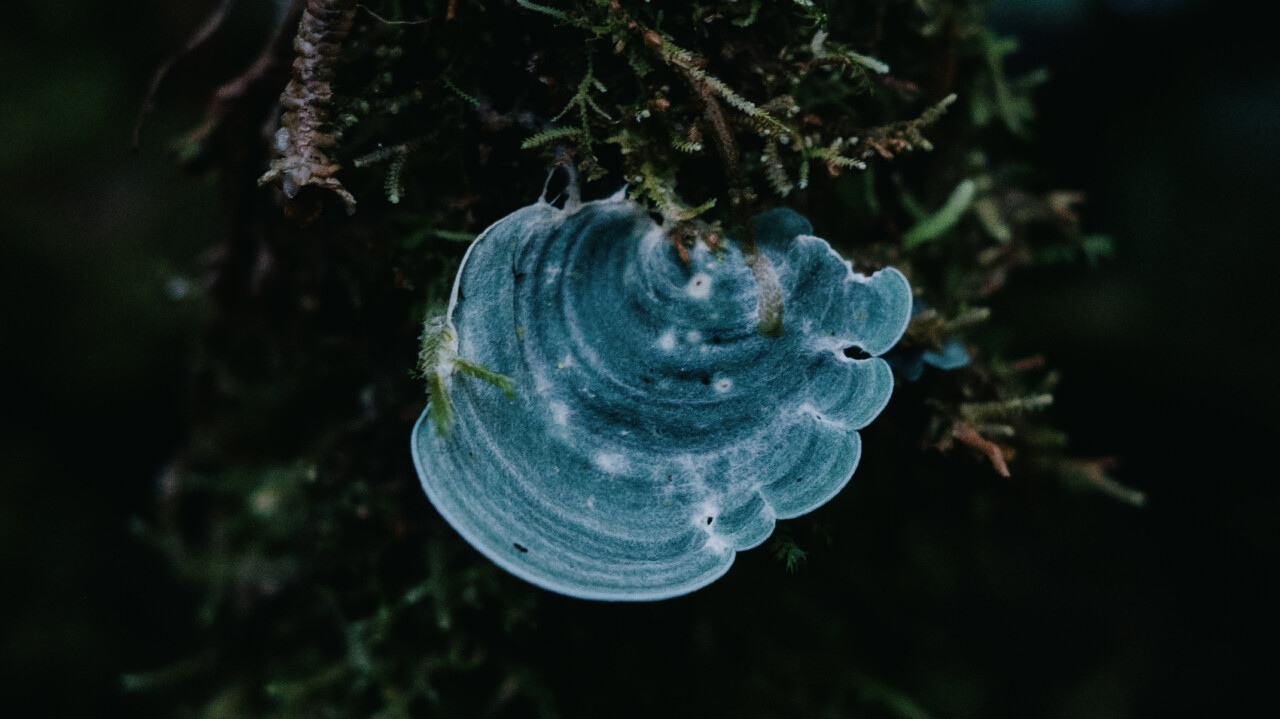
So, oh, this is the temperature, this is the type of light, this is the time of year. But then sometimes things happen in places that I’ve never been to before and in ecosystems that I don’t know well at all, I’ve never met before. And I’ve always had that, but I wouldn’t dare say it. And it’s only been a few times that I’ve dared say it with witnesses, and they’ve seen it. And now for them, it’s really extraordinary. And that’s where all this is coming from because Rob [MacFarlane] experienced it, and Merlin and Cosmo Sheldrake have experienced it. With Merlin and Cosmo, it was a big one because it was at night, and I was driving, and I just got the feeling, I was like, “Oh, stop the car!” and ran into the forest, and there were massive blue mushrooms.
Willow
I’m going to need you to paint more of a picture. So, you’re driving with Merlin and Cosmo, and you said, “Stop the car.” It was—
Giuliana
No, we’d been at some hot springs, a group of us in Chile. And I was driving back, and I got a feeling along the road that someone was there. And I stopped the car, and I sort of followed that instinct into the forest. And there were very large blue mushrooms called Stephanopus azureus. I felt them from the car, and I sort of screamed out to them to come in. And it was quite a way into the forest. And when they saw them, they were pretty shocked. But that’s an example of the feeling.
Now, I’ve encountered many species like that. There’s a species of mushroom called Amanita galactica, who I had the honor to name, and I felt Amanita from the car as well, driving. There’s a feeling that comes over one. So, again, it might be like dowsing. In fact, Cosmo Sheldrake had the theory. He’s like, “I wonder if this is because you’re a dowser,” but we haven’t come up with a way of how to test it because also 90% of a mushroom is water in many cases. So, there’s something there. There’s an experiment to design.
Willow
Yeah, I remember the description of the mycelial river of water moving through the mycelium. I had never thought of a network like a river. It’s beautiful.
Giuliana
Yeah.
Willow
You mentioned it’s been almost 26 years since you started working for fungi. It sounds like there was a moment. Was there a specific moment that you felt so completely pulled toward being of service in this way?
Giuliana
Oh, yeah, it was an instant. It was like a lightning bolt. I was walking through a forest in Southern Chile, looking for fox scat to dry it and then pull it apart and understand what the foxes were eating, who the foxes were eating. And on the way through the forest, I saw a very large orange mushroom on a tree stump, and I wanted to know who she was, and there were no books on Chilean fungi. And I thought, “I’ve got to do this.” And it never stopped, and it just grows and grows and grows in conviction and in passion and in enchantment and in strength.
Willow
I can really feel that sense of enchantment.
Giuliana
Yeah.
Willow
I’ve heard you speak to the fact that humanity and fungi have very much co-evolved with one another.
Giuliana
Culturally co-evolved.
Willow
Culturally co-evolved, yes. Can you speak to that a little bit?
GIULIANA
Yeah, sure. In these many ways of being a fungus, one of the most essential ways in the relationship between humanity and being a fungus is yeast. Yeast have shaped civilizations. So, for example, a lot of people think of beer as just this beverage that has the power to either take your thirst away or to get you a little bit tipsy now and then. But yeast that make beer really shaped how certain peoples could live or not. And beer was born in what today is Iran in desertic areas, and beer was born through the necessity to ferment a beverage and stop water from becoming a liquid culture of bacteria that, if you drank, you’d get so much diarrhea that you would die. So, you have to cross the desert because at that time of the year, you’ve got to cross the desert to get from point A to point B, you need to take water. You’re not going to find any other way. Very shortly into that, water has started to breed bacteria and others. You drink it, diarrhea, and you’re dead.
And so the process of fermenting gave the possibility to have a fermented liquid that would sustain time and heat and would allow you to make those crossings of deserts, for example, and preserving foods, fermenting foods for them to not become food for bacteria and again, be harmful for humans. All of that fermentation happens thanks to yeast, thanks to fungi. So, that’s one way, a very important way, another really important way that fungi have shaped humanity is through medicine. For example, it’s a mold called Penicillium that produces penicillin. And there are many fungi that produce antibiotics.
So, the probability of dying from a paper cut—the infection of a paper cut in your finger—is a lot higher before you could take an antibiotic. So, I would say antibiotics are also another example of how that relationship has shaped humanity. And then of course, fire, making fire. Ötzi the Iceman, who’s the oldest mummy known to Europe, was found with a conk, so a tinder fungus, used to not only stop fires, but to transport lit embers. And Ötzi lived over 5,000 years ago. So, we’re looking at humans having the possibility to preserve food, to have relationships that are medicinal, and to make fire.
Willow
Very small steps in the preservation of our species and development of our species.
Giuliana
Yeah.
Willow
Incredible.
Giuliana
And then, of course, there are the relationships that are ceremonial that are extremely important. And we as humans have always had this urge to look at the celestial from the terrestrial. We’re always looking from the microcosmos to the macrocosmos. And in many cultures, the vehicle to get to the celestial from the terrestrial is through a fungus. So, you’ll have different species of fungi that help or allow for people to have visions of the celestial or to communicate with the macrocosmos from the microcosmos. And not to go far at all. I mean, Christians, Catholics take communion with bread and wine. And without yeast, there is neither bread nor wine. I mean, it’s today, and it’s in one of the largest cultures.
Willow
Do you feel that there is sort of a cultural awakening to fungi in this moment? I mean, I’m thinking about the popularity of shows—
Giuliana
Oh, for sure.
Willow
—like The Last of Us, and it feels like they’re really sprouting up with this sense of—
Giuliana
100%.
Willow
—enchantment throughout culture. Can you speak to that?
Giuliana
I mean, so much. And that’s happened, and it’s happened since 2020, 2019, and it’s been deliberate. That’s what I’d like to say. I mean, I’m very proud to be an oldie in the space. 26 years back, there weren’t many of us at all. And I think we all were working toward increasing the popularity and awareness of fungi. And at the same time, we were all making firm steps in getting fungi included in different spaces of life for people. So, when the film Fantastic Fungi came out, and then when Merlin’s book Entangled Life came out, there’s a before and after of those two publications. But it’s not only the power of the book and the film, it’s also the fact that there was a group of us for decades before who had been working. And when the interest arrived, we had a body of work already to show for that topic.
So, for example, Paul Stamets published his first book on psilocybin 47 years ago. So, as a small community, we were ready to receive the tidal wave of interest. I’m so happy to be alive to see people’s lives be happier because of how much they know about fungi. It’s just so evident.
Willow
It’s beautiful. I mean, it’s just such a visual of all the work done below ground that now, by the time it started to fruit into the cultural sphere, all of that beautiful groundwork was done by you all. I wanted to speak also to the potential … We’ve spoken a bit about the health benefits for humans, but also I want to speak to the larger biosphere. And there’s a growing field of mycoremediation and working with fungi to help tackle pollution. Can you share a little bit about that?
Giuliana
There’s a lot of research going into cleaning up polluted areas using certain types of fungi. For example, oyster mushrooms, which are great at it. Now, because fungi live in their food, digest that side, and then absorb, they have a possibility sometimes of taking out of an ecosystem or taking out of nature compounds and substances that they might actually metabolize and draw in. There are other types of efforts going on around the world to restore soils, to enable plants to be able to live on degraded soils. And then you have, for example, lichens. Lichens are also considered inside the kingdom of the fungi. Lichens are a symbiotic organism between alga, so seaweed, plant, a fungus, and cyanobacteria. And lichen are read as environmental indicators in many places around the world. They also can tell us a lot about what’s happening in an ecosystem and are therefore considered in conservation efforts. It’s just some of the ways.
Willow
Yeah. A few years ago, I was in Patagonia, in the Chilean side, and there was this stretch of forest we were hiking through that there was so, so much lichen there. It was like beautiful, ghostly, otherworldly. Yeah.
Giuliana
Like that behind me.
Willow
Yeah, exactly. Exactly. And I remember learning at the time that they are indicators of a healthy ecosystem, symbiotic beings being an indicator of a healthy ecosystem.
Giuliana
And also just it’s incredible how much we can learn about our world. So, for example, Patagonia, both the Chilean and the Argentine side, is home to a family of trees. They’re called the Northapegas or Southern beach. And the Southern beach trees grow in the Southern Cone of South America, so Chile, Argentina, Papua New Guinea, Tasmania, New Zealand, and a few other places. But the reason that the trees are only found there and these are really interesting trees from a fungal point of view because they form symbiosis with mushroom-producing fungi. So, the colors in autumn, just walking through those forests, incredible carpets of different colored mushrooms.
But they all were part of the landmass, Gondwana, that gave way to the Southern Hemisphere. So, before the continents drifted apart, first there was one big landmass called Pangea that separated into two: Laurasia and Gondwana. Laurasia then separated to form the Northern Hemisphere, and Gondwana separated to form the Southern Hemisphere. And in that continental drift, when the land masses separated, these trees went with the land, and the mushrooms went with the trees and the land. And so we find that most of the closest relatives of mushrooms in Patagonia are found in Tasmania and New Zealand. Fungi also, another thing that they have taught me, and I think can teach the rest, that these political divisions are not biological divisions of life. In Chile and Argentina, the border is a political border. It’s not a biological border.
Willow
You mentioned that it’s something they’ve taught you. What are fungi teaching you right now? Which species are you learning from? Is there something that feels really, really present to you in this moment in your life?
Giuliana
I’m always working on some sort of description of a new species or something like this. I’m always learning, and I’m always reading. I’m working with a group of colleagues from the United States on describing a species of what we called a sooty mold. And basically, it just looks like a sooty mold on the bark of a bush. And you’re walking through the forest, and you’re like, oh, what’s that? And then it’s like, oh, what is it? Of course, you’ll pick a bit off, and you’ll smell it. Oh, it smells like a fungus. And so learning from observation and then, oh, but let’s look at the microscope when you discover an incredible universe of geometrical shapes and of all these structures, I’m constantly blown away by how little we stop to look and the need to stop and look. In that process, when you’re describing these species or looking at them, you’re always grateful that you stopped and looked and that you gave yourself the time to stop and look.
Willow
Going with that line of thinking, do you have anything to offer people who are listening for how they might connect with the fungal world in their day-to-day lives?
Giuliana
There are a couple of things. First of all is just understanding that when you wash your clothes in cold water with these detergents that can clean your clothes, for example, in cold water, those detergents are using fungal enzymes to clean your clothes. Or when you are having a nice cup of tea, it might be fermented leaf and it’s like, oh, there was a fungus, a yeast was involved in this. Or every time you have a bite of chocolate or a cup of coffee, those beans were fermented with a fungus. And so I think the biggest invitation is to observe who you’re living with, who you are ingesting, who you are counting on to live as you live today, and you will be very surprised at how many fungal allies are involved in your everyday. I mean, just a start from there, I think would be great.
And then another invitation would be to make an effort to integrate them into your language, into how we talk. That fungi are not plants, and they’re not animals, and they’re not bacteria, and that they actually are this group of organisms that shape the world we live in, and that are responsible even for our chocolate, coffee, tea, beer, wine, we could go on and on and on, penicillin, so many more.
Willow
And are within us and are part of us.
Giuliana
Yeah.
Willow
They’re within our bodies as well. And again, eat away at those notions of individual self and what we’re counting as our individual bodies and selves.
Giuliana
The thrill of encountering them makes you happy. And then the more you learn, you go into wonder. Sometimes you get scared, right? There are pathogenic fungi, there are fungi that are really dangerous to human life, or to other animal life, or plant life. But moving toward understanding that that’s how all life on Earth interacts. And it’s not a human-centric way, if we’re always measuring the “usefulness” of the species with regard to our life, it’s very gloomy. But when we’re looking at different ways of life in the context of an ecosystem and an interconnected system, you get very hopeful.
Willow
They enchant us with a real sense of possibility.
Giuliana
Yeah, they’re the coolest.
Willow
Thank you so much, Giuliana, for being here. It’s such a pleasure to talk with you.
Giuliana
Thank you so much.
Narration
As you walk away from this week’s episode, I hope that you do so with your eyes just a little bit more open to the magic of fungi and the parts of your everyday life that they make possible, whether that’s sitting for tea or your morning coffee or even doing a load of laundry. I also invite you to think about the mycorrhizal networks that you’re a part of, the individuals and communities who sustain you, whether they’re human or more than human.
The Nature Of is an Atmos podcast produced by Jesse Baker and Eric Nuzum of Magnificent Noise. Our production staff includes Emmanuel Hapsis and Sabrina Farhi. Our sound designer is Kristen Moeller. Our executive producers are me, Willow Defebaugh, Theresa Perez, Jake Sargent, and Eric Nuzum. Atmos is a nonprofit that seeks to reenchant people with our shared humanity and the Earth through creative storytelling. To support our work or this podcast, see our show notes or visit atmos.earth/biome. That’s A-T-M-O-S.earth/B-I-O-M-E. I’m your host, Willow Defebaugh, and this is The Nature Of.
Join our membership community. Support our work, receive a complimentary subscription to Atmos Magazine, and more.
Giuliana Furci Is Your Guide to the Enchanting World of Fungi