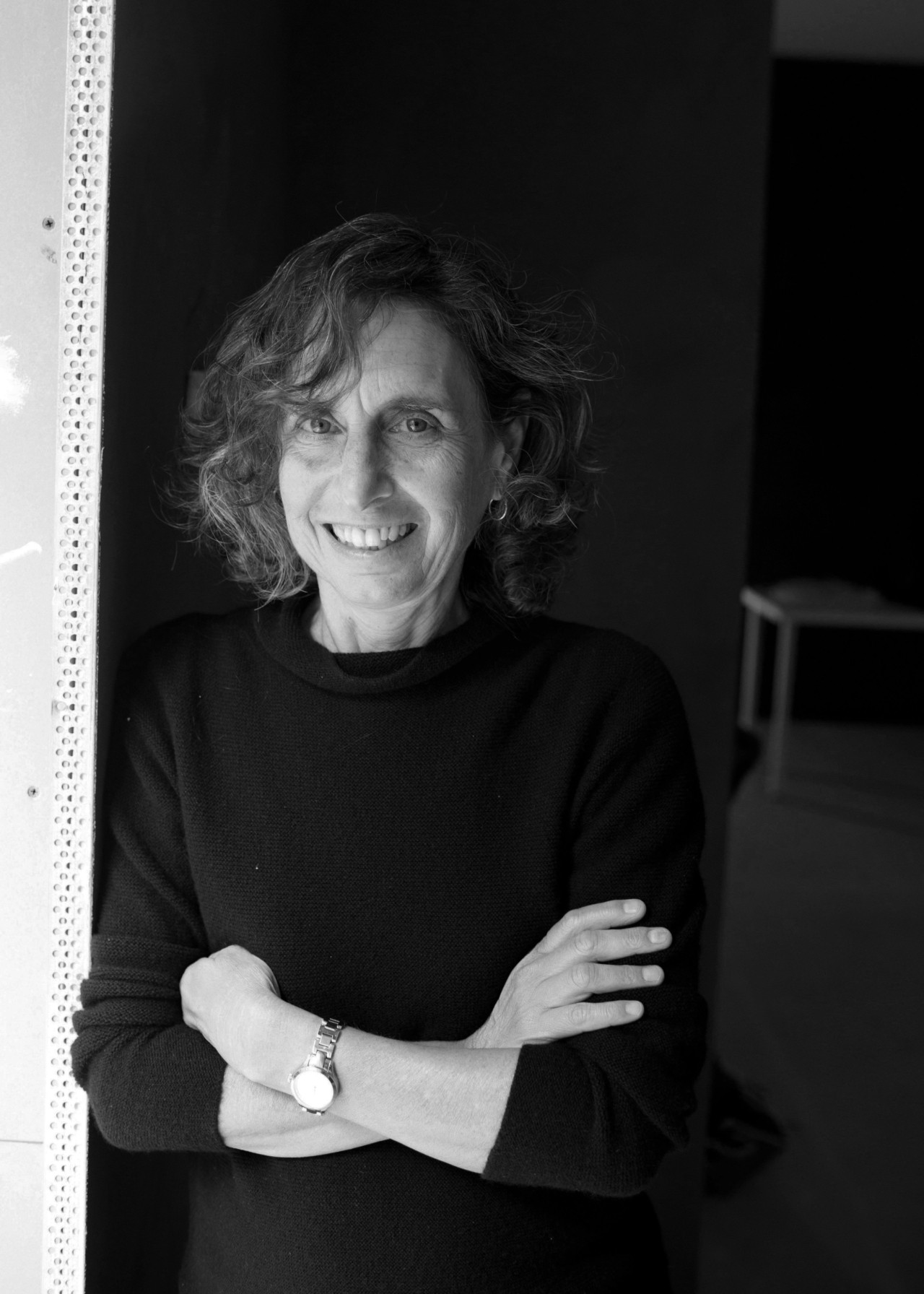
Photograph by Charles Negre
To never miss an episode of The Nature Of, be sure to follow here.
This week on The Nature Of, Willow speaks with Pulitzer Prize–winning journalist and author Elizabeth Kolbert about what it means to bear witness to a changing world. Drawing from her new book, Life on a Little-Known Planet, and her landmark work The Sixth Extinction, Elizabeth reflects on climate change, biodiversity loss, and the emotional weight of documenting both. She shares stories from the field, from melting ice in Greenland to scientists racing to catalog disappearing species, and considers the role of journalism in a time when attention feels scarce and the stakes feel enormous. This conversation explores curiosity, responsibility, and the power of paying attention, even when the truth feels heavy.
Elizabeth Kolbert is a staff writer at The New Yorker and the bestselling author of The Sixth Extinction, for which she won the Pulitzer Prize. Her other books include, Under a White Sky, which was named a top ten book of the year by The Washington Post, and, most recently, Life on a Little-Known Planet.
Elizabeth Kolbert
If you think of every species as an answer to the great question, which is, how do you survive on planet Earth? Every species has come up with a different answer to that question—and that’s just truly, mind-bogglingly amazing.
Narration
Elizabeth Kolbert is a legend among environmental journalists. As a staff writer at The New Yorker, she spent decades documenting life on this planet and how it’s changing. There’s a reason she has a Pulitzer Prize. It’s almost impossible to convey the seismic impact of her book, The Sixth Extinction, which changed how we think about the biodiversity crisis. And when I’m reading an Elizabeth Kolbert piece, there’s almost a feeling I have that I’m fulfilling a kind of sacred obligation. I’m not just educating myself about life on Earth; I’m bearing witness to it.
Elizabeth
I’m trying to get people to pay attention. I mean, really, if you think about it, we are in this war of attention right now.
Narration
I’m Willow Defebaugh, and this is The Nature Of, where we look to the nature of our world for wisdom and ideas that change the way we live. This week, I’m sitting down with Elizabeth Kolbert to talk about her new book, Life on a Little-Known Planet, and why wonder is still worth searching for.
Willow Defebaugh
I’m so happy to be able to connect with you, and I’m just such a huge admirer of your work, so thank you for being on the show.
Elizabeth
Well, thanks for having me.
Willow
I’ve seen you styled as being an observer and commenter on environmentalism. So, I suppose broadly, my first question is, how’s that going right now?
Elizabeth
Well, I started out on this beat, if you want to call it that, two decades ago, and it hasn’t been a good two decades, watching the complete indifference to these issues; and hostility, really, toward them from the current administration is obviously pretty tough.
Willow
Yeah, it’s quite harrowing. Is being out in the field something that helps you stay focused? And we’re living in this time where there’s so much being thrown at the wall. It feels almost impossible to know what to focus on. What is it that helps you stay intentional with your time and know what is signal versus what is noise?
Elizabeth
Getting out into the field with people and seeing new things has always been the best part of the job. And I’ve gotten to go amazing places and meet amazing people, and see amazing creatures and landscapes and seascapes. So that has been just a great pleasure. And when I look back, there are some extraordinary highlights I feel very, very, very fortunate to have experienced.
Willow
Speaking of highlights, your new book, Life on a Little-Known Planet, collects pieces that you’ve written mostly for The New Yorker over the last few decades. And the range of subjects is really just incredible. From investigating the efforts to communicate with whales in Dominica to tracking glacial melt in Greenland, it really takes you all over the world. Something that really stands out, I think, in reading your work is these windows and snapshots you get into people’s lives and the very unique perspectives that they hold on our changing planet. So I’m wondering, is there someone who stands out or jumps to mind in this moment that really has stayed with you?
Elizabeth
You become friends with people. I mean, you’ve heard their life stories. You’re not exactly their shrink, but you try to spend a lot of time with people and get as deep as I can into what makes them tick, and what they’re looking for, and what they’re hoping to accomplish. One of the stories in the book, and in fact, the title story in the book, “Life on a Little-Known Planet,” is about an entomologist. And I’ve been out now, many times, with Dave Wagner—he works at UConn—and done all sorts of fun things, eaten crickets with him and searched for caterpillars, which was a lot of fun, very memorable. And I saw a lot of fantastic scenery, as well as a lot of really interesting caterpillars.
Willow
I’m happy you brought up the title piece because it’s one of my favorites. And David, working to catalog this knowledge while we still can, before it disappears. You’ve spoken to that representing a larger theme of the book, which is this: You put it as the tension between knowledge and obliteration. I’m wondering if you can just speak a little bit to the tension that exists there.
Elizabeth
David is very explicit about this. So he’s out there trying to catalog every caterpillar in North America, basically. That’s a big job. There’s a lot of species out there, and a lot of them that are not even known. And he sees it as a race against, some of these rare species have probably already winked out. He really wants that knowledge to be preserved in some way. And he also takes genetic samples of all these caterpillars. So there will be a bank of those genetics. Now, if they’re gone, we can question what good that will do. But I also do see my own role. So there are parallels there. I do see the role of environmental journalists today—there are many different roles that you could have, but part of it is that witnessing role, of things that may or may not be here in the future, and someone ought to have recorded their passing.
Willow
He says something to you in the story. He says, “We’re going to solve climate change. It’s just a question of, how many species that we love are we going to lose?” Is that a perspective that you share? Is that what’s guiding your own thinking as you’re doing your work right now? Is the first part of that even still up for question to you?
Elizabeth
Well, Dave is a much more optimistic person than I am, I will say that. I mean, solving climate change, I mean, I would not use the word solve with climate change. Climate change is a cumulative problem. It’s not like a lot of your ordinary and run-of-the-mill pollution problems, where things will dissipate over time if you stop emitting X or Y, it will fall out of the atmosphere and your problems will decline. Whatever CO2 we’ve put up there is, for all intents and purposes, going to be up there, I don’t want to say forever, but more or less in human terms, forever.
Willow
Yeah. And I think a piece that is often missed, that I’ve observed, is that what we’re experiencing now is from emissions from decades ago. And so that’s why the bringing emissions down in the present moment is so important—because at this point, we’re talking about the impacts that will be felt decades from now. So climate change has this very, unfortunately fascinating, temporal problem in my eyes, where it exists so much across time. And it’s not always the easiest thing to communicate.
Elizabeth
Absolutely. We did evolve where there was no such thing as a really long-term problem, and it’s not clear that we’re capable of thinking in those kinds of terms. I mean, people do talk about cathedral thinking; like if you put up a cathedral, you lay the cornerstone, but you’re not going to live to see that cathedral finished. And that is what we need, really long-term thinking with climate change, because we are setting in motion processes that will play out over decades and hundreds of years and thousands of years. And that is really hard to convey. And it’s also, how do you get people to care about something that’s X number of years in the future, but is irreversible?
Willow
We do see repeated examples of things like the Seventh Generation Principle in Indigenous cultures. And you just mentioned the generational aspect, too, but I haven’t really thought so much about the evolutionary mind. The problem we have, is not having necessarily evolved to think about problems that aren’t short-term. So it’s a question of, are we going to make that evolutionary leap?
Elizabeth
I mean, Ed Wilson had this line of, we have prehistoric minds, and medieval institutions, and space-age technology. That’s a really dangerous combination. And when you think about it, it is. It’s just a really dangerous combination because we are programmed, really, to see short-term threats. That hyena over there or whatever was a really big threat to us. Now, what were we doing that was really long-term damage? Well, in some cases, prehistoric people were doing—our paleolithic ancestors—they were doing things that had long-term consequences. They didn’t realize it. They were overhunting big animals, and we don’t have those big animals anymore, but it played out over a long time and they had no way of knowing it. Now, our situation where we know what we’re doing—you might think that we would rise to the occasion, but there’s not a lot of evidence that we will.
Willow
Continuing this temporal thread, because this book collects essays from over the last few decades, what was it like for you revisiting some of these works and measuring them against progress that has or, most likely, has not been made since?
Elizabeth
Yeah. In some ways, it was fun to go back and look at things. But in a lot of cases, things were written at a more optimistic moment, like, yeah, we’re actually trying to tackle this problem in the case of climate change, for example. And now there’s just a sense of, well, we’re not trying. In this country, we’re actively, actively, actively not trying, in fact, actively trying to keep coal plants open. So in that sense, it was sobering. Let’s just put it that way.
Willow
Yeah. It was fascinating to read the “Song of Ice” piece about Greenland this week, given the news with Trump and Greenland, and just really interesting to hold the contrast there.
Elizabeth
Yeah. And the Greenlanders are—I mean, I love Greenland. I’ve been a few times and really feel terrible for the Greenlanders. They’re just being treated like pawns in this game. It’s not a game. It’s their home. One thing I think is important to appreciate about Greenland is it’s a very communitarian society. There’s no private land. You don’t own the land in Greenland. And so to have the Trump people talking about it as, we’re going to go in the same way like with Venezuela, we’re just going to seize it. It’s just anathema to them.
Willow
Yeah. You describe a sense of almost like a spell that comes over you when you travel there. Can you speak a little bit to what it was like, maybe the first time you went and you saw the ice up close, or even just the journey in reporting that story?
Elizabeth
The first time I went was actually in 2001 and it completely changed my mind. It’s really—my life, really, and it’s why I set off on this path. I think it’s pretty impossible, unfortunately, for people to really visualize Greenland. It’s two miles of ice. So when you’re on the top of the ice sheet, and I did get to go to the top of the ice sheet that first trip, you’re standing on two miles of ice, which is surreal. And even when you’re standing on it, you can’t really think, “OK, well, it’s two miles.” If we were to succeed in melting it, which we could, depending on how far we go in this process, that’s 20 feet of sea level rise, and that’s just really surreal.
And then another part of it that’s pretty extraordinary, when you’re up there, you realize every kid learns in grade school that Manhattan was under ice at one point, and then you’re up there and you’re like, yeah an ice sheet just like this one buried Manhattan. And it sounds like it was a long time ago, but in the grand scheme of things, it wasn’t very long ago. So it really tilted my worldview, how the world changes and how it can change, how immense changes are possible. And I don’t think we appreciate that because human civilization has developed in this moment of relatively unusual climate stability.
Willow
There’s a footnote at the end of the Greenland story that since you had reported it, an additional 2.5 trillion tons of ice have been lost. Compiling those additional notes at the end of the stories like that one, I mean … Do you ever just want to scream?
Elizabeth
Yeah, no, absolutely. I mean, you want to just shake the entire country or world by the shoulders and just grab them by the shoulders and shake them and say, “What are you thinking? What do you think is going to happen here?” Because to go back to what the scientists in Greenland told me back in 2001, “You can’t argue with physics.” This is very well-established physics. And when you make a prediction, you think about it: Climate modelers predicted pretty much exactly what has happened.
And when you see that, you would think, in a society that’s as scientifically sophisticated as our own, that people would say, “OK, well, that’s a pretty big clue that they’re onto something, that they were able to predict this decades in advance.” And what the predictions are for decades from now, if we continue on our, especially if we continue on our present path, they’re very grim.
And I just don’t know how you cut through the noise and impress that upon people. And the other problem, of course, is that even once you impress that upon people, it takes a lot of work to redo your economy, to redo your energy systems. And there was some slight progress being made on that front until the 2024 election.
Willow
When you started on this beat, the issue was more trying to get people to understand that climate change is happening. And it seems like that’s not so much the question anymore because there’s a growing consensus that people want climate progress around the world and people accepting it. So what do you see as your role now?
Elizabeth
There’s some disconnect between what we know and what we’re doing. So where does journalism fit into that? And some people are saying, “Well, we should just focus on the solutions.” Even though, as I say, we can’t really solve this problem, we can certainly make it better or worse. Those are our options. It can be a serious problem, or it can be an absolutely unmanageable problem. And that’s certainly influenced me. A lot of the pieces in Life on a Little-Known Planet are about people’s proposals for what we should do, showing people what could be done. So that’s another job for journalists. And I think that that’s reasonable. But now, in a moment where, as I say, we’re just actively destroying a lot of things, attempts at making things better, it’s really just chronicling the destruction, I think, is a valid exercise, but it really is hard to know what is the role of a climate journalist right now. What are we bringing to the table? And I’m not sure that I’ve entirely figured that out, I’ll be honest.
Willow
Well, that’s really honest and I appreciate that. And I’m struggling with the same thing. And I think chronicling the destruction, and also as you pointed to, chronicling the wonder, as well, before it slips through our fingers. I guess I keep coming back to it being all a “yes, and” because our last issue of Atmos, our 12th edition, Pollinate, the whole issue is just dedicated to solutions. I loved putting that issue together. It was one of my favorites to make because, how rewarding to just be focusing for a minute on who’s doing what about this situation that we’re in. But obviously, all of that work means nothing if we are continuing to just perpetuate the problem. And so with solutions, it’s always a “yes, and.” We have to chronicle the destruction, we have to chronicle what’s happening, the wonder, and also what’s being done about it.
Elizabeth
And I think that the problem that you run into, and that is definitely something that I grappled with when I reread a lot of these pieces, is the scale problem. And I’m sure you ran into that when you were putting together that issue. There are a lot of brilliant ideas out there, and then it’s always like, well, this is a pilot project in wherever, and it’s removing whatever, 100 tons of carbon dioxide or whatever it’s doing. And you measure that against the scale of the problem, which is 40 billion tons of carbon dioxide a year.
And you have to weigh, as a journalist, too, like, what do I do with this? I don’t want to bat it down at the beginning of the story—then, why am I even writing about it? But I also do want to be honest that there are huge hurdles here.
Willow
Yeah. This is heavy material that you have dedicated your life to focusing on. How does emotionality factor into it for you, in the process of reporting, but also in thinking about people who are reading your stories?
Elizabeth
In a way you could argue, I’m a bit of an emotional parasite and I think journalists are, because we are piggybacking on the emotions of the people that you’re covering. And they are guiding your emotions to that extent. And my own emotion’s like, wow, this is just a bummer. I try not to get into that in part because what’s the point, I guess, if that makes sense. But often, it’s hard to really look at a lot of these stories. It’s hard to go out there and have people talking about, “This is disappearing, this is disappearing, this is disappearing,” and certainly not feel profoundly saddened by that.
Willow
Yeah. But I think you also do such an incredible job of weaving in so many facts and insights about some of the species you’re reporting on that just open up a sense of wonder and curiosity. I mean, I feel moved when I read in the piece you did about honeybees, that they’re the only other species we know of that communicates with body language and dance. And that’s the tiniest footnote in your story, but those details, I think there’s so much to be said for the curiosity that that unlocks and the emotional experience, as well.
Elizabeth
Well, I very much appreciate that. I’m trying to get people to pay attention. I mean, really, if you think about it, we are in this war of attention right now that is so much of what is going on. And the title of the book is borrowed from a book from the ’60s by an entomologist, and he was writing this plea for, let’s pay attention even to these creepy crawly things that nobody likes, but they’re really fascinating. I mean, if you think of every species as an answer to the great question, which is how do you survive on planet Earth? Every species has come up with a different answer to that question and that’s just truly, mind-bogglingly amazing.
Willow
Yeah. I’m constantly referencing one of the first episodes we did for the show, with Janine Benyus at the Biomimicry Institute. And she points to exactly what you’re saying, which is that every species that is still alive today is an example of life having figured out how to survive in some capacity. And so it’s almost like we are surrounded by teachers, or she says genius, but humans, we think that we’re alone. And that’s why I’m so grateful to storytellers like yourself who are shining a light on that genius and just saying, “This is worth paying attention to.” Trying to get people to focus and pay attention for 5,000 words, 10,000 words. Even that is a battle, which, it’s wild that we’ve gotten to this point.
Elizabeth
Yeah. No, look, it used to be a New Yorker story was something that people read on the beach or on the subway or whatever, and it was not considered an immense ask, but now I think the stakes have really gone up. Can you get the AI summary? I think everyone, we just now think in terms of bullet points or tweets or whatever. But I think it’s a very different experience for your mind, and I guess I could say your soul to actually immerse yourself in a subject. And I think there’s way, way too little of that right now.
Willow
Yeah. It’s the difference in my mind between data and information versus story. And I think telling stories and sharing knowledge through stories is just such an integral part of being human. And I think that’s what gets lost.
Elizabeth
That’s a very good point.
Willow
There is this whole section where you go into different solutions around the world. Is there one that, in particular, pulled you out of the gloom?
Elizabeth
Yeah. I mean, I went to this island, Samsø, in Denmark. They kept saying to me, “We are just ordinary people. We are not special people.” But they just put their minds to it like, what can we do? And they had a lot of wind, so they put up a bunch of big wooden turbines, and they had a very smart scheme where people could invest in the turbines. So it wasn’t like these are being inflicted on you. You might or might not like the view. It doesn’t matter. You could invest in them and you could get a return on your investment. So everyone was an owner of this system, and that was really smart and really important. That was a very inspiring story.
Willow
I’d be remiss not to ask you about The Sixth Extinction because it was such a monumental book in this particular movement, and it’s been just over 10 years since it was released. What are your reflections on that book now?
Elizabeth
When I was writing The Sixth Extinction, insects were thought to be an extinction-resistant group. They’re by far the biggest group of species on the planet. I mean, there’s a joke that, to a first approximation, all species are insects. They so outnumber other species. So what happens to insects is super, super important for so many reasons. And I think that the fact that we are now looking at serious declines in insects, also, is unfortunately just further evidence that the message of The Sixth Extinction is on target, which I regret to say.
Willow
You wish that you were wrong about that book.
Elizabeth
Exactly. Exactly. It would be embarrassing—but it would have other satisfactions, yeah.
Willow
Yeah. We were talking about this aspect of what’s already been locked in and what isn’t. How does that relate or compare to the extinction crisis?
Elizabeth
They’re definitely analogous. As they like to say on the bumper sticker or whatever, extinction is forever. Despite a lot of talk, and that’s another thing we talk about, about, are you going to resurrect species? Extinction is really pretty permanent. And what we are doing, we’re locking in a certain amount of biodiversity loss. Even if those species haven’t been officially declared extinct, there are a lot of walking dead species that are down to very low numbers, and they’re not going to recover; or they’re functionally extinct. That’s a very important category. They’re no longer contributing to the ecosystem the way they were. You’re lopping off limbs on the tree of life.
And this is ditto for melting the Greenland ice sheet. Once you set that process in motion, you don’t get to stop it, or it’s very difficult to stop it. It may be impossible to stop it. And I think that the long tail of these problems, the permanent nature of these problems is, I think, very daunting to people. I think, to a certain extent, people turn away from it.
Willow
There’s a sense when reading an Elizabeth Kolbert piece that you’re not just learning about something, you’re bearing witness. You’re bearing witness to our changing planet. For you, do you have a specific wish or hope as to what your readers or witnesses will do next after they put down one of your stories?
Elizabeth
I don’t have a prescriptive view, like why don’t you go out and put up solar panels? Because I mean, although that would be great, my hope, though, is that it rocks you in some way, that it’s like, I can’t ignore that. That actually can’t be ignored.
Willow
Imagining that you are releasing another collection of essays sometime in the future, what is your hope for what those stories are about and what binds them together?
Elizabeth
I hope what binds them together is curiosity about the world, honestly, a sense of, wow, the world is really interesting. And that extends from the lowliest insect to whales, to humans’ amazing capacity to invent new things, both new ways of destroying the planet and new potential ways of ameliorating that. So what motivates me, I mean, what does motivate me, actually, to do this is in a large part of curiosity, is like, wow, this is just so interesting. And I hope that that comes through.
Willow
Beautifully said. Do you have any closing thoughts or wisdom for anyone who’s listening, who might be, maybe, an environmental journalist themselves, maybe someone who’s just struggling to navigate this age of disinformation, or anything else?
Elizabeth
Well, I guess my one piece of advice as it were, I always get asked, “How do you get up in the morning, because this is really depressing stuff?” And my answer echoes the point that I made about what I would hope unites the story in a future collection and unites the stories in this collection. And that is, wow, the world is really interesting.
And even if it is terrifying—and right now, I think it is terrifying—you wake up every day and you’re like, “What happened overnight that could be more terrifying?” It’s still a fascinating world that we live in. And go out and in any vacant lot, you can see something really interesting going on, and give something that’s not a screen and not the Trump administration your attention, and it will reward you.
Willow
Yes. Every morning I wake up and I’m like, “What fresh hell is this?”
Elizabeth
Exactly.
Willow
But then I have to remind myself that heaven is still here, too. We just have to look for it.
Elizabeth
Yes, yes, exactly.
Willow
Well, thank you so much, Elizabeth. I really appreciate your time and the work that you’re doing, and I look forward to reading your next piece.
Elizabeth
Oh, well, thank you. Thanks so much for having me. It was really a pleasure.
Narration
If you’re feeling heavy after listening to this conversation, you’re not alone. Like I said, Elizabeth has dedicated her life to telling the truth, and the truth is we’re in a precarious moment for our species. When I find myself feeling overwhelmed, I often come back to this idea that Elizabeth and I spoke about of being a witness. It almost feels like a sacred responsibility to me. If there’s one thing I can do today, when there are so many forces that are fighting for my attention and my ability to focus, can I choose not to turn away? And maybe for today, that’s enough.
The Nature Of is an Atmos podcast produced by Jesse Baker and Eric Nuzum of Magnificent Noise. Our production staff includes Emmanuel Hapsis and Sabrina Farhi. Our sound designer is Kristin Mueller. Our executive producer are me, Willow Defebaugh, Theresa Perez, Jake Sargent, and Eric Nuzum. Atmos is a nonprofit that seeks to re-enchant people with our shared humanity and the Earth through creative storytelling. To support our work or this podcast, see our show notes or visit atmos.earth/biome. That’s A-T-M-O-S.earth/B-I-O-M-E. I’m your host, Willow Defebaugh, and this is The Nature Of.
Join our membership community. Support our work, receive a complimentary subscription to Atmos Magazine, and more.
Embracing ‘Cathedral Thinking’ with Elizabeth Kolbert