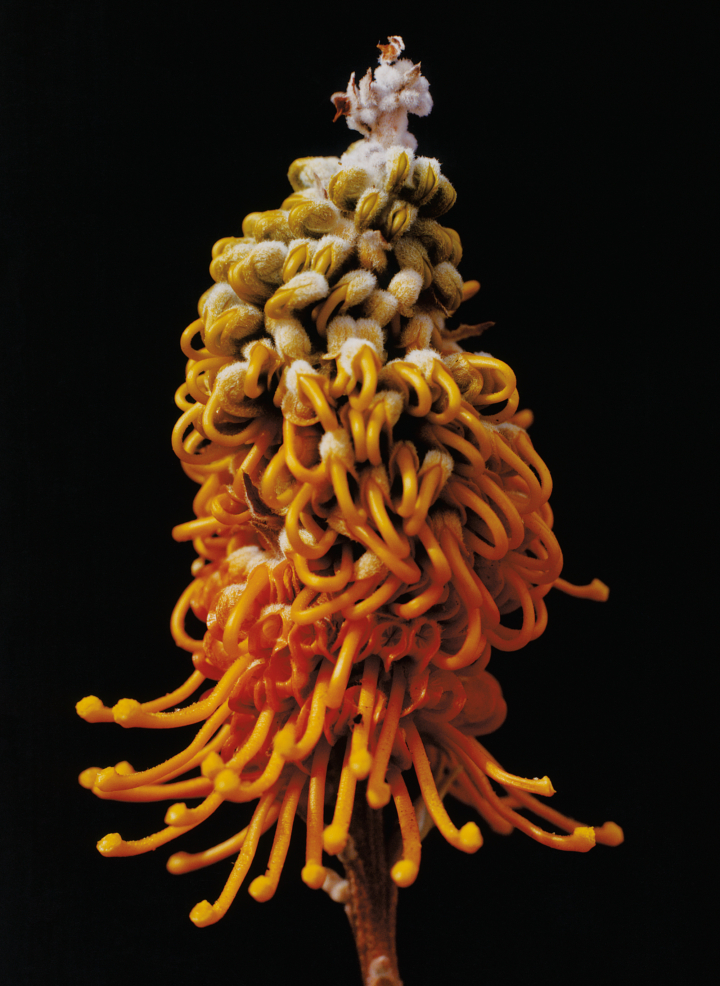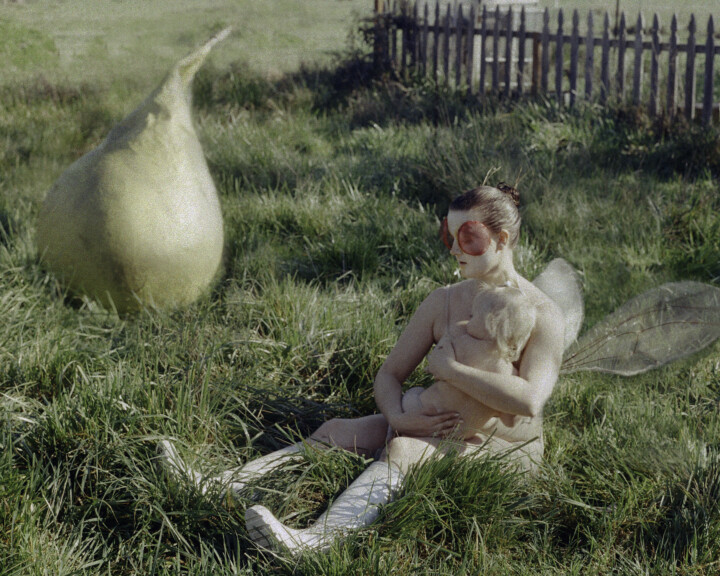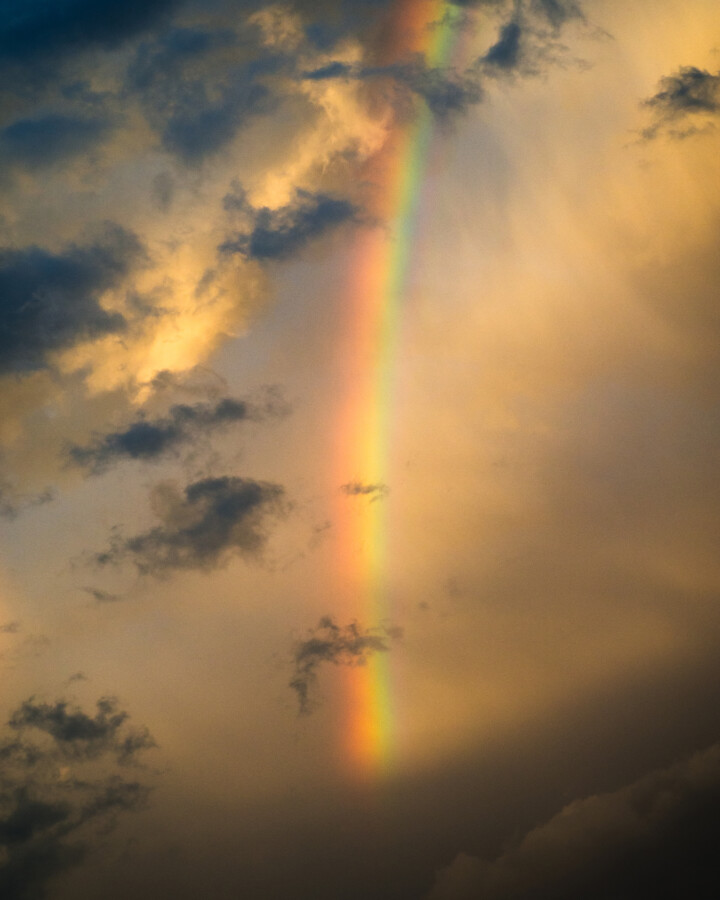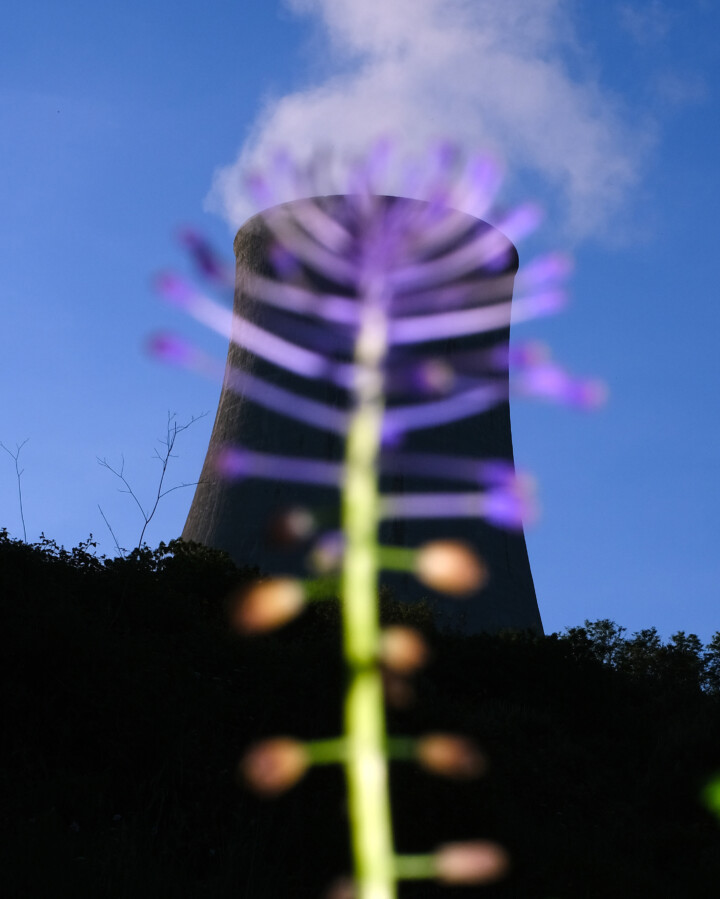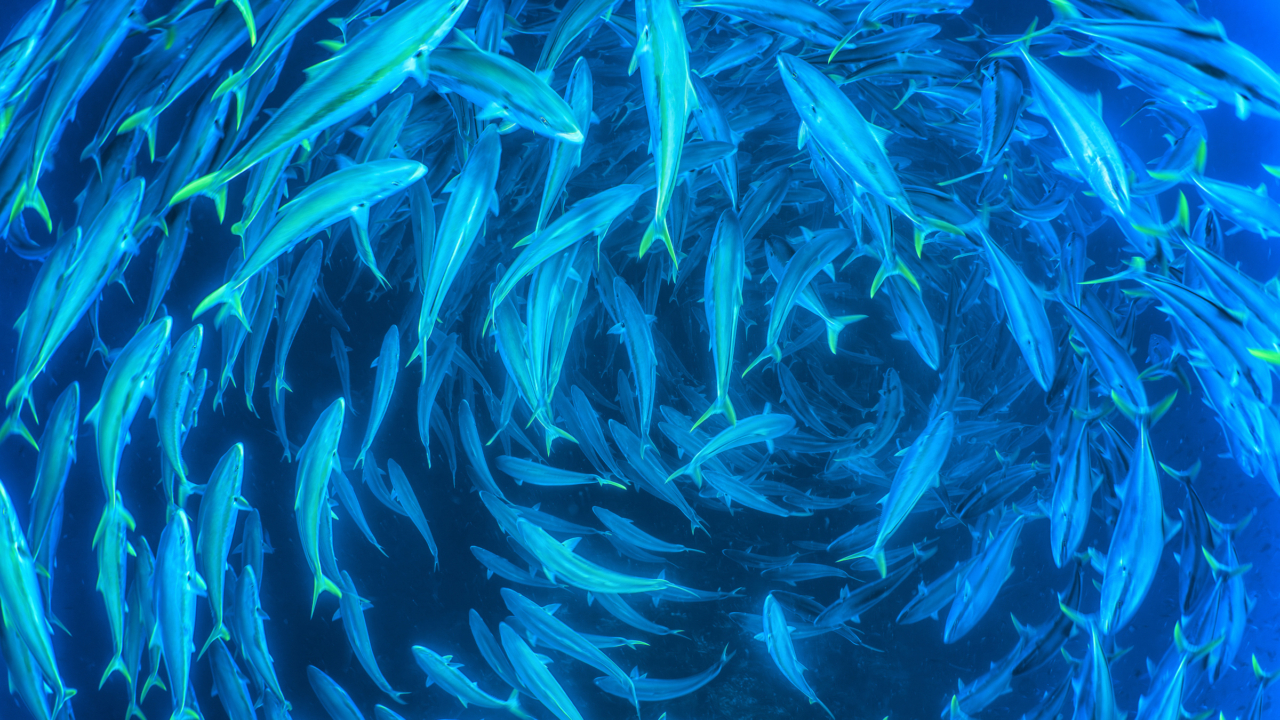
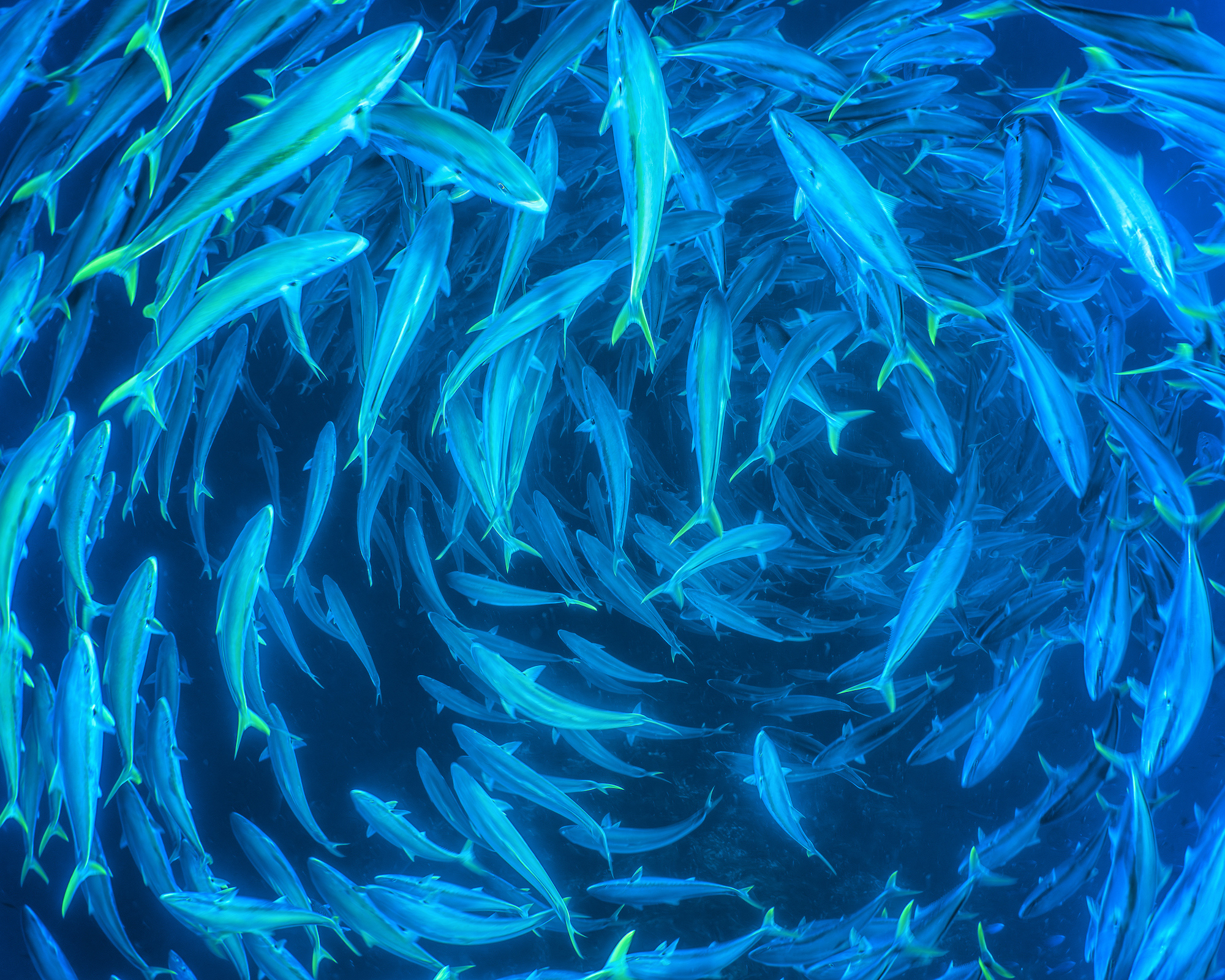
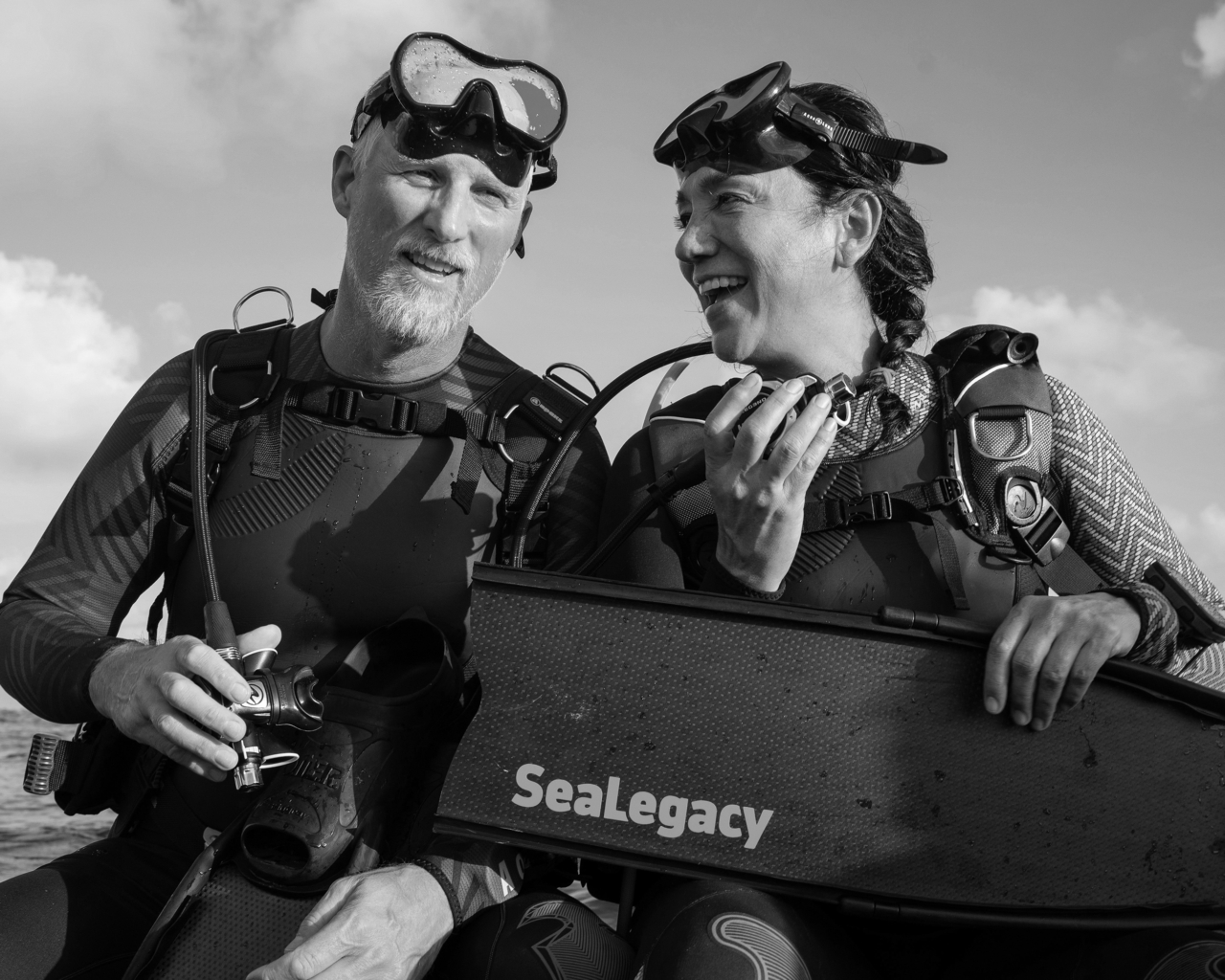
Photograph by Cristina Mittermeier / SeaLegacy
To never miss an episode of The Nature Of, be sure to follow here.
What does it cost to truly document the natural world, and why do some people keep returning even when the risk is real? In this episode of The Nature Of, Willow sits down with renowned conservation photographers Cristina Mittermeier and Paul Nicklen, whose lives and love story have unfolded at the edge of danger, from plane crashes and near-drownings to an encounter with a whale that nearly turned fatal. Together, they reflect on what it means to document the natural world with intimacy rather than distance, and why storytelling, vulnerability, and reverence are essential tools in the fight for our planet. This is a conversation about risk, devotion, and hope, about falling in love with each other, with the ocean, and with a living world worth protecting.
Cristina “Mitty” Mittermeier is a renowned photographic artist whose work sits at the confluence of beauty, advocacy, and storytelling. With a background in marine biology and over three decades behind the lens, she has created a singular body of work that illuminates the interdependence of humanity and the natural world.
Her photographs—intimate, arresting, and often tinged with quiet reverence—have been exhibited in museums and galleries across five continents, including shows at Fotografiska (Stockholm), the Galleria d’Italia (Turin), and the Natural History Museum in London. Her work has also been featured at prestigious art fairs such as Intersect Aspen, Paris Photo, Art Miami, and Photo London, where her prints continue to captivate collectors and curators alike.
Cristina Mittermeier’s artistry has earned her numerous international accolades. In 2024, she was among the National Geographic Explorers recognized with a National News & Documentary Emmy Award for her photographic work on The Last Ice, a landmark film by Dr. Enric Sala that highlights Inuit sovereignty and the impacts of climate change in the Arctic. In 2025, she received a second Emmy—shared with her partner Paul Nicklen—for their work in Photographer, a documentary directed by Chai Vasarhelyi and Jimmy Chin. That same year, she was named Artist of the Year by the prestigious Intersect Art and Design Fair in Aspen. Mittermeier is also a recipient of the Smithsonian Conservation Photographer of the Year Award, the Sylvia Earle Medal, and Travel + Leisure’s Global Vision Award, and the Wings, Women of Discovery award. She has also twice been on the list of 100 Latinos Most Dedicated to Climate Action, and has been named one of National Geographic’s Adventurers of the Year. As a Sony Artisan of Imagery and member of Rolex’s Perpetual Planet initiative, she continues to redefine what it means to be an artist in service of the planet.
A co-founder of the International League of Conservation Photographers and SeaLegacy, Mittermeier has not only elevated conservation photography into the realm of fine art but has also reimagined its purpose: to stir emotion, spark action, and reawaken humanity’s sense of belonging on Earth.
Paul Nicklen is a Canadian photographer, filmmaker, and marine biologist whose work lives at the powerful crossroads of art, science, and conservation. For more than three decades, he has turned his lens toward the wildest and most fragile corners of our planet, creating images that are as intimate as they are arresting—photographs that stir emotion and demand urgency.
Renowned for both their beauty and their technical mastery, Nicklen’s photographs transport viewers onto polar ice floes, into remote coastal communities, and beneath the surface of the sea. His work has been exhibited in galleries and museums across five continents—including C Parker Gallery (Greenwich), Hilton Asmus Contemporary (Chicago), Lyons Gallery (Australia), Galerie Gadcollection (Paris), Eisele Gallery (Cincinnati), and Fineart Oslo—and collected by cultural icons, heads of state, and even royalty.
His artistry and activism have earned him some of the most coveted honors in photography and conservation. In 2025, he and his partner Cristina Mittermeier shared a National News & Documentary Emmy Award for Photographer, a documentary directed by Academy Award winners Chai Vasarhelyi and Jimmy Chin. Over the course of his career, he has received more than 30 of the field’s highest distinctions, from Wildlife Photographer of the Year to the World Press Photo Award for Photojournalism. In 2019, he was inducted into the International Photography Hall of Fame as its youngest living member, the same year his alma mater, the University of Victoria, awarded him an honorary PhD. He later received an honorary Doctor of Fine Arts from Simon Fraser University in 2022, and is a member of the Order of Canada, the nation’s highest civilian honor.
A Sony Artisan of Imagery and member of Rolex’s Perpetual Planet initiative, Nicklen has built a career on the belief that images can spark movements. In 2014, he co-founded the nonprofit SeaLegacy, dedicated to igniting global action through powerful ocean storytelling. For Nicklen, awards and accolades are not the end goal—they are mile markers along a single, relentless pursuit: to create the one image that changes everything, inspiring humanity to act and helping safeguard life on Earth for generations to come.
Cristina Mittermeier
I feel like every time we get in the water, we are signing a contract that says “I’m willing to die”.
Narration
I am so deeply moved by people who put themselves in extraordinary circumstances to document the wonders of our world before they disappear. That is Cristina Mittermeier and Paul Nicklen. They are amazing nature photographers and either one of them would’ve made an incredible guest alone on this show. But seeing as they are also romantic partners, I thought I would invite them both, and I’m so happy that they said yes. The love that they have for this planet as well as each other is infectious, and it’s that love that gets them through when times get tough.
Paul Nicklen
I don’t know if you’ve met Cristina, but she does not let me get down for very long. She’s like, and it’s not usually like, “Oh my honey, let me hold you. Here’s some hot tea.” And so she’s like, “Suck it up, big boy. We got to get back to work. We got work ahead of us.”
Narration
I’m Willow Defebaugh, and this is The Nature Of, where we look to the nature of our world for wisdom and ideas that change the way we live. This week, I’m sitting down with Cristina Mittermeier and Paul Nicklen to hear stories of hope and reverence from the depths of the ocean to the ends of the earth.
Willow Defebaugh
Cristina and Paul, you have spent your lives documenting some of the most extraordinary ecosystems on this planet, and we are going to dive into all of it. But before we do, I wanted to invite you to share how your mutual love of documenting the natural world brought you together. Tell us your love story.
Cristina
Paul is good at telling it.
Paul
Go ahead, honey. Take it away.
Cristina
So the first time I met Paul, he was on stage in the Grosvenor Auditorium at National Geographic, which is such an iconic place for photographers. And Paul was presenting his story on his encounter with the Leopard seal, which was a real love story. And I was just amazed by what a good speaker he was, and just how funny—Canadian, down to earth—and just the story of the leopard seal and the connection to animals. And I was like, wow. And there was a wrinkle. He was married to somebody else. So that was that.
Paul
And so were you. But what happened was the next day they had the big National Geographic photographers meeting and Cristina was there and there was only one chair left. And she goes, “Please sit next to me and flirt with me.” First words out of her mouth. And I’m sort of a short circuit in my brain and I’m pretty intimidated and a little bit shy. She’s absolutely stunning, wearing a beautiful Mexican sort of Spanish dress and all her jewelry. And look how beautiful she is. And I was just sort of overwhelmed at that moment, but we became really good friends very quickly. And it was her leadership through conservation that made me ultimately fall in love with her, but it took years of working together as professionals. And then one day I’m like, “I don’t want to be away from this woman as we fight for this planet.” So it was a three-, four-year transition from that moment on.
Cristina
So all these years later, Willow, he still has not asked me to marry him.
Paul
Maybe we’ll do that on the podcast.
Willow
OK. Well, ladies, if you’re listening, you can just say “Flirt with me.” Take it from Cristina. Okay. Can we circle back to the seal story that enamored Cristina?
Paul
2003, tragically, a scientist was taken down and killed by a leopard seal. And as somebody who’s always … I was a polar bear biologist. I worked on different animals around the world and a lot of the charismatic sort of scary animals, the grizzly bears. And I’ve been around these animals all my life and I hate it when an animal gets a bad reputation. And it was tragic that the scientist was killed, but I wanted to go down and give this animal a fair shake and get to know if it was a vicious monster that is out hunting humans or if it’s misunderstood. So my proposal was to get in the water with as many leopard seals as I could over a two-month period in Antarctica and get to know them. And it was intimidating. They are 1,000 pounds. They are 12 feet long. They are aggressively curious. They do love to pop and bite boats.
And right away, I just met this big dominant female leopard seal and she came up and thrashed this penguin against the boat and there’s blood and guts everywhere. And it was my friend, Göran Ehlmé from Sweden who’s like, “Let’s get in the water. You got to go do this. ” And so just to sort of suck up that fear and get in. And then for four days straight, she [the leopard seal] tried to feed me penguins. First, she tried to give me live penguins. Then she tried to offer me dying, weak penguins. And then at one point I had five dead penguins floating around me. And then she started to flop penguins on top of my head and she’s poking me in the ribs and in the face with her whiskers tickling me just trying to get me to eat.
And it was just to see the nurturing sort of motherly care of this animal that is so dominant, that could not figure out why I was in her hunting grounds. But the only reason could be that I was probably starving and I’m looking for food. And so the only thing that she became OCD obsessed with was getting me to eat. And so the more I refused her food, the more OCD she became and the more we sort of had this bond. But after four days of it, she got very frustrated. It was the most magical thing that’s ever happened to me in our oceans. And yeah, so that’s the story I was sharing on stage with pictures and stuff when I met Cristina for the first time.
Willow
I love this. It’s such a clear depiction of how storytelling can really shift people’s perception around more than human life. If you hadn’t taken up that assignment, then this animal would’ve just continued to be seen as a killer.
Cristina
When you think about Antarctica and just how remote it is, how beautiful, how special, how important it is for the well-being of the entire planet, and then to think that the Southern Ocean where these animals live is not protected. And so we use the story of the leopard seal as a jumping start point to advocate for more protections for Antarctica, and we’re still doing it today. We still have not achieved the goal of protecting the waters around the Antarctic Peninsula. There’s a lot of opposition from industrial fishermen and from countries that are interested in extracting minerals in these remote pristine places. So the battle continues.
Willow
And can you share a little bit more about how you see storytelling’s role in shifting the needle on conservation? And that’s so much a part of your work with Sea Legacy.
Cristina
Well, I’ve been working on this for a long time, although ever since before you were born. And it’s very clear to me that whoever tells the story wins the battles. I mean, you can see it in American politics today. He who has the microphone and is telling the story captures the world’s imagination. And in conservation, it’s always been incredibly expensive and difficult to tell the story, to the point that most of the large conservation organizations dedicate less than 5% of their overall budget to communicating—it’s just an afterthought. And I think that’s where we have lost the battle for our planet. People are just not aware, they’re not interested, they don’t find it fascinating like we do. And I think through storytelling, we can actually bring people into the conversation.
Paul
For me, I came across it by luck. I was doing these scientific stories for National Geographic, covering science, showing the data. And then finally, I think in 2007, I did this story about climate change, about the loss of sea ice and the effects it’s going to have on polar wildlife. And I went and pleaded to National Geographic. I’m like, “Let me write it. I grew up here with the Inuit. I’ve been working up here all my life and let me just do a plea to the readers of National Geographic to care about these incredibly fragile ecosystems. “
And they’re like, “Well, normally we don’t let photographers be writers.” But they said, “Fine, we’ll let you have a shot at this.” So I wrote it and I was more shocked than anyone, but it got the highest readership score of any story in the previous 10 years at National Geographic. I was shocked that this resonated. And that sort of became my then, you use powerful anecdotal storytelling to draw people into the conversation to make that connection about why these ecosystems are so important.
Cristina
But the other thing that we realized early on while working for National Geographic is for years, publications like the magazine were telling photographers, OK, your job is to be invisible. You’re there to document what’s happening and you remove yourself from the story. And when I started the International League of Conservation Photographers, I thought, we have to flip that idea on its head. And it’s the photographer as an ambassador for this thing that he or she is photographing that really engages audiences. People want to know what it feels like to be in the water with a leopard seal or with a shark or with a whale.
Paul
Cristina was the first one, really, to coin the term conservation photography, which meant before how to archive prints and museums. It was a very powerful turning point for so many of us National Geographic photographers. So that’s sort of why I really fell in love with her because she sort of took all of us lost sheep out there as journalists and she was just such a strong woman, and showing us a path forward and really making a difference through storytelling and being a part of the story. So that was a very big turning point, I think, not just for myself, but for the entire industry.
Willow
There’s such an intimacy in your photography, both of you. And I think that in some ways, that word is coming up for me because it’s kind of the antithesis to this sterile objectivity that I think whether you’re a photographer or a writer, or a scientist, it’s so baked into Western journalism and Western science, this idea that we have to be fully removed from the stories that we’re telling.
And I think, particularly as it relates to the natural world, that’s something we’re constantly questioning with Atmos because how does that contribute to this massive separation and chasm? When stories—if we really want them to reach people in such a personal way—I think they need to feel personal. They need to feel like a bridge. And I think you both embody the role of the photographer as a bridge.
Cristina
You’re right. There’s got to be a vulnerability and an intimacy that allows people to come in, because the language of science is so intimidating to most people. If you’re not a scientist, it’s impossible to read a scientific paper and understand what’s being said. But a photograph is an invitation. It really lowers the price of entry for people to engage with. I think this is the most important conversation of our lives. And so we’re trying to build that bridge.
Willow
We’ll continue on the thread of storytelling, but I did want to take a moment to just dive into both of your backgrounds and upbringing. Paul, you mentioned that you grew up alongside the Inuit, and you’ve mentioned that this was a defining chapter of your life. Can you share a little bit about how that time shaped you?
Paul
Yeah, absolutely. I was born in Saskatchewan, Southern Canada, and my family, they’re both farmers. My dad used to pick up my mom at school and his pig truck with all the hay flying out of the trucks, like real Saskatchewan farmers. But my dad became a mechanic. And then in 1972, he was offered a job to be the superintendent in this small community. So we lived at first in Iqaluit, which is the place of fish. It was a bigger town with 2,500 people in it.
And then from there, we quickly moved to a place called Kimmirut, which is Lake Harbour. It used to be called Lake Harbour back then, which had 1,190 Inuit people in it. There were three non-Inuit families living in this community. And there was no radio, obviously no computers back then. We didn’t even have a telephone. You got to call out once a year on the radio phone, like your Christmas call.
So there was really no reason to spend any time indoors. I just loved the quiet. I loved the big vistas, the landscapes. I loved the mystery of these animals and seeing ptarmigan and Arctic hares and polar bears and caribou, and then just to be able to walk across the barren lands. And it worked its way deep into me very quickly. And I knew that … And then you’re hearing all the stories. The Inuit are incredible storytellers, both through their art, through soapstone carvings, through their lithograph paintings, through oral stories, and in their writings and their drawings and their stories. And it just grabbed me by the heart. And I knew I was going to do something someday that had to do with protecting it, but I didn’t know what. So the obvious job was to become a biologist. And I was working on different species and then very quickly learned that as a scientist, we were just managing hunters’ rights.
So maximum sustainable yields, how many animals can you kill before you drive the population down? And like one population, we were working on the Bathurst caribou herd. When my last census we did there in the ‘90s, there were 500,000 Bathurst caribou herd. Now there’s 5,000 and they’re still fighting over who gets to kill the last 5,000. So we got that wrong. Everything we touched, we got wrong. And so I just wanted nothing to do with it. And I left very disgruntled and very frustrated and then began the long journey of trying to get into National Geographic and really tell these important stories. The science was important, but what we were doing it for was misaligned.
Willow
Cristina, you grew up in Mexico. Can you tell us a little bit about how your culture shaped your development as a person and also your approach to photography?
Cristina
Yeah, I think I was so lucky to be born in Mexico because I love being Mexican. And I grew up pretty much like Paul, just running outside. And there used to be cow fields and chickens. And we lived very nearby an Indigenous community in the state of Morelos, in Cuernavaca. And I grew very far away from the ocean, but my father was very good about bringing books. My brother always got amazing books of the Jack Cousteau Adventures and the National Geographic Magazine. And the girls and I, my sisters and I, got the Barbie doll coloring books, the ones that you used to cut the little dresses and put them on the … And I just thought it was so boring. So I would sneak into my brother’s bedroom and read his books when he was not looking. Eventually I stole the books and I still have them.
And I think it was the adventure of it, the description of the natural world. And thankfully, I grew up with a lot of nature around me and just fascinated by what animals are doing: just to sit quietly and watch any creature be itself just like, “What are they doing? What are they talking about?” To this day, I’m fascinated by it. So I struggled a lot with the role of being a girl in a traditional community. To this day, Mexico still has pretty defined gender roles for men and women, but my mother was a big champion of me. So when I said I want to go and become a marine biologist, my father had a fit because that was not a proper job and we had to do a lot of negotiation; and eventually, I was allowed to become an engineer—that was acceptable, and it turned out to be fisheries biology, so how to ravage and pillage the ocean.
And by the time I graduated from university, we were studying the industrial process for how to can sea turtle meat that was sold in markets in Mexico. And so I knew I didn’t want to have anything to do with that. And this is the late 1980s. And Paul, I don’t know about you, but in university, we didn’t have any courses about the environment, about sustainability. Conservation biology didn’t exist. And it was kind of frustrating that your entire university formation is about how to exploit nature. So I knew that I didn’t want to be any part of that.
Willow
It’s really staggering when you think about the fact that conservation science is so relatively new and what you’re sharing around both of you and both of your experiences, so much of the sciences were directed toward, how much can we exploit? How much can we get away with?
Cristina
To this day, to this day, the concept of maximum sustainable yield basically says, how much of this population can we extract before the population collapses? And just this year or last year in a paper, scientists said, “Oops, we got it wrong.” It turns out that animals don’t exist isolated in populations. They’re part of larger web ecosystems. And when you take one out, there might be catastrophic consequences. And we’ve seen it repeatedly over and over and over again, and yet the world refuses to acknowledge that we just can’t keep taking from nature the way we do.
Paul
I mean, the fact we’ve lost 70% of biodiversity on Earth right now, and we’re still figuring, how do we exploit it, is we’re asking all the wrong questions. We’re doing all the wrong things and we’re just driving this planet into the sixth mass extinction. So the hardest part of what we do is picking yourself up every day, knowing the news, being aware. It sucks to care, but once you start caring, there’s no going back. You have to just stay in the fight because it’s the only thing that’s cathartic in this sort of sometimes depressing, sad, demoralizing journey that we’re on. But it’s like the nice part about being a couple is that when Cristina’s down, I can pick her up. And when I’m down, which is more often than her on this journey, she picks me up all the time. So you sort of help each other stay in the fight with all these issues.
Willow
You’ve witnessed devastating ecological changes up close and up front in a way that so many people will not. How do you process that when you get back from an expedition, for example?
Cristina
Hey, Paul, you struggle way more than I do.
Paul
Yeah, I think I give myself a moment to sulk and be sad and be angry and be scared and cry. And then it’s time to crawl out of it. I mean, if you stay there, you’re not very effective as a storyteller, as a conservationist, as a warrior. We’re like war photographers. We’re on the front lines of the worst things happening to our planet. We were just working in Indonesia and you can’t even go out in the water at times because there’s too much plastic floating around our boat when we’re on anchor. And you can’t even put the dinghy in the water because the plastic: You have 300 million people flushing their diapers and all their trash into the rivers and the ocean. And so you just get angry and scared; but then you look around you and there’s so many people doing good things, and all of a sudden somebody just made an advancement with the government in Asia.
Now you have hundreds of volunteers working with, like, Sungai Watch picking up the plastic. Now they’re turning it into furniture. Now people are getting employed and they’re—you just sort of keep grabbing onto these positive threads and they keep inspiring you to keep going. So you allow yourself to get down. I don’t know if you’ve met Cristina, but she does not let me get down for very long. And it’s not usually like, “Oh my honey, let me hold you. Here’s some hot tea.” She’s like, “Suck it up, big boy. We got to get back to work. We got work ahead of us. Yeah, you got a Zoom call. We’re talking about the Antarctic and Southern Coalition right now. We got to go create this MPA. We got to do this.” So she’s always rallying everybody around her and I’m just one of her soldiers that she keeps in the fight. So yeah.
Cristina
I just love really that there’s a role for everybody to play. And what I say to people, Willow, is stop asking me for permission to do something. A lot of people will sit in the audience and say, “What can I do? ” Well, you tell me, what can you do? Can you organize some recycling or some trash pickup or just host a lecture? There’s so many things that any one individual can do. Paul and I were learning about the World War II heroes that helped win the war, even though they were not part of the military, they were not part of the intelligence community. They were just regular people. They’re called glorious amateurs who stepped up to the plate to do whatever they could in any capacity to help win the war. And that’s what we’re calling on everybody. Let’s be the glorious amateurs that just do whatever we can and just step up to it.
Willow
The glorious amateurs. I love that so much because there’s some kind of imaginary barrier that exists where people feel like they have to be experts in conservation or climate work or environmental sciences in order to get involved. And at Atmos, we’re very passionate about breaking down that barrier and just helping people see that we need every single person.
Cristina
Yeah. And how cool it is to wear a superhero suit? Everybody has one. You look beautiful when you put on a beautiful dress and get up on stage and that’s your superhero suit. But for Poland, for me, it might be wearing a wetsuit, even at almost 60 and a little on the heavier side. It doesn’t matter. It’s the armor you put on in the morning to say, “I am for this planet.”
Willow
Whether it’s a wetsuit or a corset.
Cristina
Whatever.
Paul
Exactly. We really have believed all along that the power of the people’s greater than the people in power. And when you hear that and you’re like, “We just have to keep galvanizing a global movement.”
Cristina
Well, you inspired both of us greatly with your metaphor of sitting on the shores of the coast of British Columbia at night around the campfire and drinking. And Willow, tell us the story because I thought it was such a beautiful way to talk about activism.
Willow
So I was in British Columbia recently and I was on Cortes Island, and every night I was with a group of scientists and artists and writers. And every night we would go down to the water and we would experience bioluminescence. And what I loved so much about it was that when you first look out into the water, it is just inky, black, complete darkness everywhere you look. And when you actually wade into the water and you create movement, then all of a sudden the bioluminescence starts to come to life and you create light. And that was such an important lesson for me because when we stand still, when we are on the shores of hopelessness, it feels like there is only darkness everywhere we look. But when we actually step forward in action surrounded by other people, then we create the light. And that’s how we step past the constantly asking, “Well, what can I do? What should I do?” Just get in the water.
And I think the other thing that it taught me is just also that it creates so much beauty. That is the most beautiful thing, is being in action with other people. And I would go down to the water every single night because I loved seeing people’s faces for the first time when they realized that their movement was what was creating it in collaboration with these microscopic beings in the water.
Cristina
Oh, so beautiful. That’s very inspiring and so true.
Willow
I want to spend a little time speaking about the fact that you both have new books and they both are titled two of my favorite words, and I want to give you both a chance to speak about them. Cristina, your book is called Hope.
Cristina
I started thinking about this book in one of those dark moments when I was thinking everything is lost. And I thought, no, I need to build myself an emotional life raft that I can hold onto. And I made so many quotes of how I feel about hope throughout this book, and the people and the wildlife that I photographed that are still out there, it gives me so much hope to know that they still exist. And if people like me, people like us get up in the morning to fight for it, we can still protect it. And it went on to be a very successful publication now on its third reprint. And Paul’s about to publish his book using the same methodology, just getting our followers to become part of the story.
Paul
Yeah. And my book, Reverence, is something I’ve always wanted to talk about, but I’ve been shy to talk about it. But when I see the craziness of the world: I grew up Catholic, I grew up an altar boy, and my grandma used to pay me serious money when I was 7 years old to learn all my Hail Marys and Our Fathers. And I sort of always tried to imagine this world that exists after life on earth. Where do we go if we do everything right while we’re here and how awful is hell? And meanwhile, every day I’m surrounded by the bioluminescence. I’ve been swimming with bioluminescence and there’s nothing more beautiful, or to walk in the Great Bear Rainforest, and to see a beautiful white spirit bear come out under these old-growth trees that are 200 feet tall, or to walk across the plains of Torres del Paine against these mountains with this puma at your feet or to see a polar bear.
So the reverence I have for nature and to realize that for me, heaven is here and now. It doesn’t get any more beautiful and any more powerful than what’s in front of us now. And the fact that we are squandering and killing this beautiful planet of ours, waiting for this next life, when you realize that you’re living here and now in heaven. It doesn’t get any better than this. When you spend time in nature and you look an animal in the eye, or you stand there on the side of a river full of thousands of salmon, and to hear the ravens and the wolves howling in the forest, you can’t imagine anything more powerful and beautiful than what we have in front of us. And we have to fight to protect this. And this is the reverence I have for this planet right now.
Willow
I couldn’t agree more. “Reverence” is actually the title of the first chapter of my book and because that word is just, I think it has to be the beginning because I think if we really want to change the world, we have to change people’s worldviews. And spirituality is kind of this very loaded word, largely due to religion, but it’s essentially just something that comes down to our worldview and how we see life and this experience that we’re part of.
And, I think the more time you spend embedded in the natural world and studying the natural world, it is so awe-inspiring. And I think that has more of a power to shift people than a statistic or a fact or a figure. And both of your images really, really capture that. And that reverence also inspires hope because you see how much resilience the natural world is capable of. You see what people are capable of when we actually get in the water. So I love that you focused on these two words.
Paul
Oh, thank you.
Cristina
We do this work because we want to live on a planet that is full of wildlife, that is full of Indigenous knowledge, where everybody has equal rights and everybody’s welcome and included, and where a handful of people are not in charge of every decision on everybody else. So that’s the planet I would like to live in. And I’m going to manifest that destiny with my work every day.
Willow
Whether it’s deep-sea diving or spending time at the poles, are there ever any moments where you feel really afraid on assignment?
Paul
You’re never afraid, but you’re focused. And I’ve crashed two airplanes, but when I crashed my second airplane, I had left the wheels down on my floats. And at 70 miles an hour, I ended upside down in a lake, an Arctic lake, full of water in the cockpit, and it’s a 99% fatality rate, but we’ve had so many scary moments underwater that you’re like, “OK, I need to focus through this right now and I need to use whatever lessons I’ve had in life to get through this,” or you don’t. And I think what’s neat about the work we do is the worse it gets, the scarier it gets, the calmer you get, the more focused you get. And we’ve run out of air underwater. We got caught in a big down current last year in New Zealand where there was a big great white shark around. It’s so funny.
When I first met Cristina, I was on lecture tour and I was so proud and I just spoke to 2,800 people at the Benaroya Hall and I got up on stage and I had some nice stories, but it was mostly, “I nearly died here and I did this and this bad thing happened to me, but I’m a hero.” And I got off stage and I was like, “Did you like my talk?” And I was so proud. She goes, “Do you really need to spend an hour telling everybody how big your balls are?” And I was devastated, but she was right. And now the stories are much more focused on, of course you’ve had those moments, but you don’t really focus on those. You’re just so grateful for having the chance to do this work, to tell these stories, to connect with global audiences, to galvanize a movement, that that’s so much more rewarding than sort of … But yeah, we have had some moments, but you just get focused.
Cristina
I’ll tell you what, I mean, you know that if you are not a little scared, if you are not a little uncomfortable, you’re probably not in the right place. And we both have been lost at sea when you come up from a dive and all of a sudden there’s no boat there and you’re drifting alone wondering what’s going to happen next. And then like Paul said, you focus, you find solutions and you get rescued: miraculous. Or was it last year, Paul, or the year before that, that we both were—it’s not an attack from a right whale, but put in our place by a solid right whale who said, “You’re too close, find your boundaries.” And it’s terrifying when such a big animal gets curious or gets assertive with you.
Paul
Well, both those cases with the southern right whales, they were curious about us. And we’re just sitting there in the ocean and this calf who happens to be with Cristina, this calf was a young calf, but it’s still probably 10,000 pounds, it wanted to go play with her. So it came shooting over her. And the mother, she doesn’t have hands, so she’s trying to control her calf and decided that she couldn’t control her calf. So the only way to—I could see her loading up her tail and her tail weighs more than a suburban pickup truck, weighs more than a vehicle. And she’s got this 20-foot-wide tail, and she’s loading it up and I could see her cocking—Cristina’s watching the calf and she throws her tail at Cristina. I grabbed her and I yelled, “Duck!” and she put her head underwater and the tail went shooting—it would’ve taken her head off.
And then that was it. But the mom’s just like, that’s her just saying, “Hey, I can’t control my kids.” So in her world it’s probably a very minor moment, but for Cristina, it could have been death. And then I had a subadult 35-foot-long southern right whale who decided that it was going to come and play with me. And it did not realize how useless I am in the water. So I freedove down. It came toward me and it wanted to play. It was probably used to playing with dolphins. And she just came up and rammed me. And all of a sudden it pushed me down with her chin and she’s trying to push me toward the sand and I’m trying to get some air. So I tried to swim up and she hit me down again. And then she hit me with her peck, which is, again, the size of a hood of a car.
Yeah. So those are moments where again, you’re craving air, you’re pushed down toward the bottom, and you got to just sort of keep your calm. It’s like almost everything that kills divers is panic.
Cristina
It’s also to say that there’s a craze of selfish people wanting to be photographed with whales and with dolphins. And these are wild animals that need space. And I mean, if the story serves to say anything, is like, you could get really hurt. So give animals space, don’t chase them and certainly pay attention to what they’re doing because they’re individuals. And sometimes they want to play. Sometimes they’re having a bad day. Sometimes they just have no patience for humans and it can end up poorly.
Paul
And we have to let the animals always dictate the encounter. There’s nothing worse than a stressed animal. That’s not why we do this work. We do it because we really want to give them a voice, put their issues in—we use charismatic megafauna to elevate their issues that are affecting their habitat and their ecosystem. So you need a calm, relaxed, happy animal. And so by just spending quiet, gentle time with these animals, and then let them dictate the encounter, you have these really powerful spiritual moments in nature that really, it comes through in the photography, these intimate, intimate moments.
Willow
And they sound deeply humbling, too.
Paul
Yeah. Yeah, definitely.
Cristina
One last thought, the work that we do is humbling for sure. And I feel like every time we get in the water, we are signing a contract that says, “I’m willing to die,” because it’s so out of your hands. The ocean is such a powerful force and animals, they don’t have written contracts on how to behave. And it’s a lot to ask a creature to moderate its emotions when you’re in the water. So if it’s the way we go, it’s the way we go.
Paul
But it’s amazing just on social media, when you watch—Cristina mentioned this selfie craze that’s going on with people who are so ignorant and uneducated and unaware walking up to wild animals with their little selfie sticks, whether it’s a bison or a bear or whatever it is. And you’re just like, “My God, animals are forgiving.” And yet we vilify them when we’re scared of them and we hate wolves and we run them down and we hate bears and we hate—We’re such a scared species and we hate anything that we’re scared of.
And yet you watch these animals time and time, again, just forgive us for our ignorance and let us off the hook. And it’s unbelievable. People are like, “Aren’t you scared of bears?” I mean, I’ve seen 3,000 polar bears, 2,000 grizzly bears, 1,000 black bears, and I’ve never had a scary moment. And if there ever was a moment that was a little bit off, it’s because I messed up. I would let my guard down or I wasn’t paying attention or I got too close, but it’s just these animals are so forgiving. It’s unbelievable.
Willow
OK. So we have multiple crashed planes, almost drowning in a cockpit. We have getting caught in an undercurrent, and there being a great white shark. We have Cristina almost being decapitated. We have running out of oxygen. You mentioned that panic is the thing that really kills divers. So I’m thinking, in this moment, these kind of anxiety-inducing times, what wisdom do you have to share about overcoming anxiety and panic?
Cristina
God, anxiety is such an epidemic. And I, again, think that the antidote to anxiety is action. And if you don’t want to feel fearful and anxious, you have to get up and do something. And it almost doesn’t matter what it is. Write a letter, pick up the phone, call a senator, go protest, march, talk to a neighbor. Any kind of action is an antidote to anxiety, and recoiling into ourselves and into social media is probably the worst thing we can do.
Paul
Because we’re free divers, we do a lot of breath hold work and we free dive down to decent depths, and you’re spending time down there with sperm whales and blue whales. And to train for that is twice a day, we’ll do some breath training and just breathe in for four seconds and then out for eight. And you realize very quickly how it takes you from your busy brain. And it’s amazing when you calm yourself, how everything becomes very clear around you and your path forward becomes clear. And then all of a sudden, you’re on this beautiful journey and you’re making a difference in the world. And nothing feels as good as making a difference and being part of a bigger movement, a bigger community to advance the health of our planet.
Willow
OK. Final question. How has your partnership deepened your understanding of what it means to love not just each other, but also the planet?
Cristina
I’m going to say that we both had these first marriages and a lot of people are caught in a first marriage where you’re learning how to be a good partner and you make a lot of mistakes. And for me, I was married for 20, 21 years to somebody who was not the right partner for me. So when I met Paul and I had this coming together of not just the souls and the bodies, all of the exciting things about being in love, but also somebody with a shared purpose, somebody who understands exactly why I have to get on an airplane and go somewhere—I need to do this work. I have no choice. It’s so rewarding. And I think for photographers, specifically, it’s a very lonely journey. So I’m every day grateful that I get to share this with Paul.
And I know that I’m going to spend the rest of my life doing it with him and it’s the best thing.
Paul
She comes into this relationship and this journey we are on very much in service to the journey that we’re doing together. And it really sort of was a culture shock to me because I come from a world of tit-for-tat relationships. I cook the dinner, you do the dishes, I do that. And it’s all of a sudden, here’s this woman who’s giving everything to me and throwing herself at our common goal in this journey. So all of a sudden, you wake up one day and you’re like, “I got to give back to this person.” And also when you start to wake up and you wait, your first question is, “How do I make her day better? How am I in service to this person, this partner in my life? How do we have this common goal of making this a better planet together? How do we live a life of purpose and passion?” And to have this for me has been the most beautiful gift to just always think about, how do you give back.
Cristina
But also, I don’t care if you wake up alone or with somebody, but just dedicate the first five minutes of your day to share some gratitude, to do some affirmations about the reasons why you’re together and the purpose of the day instead of reaching for your phone and the news and the social media fix, because it changes the narrative of your day in such a powerful way. And yeah, every day I get to say to Paul, “I’m really grateful that I get to spend the rest of my life with you.”
Willow
Love is what teaches us to get up in the morning and be of service and to ask that question of, how can I make the world better today? Not just how can I make the life of this person better today? And I love what you’re pointing to, Paul, around the shift from a culture of sort of extractive exchange of giving with the expectation of receiving versus just giving with your whole heart. And in doing that, of course you will be fed in return.
Cristina
Same to you, Willow. I mean, you show up here with such articulate, beautiful questions and you just made our day and such a joy to be working with you.
Willow
Well, likewise, and maybe next time you’re on the show, Paul, you can prepare your proposal.
Paul
Maybe. Next time.
Willow
Stay tuned for part two.
Narration
Most of us don’t often find ourselves nearly drowning in a cockpit in the Arctic or almost getting decapitated by a whale in the middle of the ocean, but I think we all experience moments of overwhelm, particularly as it relates to the state of our world. I know that for me personally, in those moments, it’s my relationships that get me through. So in walking away from this episode, I invite you to think about who the people are in your life, whether it’s a partner or a friend or a colleague, that you can lean on and turn to when you feel overwhelmed, and also what it might look like for you to place love more directly at the center of your work and the way you move through the world.
The Nature Of is an Atmos podcast produced by Jesse Baker and Eric Newsom of Magnificent Noise. Our production staff includes Emmanuel Hapsis and Sabrina Farhi. Our sound designer is Kristen Mueller. Our executive producers are me, Willow Defebaugh, Theresa Perez, Jake Sargent, and Eric Newsom. Atmos is a nonprofit that seeks to reenchant people with our shared humanity and the earth through creative storytelling. To support our work or this podcast, see our show notes or visit atmos.earth/biome. That’s A-T-M-O-S dot earth, slash B-I-O-M-E. I’m your host, Willow Defebaugh, and this is The Nature Of.
Join our membership community. Support our work, receive a complimentary subscription to Atmos Magazine, and more.
Cristina Mittermeier and Paul Nicklen: A Love Story for the Planet