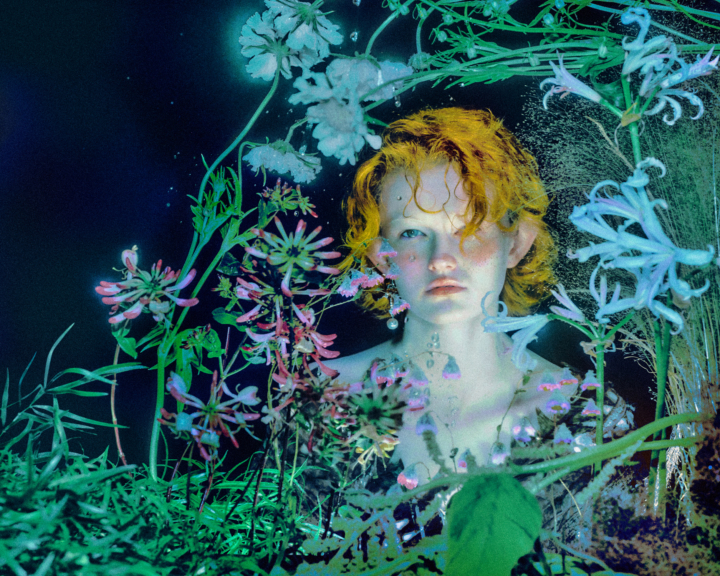
Words by Megan Doyle
photographs by Dafy Hagai
styling by Flora Huddart
Peat bogs are known for their remarkable capacity for preservation.
These marshy wetlands—which cover just 3% to 4% of the planet’s surface yet store 40% of its carbon—form dark, deep peat layers that can act as time capsules for “bog bodies,” well-preserved human remains periodically unearthed across Northern Europe. Some bog bodies date as far back as the Bronze Age, around 4,000 years ago, and are often found with skin, hair, internal organs, and clothing intact. The lack of oxygen in peat slows the bacteria that would otherwise cause decomposition, while sphagnum moss helps create a highly acidic environment that can preserve organic matter for millennia.
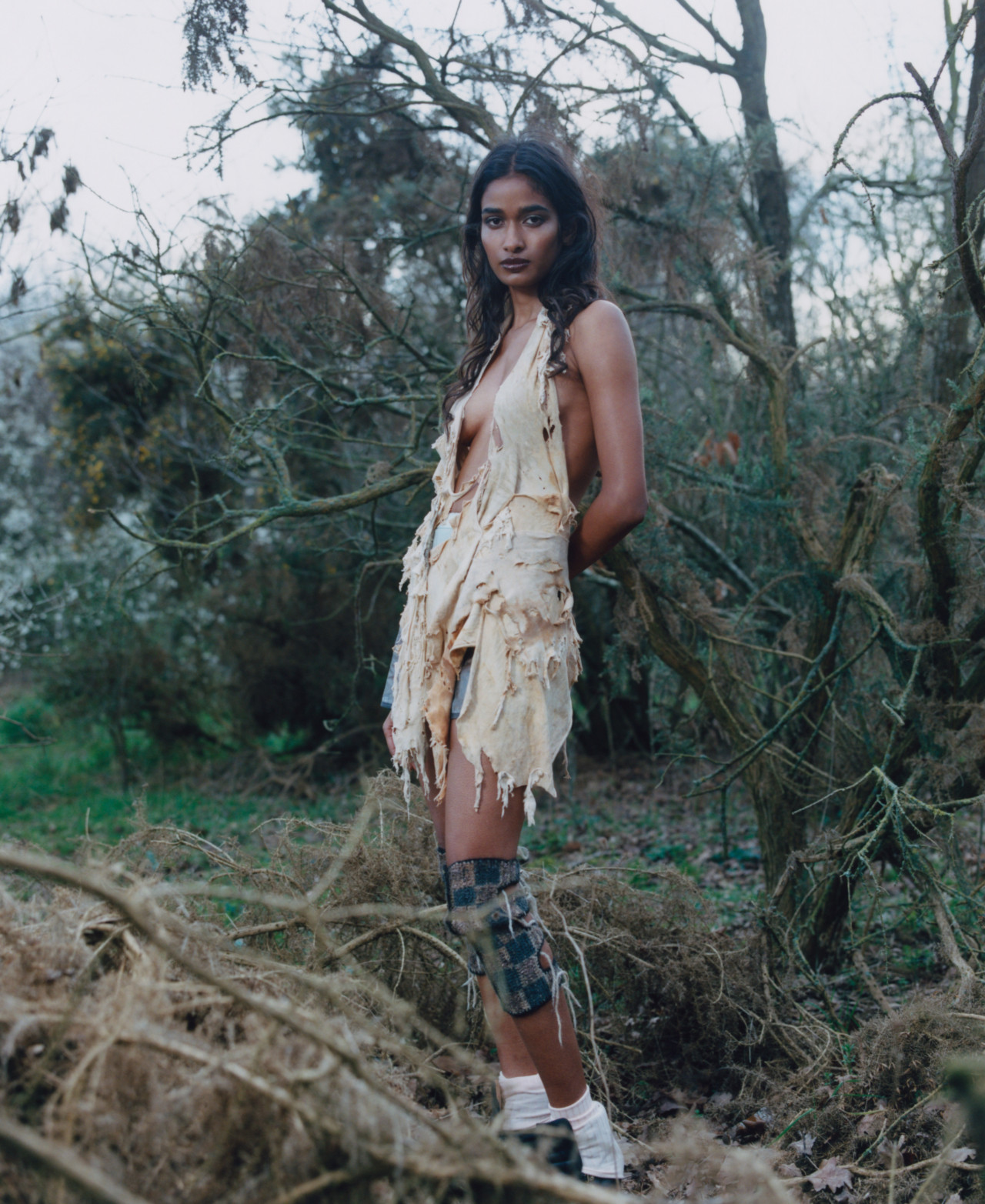
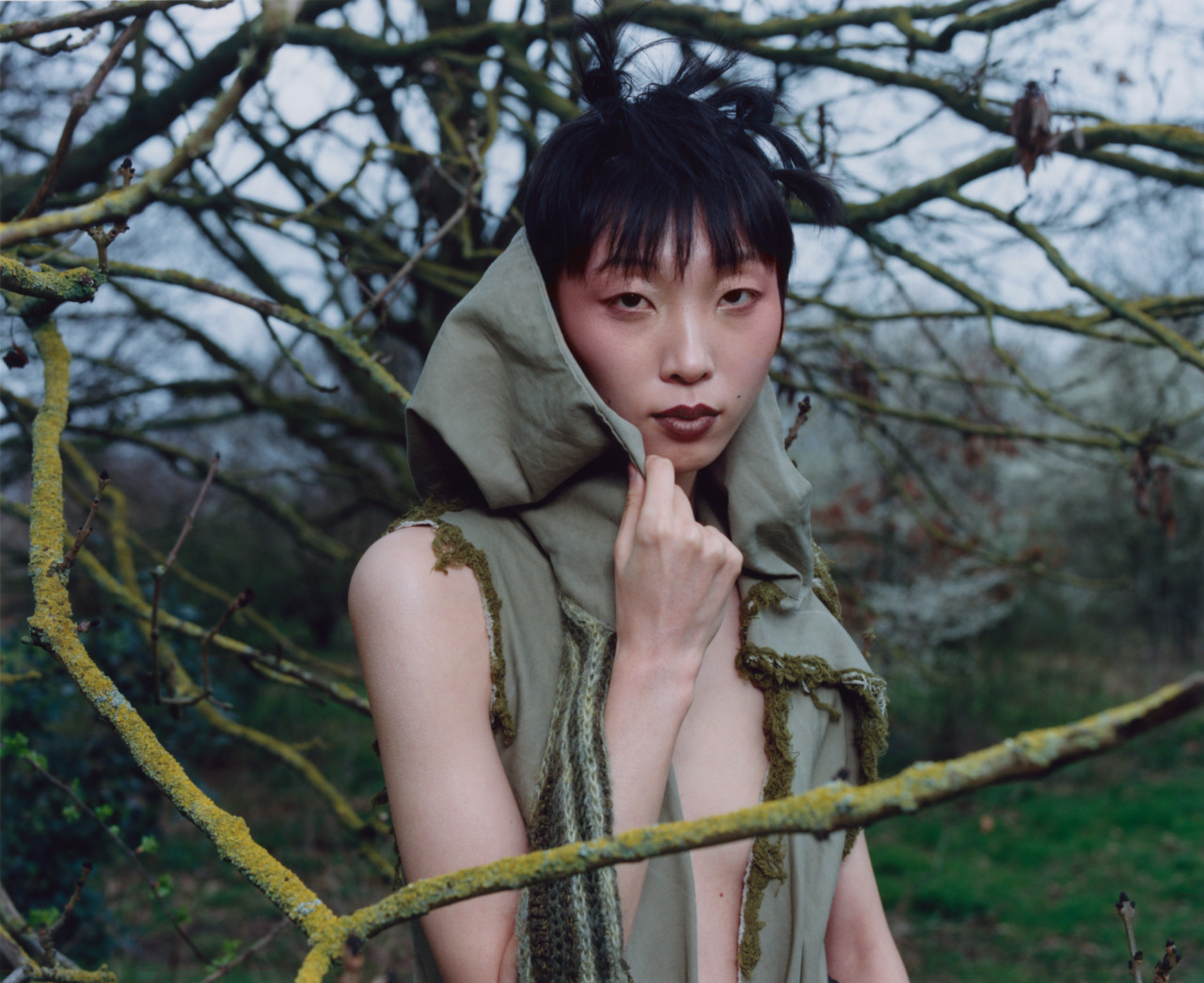
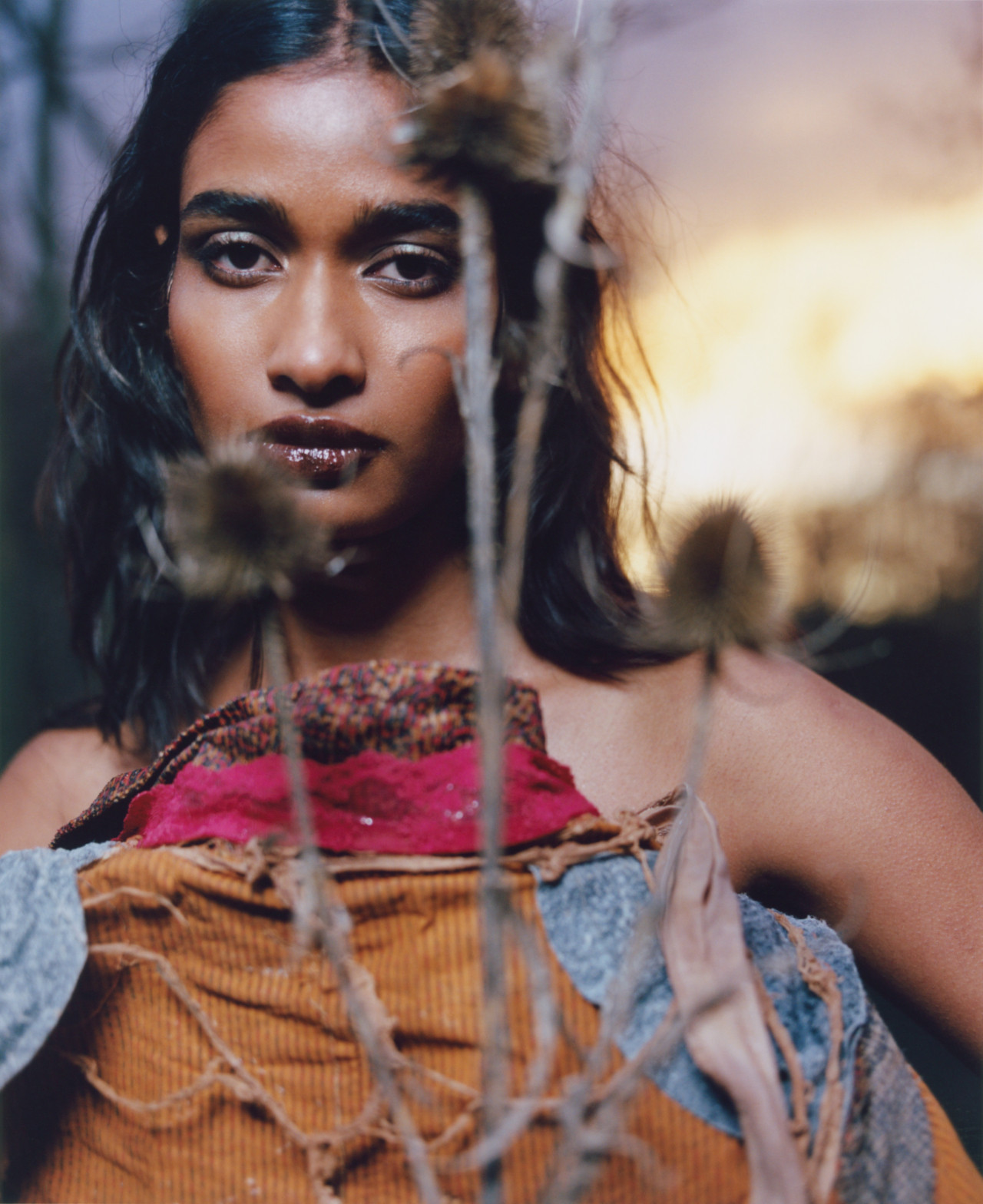
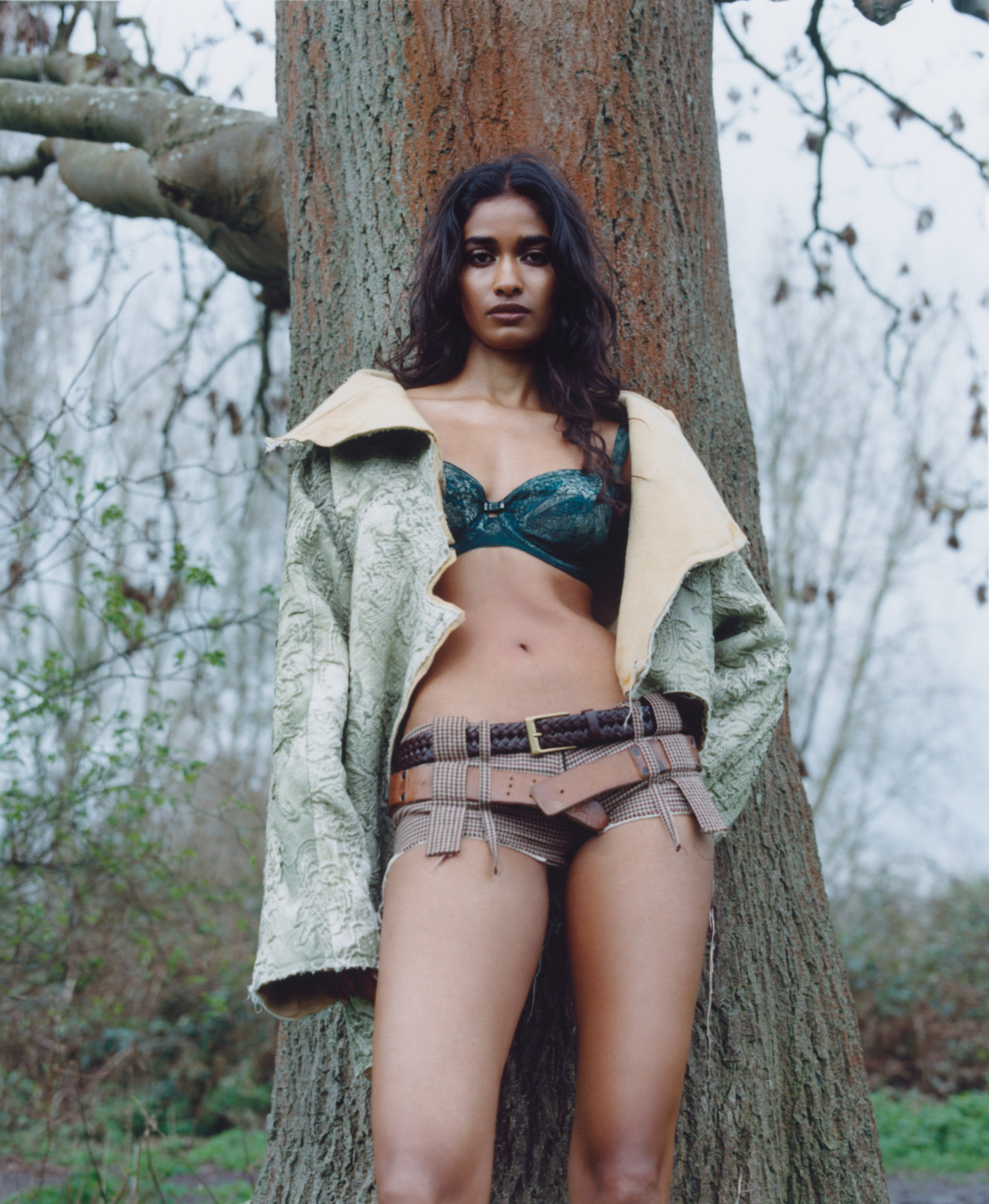
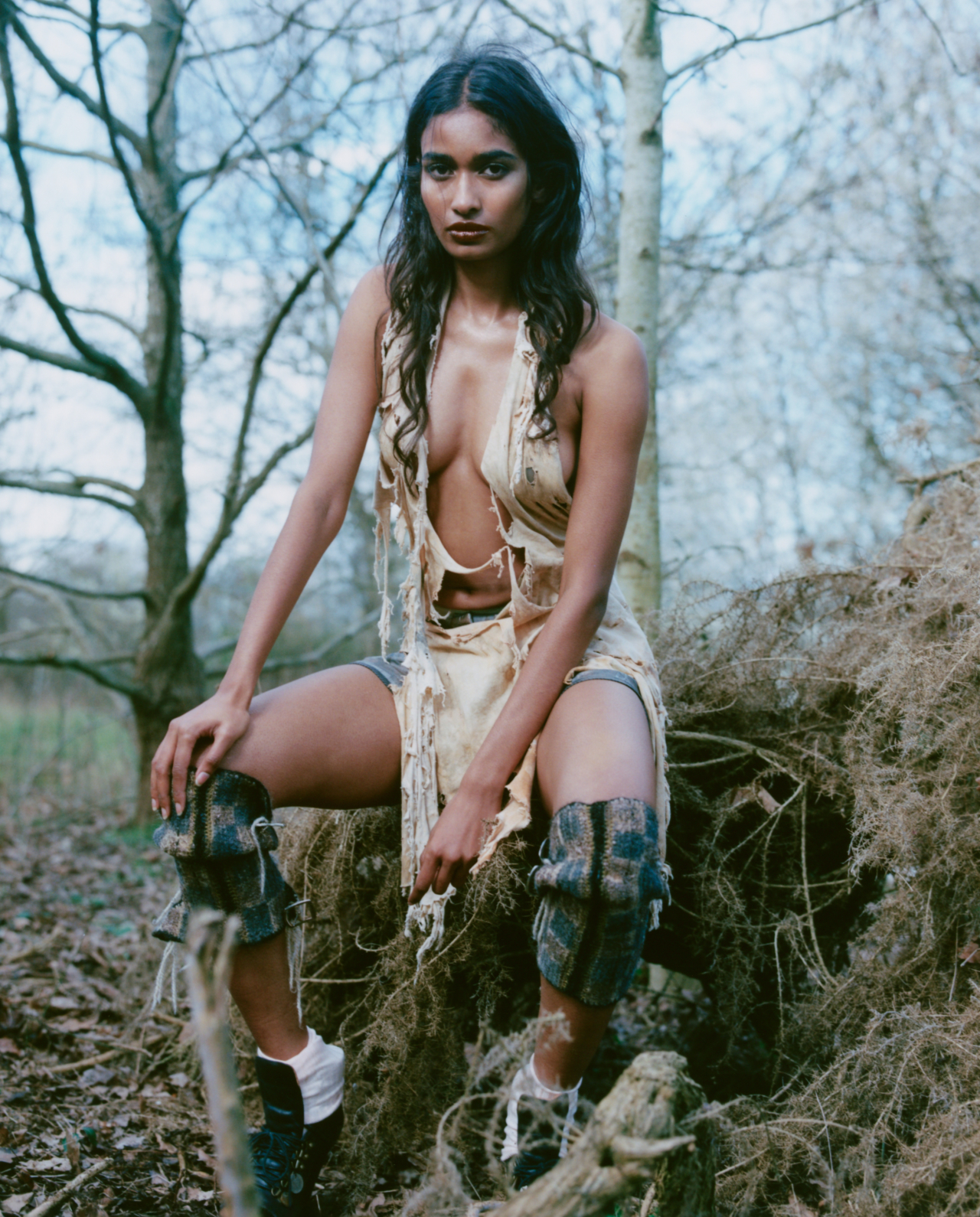
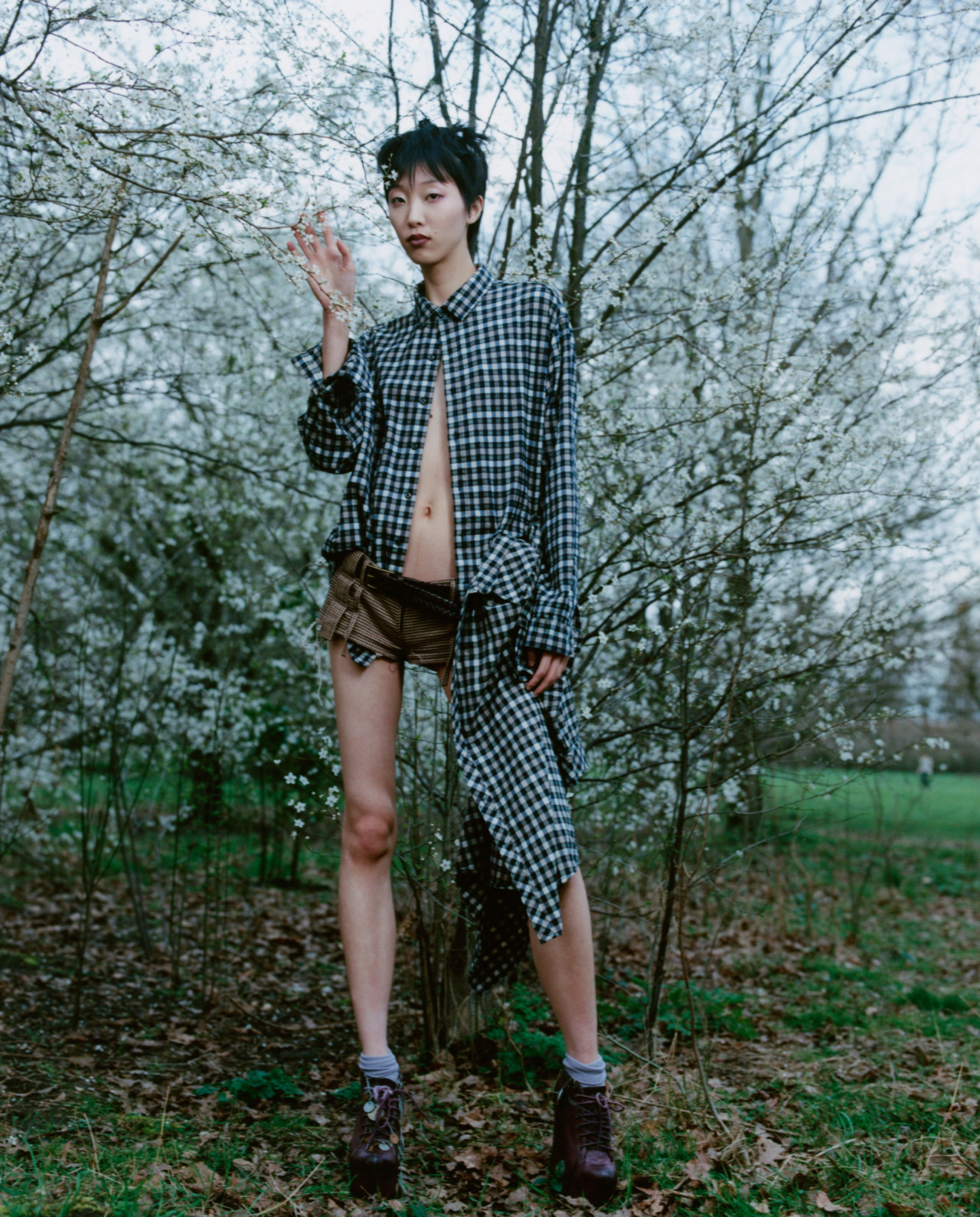
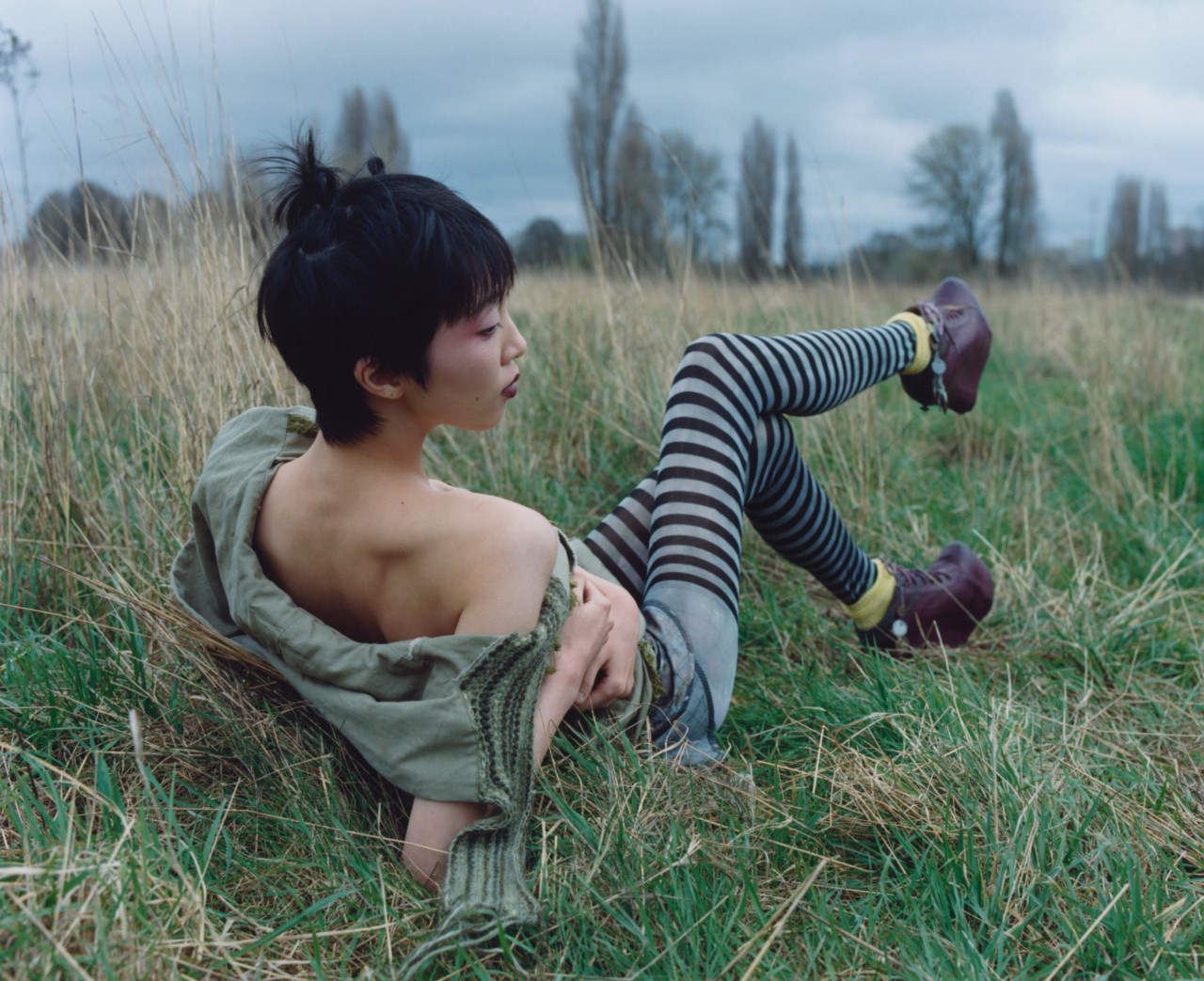
Today, a small group of clothing makers is using bogs to test what happens when textiles meet this unique biological landscape, shaped in equal parts by preservation and decay. These designers push against the fashion industry’s overextractive reliance on natural resources, offering a new vision of pieces made in collaboration with nature that embrace uncertainty, dive headfirst into mud, mess, and mistakes, and relinquish a futile sense of control over the results. And though “bog fashion” won’t hit the high street any time soon, it can offer valuable lessons about clothing’s inherent interconnectedness to nature.
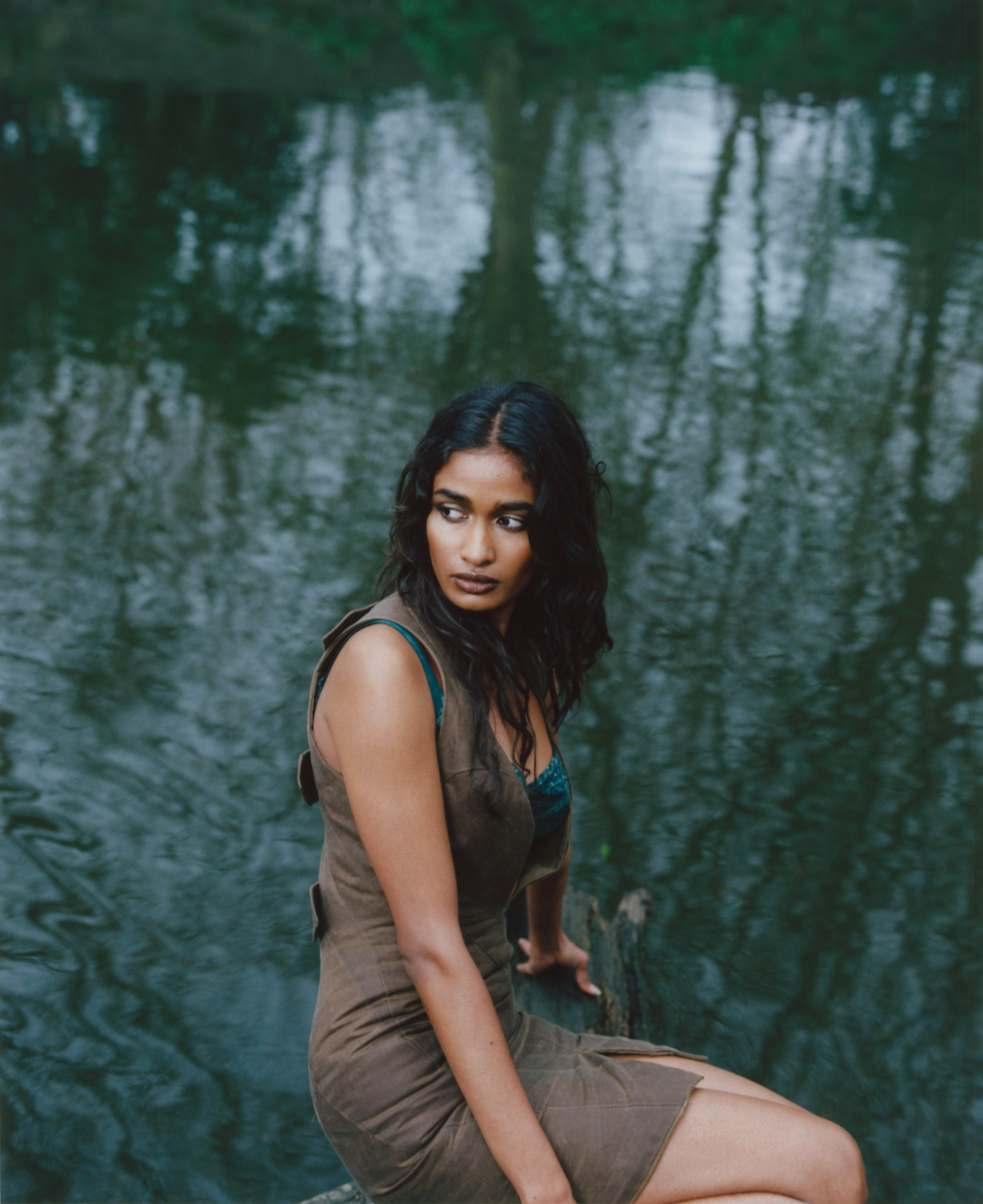
In the leafy villages north of Copenhagen, Denmark, a local woodland bog has become a site of textile experimentation for fashion designer Sophia Martinussen. The idea, she said, has been with her since childhood. “When I went to kindergarten, we would go for walks in that area every day, and the color of the water was red and orange, changing depending on the area,” she said. “The teachers would tell us that it was because the elves would wash their clothes in the water, and that just stuck with me.”
Martinussen first began submerging natural and undyed fabrics into the bog during the COVID-19 lockdowns, mapping how different pockets of water produced distinct effects on wool, cotton, and silk over varying lengths of time. She also met Jonas Sayed Gammal Bruun who, in 2019, had started the clothing brand Solitude Studios with a friend. Martinussen and Bruun joined forces in 2020 and have been the brand’s co-owners and creative directors ever since.
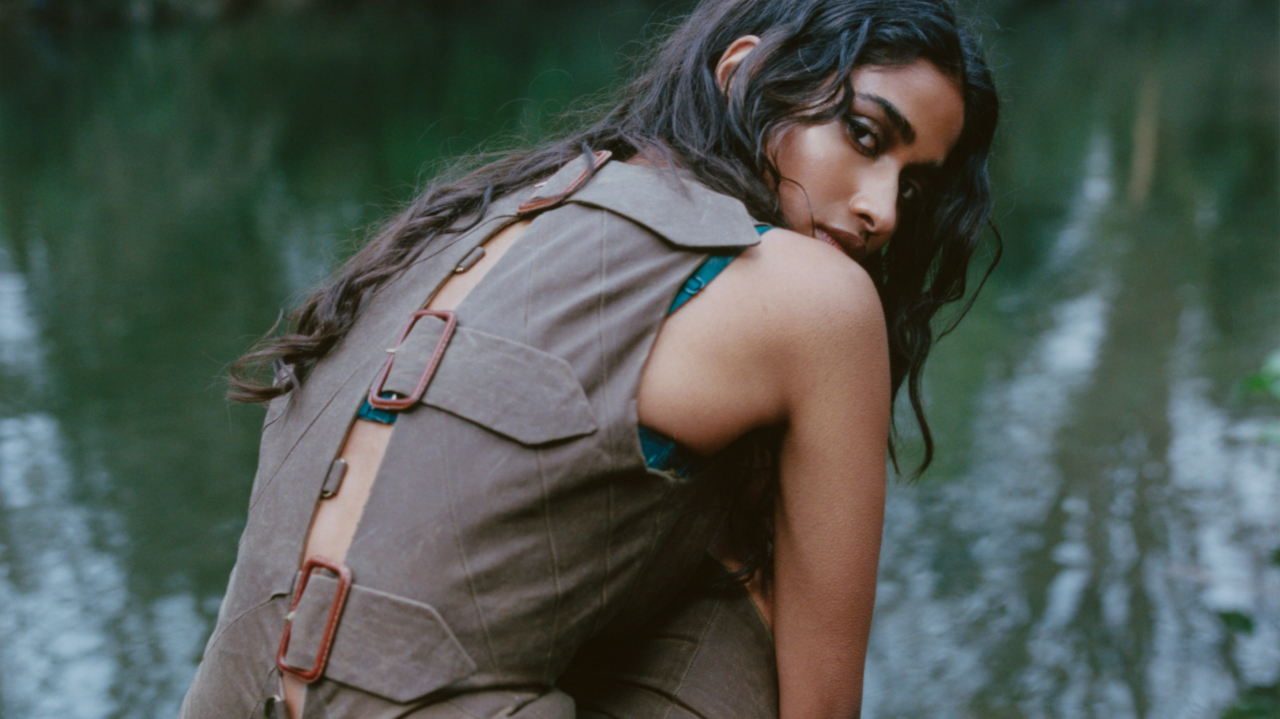
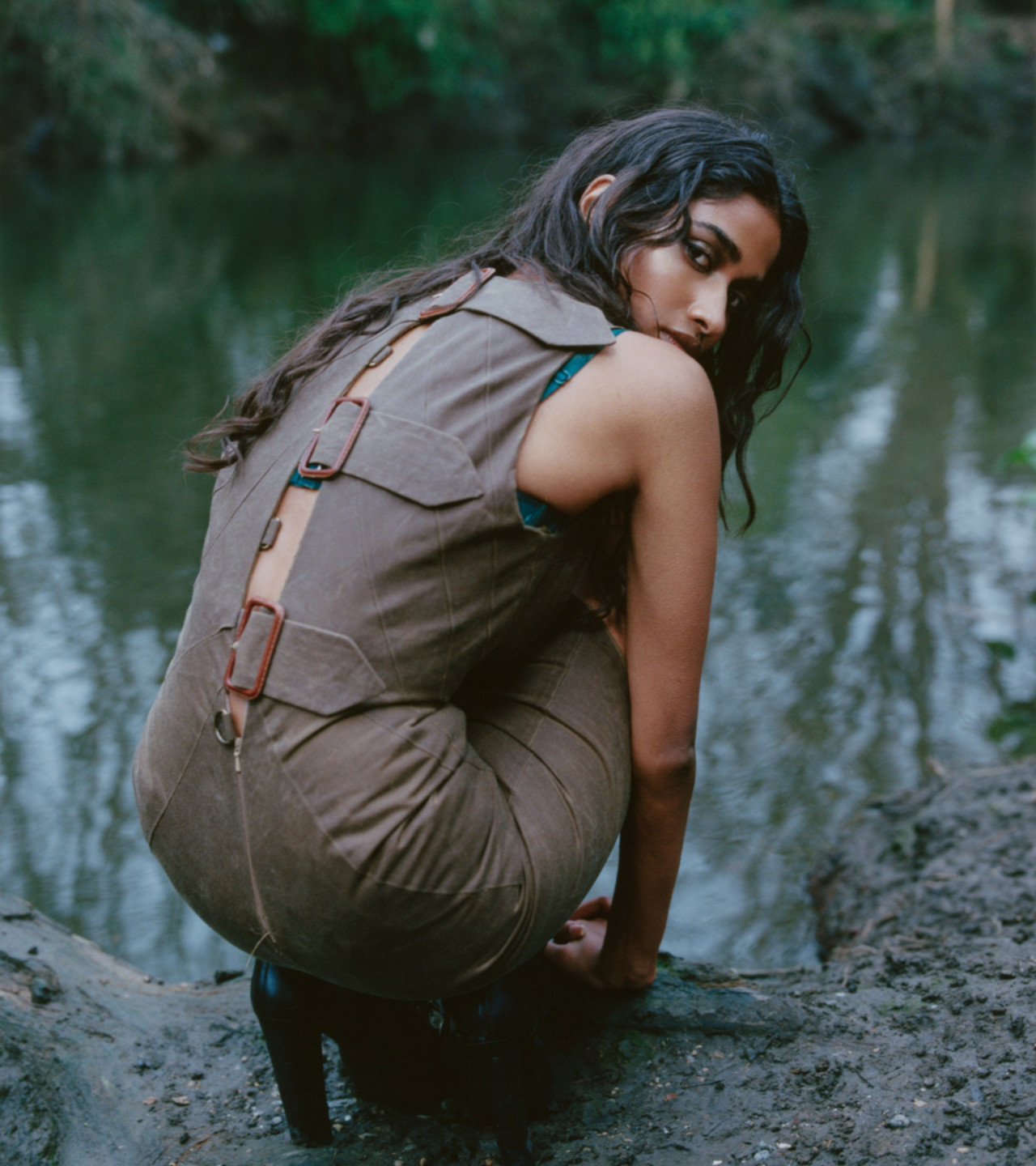
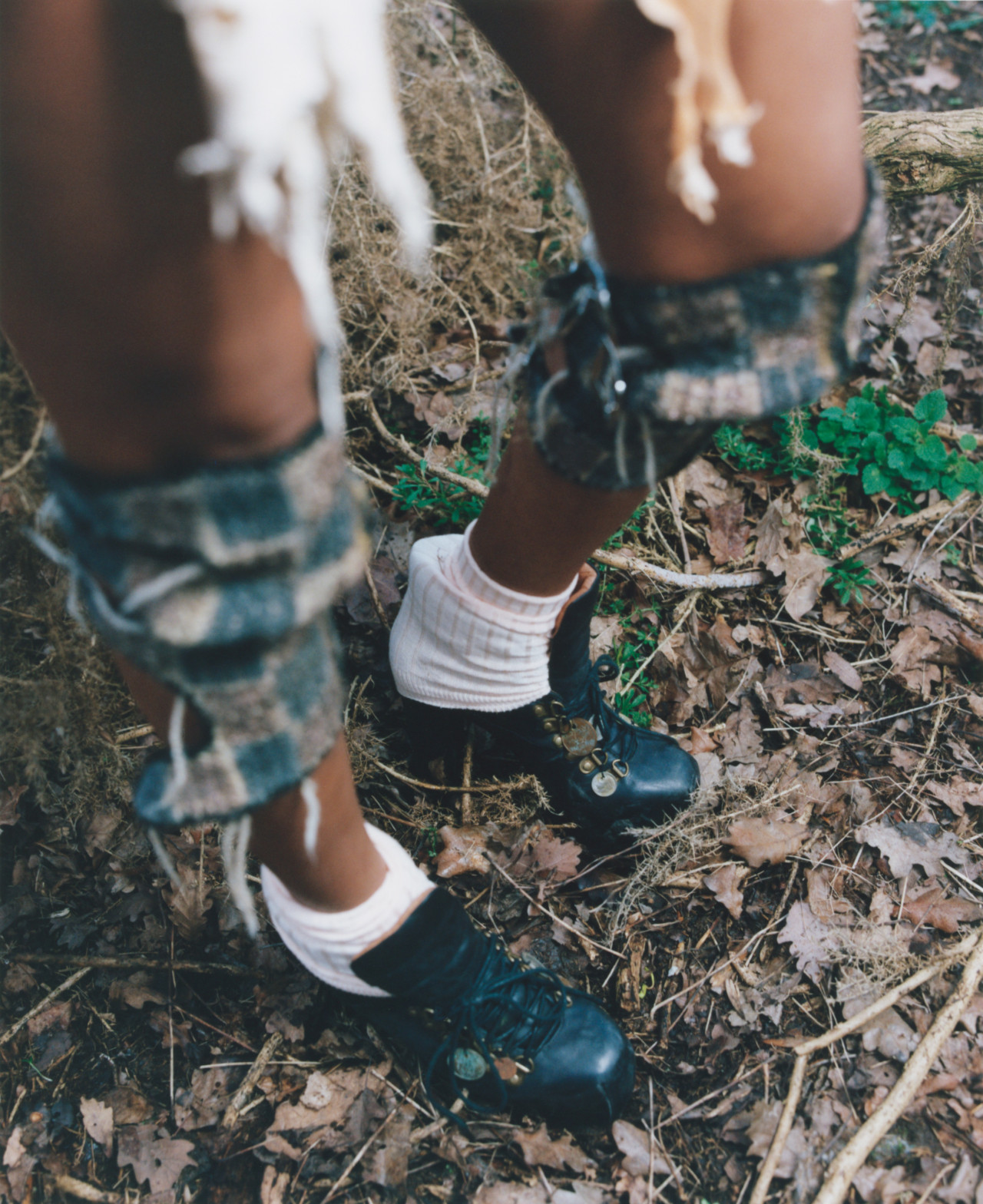
The pair recently doubled down on their collaboration with Danish bogs to create Solitude Studio’s idiosyncratic, now unmistakable, designs. “It’s been a lot of trial and error,” said Bruun. “We’ve been doing it for five years, and at the start, we didn’t know anything. We had this joke that the bog gives and the bog takes, because sometimes we came down and the fabric was amazing, and sometimes the fabric was just gone.”
Dirt, desire, and decay were the focus of Dirty Looks, an exhibition at London’s Barbican Centre that ran through early 2026. The exhibition traced how designers from the 1980s to present day have used “dirt” for different ends, said Karen Van Godtsenhoven, the Barbican’s fashion curator. “What we wanted to do was to show all the different generations,” she said, “from the times when it was still more transgressive and experimental, and times when it was almost common.”
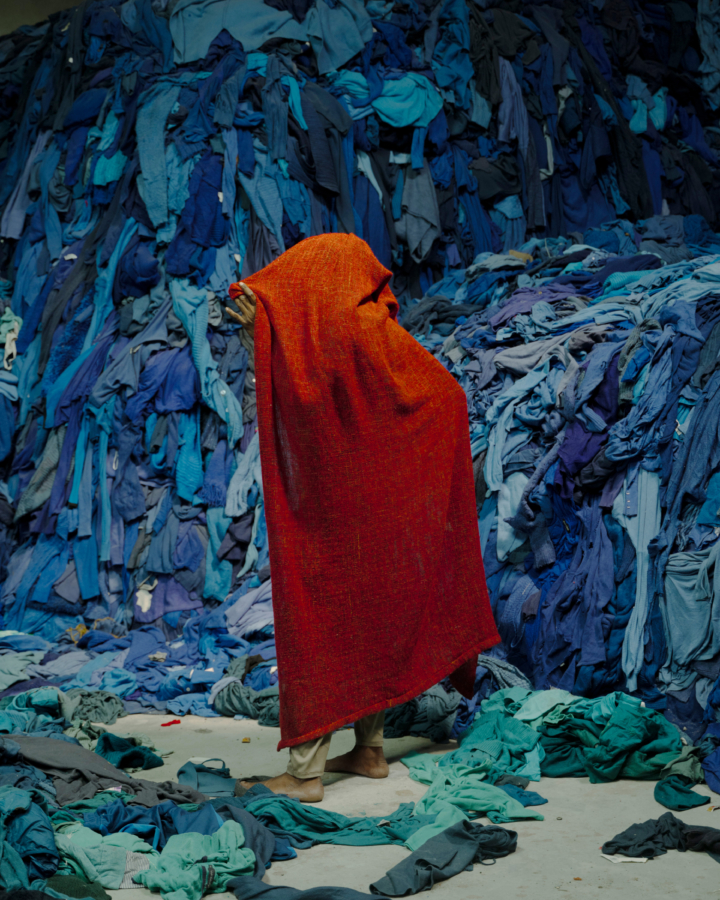
For some of the featured items, dirt is a political statement challenging fashion’s polished veneer. Others use it as a spiritual ritual to connect them more deeply to nature. The show also invited audiences to sit with the industry’s contradictions, especially as trend cycles accelerate and overproduction leaves mountains of unworn clothing in its wake. “In a way, the dirtiest garment is the garment that was never worn,” said Van Godtsenhoven. “It’s the garment that’s just mass-produced and dumped. What is actually dirty and what is clean? And can we think differently about these things?”
The exhibition included an original commission by Solitude Studios, titled “After the Orgy,” which was suspended in the air to reveal the complex labyrinths of material in varying states of decomposition. Each piece had been submerged in the bog (or “orgy”) for a month to dye and decay, infusing the pieces with a new identity. The work was inspired by sociologist Jean Baudrillard’s The Transparency of Evil, a series of essays that critique modern Western culture.
“We made the whole collection based upon nothing, just clothing for clothing’s sake, which you could say about a lot of fashion,” said Bruun.
Elsewhere, designers are building entire collections centered on slow methods that leave room for uncertainty.
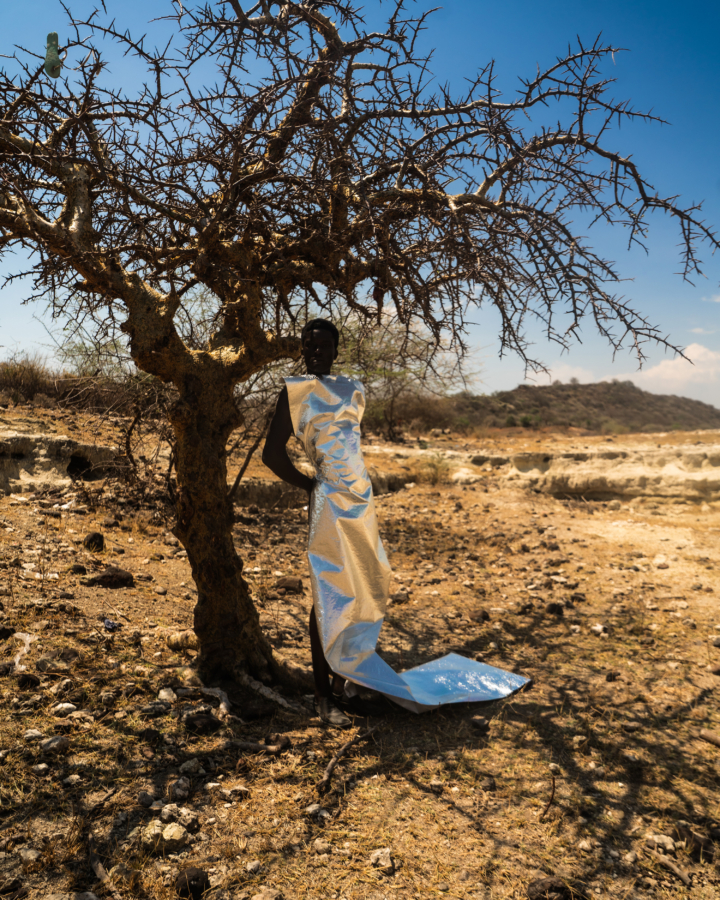
“I like to leave a lot of things to nature to allow mistakes to happen,” said Bubu Ogisi, the founder of IAMISIGO, a fashion brand and research practice based between Ghana, Kenya, and Nigeria that explores Africa’s diverse and interconnected textile histories. “I mean—I don’t want to call them mistakes, but I would like for life to happen. I would like for time to happen.”
Time is a key ingredient in Ogisi’s practice, which embraces unconventional natural and synthetic materials, including glass from electronic and building waste, banana and palm leaf raffia, old clothing, upcycled plastics, and a durable fiber from the Agave sisalana plant called sisal. Some of these are then dyed through exposure to the elements and organic processes. “I love collaborating with nature,” said Ogisi. “For me, it’s also about letting go of having control of everything. A lot of our works have frayed edges and undefined pieces because playfulness and rawness go hand in hand when you’re allowing yourself to be playful in how you create.”
IAMISIGO featured eight pieces in Dirty Looks, some of which incorporate an ancient Ugandan textile called bark cloth made from the Mutuba tree. “We scrape, we beat, then we soak it in water for about six to eight months,” Ogisi said. “After that, we have to dye it in clay. There’s nothing clean about the essence of bark cloth, and no shade is ever the same because it depends on the type of clay we use, where the clay is sourced, and how it is stored.” The team then folded patterns into the cloth and used ground coconut husks to push the dye further.
“We were baffled by this faith they had in giving something to the bog and getting something in return; that nature would actually give you something if you gave it your most prized possessions. Nowadays, we don’t really have that faith in nature, we don’t really give it anything.”
“Sometimes, when you’re surprised with how things are done, especially with a slight mismeasure or a slight mistake, then it brings out new frontiers for the material,” she said.
The people behind Solitude Studios and IAMISIGO describe a spiritual, ritual element to their practices. For recent collections, Solitude Studios has drawn inspiration from sacrificial jewelry and other valuable objects from the Bronze Age that were found in a Danish bog. “We were baffled by this faith they had in giving something to the bog and getting something in return; that nature would actually give you something if you gave it your most prized possessions,” said Bruun. “Nowadays, we don’t really have that faith in nature, we don’t really give it anything. We just take from it. That practice became a focal point [for the brand] after that.”
That’s why questions of impact and responsibility are built into the way they work. “We talk a lot about what’s acceptable to put in the bog, and what we feel is ethical to leave there,” said Martinussen. “We hold it as a sacred place.”
For Ogisi, that same respect is tied to an artisanal way of working that resists fashion’s obsession with scale and keeps the process rooted in awe. “We can’t get used to saying, ‘How do we scale this?’” she said. “Where I’m from, these words don’t exist. If you’re creating something, it comes out of your free hand. Whenever I’m working with old craftsmen, they will say: Follow your spirit, design what you want.”
Solitude Studios is building on a long legacy of designers pulling beauty from nature’s overlooked, murkier, and raw elements.
Designers like Hussein Chalayan have experimented with burying clothing to transform their appearance, while the likes of Vivienne Westwood have made mud a kind of manifesto, staging her “Nostalgia of Mud” era as a rebuke to polish and propriety. More recently, eponymous Welsh label Paolo Carzana has built a business around “working with nature rather than against it,” embracing the fragility of natural materials and dyes made from tumeric, cochineal, and logwood. And emerging designer Yaz XL has become known for submerging metallic garments in water and letting them rust, most notably for her 2025 collection Corrosion Perversion. The unpolished and imperfect also appeared on the catwalk this fashion week, when Prada sent stained looks down the runway in its Fall/Winter 2026 collection as an ode to lived-in clothing that is infused with time and memories.
Even so, the broader fashion industry is unlikely to adopt bogs—and deliberately surrendering garments to rot, rust, and ruin—as a standard manufacturing practice. The question is what it can take from a nature-centered approach to making clothes.
For designers disillusioned with the fashion machine’s churn of cheap, fast, synthetic products, it points to other ways of working. “When you graduate as a fashion designer, it’s hard to feel that you can still add something, and I think [young designers] often grapple with how to [square up the reality of] bringing more garments into this world,” said Van Godtsenhoven. “For today’s designers, the bog has a more spiritual motive that gives them a sense of hope or repair.”
Solitude Studios has lately moved away from seasonal collections in favor of a more artistic direction, shaped in part by the fragility and impermanence of the company’s delicate garments.
“A few collections back, we [discussed], should a garment even last forever?” Bruun said. “When you buy a high-end piece and spend a lot of money, it seems fair that it should last. But it’s up for debate. What is quality? Longevity can’t be the only parameter we use to judge whether something is a quality product.” The label’s bog work sits inside that question, treating change over time as part of the garment’s natural lifecycle.
As for Ogisi, her intention with IAMISIGO has always been to forge a more open-minded approach to textile production. “The fashion industry is so used to its own systems,” she said. “It’s not open to other systems. That’s what I want to do. I want to completely change how we engage with materials or fabrications. I want to disrupt a system.”
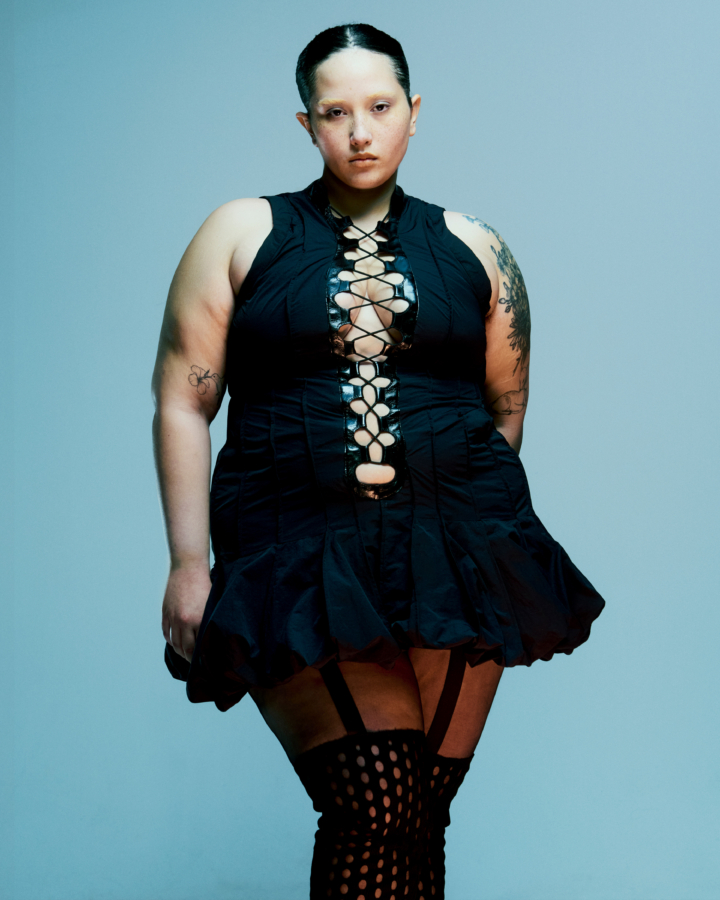
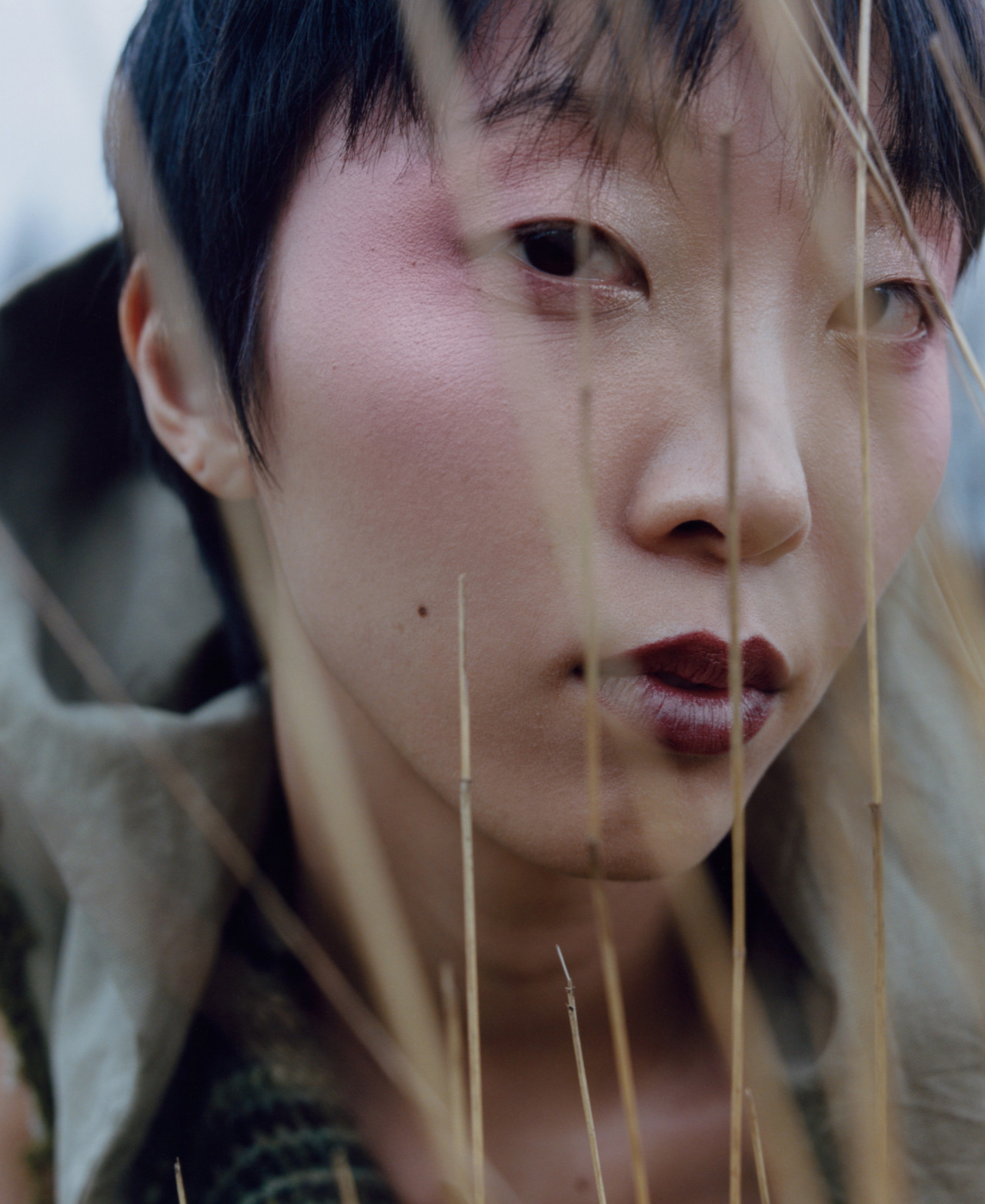
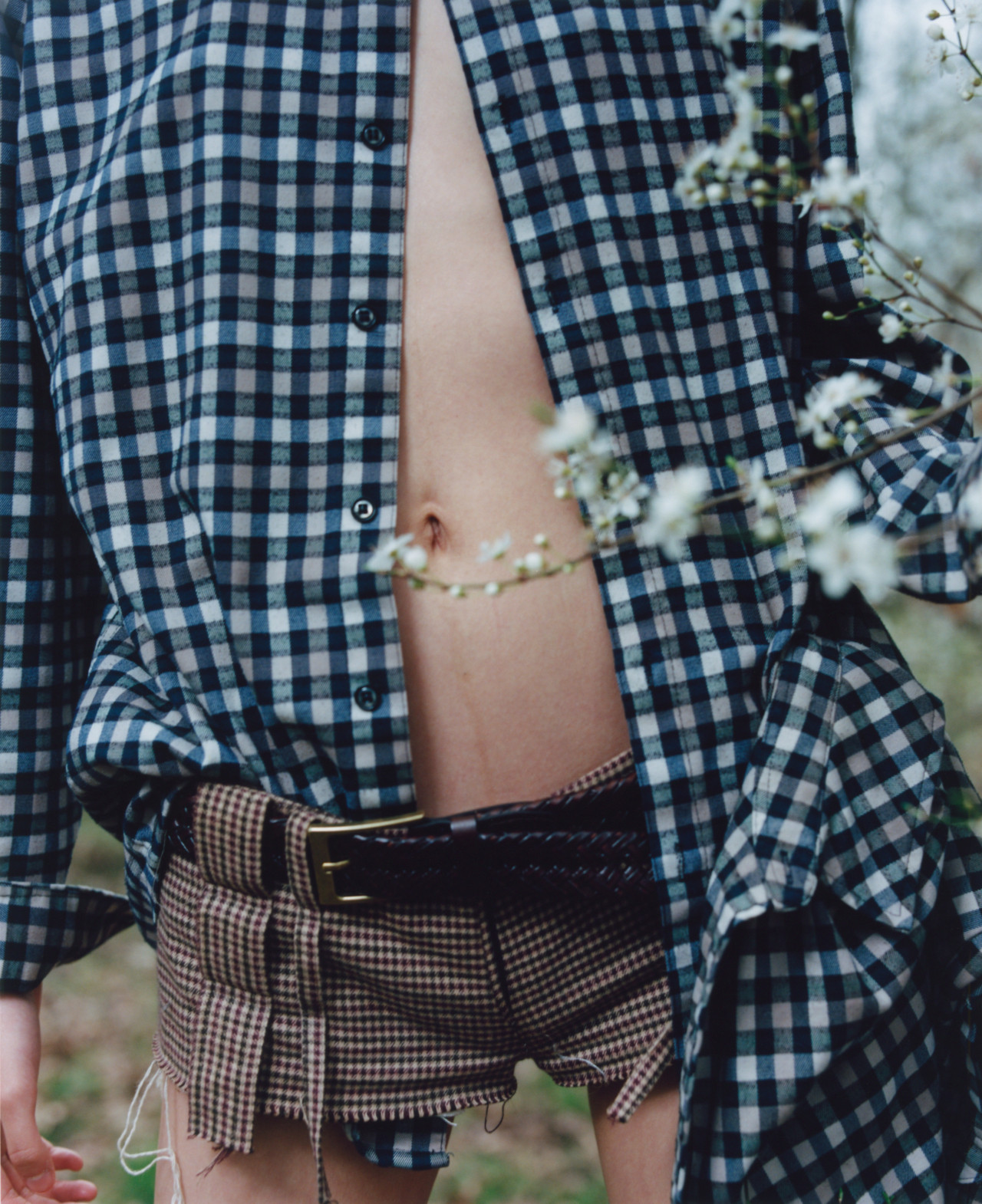
Clothing Solitude Studios Photography assistant Milo Hickey Styling assistant Eva Perez Hair Lachlan Mackie Makeup Claire Urquhart Casting Tytiah Blake at Unit C Models Ankitha at Select Models, Jinwoo at PRM Agency Production Phoebe Asker
Join our membership community. Support our work, receive a complimentary subscription to Atmos Magazine, and more.
Bog Fashion: The Designers Collaborating with Swamps and Soil