


Words by Ash Sanders
Photographs by Jacques Brun
According to the ecological scholar David Abram, the earliest human expression arose as a guttural response to natural phenomena—the shock of thunder rolling across the Earth or the sky crazed with lightning. Human language was an extension of nature and emphasized our part in it, reflecting our entanglement with the living world.
But all too soon, that would change. As colonization, capitalism, and modern scientific thinking gained traction, they encouraged the plunder of the Earth, the exploitation of other species, and the sanitation of the human environment. More than ever before, humans had the power to destroy the web of life, and they were using it. According to Abram, they found a justification for their dominance by inventing a sense of their own specialness. Humans were no longer a part of nature; they were above it. They were subjects and nature was the object, an it to be used and used up.
In the 21st century, many dictionary definitions of nature reflect that relationship with the natural world, emphasizing human separateness from the biosphere and anthropocentrism. Nature is now predominantly seen as “the phenomena of the physical world collectively […] as opposed to humans or human creations,” as one of the Oxford English Dictionary definitions of nature puts it.
Shifting definitions might seem like a small thing. But language is not just an assemblage of words. It’s a tool we use to see. Language can radically alter perception, paving the way for huge shifts in culture, behavior, and belief. And definitions serve as reminders of how we view our place in the world, both reflecting and shaping our sense of ourselves and our relationships.
That’s one reason I’m so compelled by We Are Nature, a U.K.-based group that is working to change the dictionary in order to change our minds about our place in the world. Spearheaded by Frieda Gormley, cofounder the of the haute British interiors firm House of Hackney, and Jessie Mond-Wedd, a barrister at Lawyers for Nature, the campaign calls on both regular folks and dictionary editors to redefine nature in order to reorient ourselves to the planet that sustains us.
Gormley has always drawn on the natural world to inspire her designs. But when the pandemic touched down and the British government restricted people’s access to the outdoors, she started thinking. So far, she’d been taking from the living world, not giving back. So she decided to change her life. She moved to the countryside and began nurturing a garden while turning her business into a regenerative company dedicated to undoing the impacts it made on the planet.
For Mond-Wedd, the path also began in a garden: on the organic farm where she’d grown up, with a father who was a Greenpeace activist. She’d always accepted nature as a part of her life, but it wasn’t until her concern over climate breakdown drove her back to school to become an environmental lawyer that its importance really hit home. Her thesis was on the Rights of Nature and Indigenous attitudes toward the land. As she studied, she had a realization: Nature needed rights. But to reach that goal, humans first had to change their mind about what nature was.
Gormley and Mond-Wedd were friends, and they were thinking on parallel tracks. But it wasn’t until Gormley went to an environmental conference where a woman read aloud an OED definition of nature—the one that pitted humans against the biosphere—that the task became clear.
After the dictionary reading, Gormley said, there was silence. Gormley herself was gutted. She felt like she’d just been told that she wasn’t “a part of [her] own family.” She understood, suddenly, that the OED’s definition of nature wasn’t an inert entry in a dictionary. It reflected and propelled a worldview that was driving selfishness, greed, and climate breakdown.
Gormley and Mond-Wedd knew that they needed to change this definition if they wanted to change perception—and ultimately behavior. So they sent out a call to friends, colleagues, and local school children, asking them to define what nature meant to them.
The results came pouring in. Again and again, people spoke of being part of nature and natural cycles. A child put it simply: Animals give birth, and so do we. The Indian-British activist Satish Kumar called attention to the etymology of the word human, which comes from humus, or soil. “Humans are literally soil people,” he reminded the dictionary editors. We can’t forget that. The Rights of Nature writer Robert Macfarlane approached the debate with grammatical clarity. Nature, he wrote, is “the greatest group noun of them all; the entangled web of planetary life of which humans are inextricably part.” Contrary to received opinion, nature is not an it—or even a singular subject. Nature is a we.
Language is relational. At its best, it reflects a reciprocity that the philosopher Martin Buber calls an I-Thou: a communion that involves awe. This means that language also comes with obligations. “If we feel separate from something,” Gormley told me, “we’re not going to care for it.” But “if we feel that we’re part of an Earth community, the natural instinct is to…want to protect it.” When we sever that relationship and turn the living into the dead, we relieve ourselves of those obligations. We find ourselves utterly—alarmingly—alone.
“Language is not accidental or incidental to the way we see or treat the world. It’s a reflection and a mandate, a mirror and a call for change.”
In Gormley’s words, “this separation is making us sick.” It gives us a sense of dis-ease, of not being at home in our only home. I am reminded of the Quechua, Chinese, and Turkish thinker Pinar Sinopoulos-Lloyd, who writes about settler colonialism as a great severing that cut the cords that tie us to our multi-species kin. Our bodies need other species to co-regulate, Sinopoulos-Lloyd says. Without those relationships, we’re isolated—left to survive on the meager consolation of supremacy. Relearning our connection to the natural world is relearning ecological co-regulation, Sinopoulos says. It’s nothing short of a “restoration of the ecological body.”
To put it plainly, we’re lonely. We used to spend our days surrounded by hundreds of other species. Being with them. Interacting with them. Somewhere in our bodies, we long for that. Somewhere in our language is the memory, a linguistic echo, handed down through time, of living in boisterous, multi-species cacophony. Follow the echo, and we might return.

I often wonder about the people who are wrecking the planet, and why they do it. Sure, they’re greedy, but they already have more money than they can spend. Yes, they want power, but they’ve already bought whole governments on layaway. Sometimes I think that what these people want more than anything is death, which is to say: the sweet release of total loneliness, the absolute freedom of severing all obligations and attachments.
In the face of this destructive desire, the most potent response we can offer is to yearn for relationship: to accept responsibility and reciprocity, and to admit, each day afresh, that our fates are bound up in the fates of all creatures, in all corners of creation.
Since Gormley and Mond-Wedd started campaigning in 2023, We Are Nature has achieved a fair bit of success. After the campaign submitted its crowd-sourced definitions to the OED, the editors agreed to remove the “obsolete” label from a more human-inclusive definition of nature that had been included in the dictionary in the past but marked as out-of-date. That definition describes nature as “the whole of the natural world, including human beings; the cosmos.” Now, Mond-Webb and Gormley are in the process of bringing other British and U.S. dictionaries on board. They hope to change the definition of nature across all of English dictionary-dom. They imagine a world where we reorient our schools, workplaces, and cities to honor our biological belonging to nature. “Ultimately,” Gormley says, she feels like they are fighting for “a very basic human right. If we are nature, then we should be able to live nature-honoring lives.”
It might seem that language is too many times removed from the urgency of the climate crisis and that changing it will take far too long to stop the devastation. But language is not accidental or incidental to the way we see or treat the world. It’s a reflection and a mandate, a mirror, and a call for change. Nature is not a concept, after all. It is our experience of the entire living world, a register of everything that happens to us and everything we happen to. Imagine, We Are Nature invites us. Imagine if we left behind this damaging notion of separateness and superiority. Imagine if we returned to a place where our language reflected our visceral shock and wonder at the natural world—where it became, once again, a gesture of belonging.
This story first appeared in Atmos Volume 12: Pollinate with the headline, “Redefining Nature.”
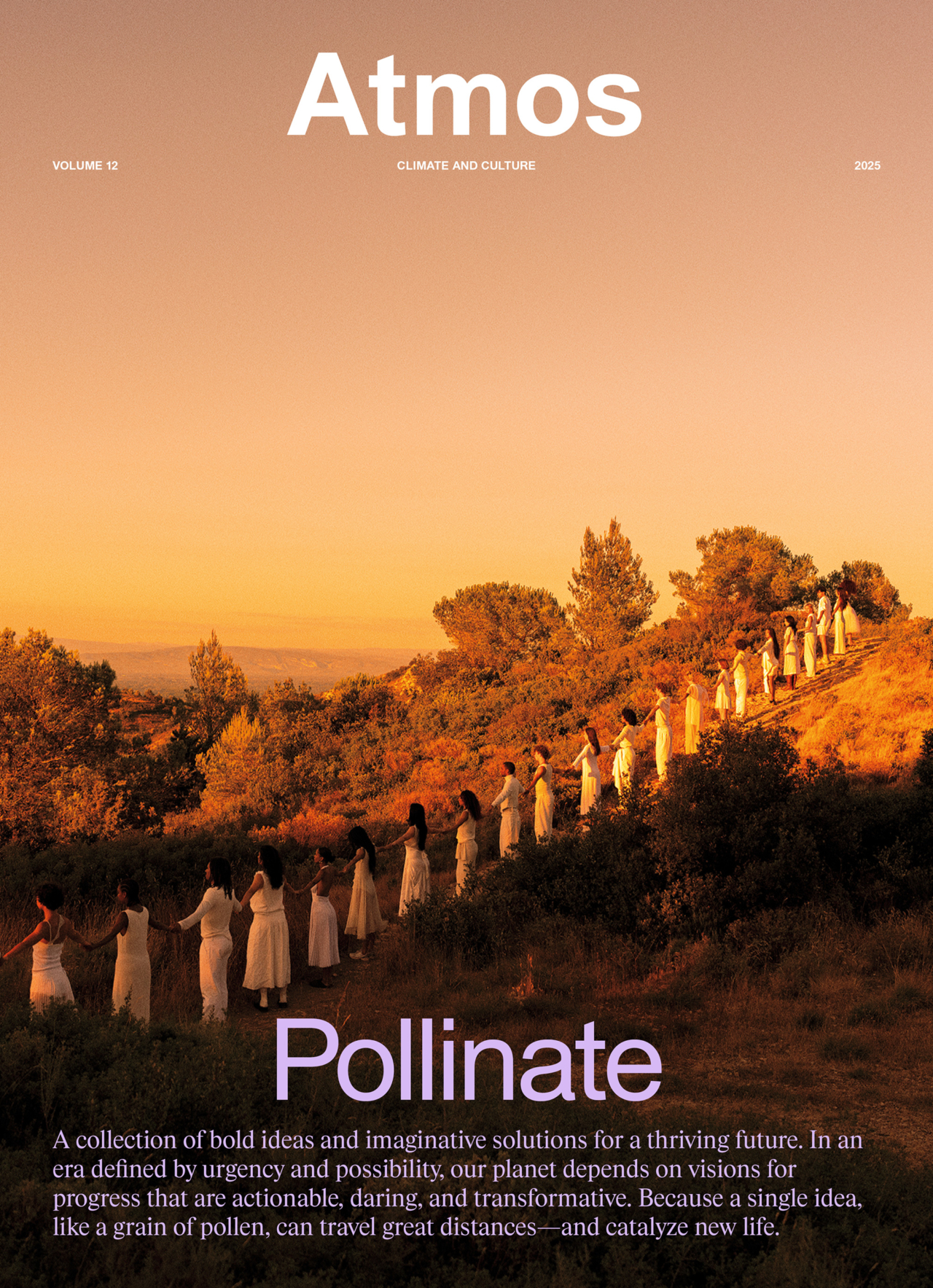
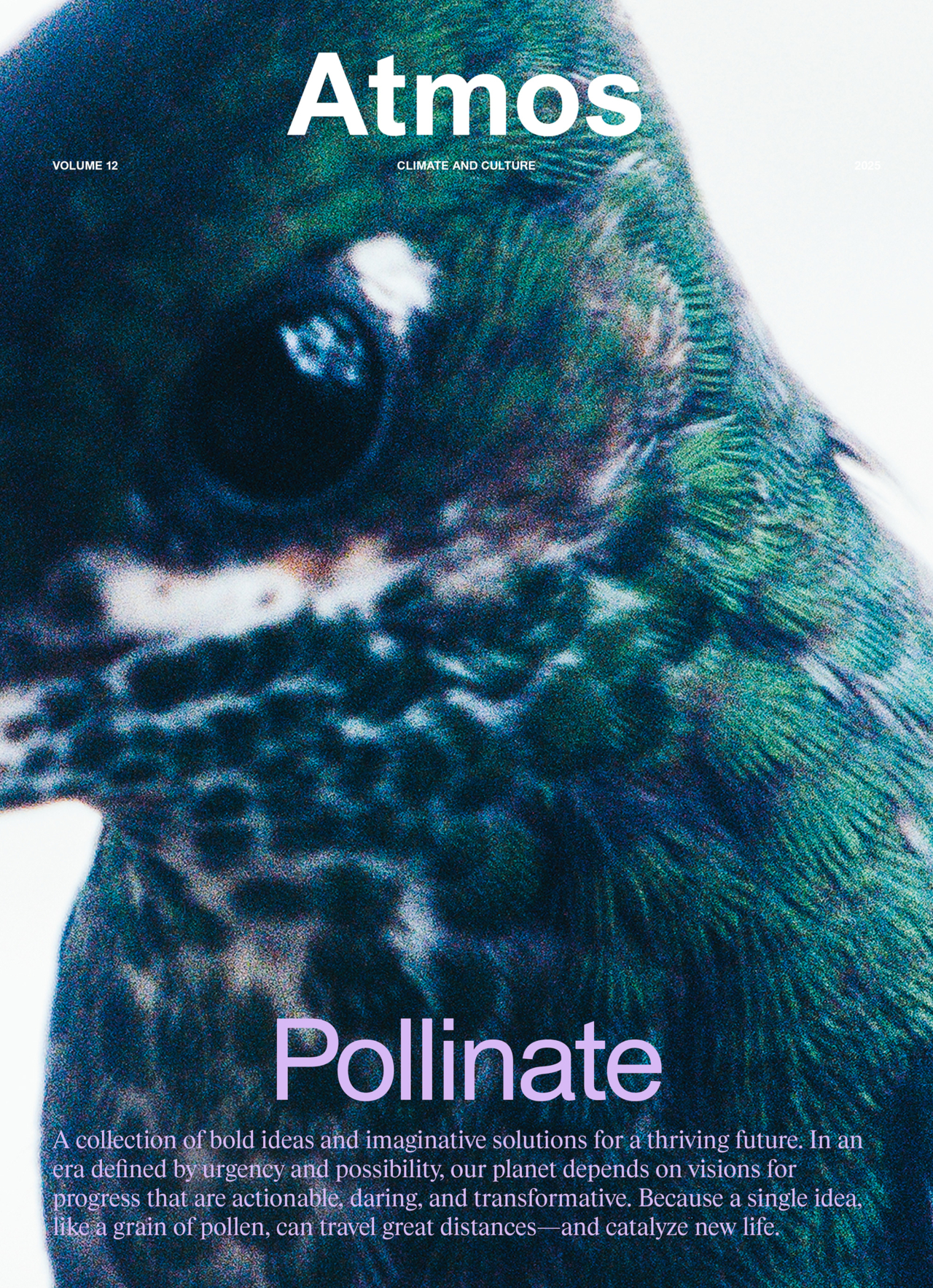
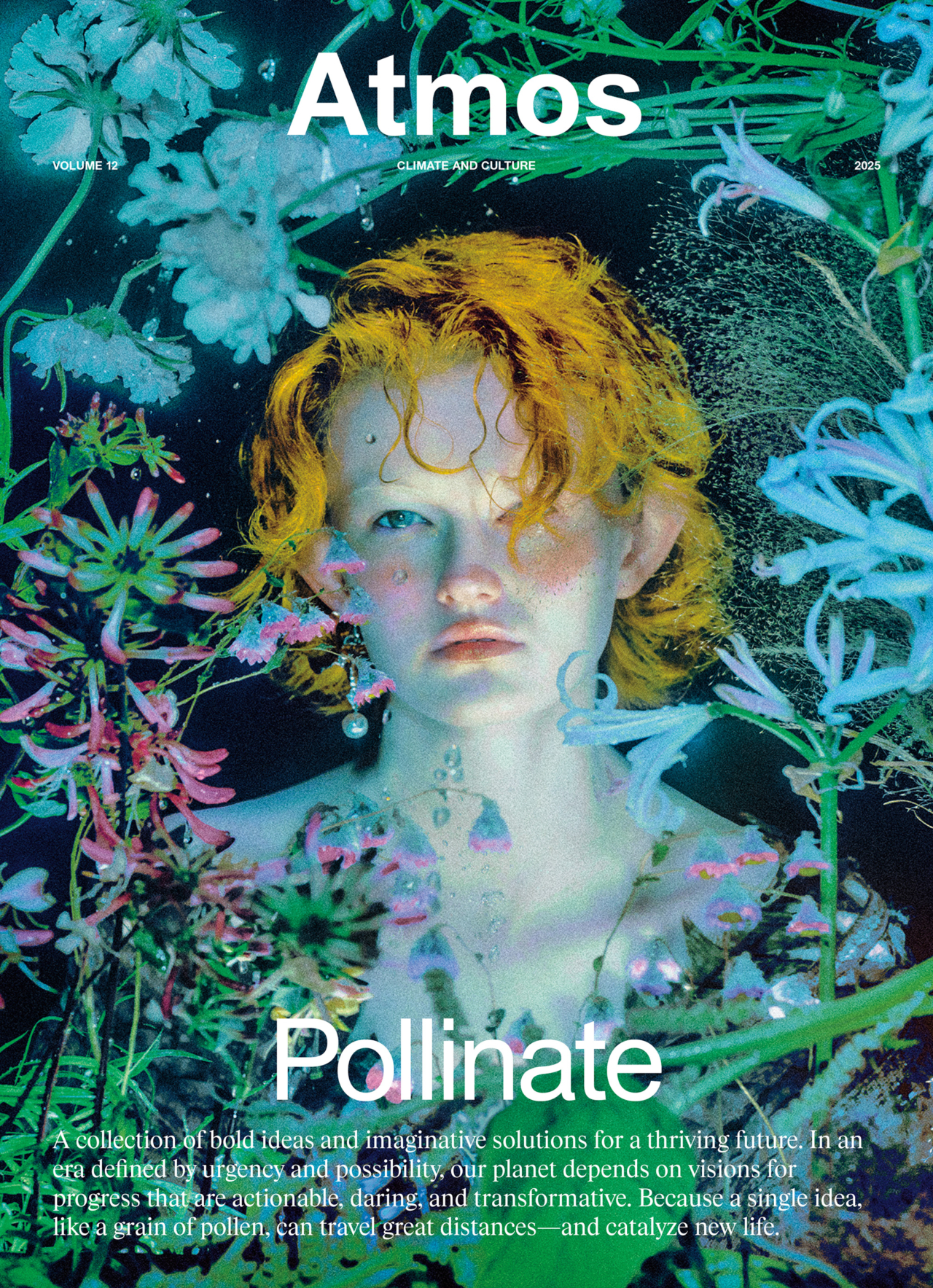
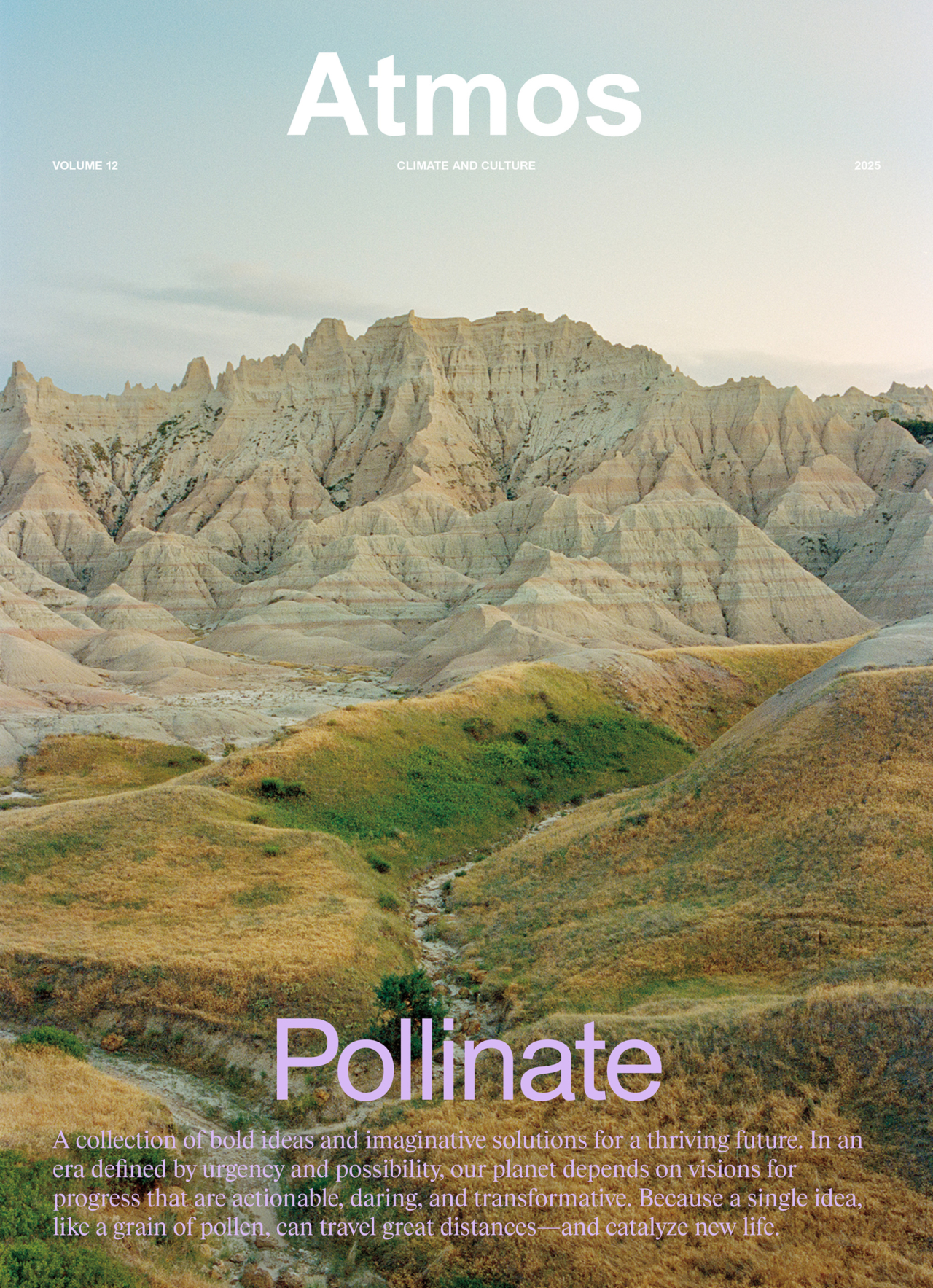
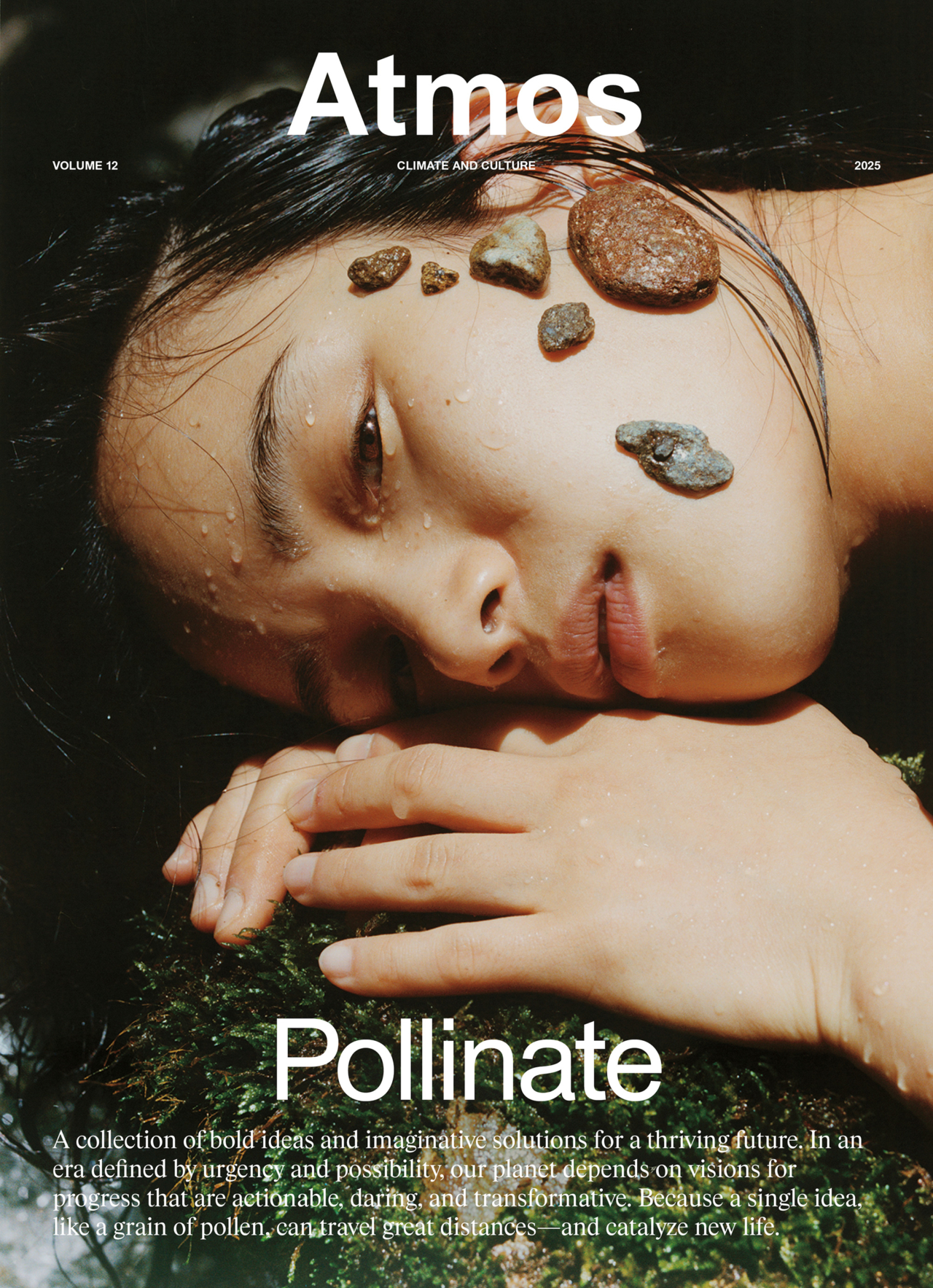
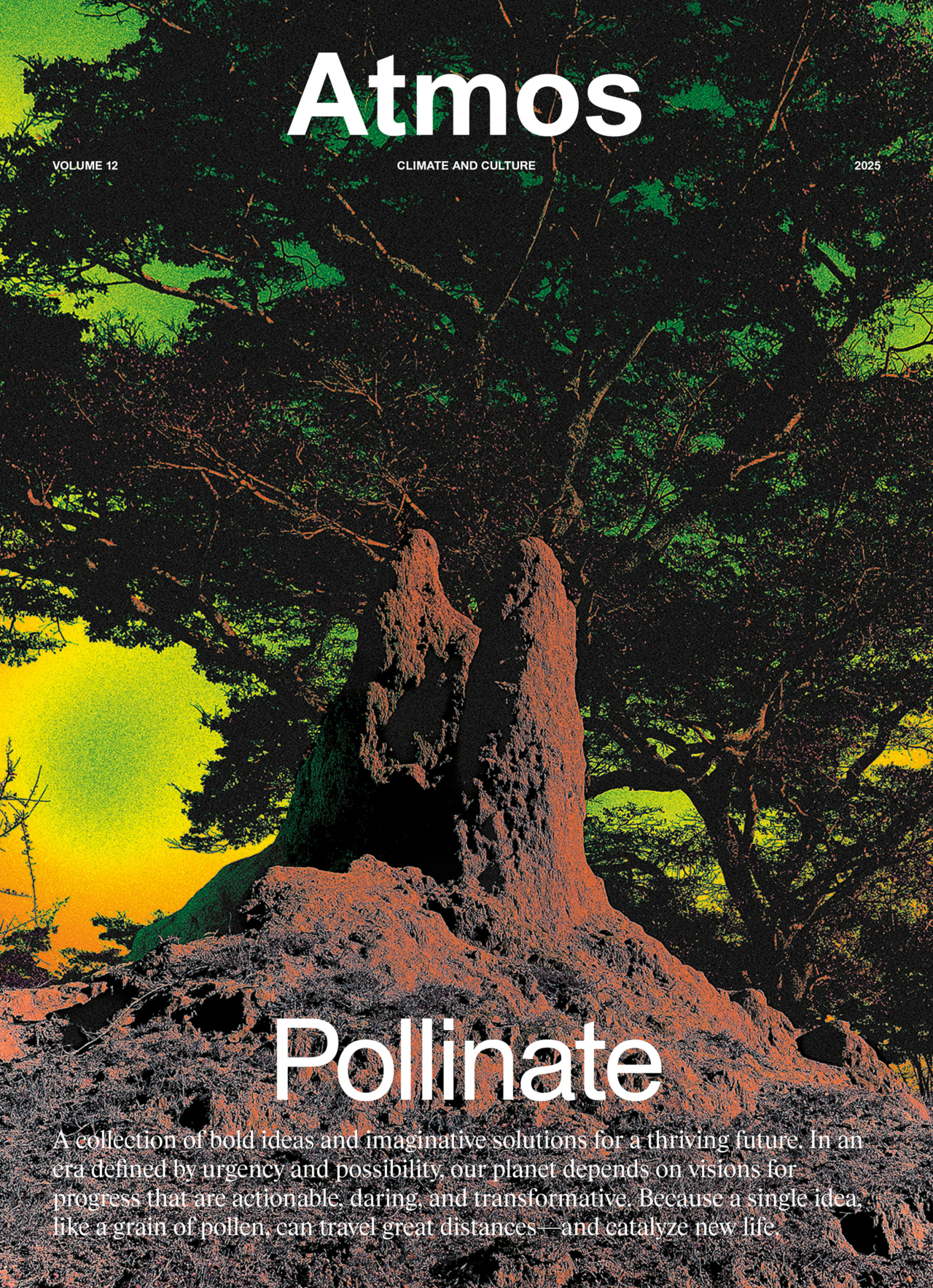
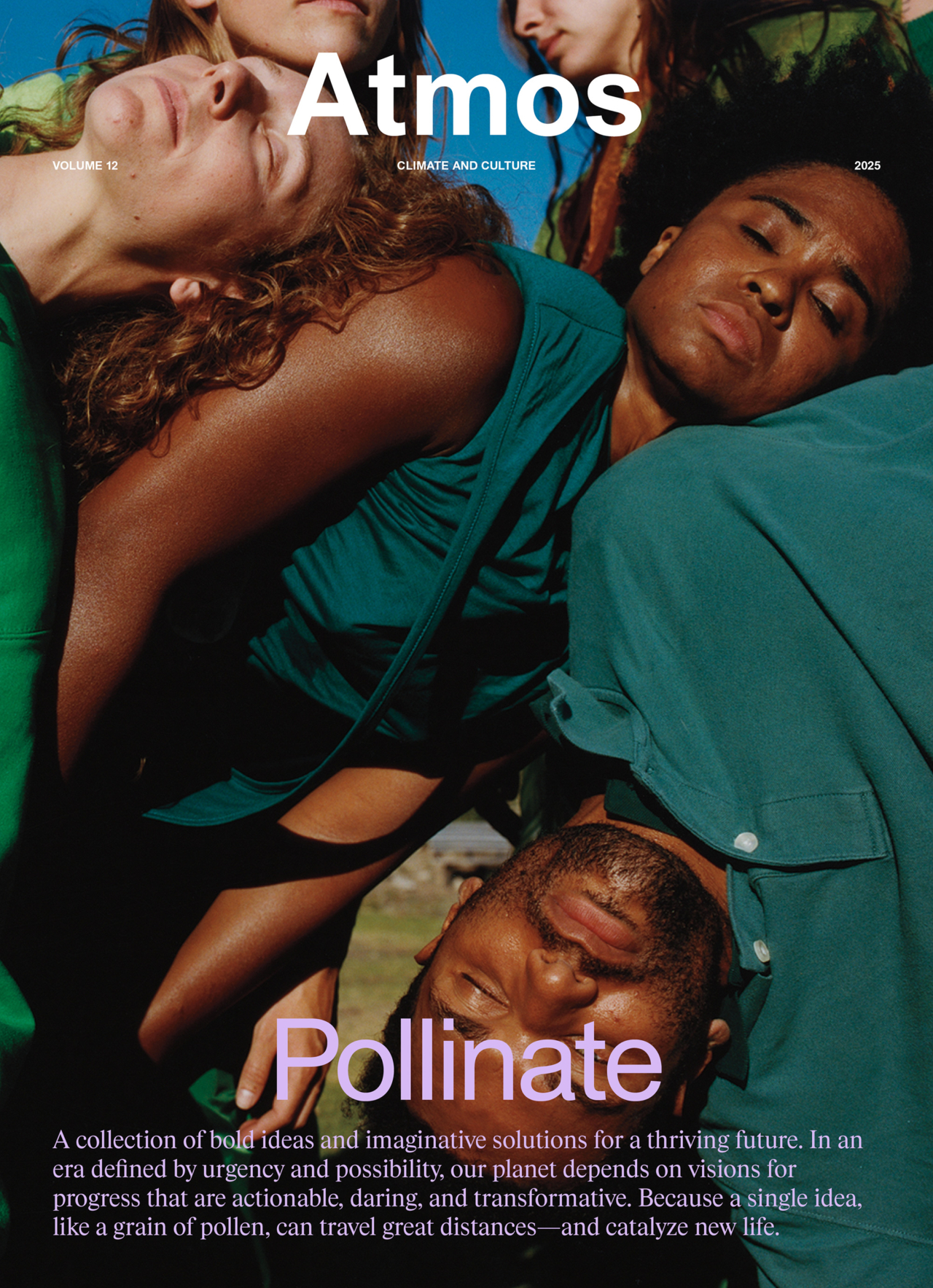
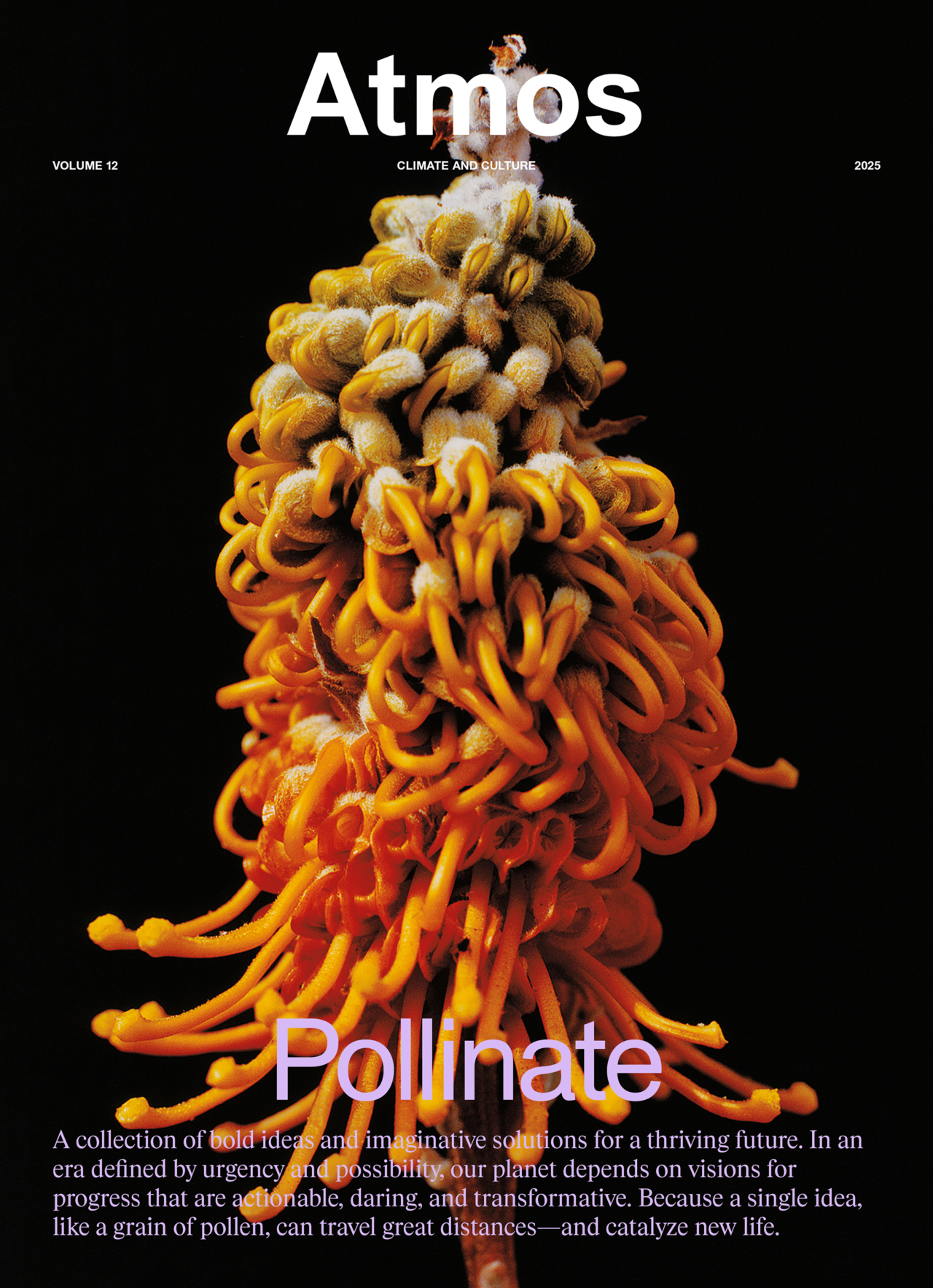
A collection of bold ideas and imaginative solutions for a thriving future. In an era defined by urgency and possibility, our planet depends on visions for progress that are actionable, daring, and transformative. Because a single idea, like a grain of pollen, can travel great distances—and catalyze new life.
Redefining Nature: How Changing Words Could Change the World