Photograph by Erlend Haarberg / Nature PL
words by willow defebaugh
“Faith is the bird that feels the light and sings when the dawn is still dark.”
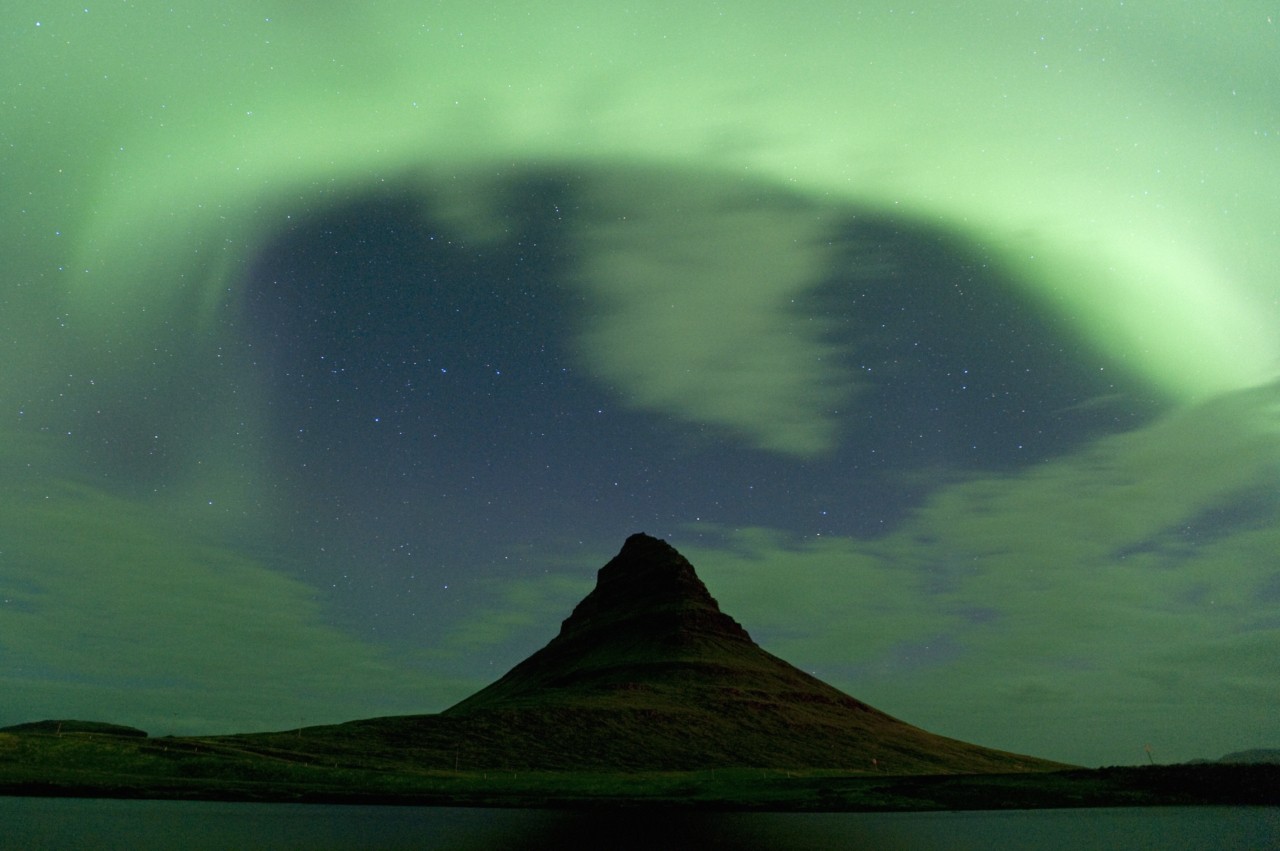
I have spent the last week traveling the mossy, volcanic terrain of Iceland with the Atmos team. In order to fulfill our mission to re-enchant people with nature and our shared humanity, we have identified the importance of making sure we are doing the same for ourselves from time to time. When we set out on the trip, our group did so with the hope that we would see one of the particularly enchanting phenomena the island is known for: the aurora borealis.
Though auroras dance in our earthly atmosphere, they are actually a result of forces entirely out of this world. They begin with activity in the Sun’s corona, where plasma propels solar wind (high-energy particles in flux) out of the star’s outermost atmosphere and into our own. Upon striking our planet’s magnetic field, they travel down into our atmosphere along magnetic lines at the North and South poles, scattering their way across the sky.
Once in our atmosphere, these solar particles collide with the nitrogen and oxygen atoms that abound in our planet’s penultimate boundary. In this process, they lose their electrons and leave excited ions in their wake, which in turn emit radiation in many hues. When solar particles strike oxygen, red and green lights are conjured; when they barrel into nitrogen, green and purple lights appear. Amidst all that calamity, the cosmos paints our planet with heavenly brushstrokes.
Most of the time, low solar activity keeps the auroras canvased around the poles. But during periods of increased activity on the Sun, in which plasma is more frequently erupting from its surface, these auroral zones expand outward to even the middle latitudes of our planet. The aurora borealis has even been spotted at 40 degrees latitude in the United States, surprising the life sprawling down below—not a reward for the hopeful, but a gift for the unsuspecting.
We’re all looking for the light, hoping for an end to these dark times. But I for one am done with hope and all its precarious instability. Hope is predicated on a specific outcome, and when that outcome fails to arrive, we cast the world in shadow, our view of it shaken. Rather than hope, I would rather focus my energy on faith—belief in a higher purpose regardless of the end result. Hope has us wishing to see the light; faith assures us that it is there whether we can see it or not.
Faith is what keeps us going when hope is lost. If I positioned my passion for growing a just future for people and the planet as dependent on every win or loss, it would never last. That’s not sustainable. I may not see the Earth healed in my lifetime, but that doesn’t change my faith in our capacity to restore it. Even when it feels like compassion is in short supply, I have faith in our ability to cultivate it. I have faith in our willingness to not only seek out the light, but be it.
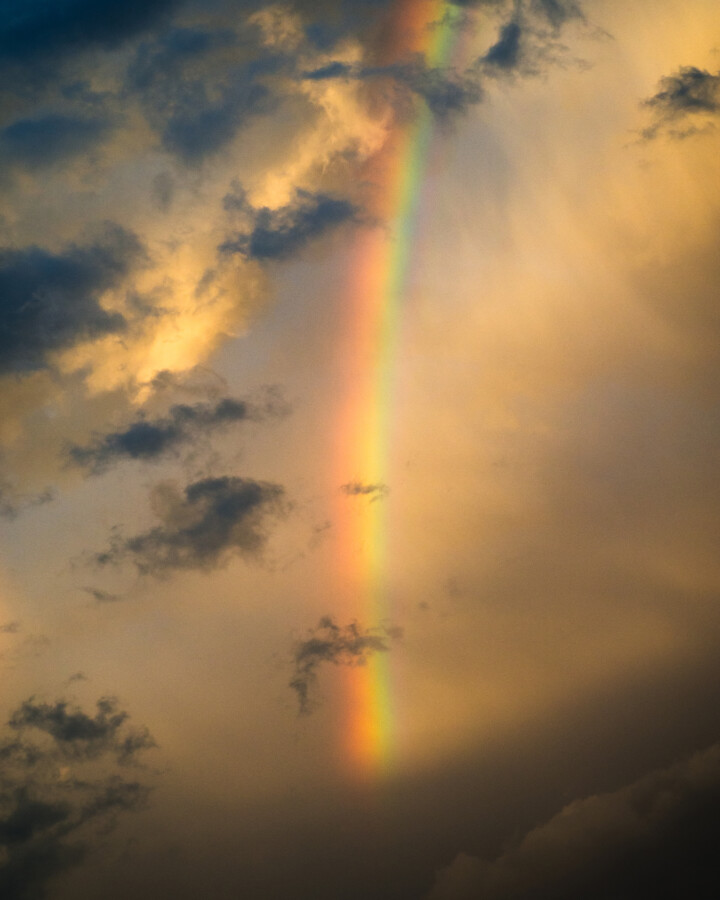
We did everything possible to witness the northern lights, including a midnight expedition in the frigid cold to find the perfect conditions of cloud cover and magnetic activity. We never found them. On the last day, we traveled to a waterfall. Just as we arrived, the clouds parted and a rainbow arced across the colossal cascade. I watched my colleagues hold one another, awestruck with wonder at the sight of it. It wasn’t the light we had been seeking, yet it was no less sublime.
Join our membership community. Support our work, receive a complimentary subscription to Atmos Magazine, and more.
Acts of Faith