Video still by Pie Aerts
words by willow defebaugh
“What can nature tell us about knowing the best moment for departure or when it is time to move on from a place? What can we learn about making a home where we are and digging in?”
—Reader submission
Every year, billions of animals embark on epic journeys to seek new shores and skies. And migration isn’t always a round trip: Some travelers are born to leave, never to return. Some journeys are completed by descendants: One monarch butterfly migration cycle takes four generations. As for how animals know when it’s time to leave, nature knows many clocks—some wound by weather patterns, some dialed by daylight, and others by internal, biological knowing.
In autumn, shimmering clouds of globe skimmer dragonflies can be seen flying over the Indian Ocean. Traveling over 2,000 miles across open water from India to East Africa, it is the longest migration known to take place by any insect. Their journey chases rainfall, as they need freshwater to breed. As for when they know to leave, they read the sky: Changing wind patterns create atmospheric corridors that make an otherwise impossible journey possible.
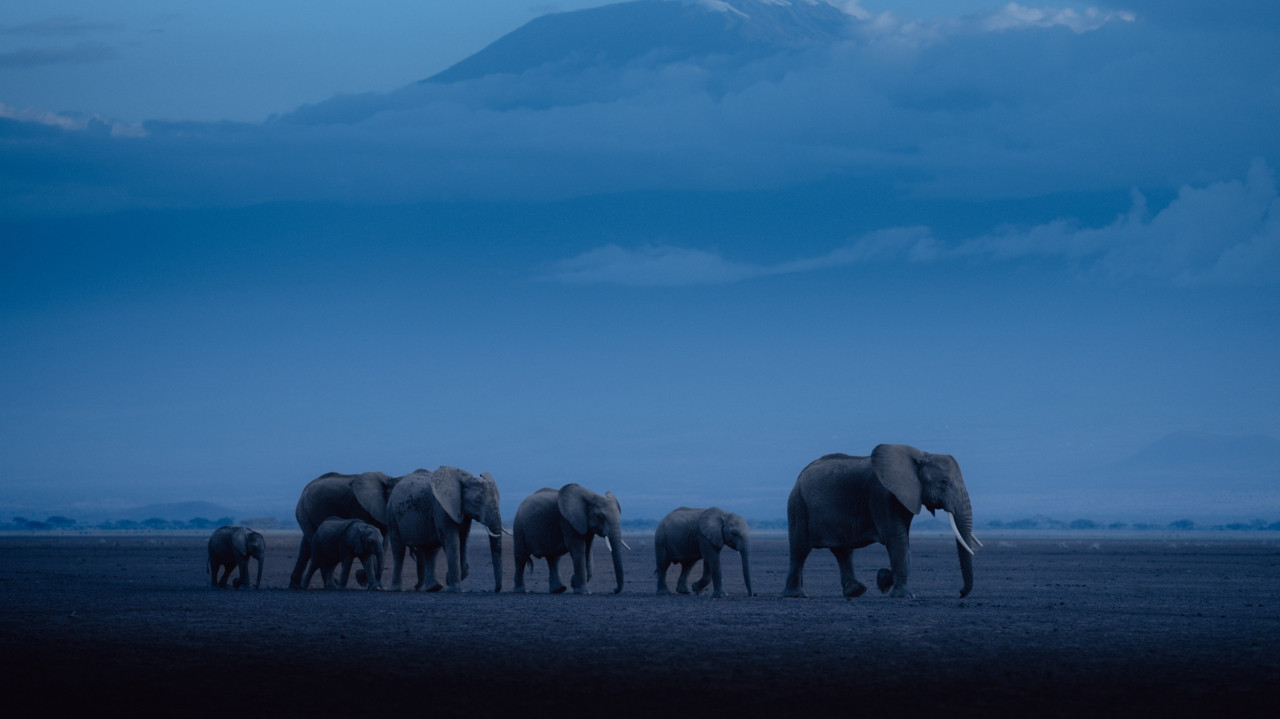
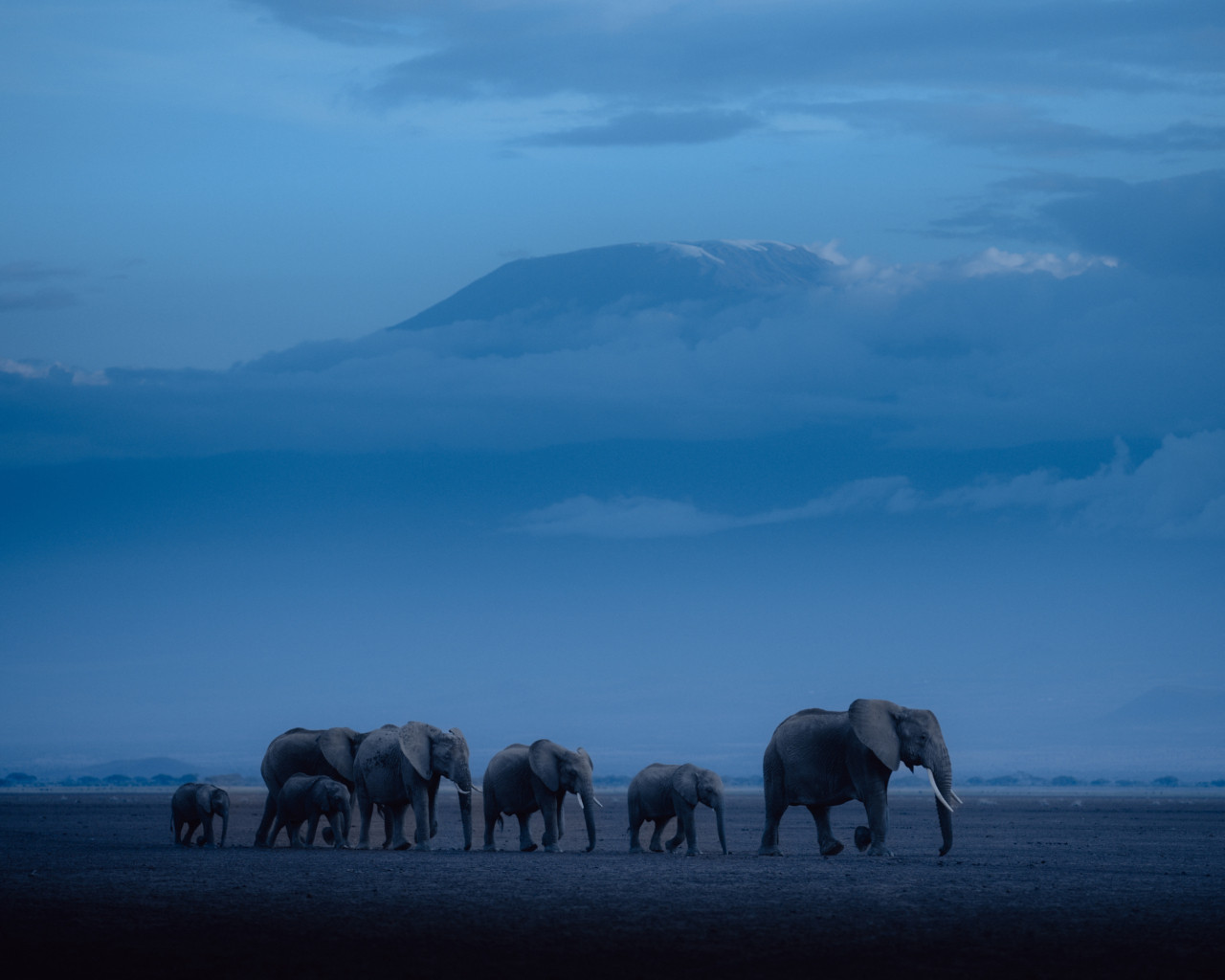
African elephants roam the savanna seasonally, seeking water and lush greenery. These patterns of movement are often led by older matriarchs who carry ecological knowledge and memory of place. And their journeys give back to the land, as well as to other species. Their uprooting of trees and shrubs while feeding helps maintain open grasslands; the wells they dig provide water for other animals; and they help transport and disperse seeds over long distances. They are migratory stewards, driven by memory.
Born in freshwater rivers, young Chinook salmon transform into salt-tolerant fish and travel hundreds to thousands of miles to reach the Pacific, where they spend years feeding far from home. Then, guided by the Earth’s magnetic field and the unique chemical signature of their natal waters, the survivors return—swimming upstream as far as 2,000 miles and 6,500 feet uphill, leaping waterfalls along the way. After spawning, they die, their bodies nourishing the rivers and forests that will sustain the next generation, completing a migration that is not linear, but circular.
Migration is natural. Only humans criminalize it. As climate destabilization accelerates, it stands to be a defining issue of our lifetimes. In the last decade alone, climate disasters displaced an estimated 250 million people worldwide. Some high-end projections suggest that, if climate change continues to compound existing vulnerabilities, displacement could reach unprecedented scales by 2050. The Global North bears disproportionate responsibility for climate change, yet it is often the Global South that is punished for relocating in response to its effects.
Here in the United States, the idea of home has never felt more essential—or more precarious. Immigration enforcement has taken lives, separated families, and taken immigrants and citizens alike into detention. These are neighbors who have built and birthed entire lives here, now violently uprooted. Against this backdrop, I can’t imagine a more stirring portrait of home than the one being painted by Minnesotans, choosing community in the face of tyranny.
Whether it’s reading pulses of the land, shifting winds, or a magnetic pull, there are many signals that it might be time to move on from a place. And there are as many signs to stay. I don’t believe it’s for me or anyone else to decide who gets to leave one home for another. All I can say for certain is that it is no small feat. And that, more than lines on a map, a home is made by those who live there: citizens and neighbors, holding each other’s sanctity hand-in-hand.
Join our membership community. Support our work, receive a complimentary subscription to Atmos Magazine, and more.
Migration Is Natural. Only Humans Criminalize It.