Photograph by Chien Lee / Minden Pictures
words by willow defebaugh
“Do I contradict myself? Very well then I contradict myself, (I am large, I contain multitudes.)” —Walt Whitman, “Song of Myself”
What is the self? Is the body the soul, or merely the seat of it? Is identity mutable or moored by memory, a narrative we construct until the story is written into reality? Are we sculpted by the twining helix of copulation and chemistry, or are we contoured by encounter? And if all our atoms are borrowed, can any of us truly be original? Nature is a panoply of mirrors, life imitating itself through iteration and imitation: especially through the evolutionary marvel that is mimicry.
You might be familiar with cordyceps—the parasitic fungi that infect, control, and kill insect hosts from within. Perhaps even more astonishing, a scientist recently stumbled across a spider pretending to have been infected by a similar pathogenic fungus called Gibellula; mimicking the fungus’s fruiting body, the spider has stalk-like protrusions. Through evolution, it came to resemble what few predators will hunt: a body in decay. To skirt death, the spider became it.
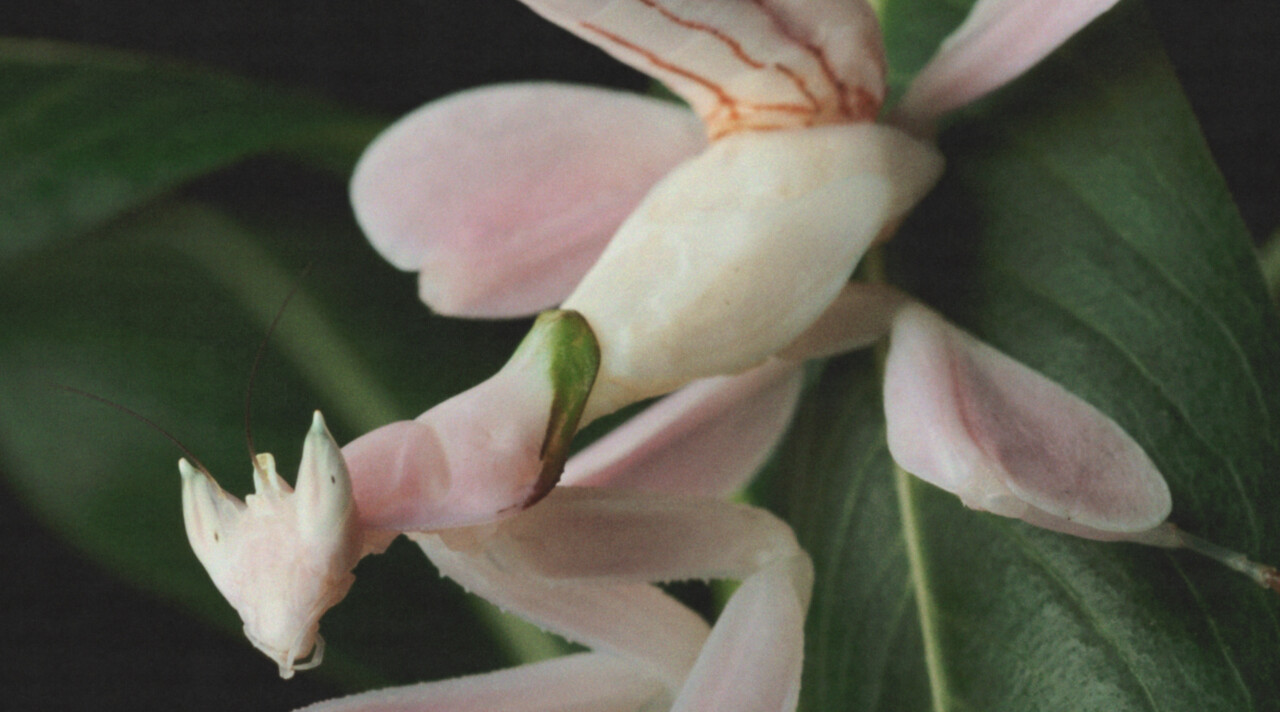
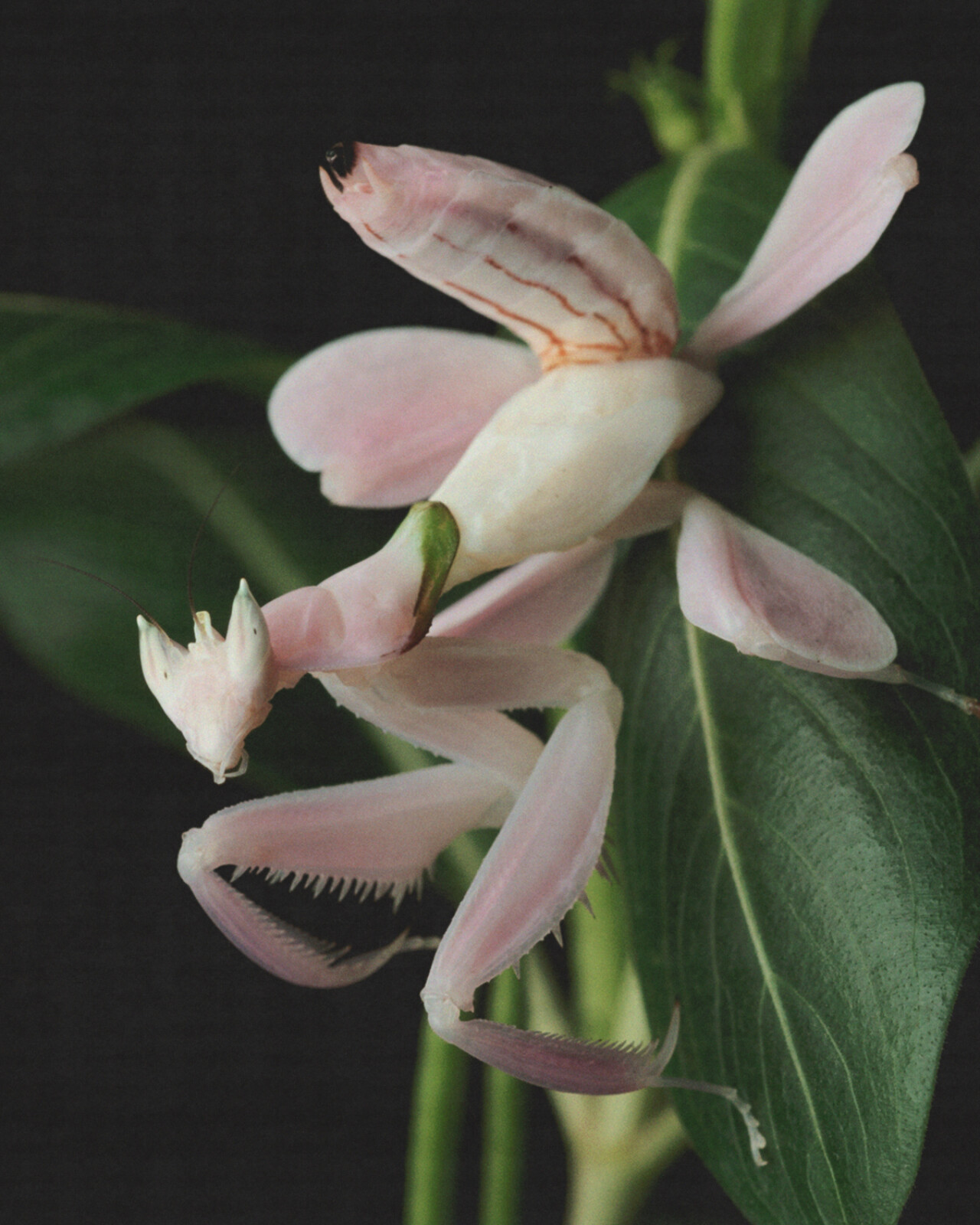
While some organisms mimic the unwanted, others employ the opposite approach. With their pink, petal-like limbs, orchid mantises evolved to evoke the artistry of flowers. They wait on leaves for pollinators to approach, at which point their elegant disguise turns deadly. This method of mimicry has proven fruitful for these insects; research shows that they might even attract more pollinators than the flowers they imitate. To attract life, the mantis became desire.
In the rainforests of Madagascar, a close inspection of fallen foliage and the branches of trees can unveil another form of fauna that evolved to masquerade as flora: the leaf-tailed gecko. And their details are exact; these arboreal lizards have flattened bodies, irregular edges, veil-like patterns, and curled tails that mimic bark and leaves. Staying completely still during the daytime, they remain invisible until night beckons. To remain something, they became nothing.
Few creatures are more chimeric than the mimic octopus, whose imitation isn’t fixed. With fluid control over their color, texture, shape, and movement, they shapeshift depending on what the moment calls for. They spread their limbs with stripes to appear as the venomous lionfish, bury their bodies in sand save for two arms that they wave like sea snakes, and raise all their limbs like the stinging tentacles of jellyfish and anemone. To adapt, they became change incarnate.
Appearance isn’t everything. Composers of the canopy, male superb lyrebirds create complex songs by copying and layering the sounds around them to attract females. They have been known to imitate dozens of other species of birds, the calls of mammals, and even the sounds of chainsaws and camera shutters. Far from mere replication, the birds remix the world around them into performance art, making their single voice many. To find others, they became choral.
Mimicry reveals identity that is relational. When everything feels too much, I ask that my sense of self become similarly boundless, wide enough to carry it all. That I might walk with death and flower with life, embody the rot and bloom. That I might melt into a tree, become nothing and everything, as fluid as the sea and all who swim it. Our species has produced an isolating fence around itself, but we can mimic the Earth once more—a song so vast it holds the whole world.
Join our membership community. Support our work, receive a complimentary subscription to Atmos Magazine, and more.
Life Imitates Life In the Evolutionary Marvel of Mimicry