Photograph by Amy Woodward / Connected Archives
words by willow defebaugh
“My question has to do with how we situate morality within an ecocentric worldview. How can nature inform our right and wrong? When is the predation of an animal, the harvest of a plant, the intentional husbandry of an animal for the purposes of feeding ourselves—when is this right, as opposed to wrong?” —Reader query
In the verdant necropolis of social coherence in which we now find ourselves, morality seems its central tomb. I used to think ecocide would stir virtue from its untimely grave, but we are living in an era when people can’t even agree on what is right and wrong. So what does nature have to say? Does morality flower in the living world outside of humanity’s manicured garden? It’s tempting to say no—other animals kill, maim, and cannibalize—but that’s not the whole story.
The late Dutch American biologist Frans de Waal, who championed the intelligence of our fellow animals and in so doing revolutionized our study of them, argued that morality is not exclusive to humans, and that emotions are its biological language. Morality is constructed from a set of building blocks, clearly possessed by many species beyond our own, that scientists call proto-morality: empathy, altruism, cooperation, peace-making, fairness.
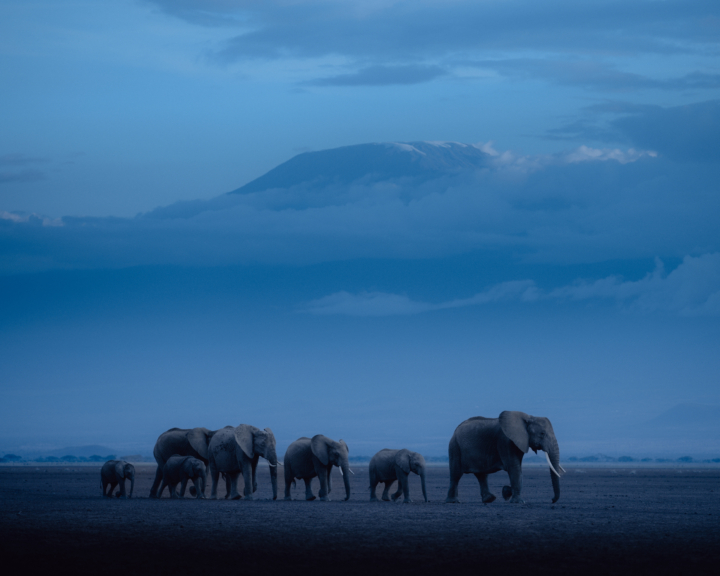
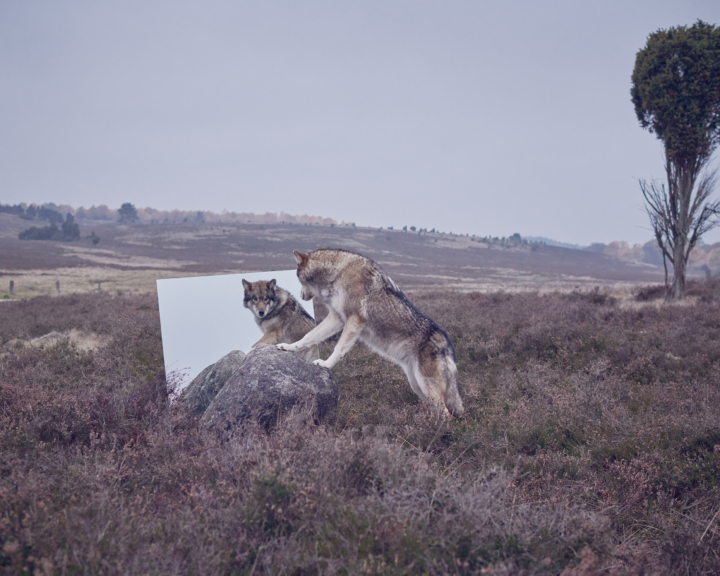
Chimpanzees regularly act altruistically, while capuchins react to inequality. Dogs often sense when humans are in distress and console them; elephants guard one another and touch trunks while under duress; wolves regulate pack behavior and make peace after conflict; dolphins lift the sick and injured so they can breathe above the surface. Even vampire bats, doomed to starve after three days without blood, will share their spoils in bloody french kisses. The list goes on.
Nature might not offer moral imperatives, but that isn’t to say morality isn’t natural. It bloomed for a reason: Social coherence offers evolutionary advantages. Ecology can’t tell us what is right or wrong, or even what is permissible, but it can reveal the relationships we are accountable to. It replants morality from the garden of Eden, where the tree of the knowledge of good and evil casts its long shadow, to the wider web of life. An ecocentric worldview is relational.
This web reaches beyond our relationship with just each other. Eating other animals cannot inherently be wrong; life itself is a trophic tangle of organisms continuously devouring each other. But when we affect other species’ ability to live and flourish, our actions become moral questions. Industrial agriculture in its current form is unweaving the web of life, contributing enormously to the climate crisis, and slaughtering at a scale unseen anywhere else in nature.
Every act of predation reverberates in the web. If deer populations disappear, wolves starve. Therefore, if wolves overhunt, they weaken their own future. Ecology grounds ethics. Nothing takes without being shaped by what it takes. Humans act as if we have escaped this feedback loop, even as the consequences are catching up with us. But our species is also blessed and cursed with that most curious capacity: to consciously choose what we take and how.
I let my personal morals guide my choices. But to some people, my very identity is immoral. So what do we do when our morals vary so vastly? I ask myself that question every day, and I still don’t know the answer. I come back to an ecological worldview, try to focus on what tethers us. Dependence creates accountability, and we are all dependent on one another and the life we share this planet with. I return to the only force I have ever seen truly change a person: relationship.
Join our membership community. Support our work, receive a complimentary subscription to Atmos Magazine, and more.
Can Morality Be Found in Nature?