Photograph by Gim Siew Tan
words by willow defebaugh
“I am out with lanterns, looking for myself.” —Emily Dickinson
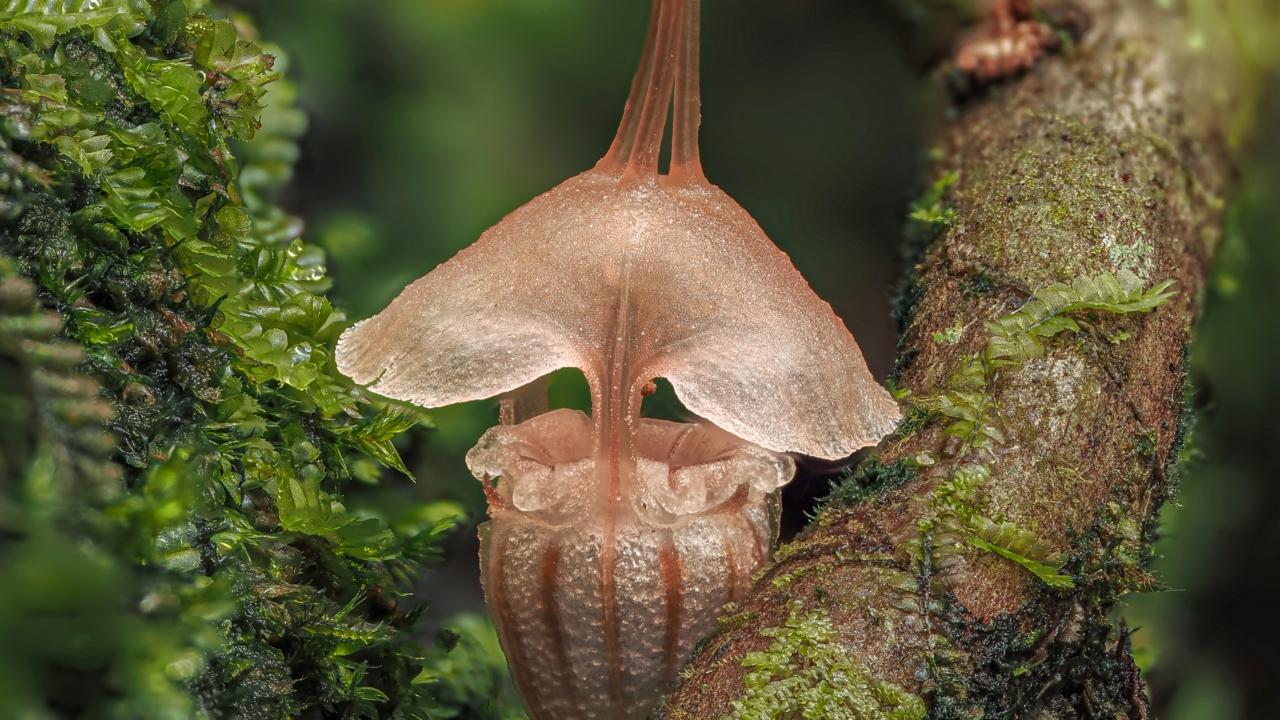
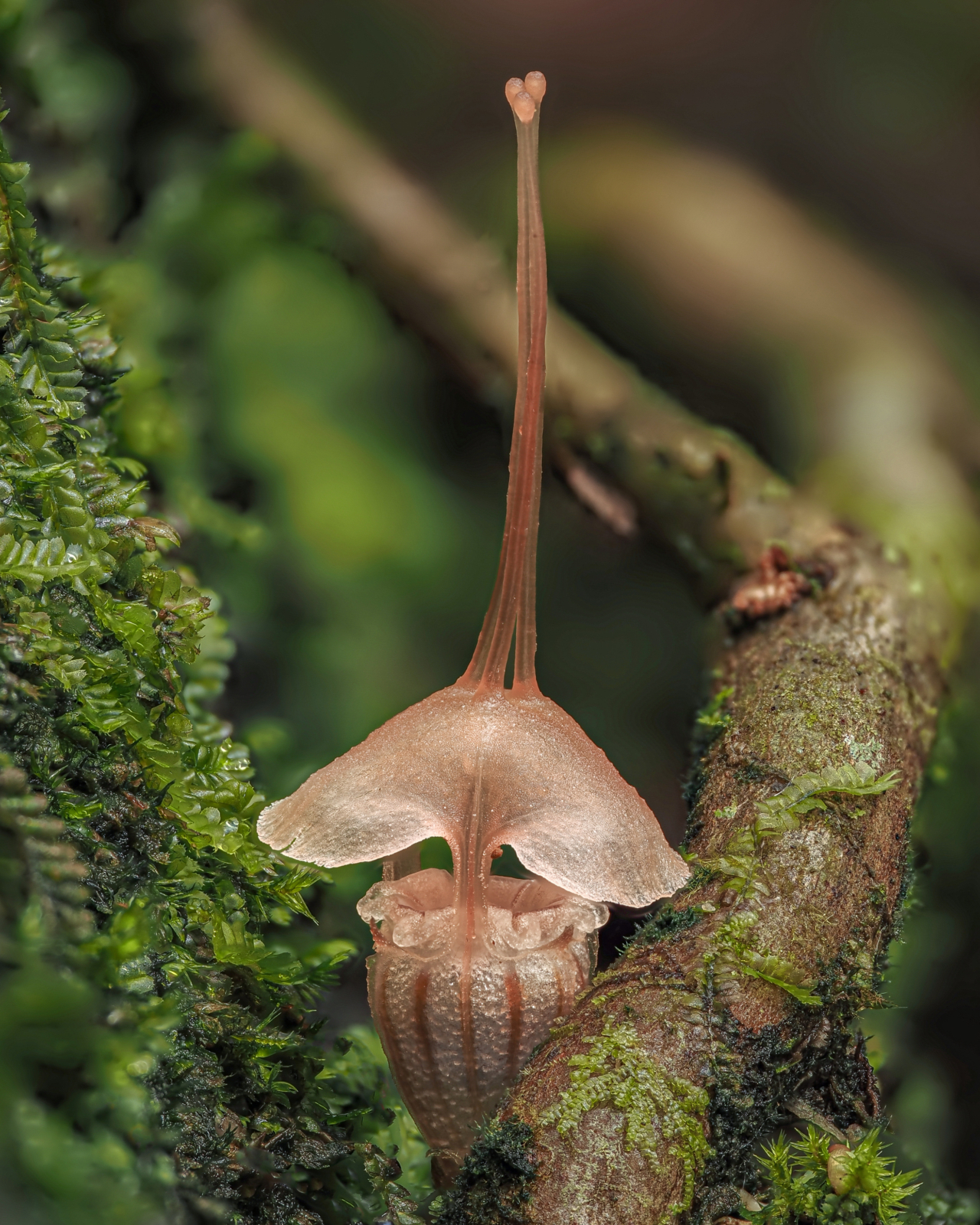
Nestled on the edge of a forest in Kuala Lumpur, Malaysia, an ethereal new plant species has been found. A variety of the fairy lantern, the elusive Thismia selangorensis flowers with a pale pink, translucent umbrella and tendrils that stretch skyward. Most of its unusual existence is spent hidden underground and in tree hollows. As a mycoheterotroph, it parasitically feeds on unseen mycorrhizal fungi—exploiting and drawing sustenance from their networks.
Mycoheterotrophs are few in the plant realm. Of some 400,000 known plant species in the world, only around 500 are mycoheterotrophs. Most plants form mutually symbiotic relationships with mycorrhizal fungi: Plants transform sunlight into sugar to feed the fungi, and the fungi give plants water and nutrients from the soil in return. But those like the fairy lantern “trick” fungi that are connected to other symbiotic plants, taking what is offered while giving nothing back.
The fairy lantern is shrouded in mystery, especially its otherworldly blooms. It blossoms irregularly, showcasing delicate flowers cloaked by dome-like tops called mitres that may protect it from rainfall (which is common in Kuala Lumpur and can be quite heavy during monsoon season). Accompanying this ornament are equally mysterious and delicate tentacles that may release chemicals to herald the flower’s emergence—a rare unveiling on the forest floor.
Aside from their whimsical appearance, fairy lanterns are aptly named. In Northern European folklore, fairies are known for their trickery and secrecy. In medieval times, they were feared for swapping out human children for shapeshifting changelings, spiriting babies from their cribs to unseen realms. Sprites, pixies, and fay could be benevolent guides or mischievous pranksters, appearing to forlorn travelers trying to find their way through the woods.
We are living in a time of fairy lanterns. All around us there are veiled entities that siphon our energy, attention, and well-being. The news, social media, and our devices drain us of our joy and our ability to focus—transporting us to domains behind the shimmer of metal and glass. We have traded our wandering for scrolling, but find ourselves lost nonetheless. The ripple of these forces on our mental health is subsurface, yet widely established.
Studies show that social media and digital technology, especially short-form content and frequent notifications, are linked to lower attention spans and higher anxiety and depression. Emerging research suggests this mirrors addiction: Dopamine surges reward us for scrolling, algorithms tailored to our behavior capitalize on our engagement, and separation anxiety keeps us reaching back. I’m not saying these platforms lack benefit, but I worry that they skew more parasitic.
So what are we reaching for? Ourselves, each other. Connection, belonging. Escape, novelty. There is still a world waiting to be explored outside our glowing screens, filled with marvels yet to be named. As a new year dawns, I want to focus my attention there as much as possible. And not every discovery is found with a lantern, looking for rarity aboveground. The bizarre is unpredictable. It can be tentacle-like in its flowering, subterranean and hidden within.
Join our membership community. Support our work, receive a complimentary subscription to Atmos Magazine, and more.
A New Fairy Lantern Is Found