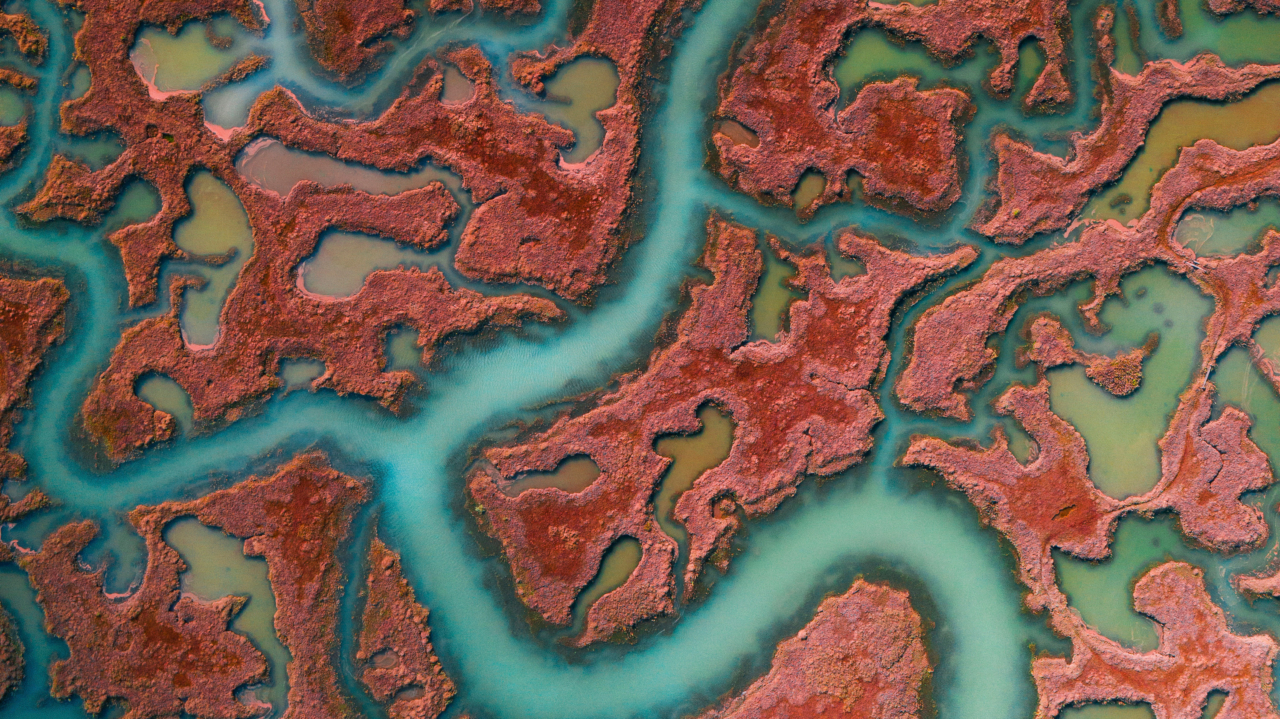
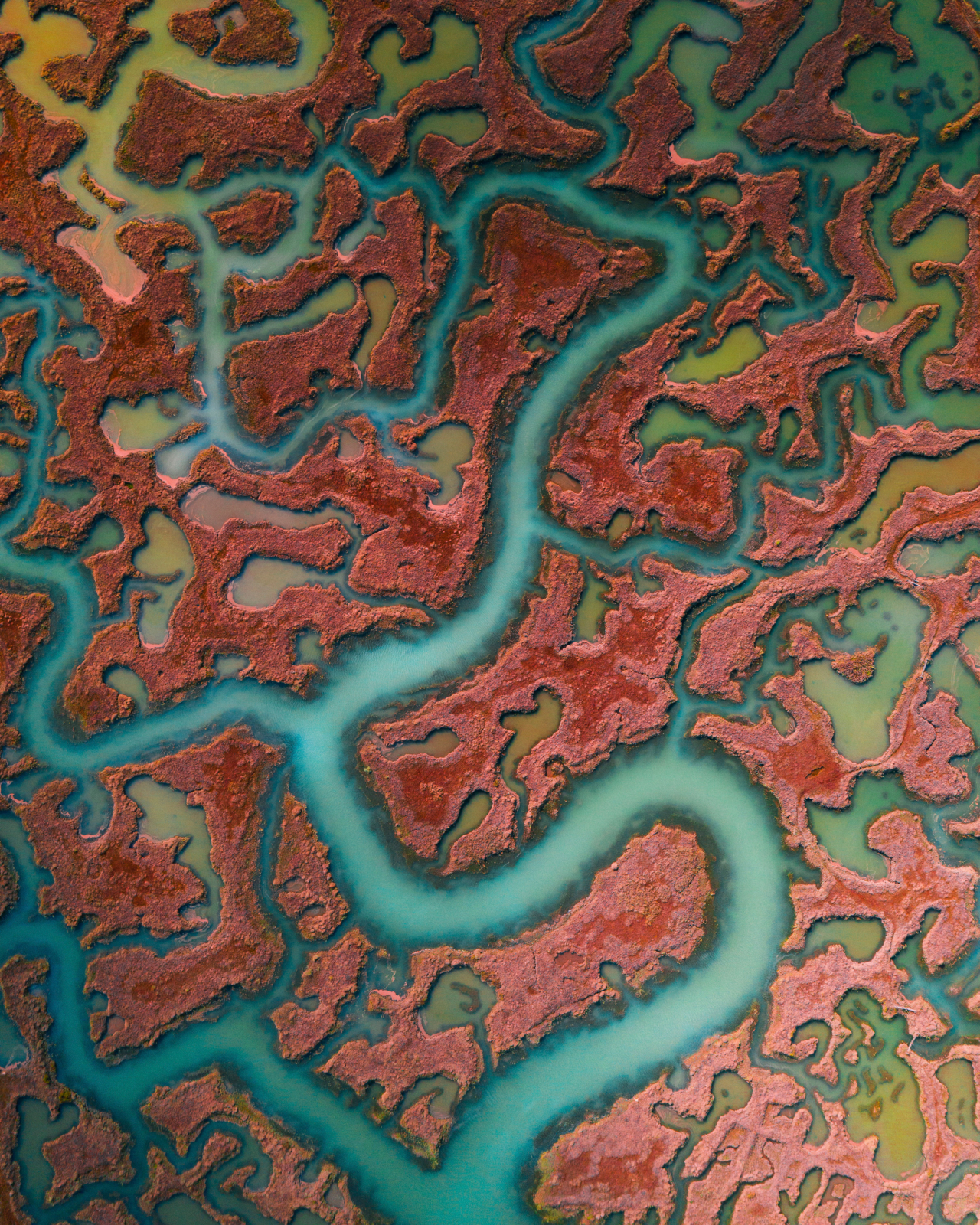
Photograph by Amazing Aerial / Kintzing
words by willow defebaugh
“Do not now seek the answers, which cannot be given you because you would not be able to live them. And the point is, to live everything. Live the questions now. Perhaps you will then gradually, without noticing it, live along some distant day into the answer.” ―Rainer Maria Rilke
It’s hard to make sense of this year. It feels like 2025 stripped away many truths that we once took for granted. The older I grow, the less I can say that I know for certain. We humans want to believe we have answers to life’s most pressing questions. But certainty fades with the ringing of years, decaying to reveal the assumptions beneath. In an era of disinformation and artificial intelligence, knowledge itself has never felt more suspect. So where do we go from here?
We can begin by embracing the freedom of not knowing. This newsletter marks the 300th edition of The Overview. For five years now, this has been a practice of surrender: admitting that I do not have the answers, and learning to look for them elsewhere. When I was beginning my transition, I turned to insects, who are no strangers to metamorphosis. When needing to process grief, I sought out decomposers. When I felt burned out, I found solace in the long view of volcanoes. Again and again, the living world met me where human knowledge fell short.
Over time, I’ve come to understand this as a practice of learning from rather than about nature. This was the foundation of my conversation with Robin Wall Kimmerer for The Nature Of podcast this week. We spoke about the humility required to open ourselves to the wisdom of the more-than-human world, and what becomes possible when we release the idea that humans are the sole keepers of intelligence. When we start to see everyone as a teacher, suddenly the answers—or, as Robin put it, the pathways to them—are everywhere.
This way of seeing is also at the heart of biomimicry, which is one way that nature’s teachings can be integrated into how we live. It’s a design framework that treats every other living being as an example of life having gotten it right. Learning from Janine Benyus and the Biomimicry Institute this year gave language to a philosophy I’ve been learning to live by through this newsletter—one that recognizes other species as guides and mentors.
A few years into this journey, I was writing for a mainstream publication about the launch of The Overview book when my editor flagged my use of the phrase “nonhuman animal” as redundant. I had to gently remind her that humans are animals. This is a common occurrence. We only use phrases like “animal” and “animalistic” for humans pejoratively, echoes of an Enlightenment-era belief that knowledge and rational thinking would elevate us above the rest of life on Earth.
Where has that gotten us? The top of a pyramid is a lonely place. In another conversation I had this year, writer Robert Macfarlane offered the idea of enlivenment as a companion—or perhaps antidote—to enlightenment. Out beyond the rational mind, beyond the fantasy of omniscience, the living world is waiting for us to embed ourselves once more. In surrendering our fealty to human knowledge and exceptionalism, boundless wisdom opens before us.
If you feel uncertain about the path ahead—if you don’t even know what question to ask—you aren’t alone. Especially at the end of a year such as this one. But the vision of the inner eye is always golden when looking at the ground. When you feel lost, go for a walk. Notice who shows up. Read the answers written in their feathers and scales, roots and spores. Find your mentors. Let yourself be enlivened. The world is both a library and a map, guiding us home.
Join our membership community. Support our work, receive a complimentary subscription to Atmos Magazine, and more.
A Living Map