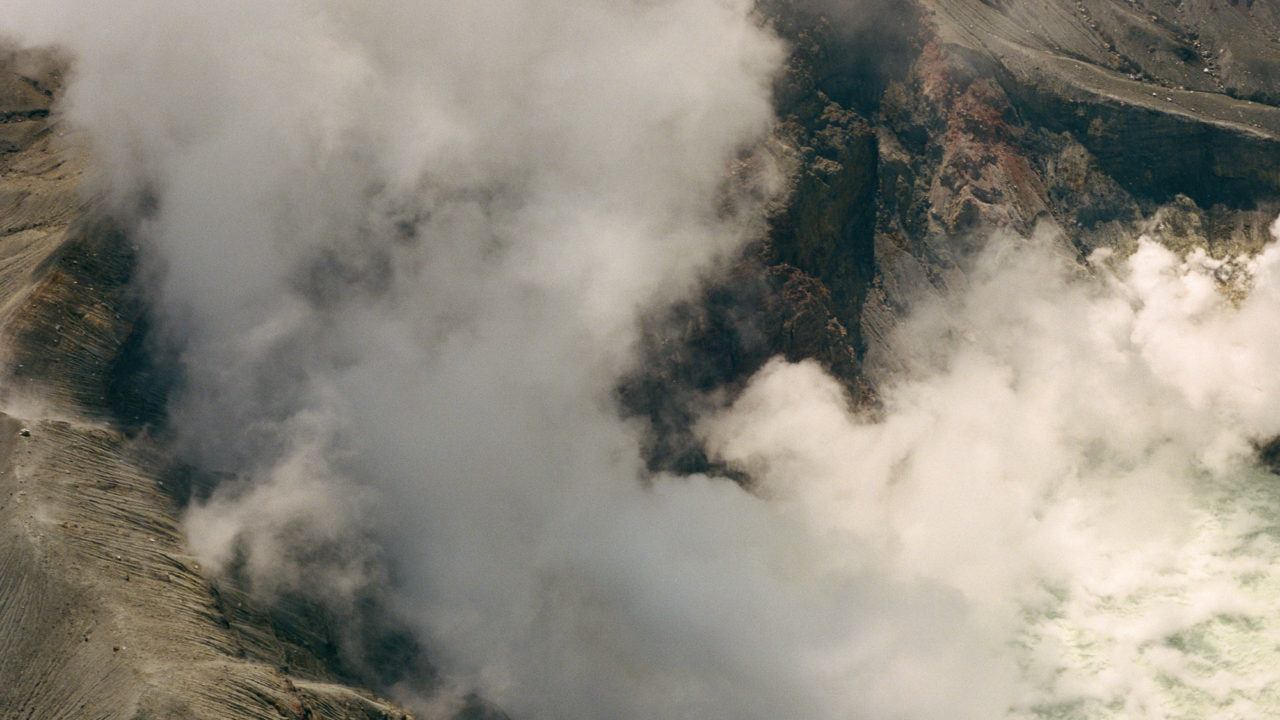
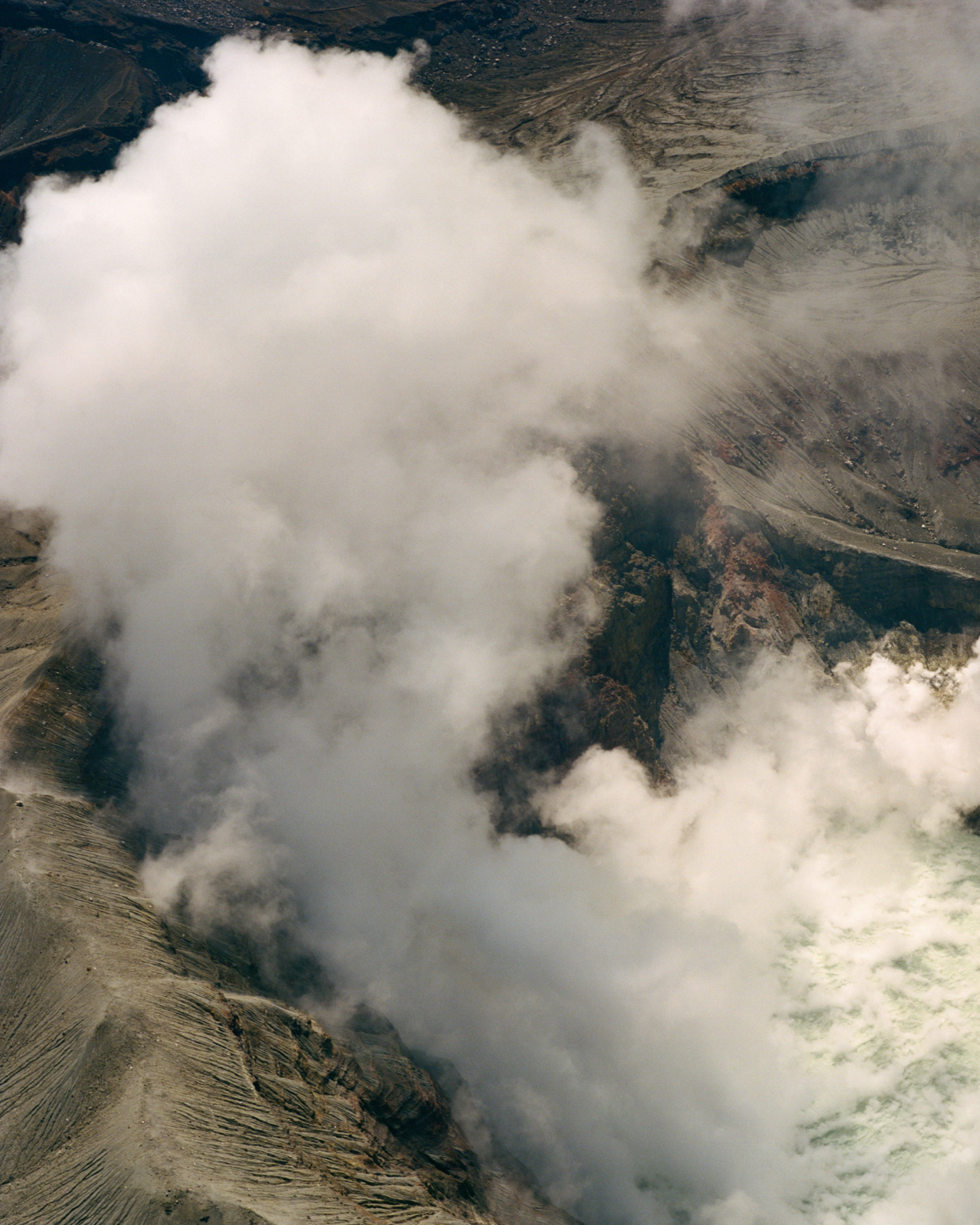
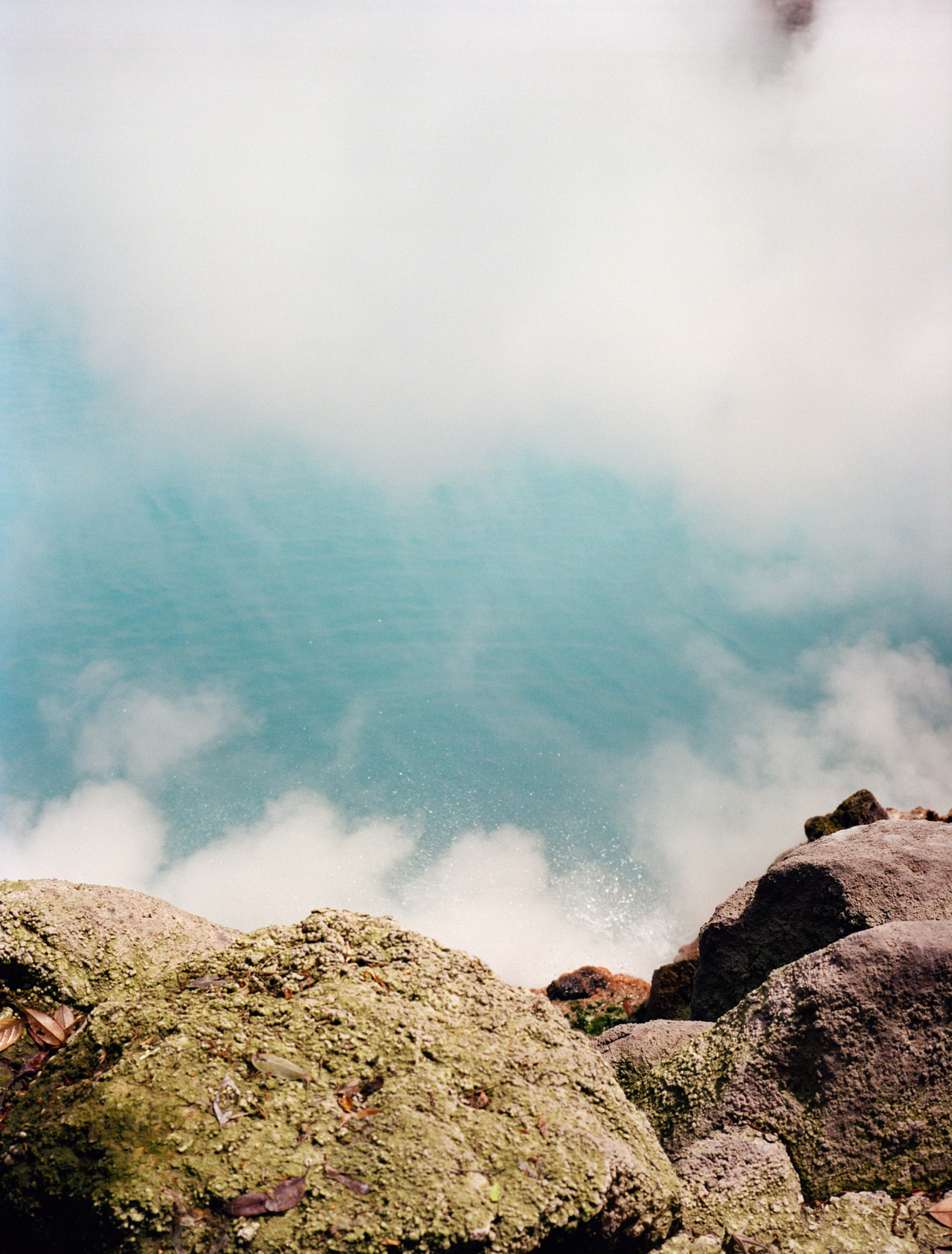
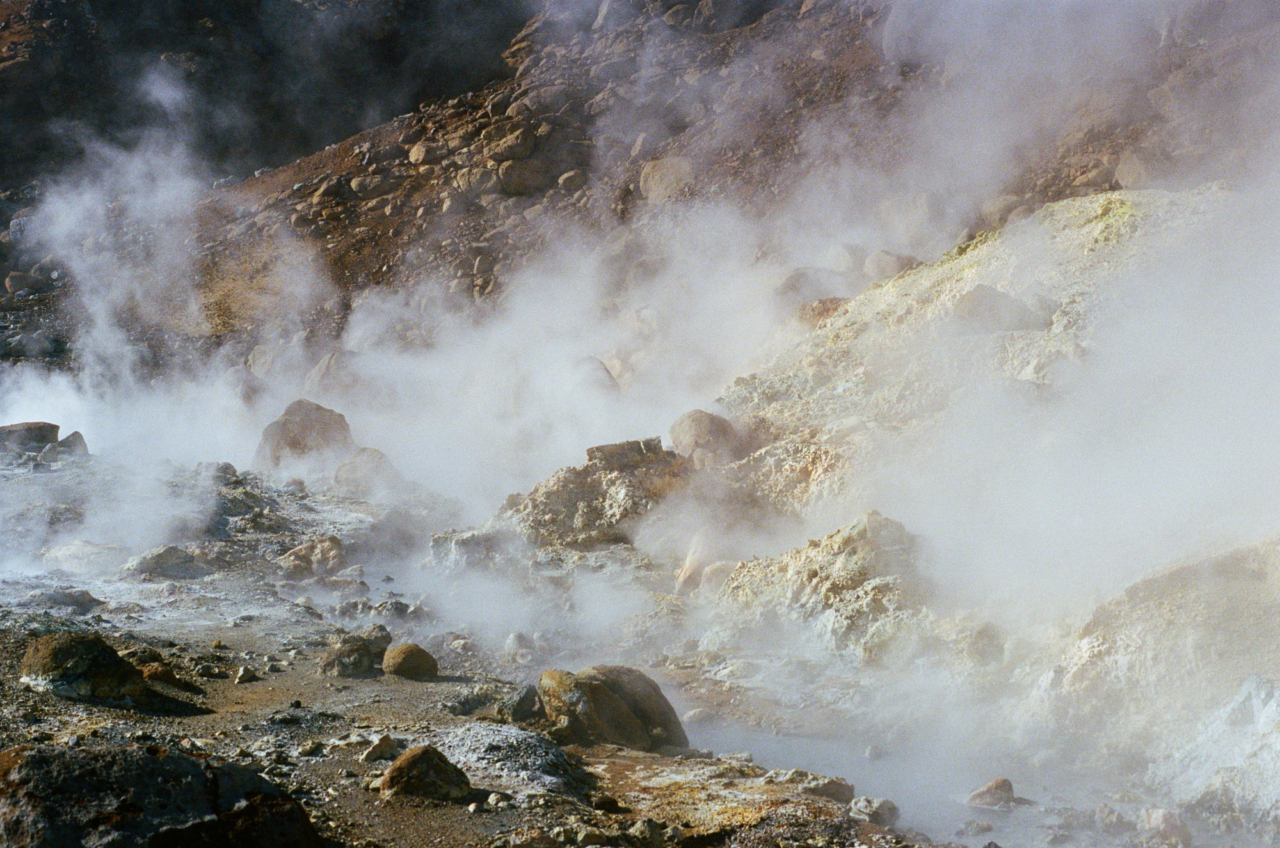
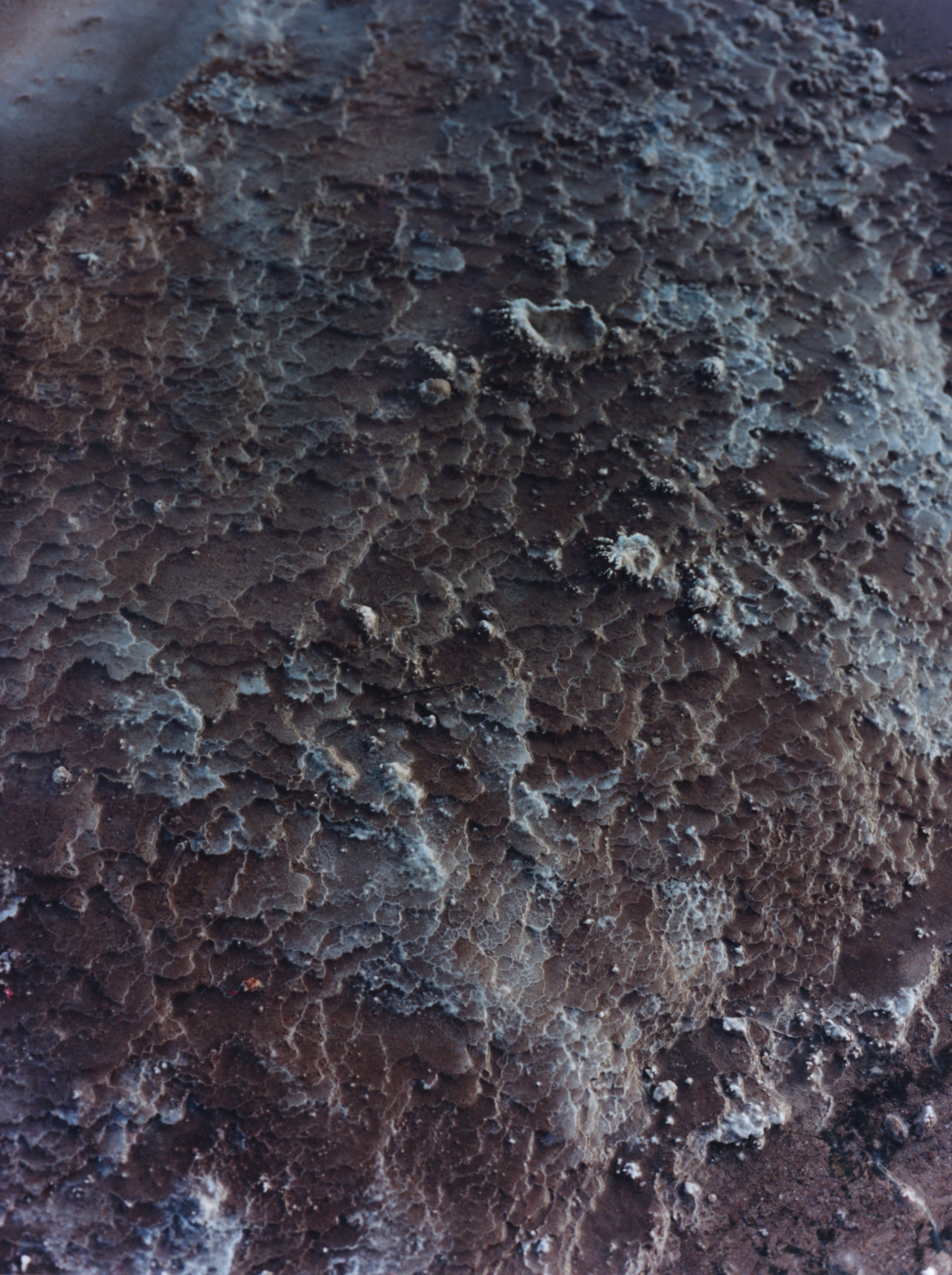
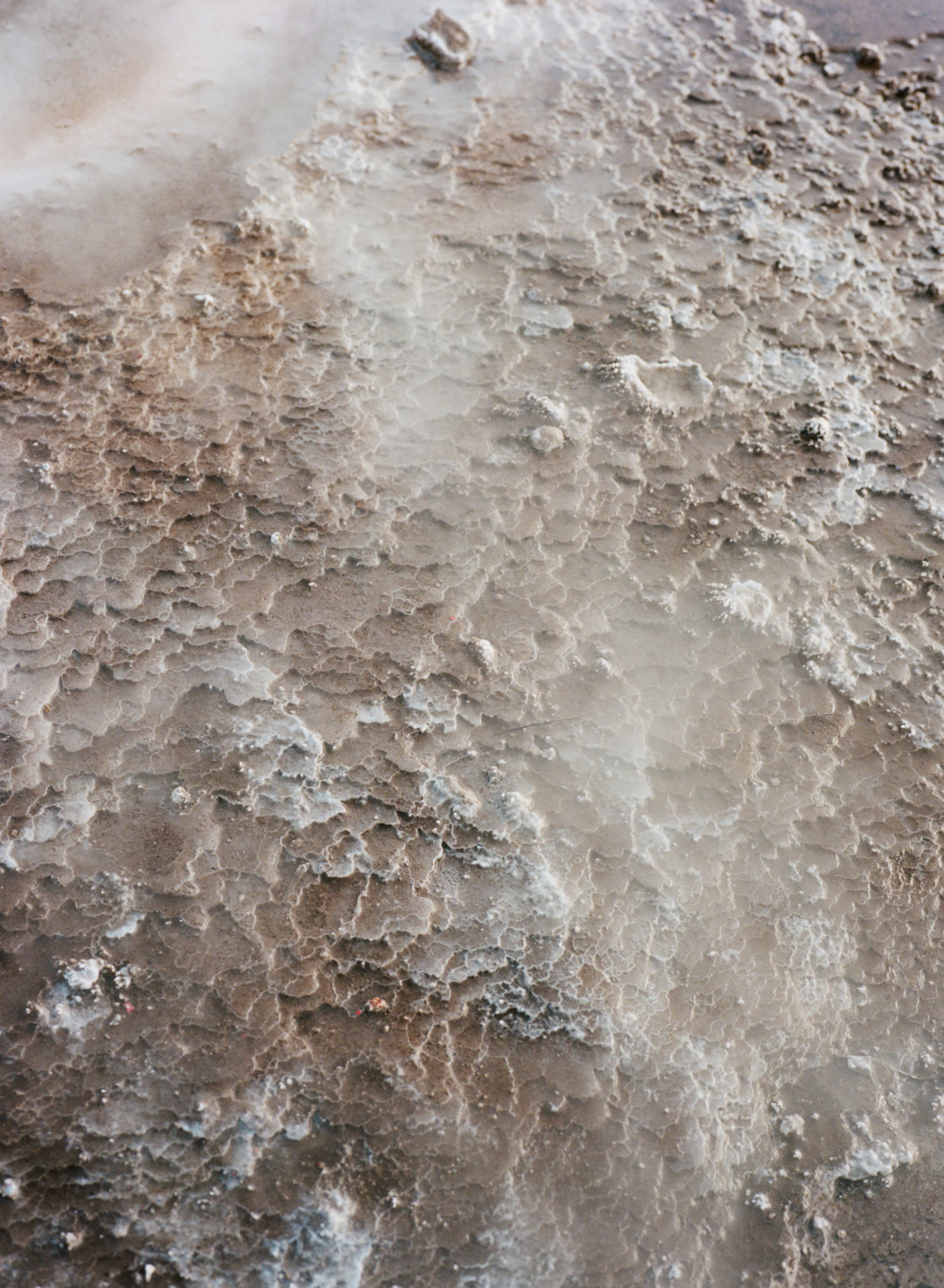
This series of images by photographer Jess Gough features naturally occurring steam and geothermal springs in Chile, Japan, and Iceland.
Words by Gregory Barber
Photographs by Jess Gough
A few years after he moved to Presidio County, Texas, Trey Gerfers became aware of something strange underground.
Most people know the region for Marfa, with its galleries and Prada store art installation, and for its remarkably dark skies, a testament to the county’s remoteness. But below the town of Presidio, where most of the people in the county live, and where a visit to the dentist generally involves a trip across the border, is a remarkable reservoir of heat. Below the borderland, the Rio Grande river valley continues as a geological rift where the crust has splayed apart, allowing the mantle to bleed just a little closer toward the surface. Down below, the rock gets hot, fast. The temperature rises by 300 degrees Fahrenheit within a half-mile.
To Gerfers, this heat presented an opportunity. Originally from San Antonio, he had traveled the world working as a translator (mostly of technical reports between German, Spanish, and English). Soon after settling in Presidio County, he learned that living in a small, remote place means wearing many different hats. He first became the head of a local environmental nonprofit that was taking on the Trans-Pecos pipeline, which would ferry natural gas from the Permian Basin, a few hundred miles northeast, to Mexico, via Presidio. “We lost that fight,” Gerfers said. “Big surprise.” Next he became the chair of the county water board.
Gerfers was looking for a fight he could win. “I wanted to focus on something positive,” he said. The answer turned out to involve embracing the same drilling rigs he had once fought. He came across a report on underground heat across the state of Texas. Presidio, for all its remoteness, held the potential to be the epicenter of one thing: geothermal power.
Renewable energy may not look like a winner in this political landscape, with conservatives in Congress and in state governments doing all they can to stall the renewable revolution. But even as conservatives throw roadblocks in the path of solar and wind development at every turn, geothermal has emerged as an unusual bright spot. The industry hasn’t escaped the decimation of science funding across the federal government or the atmosphere of chaos and uncertainty—nothing has. But conservatives have, in some cases, been vocal backers of geothermal, which has benefitted from conservative support on issues like easing regulations for drilling of all kinds, whether for fossil fuels or for heat.
That’s why, even now, Gerfer’s fight is looking unusually winnable—provided new geothermal technology can be proven out.
From the surface, Presidio’s energy potential is not immediately apparent. Geothermal power plants like the ones found in California and Iceland are made possible by hydrothermal activity—places like hot springs where groundwater mixes with heat that can be carried to the surface. Apart from a few lukewarm springs, the Big Bend of Texas doesn’t have that. Few places do. That’s why, for all the appeal of geothermal energy—clean, essentially carbon-free, and, unlike other types of renewables, on at all times of day, through all seasons, regardless of fickle weather—it remains a rounding error in the overall energy mix. Today, the U.S. is the world’s biggest producer of geothermal energy, and it contributes less than 1% of electricity overall.
But newer technology aims to extend the reach of geothermal power to places where heat is present, even if water is not. A variety of experiments are in play: One borrows fracking techniques from the oil and gas industry to open cracks in the rock and fill them with water, creating a reservoir of hot water where it didn’t exist before. Another strategy, called “closed loop,” entails drilling an impermeable tube through which liquid is pushing, absorbing the heat and bringing it to the surface. The end result is the same: virtually emissions-free power, 24 hours a day. And all that either requires is hot rock, giving rise to the idea of “geothermal anywhere.”
For a long time, the reality was geothermal almost nowhere. The technology has been a promising idea, but never quite a reality. Past decades are littered with expensive experiments gone awry. Cases where boreholes failed to draw up enough hot water or, due to poor planning of the fracturing process, led to earthquakes.
But recently, that’s started to change. Fervo, a startup backed by ample venture capital, has promised to produce hundreds of megawatts soon using fracturing techniques. In Germany, Eavor, another well-funded start-up, is finishing construction on its first commercial closed-loop plant. Cheaper drilling and scientific efforts to better understand subterranean heat have helped give investors and startups the nerve to actually try commercializing the technology, says Joseph Moore, a University of Utah professor who leads an academic project called FORGE to “de-risk” geothermal energy. “I think things are more positive now than they have been in years,” Moore said. “The advances are coming more quickly.”
In Presidio County, the Texas-wide geothermal report suggested those advances could work there, too. But no one had paid much attention to the findings. The county is the fourth poorest in the state and was perceived, Gerfers said, as far too remote—too far from cities and industry—to make abundant energy production useful. “As per usual, Presidio County got tossed to the side. But we’re used to that,” he said.
Gerfers reasoned that the county could find a way to export that power, while rebuilding its own industry in a place where the agricultural base has withered. Today, it’s common for those growing up in the Big Bend to move north and take a $30 an hour job flagging traffic in the Permian. “We’re just a couple hundred miles south of the biggest oil and gas field in the world,” Gerfers said. “They’re taking advantage of the energy underneath them. Why shouldn’t we take advantage of the energy underneath us?” With geothermal relying on many of the same drilling rigs and bits and engineering know-how that the oil and gas industry uses, the county could also potentially make use of that proximity.
“For a long time, the reality was geothermal almost nowhere. The technology has been a promising idea, but never quite a reality… But recently, that’s started to change.”
The problem, at the outset, was limited information. “Our knowledge of what’s more than five feet below our feet is almost nil,” said Ken Wisian, a former Air Force general turned professor at the University of Texas, Austin, who was the lead author on the report. Presidio’s problem is that more detailed data comes from drilling—and nearly all of that is for oil and gas—but the few wells bored there had come up dry. Gerfers convinced the county to “scrounge up” $15,000 to help pay for Wisian to undertake a more intricate study of the area’s heat, with the idea of showing where exactly geothermal startups could drill and have a good chance of hitting the right temperatures to produce electricity. The additional reconnaissance proved fruitful—soon Presidio had suitors.
Whether that results in a power plant is still to be determined. The county development board signed a power purchase agreement with Exceed Geo Energy earlier this year for 110 megawatts. The plant would be the first of its kind anywhere in the world—a type of closed-loop technology that involves filling the system with highly pressurized, “supercritical” CO2. Closed-loop systems face questions about how much heat they’ll be able to draw in the long term, Moore notes, because without fractures, there’s less surface area to keep the geothermal system hot. But the idea is to head off potential concerns about fracking and water use. “The premise where you’re losing water doesn’t seem right to me,” said John Kennedy, executive director of the Presidio Municipal Development District, who has been working with Gerfers to make geothermal happen.
For Kennedy, perhaps the more complicated process will be turning the county itself into a broker of electrical power, and making sure the benefits flow to residents. With a small annual budget, the board has offered up land as its primary bargaining chip rather than sinking money into a risky experiment. There have been questions, of course, about bringing an unusual new technology to the Big Bend and about what sort of development may come down the line. “I’m trying to keep an open mind,” said Kennedy. “It’s not straightforward at all. But there’s a vision here.”
This story first appeared in Atmos Volume 12: Pollinate with the headline, “The Clean Energy Solution Beneath Our Feet.”
A collection of bold ideas and imaginative solutions for a thriving future. In an era defined by urgency and possibility, our planet depends on visions for progress that are actionable, daring, and transformative. Because a single idea, like a grain of pollen, can travel great distances—and catalyze new life.
Why Oil Country Is Betting on Geothermal