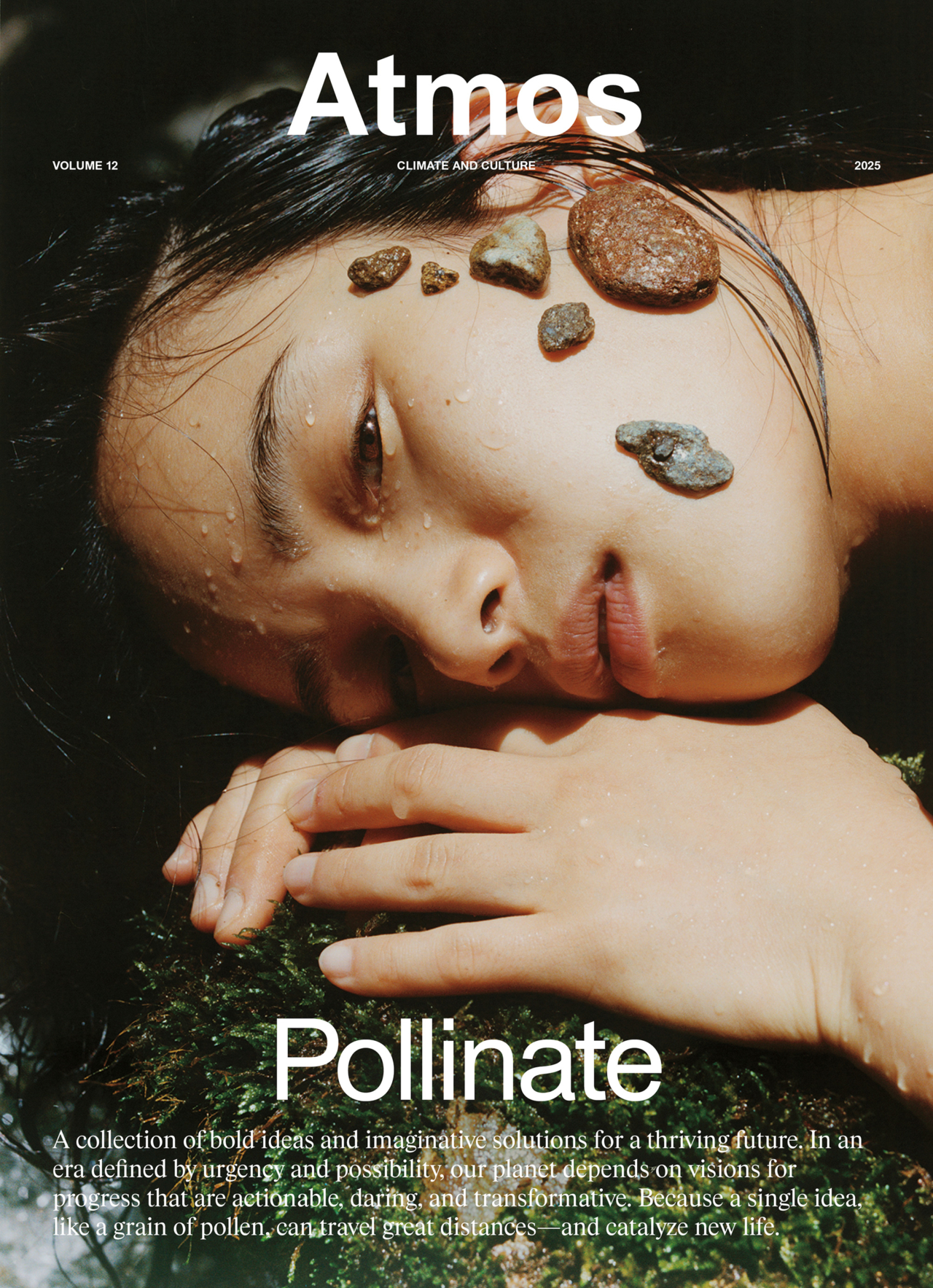
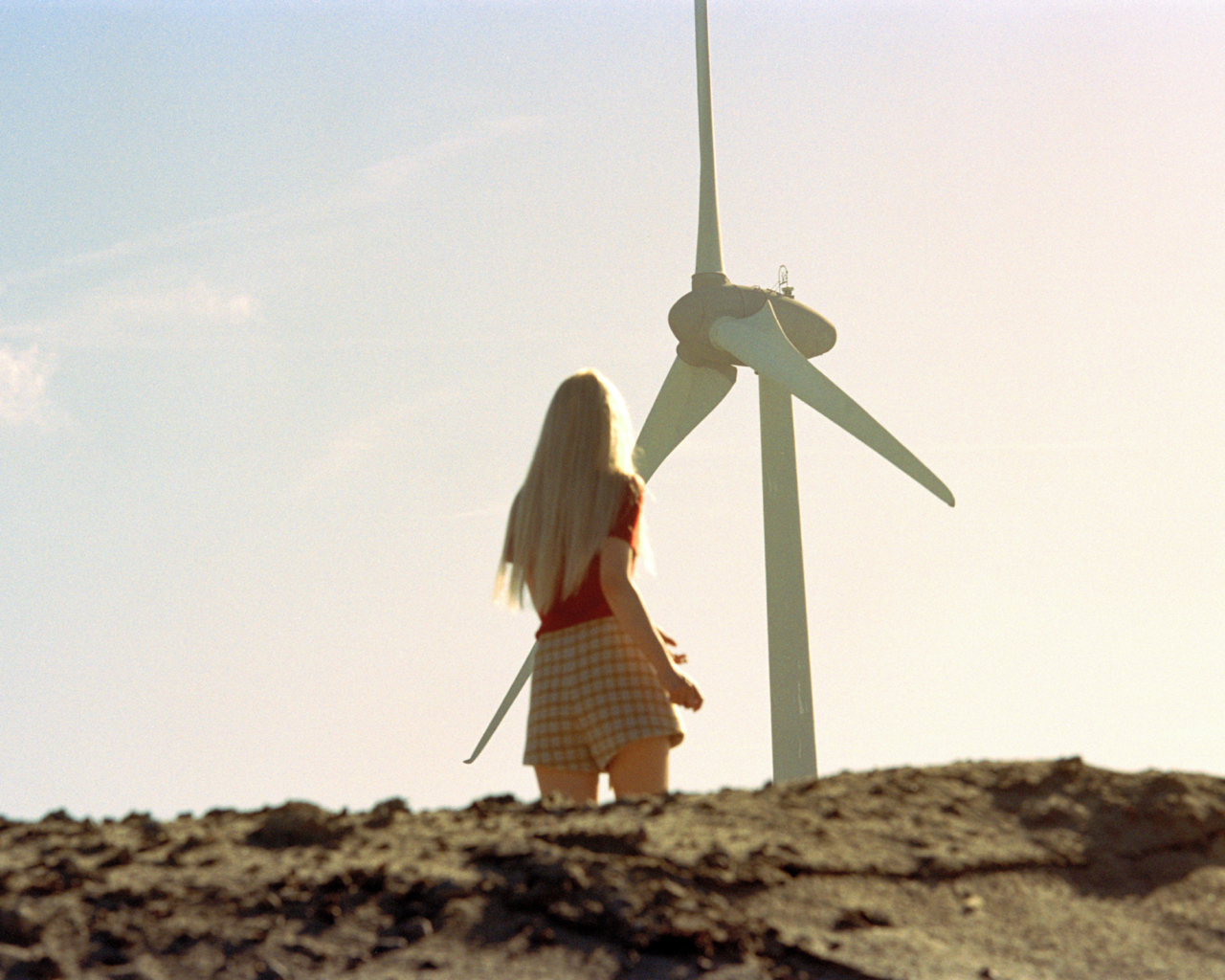

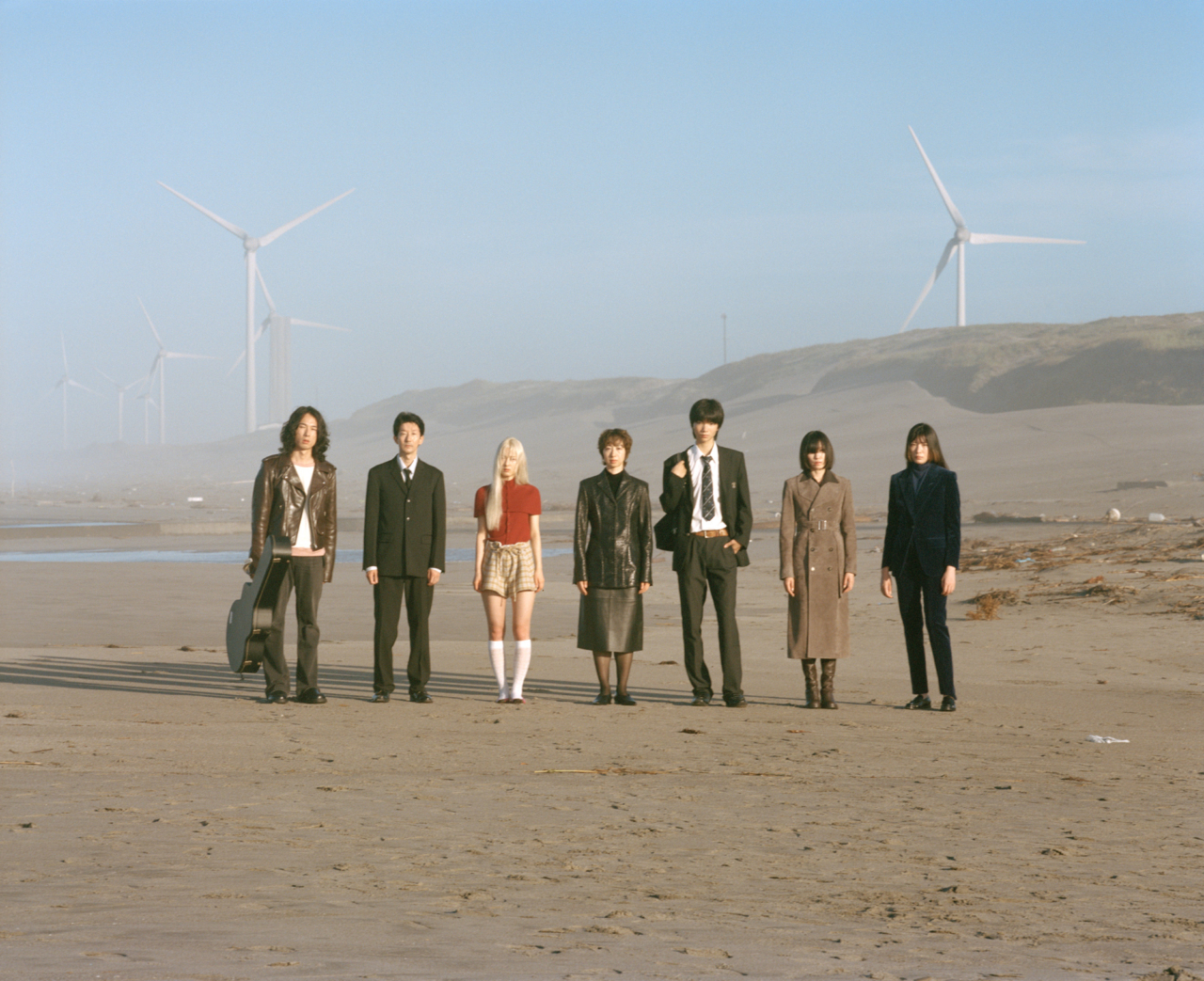
Miu wears Amomento top, Séfr shorts
When Mikiko was first asked to envision herself in the year 2060, she was skeptical. The instructions were clear: Imagine you could time travel 40 years into the future of Yahaba Town and live there at your present age. Then, provide ideas for policies that should be implemented now that would represent the interests of that generation. As a 40-something-year-old woman who’d lived in the charming Japanese town for a decade, Mikiko didn’t see anything wrong with the way things were currently, and she couldn’t imagine she’d have any issue with it 40 years down the line, either.
A young woman about two decades her junior changed her mind. The woman expressed dissatisfaction with the way things were and a desire for a better tomorrow, which reminded Mikiko of her own decision to leave home at a young age. Mikiko wanted Yahaba Town to be different—a place where young people wanted to stay and build. After some discussion, she reconsidered her vision for the town’s future. Maybe things needed to change, after all.
Gathered in a small room at Yahaba Town Hall, Mikiko, the young woman, and a handful of other local citizens of disparate ages had agreed to engage in these imaginative discussions as a part of a budding new movement called Future Design. As members of the inaugural Future Design workshop, participants like Mikiko were later interviewed about their experience in a study published by researchers Yoshinori Nakagawa and Tatsuyoshi Saijo (interviewee last names were omitted).
While Mikiko and her groupmates mentally stepped into the future, a separate intergenerational bunch inside the town hall had been tasked with discussing and designing their own set of policies—but as their current-day selves. After months of ongoing conversation, the two groups of Yahaba Town locals came together in a debate—future versus present—to share their ideas on topics like climate change, infrastructure, and healthcare investment.
This is the crux of the Future Design framework. Proposed by Japanese economist Tatsuyoshi Saijo, the methodology uses these roleplay exercises to address our disregard for the well-being of forthcoming generations. Indigenous seventh-generation traditions have long championed thinking in this way, formally considering those who will inherit the world up to seven generations from the present in their major decision-making discussions. Inspired by this method, Saijo designed his own experiment where the future and present would negotiate with one another, finding that those in the imaginary future group consistently invested in the future at higher rates.
In a politically chaotic and short-sighted world, considering the priorities of future people could offer a more holistic path forward for governance at the local, federal, and international levels.
World leaders should embrace this framework the most, says Future Design Consortium founder and neuroscientist Dr. Tsuyoshi Okamoto. In reality, however, such an unconventional idea might struggle to gain traction in a group known to change slowly.
“That’s why I’ve focused on engaging young people—those who are likely to become the leaders of tomorrow,” Okamoto said. “By experiencing Future Design early on, they can begin to develop habits of thinking and acting for a better future society.”
Okamoto is an associate professor at Kyushu University, where a Future Design-based course is now part of the required curriculum for approximately 2,700 first-year undergraduate students. It’s believed to be the largest implementation of Future Design education in the world.
“In a politically chaotic and short-sighted world, considering the priorities of future people could offer a more holistic path forward for governance at the local, federal, and international levels.”
During class, students are asked to vividly imagine what daily life would be like in the future and to describe it using present-tense, definitive language. In Japan, the intense effects of climate change are already being felt through extreme heat and flooding, leading young people to envision a dystopian future, Okamoto explained. Through the Future Design process, they’re encouraged to imagine the future freely without preconceived notions, and therefore develop a genuine desire not to let this dystopian future happen.
“At that point, they begin to see the issue as personal, and start to seriously consider what actions are truly necessary. I believe that the more people who carry that mindset—and can turn it into action—the more our society will begin to change for the better.”
Okamoto has gone so far as to test brain activity on those engaging with Future Design-style thinking. His preliminary observations suggest a trend: Future Design participants tend to make more sustainable decisions, which is reflected in corresponding changes to their brainwave patterns. The Future Design methodology doesn’t require any major conscious psychological shifts in the participant; rather, participants experience a shift naturally by fully embracing the act of roleplaying.
Young people tend to be more enthusiastic and open to this, although both Okamoto and Saijo acknowledge a gap in imaginative capacity between them and older generations. A lack of life experience can prevent younger generations from being able to see how dramatically things could change in just a few decades; whereas older people can activate the same part of the brain used to think about their storied pasts to envision a more expansive future.
Both perspectives are necessary for change, which is why intergenerational dialogue is a key tenet of the Future Design methodology.
Five thousand miles away in the Bay Area, California, climate activists Jayden Wan, 17, and Clint Wilkins, 79, have fully embraced this form of collaboration.
Wan and Wilkins have been working together for the past two years on Future Design workshops, materials, and trainings. As a duo that is “feeling [their] way to solutions,” they’ve gained traction in their charge to spread the Future Design framework and help people connect with the generations that are alive today, while taking into account the generations that are on their way.
“We are combining our strengths and forgoing our weaknesses for the sake of a better future. That’s something that I can get on board with, and that I also want my peers to get on board with,” said Wan.
There are three main generational buckets Wan and Wilkins categorize people in: youth, midlifers, and elders. As Wilkins explained, each generation has an essential role to play: “We elders are the conveners, the midlifers can actually get things done, and the youth are kind of justice-seekers in training.”
Last year, with the help of climate organization Elders Action Network, the two were able to gather 56 people of various ages and disciplines—ranging from local elected officials to high school students—for an official Future Design retreat. They discussed a real California ballot measure that was up for a vote: Prop 4, which proposed authorizing a $10 billion bond for climate spending in the state. Participants followed the present versus future role play framework, splitting into intergenerational groups and negotiating how much money should be invested into mitigating future climate change events.
The most common feedback from the retreat was in praise of the intergenerational structure: Participants felt as though it was a safe environment for everyone to share their thoughts and perspectives, regardless of age. This sort of solidarity across generations is precisely what Wan and Wilkins believe will cultivate empathy for unseen future generations as well as encourage government officials to recognize that safeguarding the future is popular among all ages.
“The idea we’re trying to manifest is that if we bring together the youth, the elders, and the folks in between, and get them all in a room, advocating for the same policies, it can really make a difference when it comes to how decision-makers perceive their own policies,” Wan said.
Back in Yahaba Town, where the first ever Future Design workshops were held, these strategies have paid off. The mayor officially declared it a Future Design Town in 2018, and subsequently formed a Future Division, where members design the present from the perspective of the future. Currently, over 80% of the town’s policies are made by citizens who’ve become Future Designers. Now, when Mikiko walks through the charming streets, she tends to look a bit closer at what the town might need for its future to flourish.
Redesigning and transforming governance in a way that considers our future kin might seem like an uphill battle. After all, empathy for those rendered invisible—whether it’s marginalized peoples, nonhuman entities, or future generations—seems to be constantly sacrificed for self-satisfaction. Still, love for the next generations remains the number one motivator for support of climate action, whether those actions are implemented by policymakers or not.
There’s no denying that the stakes are high. Perhaps with a new political design, the future could be seen more clearly—enough to give its beings a fair shot to continue to protect the Earth, pass the torch forward, and look back to tell their ancestors, “Thank you.”
Talent Souta, Koichi, Jinichiro, Miu, Meguro, Yuumi, Miyu Motegi Makeup Rie Shiraishi Hair Tomihiro Kono Photography Assistants Aki Takayama, Kota Otanii Styling Assistants Moka Asada, Reika Omi, Jinichiro Matsuyama, Marina Furuhashi, Tatsuki Yamada, Nao Yanahara Makeup Assistant Riho Aoyagi
This story first appeared in Atmos Volume 12: Pollinate with the headline, “Japan’s Vision For a Future-Minded Society.”
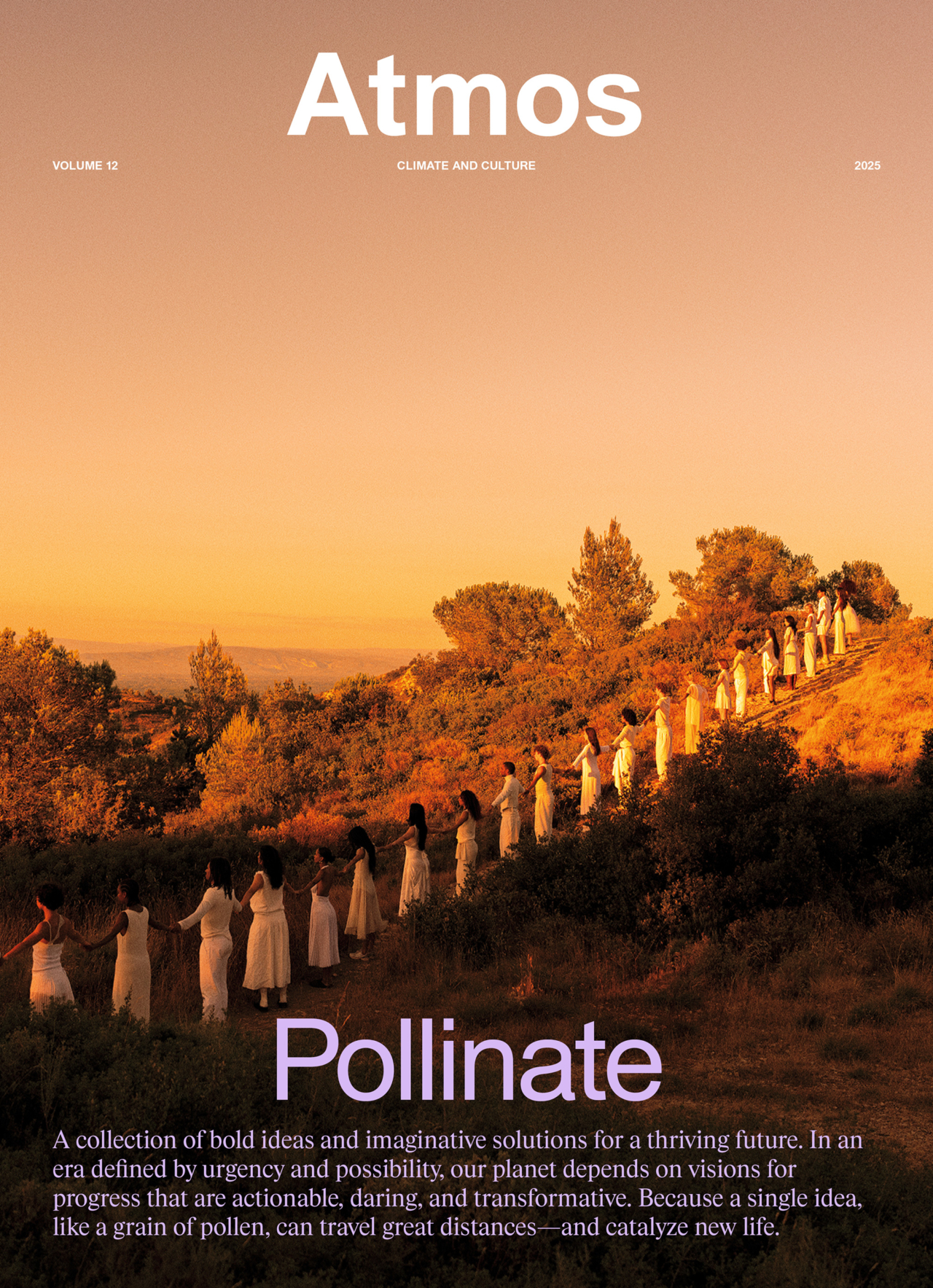
A collection of bold ideas and imaginative solutions for a thriving future. In an era defined by urgency and possibility, our planet depends on visions for progress that are actionable, daring, and transformative. Because a single idea, like a grain of pollen, can travel great distances—and catalyze new life.
What Happens When a Town Governs From the Future?