Words by Jarod K. Anderson
Artwork by Ida Lissner
When nature is a wellspring of awe, a feeling of connection follows. A world that enchants us also entices us to be fully initiated members of her rich and interconnected family, to be guardians of her wonders. Children know this. Adults, often, need a helping hand to remember. As a naturalist who writes speculative fiction, I find that fantasy narratives are a powerful tool for rekindling curiosity and emotional investment in nature.
Setting aside grief and overwhelm among the ecologically minded, there seem to be two key barriers keeping many from a meaningful relationship with nature—and they are, paradoxically, opposites. It is difficult to feel a personal connection to nature because she is distant, abstract, and unknowable. It is difficult to feel a personal connection to nature because she is commonplace to the point of becoming drab, humdrum, and fading from our active awareness.
In the former, the wonder of nature feels beyond our reach; in the latter, the wonder doesn’t feel worth the effort to grasp. And so, we end up with two antithetical pathways leading to the same troubling destination: a sense that the world which sustains us is mere trivia or dry textbook fodder. Past and present, such dispassionate views of nature are deeply damaging drivers of our climate crisis.
It’s absolutely true that our enduring epidemic of disinterest and disconnection is not consistent with the bare facts of our reality. We depend on other species for every scrap of sustenance, and each of our breaths is founded on vast nations of plants and phytoplankton. We are uncontestably and intimately connected with nature. None of this is a secret. The facts are readily accessible. The question is whether that availability of information has translated into any meaningful, widespread sense of ecological connection.
I’m afraid not.
Even those among us with the most dispassionate attitudes toward ecology could probably tell you where their oxygen originates. They just don’t particularly care. The knowledge doesn’t feel involved in their internal, emotional lives. There’s no tingle of curiosity, kinship, or childlike wonder on offer.
When discussing our climate crisis, the information we present is frequently all stick and no carrot. No enchantment. Sure, we can argue that these facts are a matter of survival. But we all go about our days with full knowledge of our impending deaths. This numbing awareness stands beside us when we brush our teeth; we stir it into our morning coffee.
Still, the promise of a richer life can take root where sensible warnings don’t. When we captivate, our message connects. Story, and fantasy in particular, is a time-honored craft for good reason.
When I consider my own identity—my emotional and intellectual concept of self—that contemplation doesn’t arrive as a list of physical stats: age, bone-density, blood cell counts, or catalog of scars. My identity, like the underpinnings of my emotional connection with any facet of reality, is built of narrative. I am the one who kisses his 6-year-old son’s head while he eats his breakfast cereal. I am the one who touches the last tree he passes when leaving the woods as a tactile ritual of gratitude. I am the one who lies so still among the dandelions that I can feel the borders dividing us start to become fuzzy and permeable.
“The childhood knack for fashioning tales of magic, imaginative empathy, and connection is quick to atrophy from disuse. Fantasy can help us reawaken those essential skills.”
Certainly, there are people who believe themselves moved by facts alone. I have counted myself among that number. But when I consider how a fact awakens an emotional response in me, I find that it isn’t a passive process. The information is working in tandem with my imagination to bridge the gap between personal and impersonal. I am always making meaning through stories. It happens so automatically, it’s easy to overlook.
For many, this act of creative interpretation is the missing step. Without it, the planet’s once-intriguing character becomes dull and nature is severed from our stories of identity. The childhood knack for fashioning tales of magic, imaginative empathy, and connection is quick to atrophy from disuse. Fantasy can help us reawaken those essential skills.
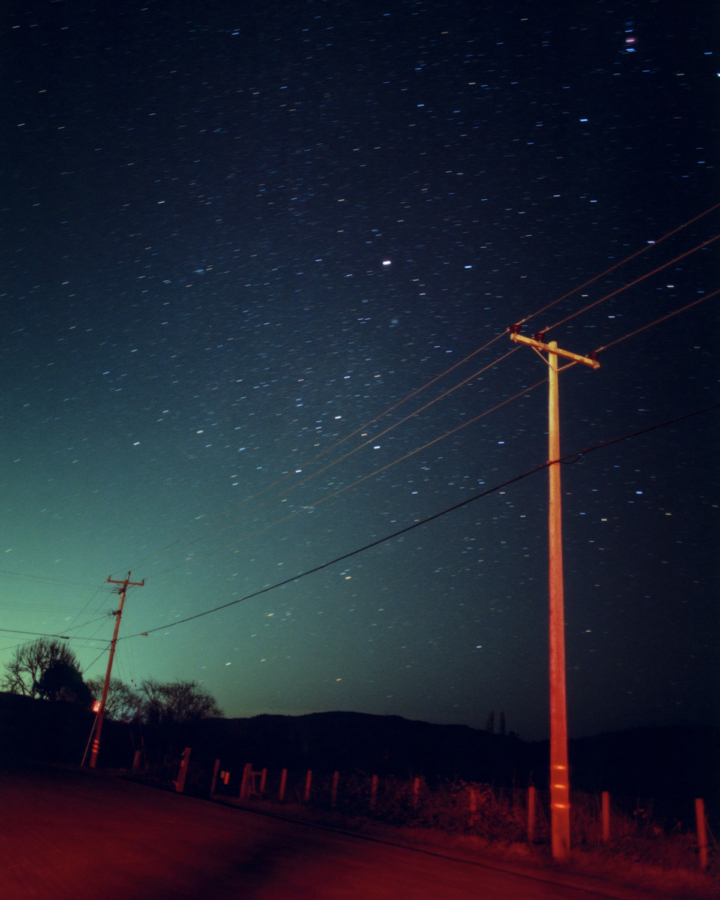
When I see a splotch of lichen on a utility pole, I imagine the fungus and alga that comprise the organism as shepherd and flock, garden and gardener, with the individual roles shifting like cloud-shadows on a spring meadow. When I think of the ancestry of mitochondria powering my cells, ancient creatures living free in prehistoric seas, flowing down my maternal lines, my body becomes a man-shaped tidal pool like a window onto a strange and primal history.
Fantastical? Exactly. Whimsical? No doubt. Such playful framing is anchored in truth and a foundational element of my understanding the many faces of a rich and sustaining nature—whether lichen on concrete, the history of our organelles, or the grandeur of Earth’s imperiled biodiversity.
I metabolize fact into story and, in doing so, discover daily reminders that the unifying tale of nature is one in which I am excited to play a part. In turn, paying attention becomes rewarding and worthwhile. The key factor for me is granting myself permission to take inventive storytelling seriously. I embrace fun and fantasy with intention.
Of course, many rich traditions and religious practices recognize agency and personhood in nature. But my own baggage makes most forms of real-world religion and spirituality—whatever their source—feel itchy. And yet, through fantasy, poetry, and homespun meaning-making, I’ve found a different way in: creative metaphor as a route to real connection and a welcoming way to touch the sacred.
We need a diverse toolset to pick the locks of human apathy, tools as diverse as humanity itself. Personally, in both my writing life and reading life, I turn to fantasy to access the wonder and kinship swimming slow circles just beneath the surface of my world. Fantasy works for me.
Maybe we can’t literally have a chat with the idea of interdependent organisms and ecosystems. Maybe we can’t literally look the essential magic of Earth’s biodiversity square in the eye. But have you met my pal Swamp Thing? Have you listened in on slow conversations with Tolkien’s Ents? Walked Jeff VanderMeer’s Area X or experienced N. K. Jemisin’s the Stillness? Met Heather Fawcett’s fairies or Marie Brennen’s dragons? As creative, storytelling creatures, when has humanity ever respected the limits of literality?
We can trace the etymology of “fantasy” to the Ancient Greek φαντάζειν (phantázein), which means “to make visible.” And that’s precisely what these narratives do. They render the abstract recognizable, the commonplace vibrant, and can imbue our planet’s living systems with agency and moral consequence. Such stories are not just escapist departures from reality. They are the fertile soil of fact giving rise to verdant groves of meaning.
“We need a diverse toolset to pick the locks of human apathy, tools as diverse as humanity itself.”
Becky Chambers’ beautiful eco-fantasy, A Psalm for the Wild-Built, for example, doesn’t have a lichen-speckled utility pole, but it does have a lichen-speckled robot named Mosscap who, from a non-human perspective, makes the case that disconnection from nature is the truly artificial state. Fantasy can give voice to the voiceless—and it can do the imaginative heavy lifting for those who struggle to make that leap on their own.
Fantasy relies on blending the recognizable with the incredible and, in doing so, models ways in which we can awaken wonder and significance in our everyday lives. By visiting other worlds, we practice detecting magic within the mundane. We try on non-anthropocentric viewpoints that build our capacity for understanding and environmental empathy. It’s a timely medicine, couched in entertainment, that comes with a heaping spoonful of sugar.
In my new fantasy novel, Strange Animals, we follow a man who feels disconnection from nature like a pebble in his shoe. He pushes through fear and uncertainty to establish a personal connection to the wild. We also meet a living embodiment of the Catskill Mountains and receive advice from a monarch of crows. I feel a sneaking suspicion that this book will connect with a few folks who might never have reached for my nonfiction or my collections of nature poetry, though they’ll encounter many thematic commonalities.
That’s the beauty of it: Fantasy captivates while it connects. Through an imaginative lens, everything from the skin cells on the backs of my hands to a glimpse of lichen on my morning walk becomes a reminder of my place in an unlikely and magnificent world. Imagination can reach truths that facts simply cannot access. Stepping outside reality is sometimes the only way to see it clearly. We are part of and reliant on a legitimately magical world. And yet, internalizing this fact can require a bit of fantasy.
Editor’s Note: Jarod K. Anderson is a writer and poet from central Ohio. His latest book, Strange Animals, is out Feb. 10, 2026.
Join our membership community. Support our work, receive a complimentary subscription to Atmos Magazine, and more.
How Fantasy Can Reveal the Hidden Magic of Nature