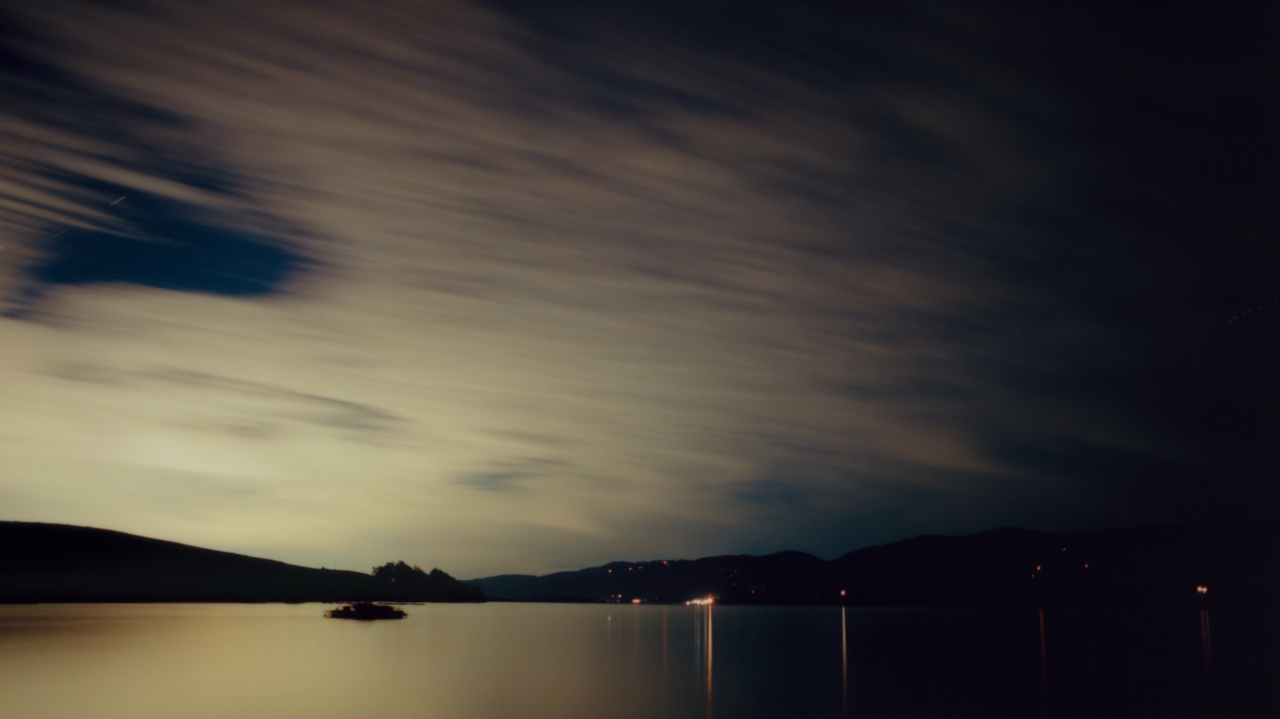
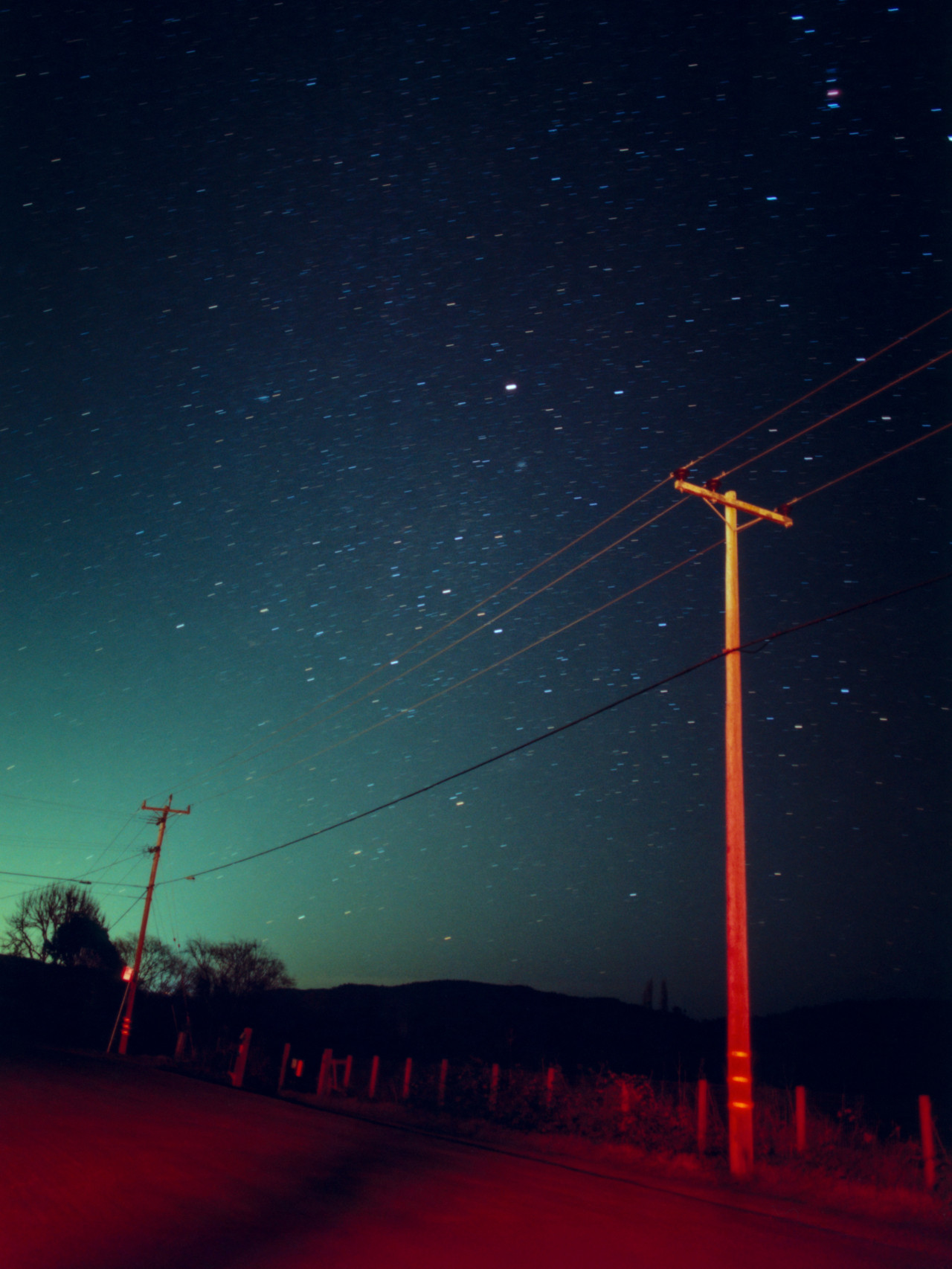
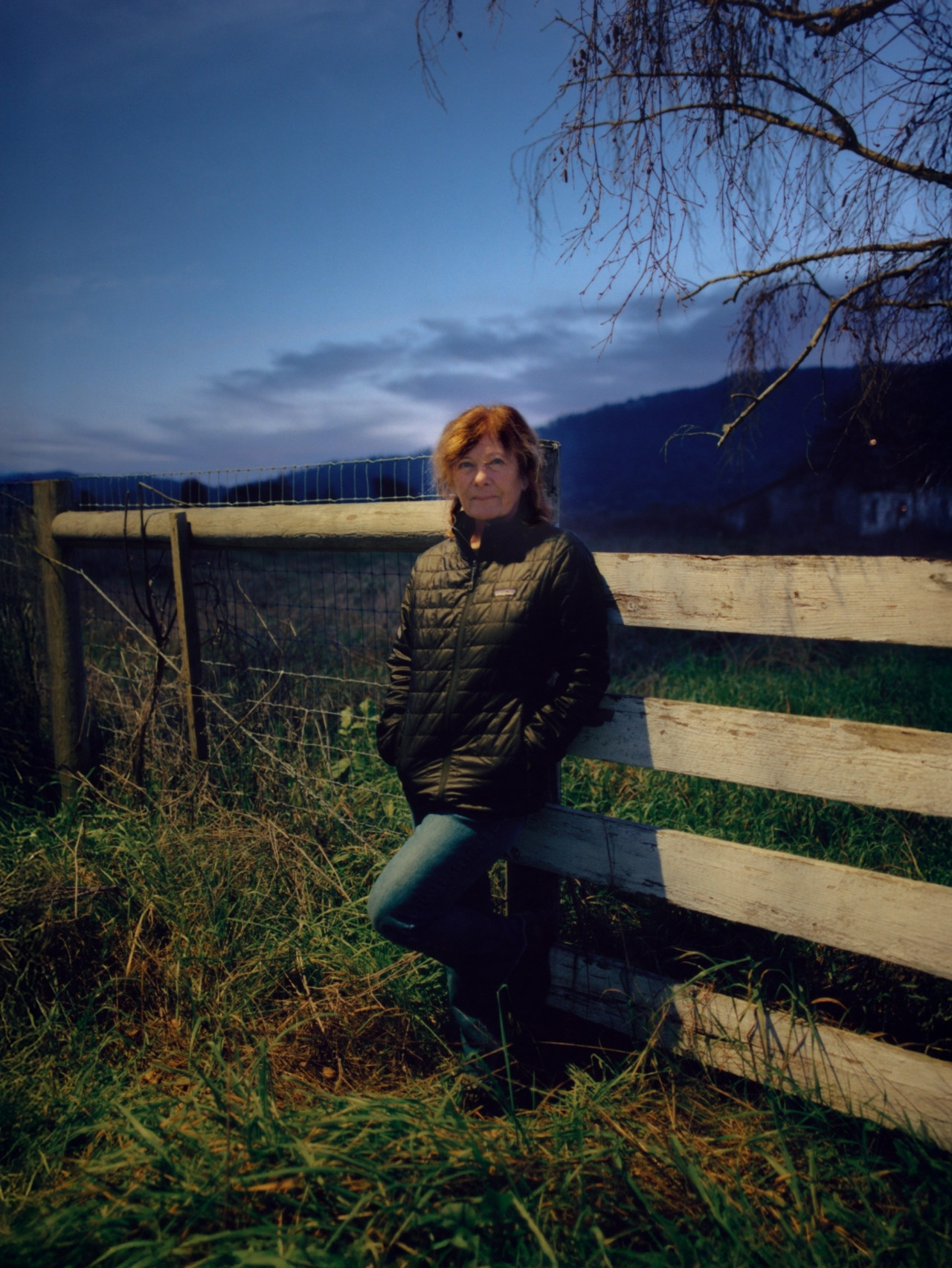
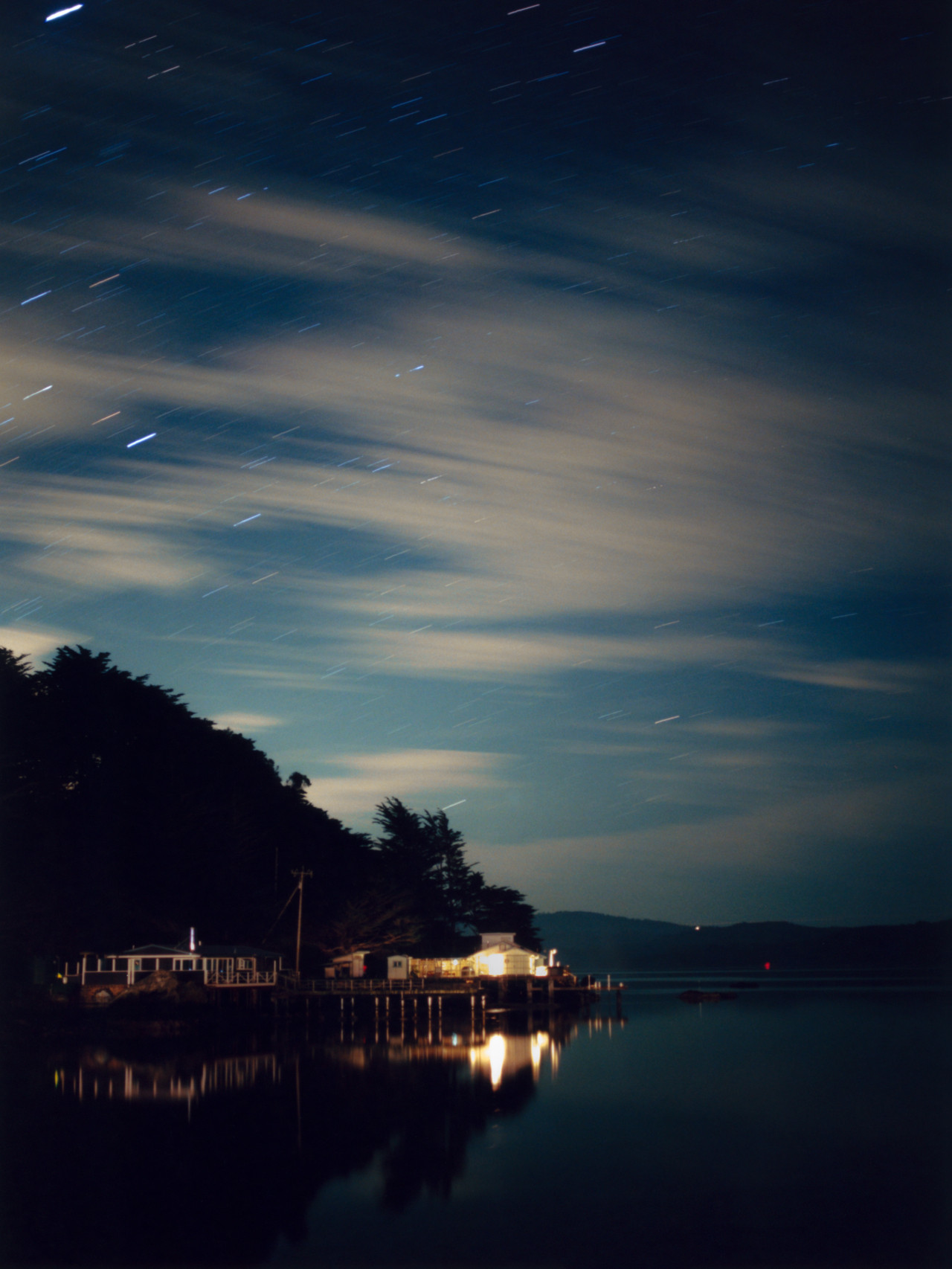
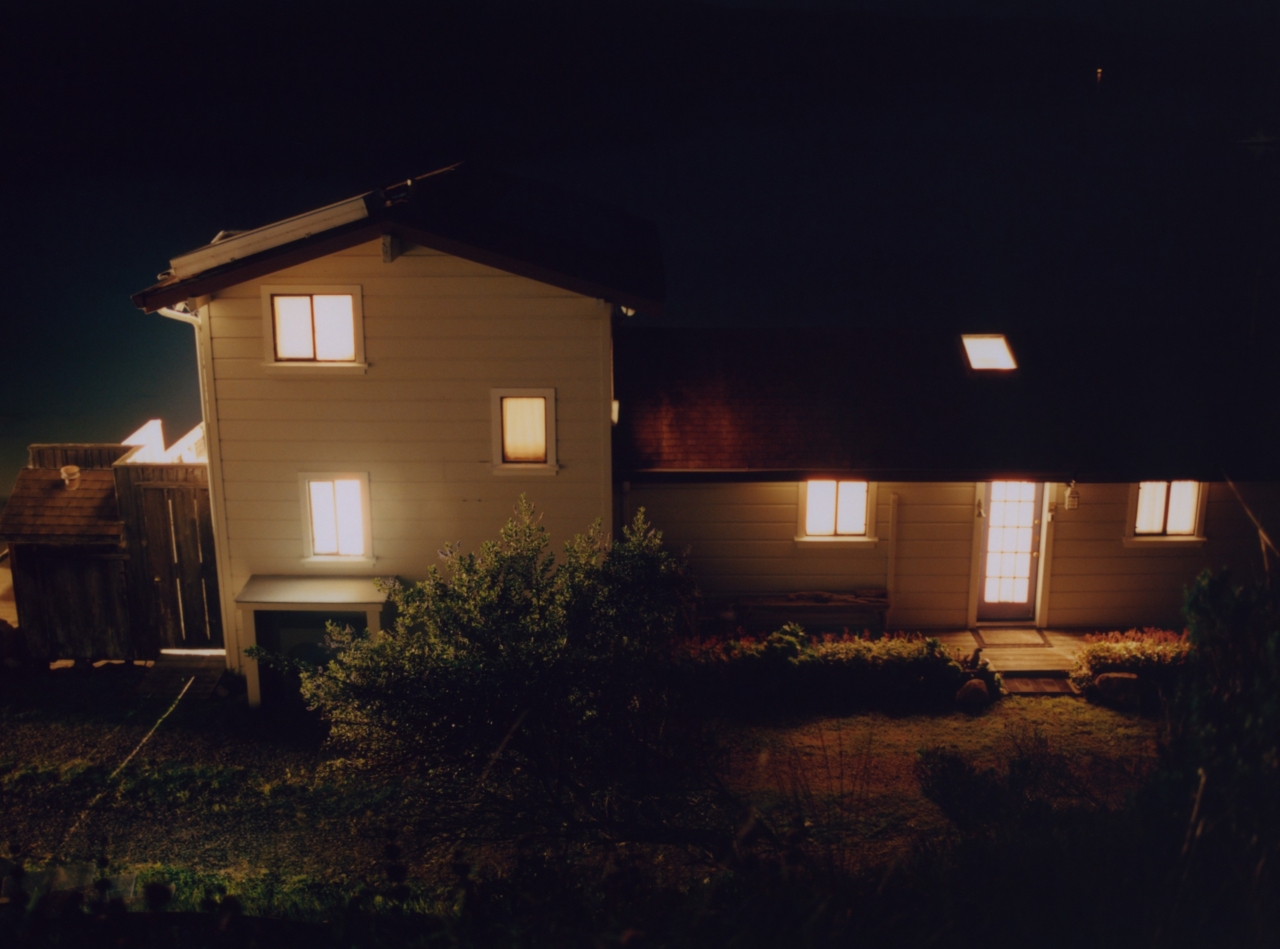
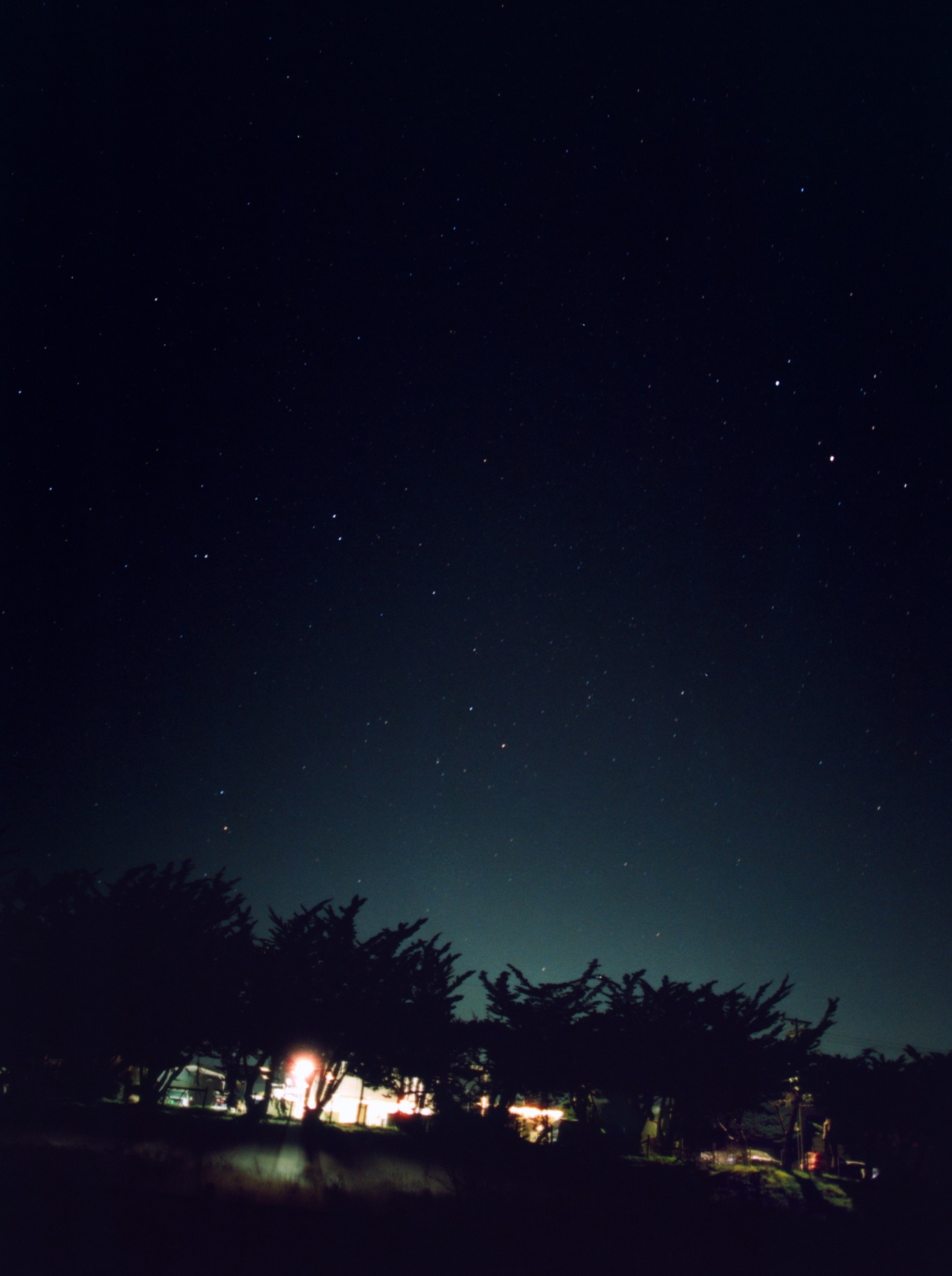
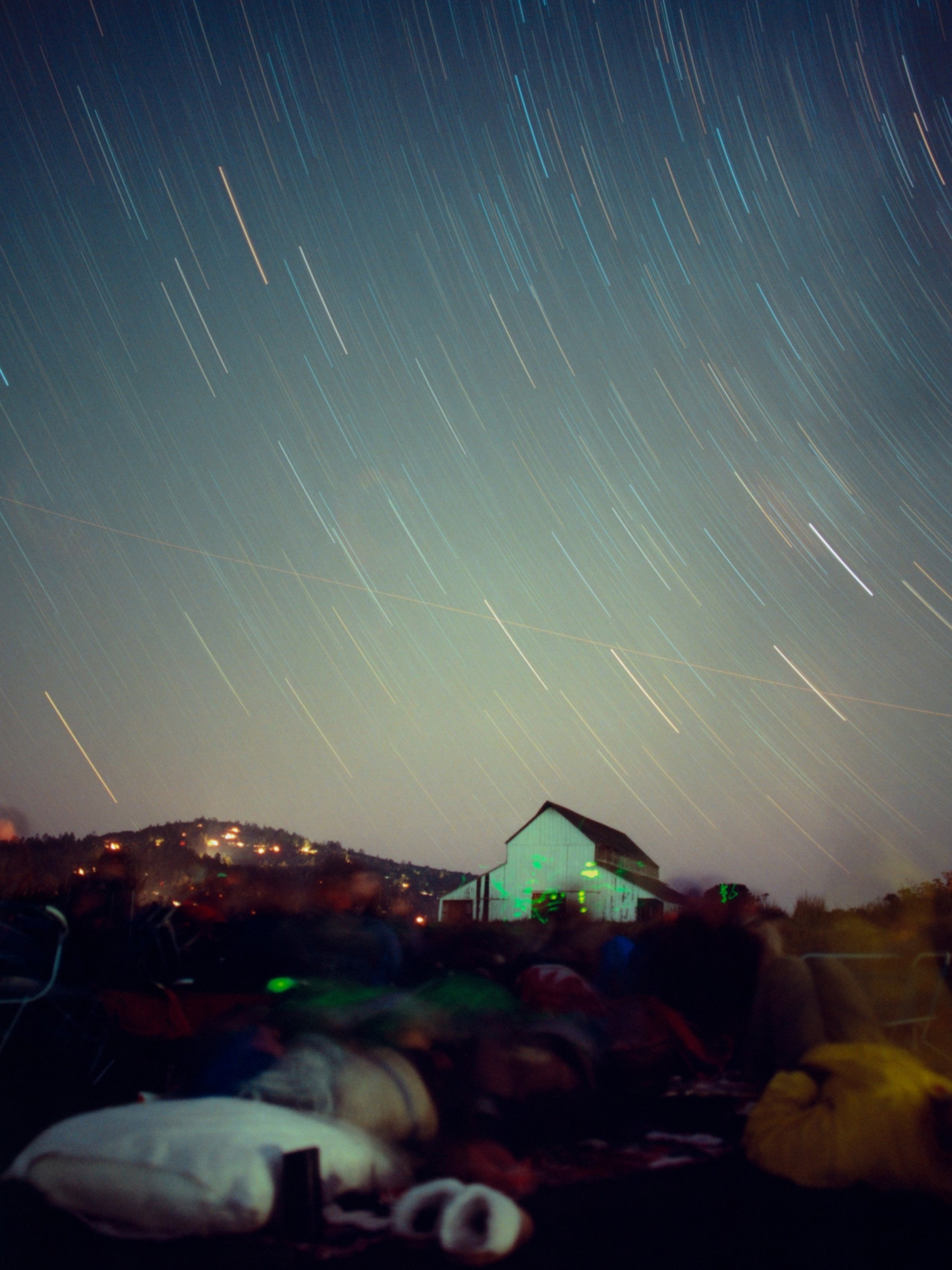
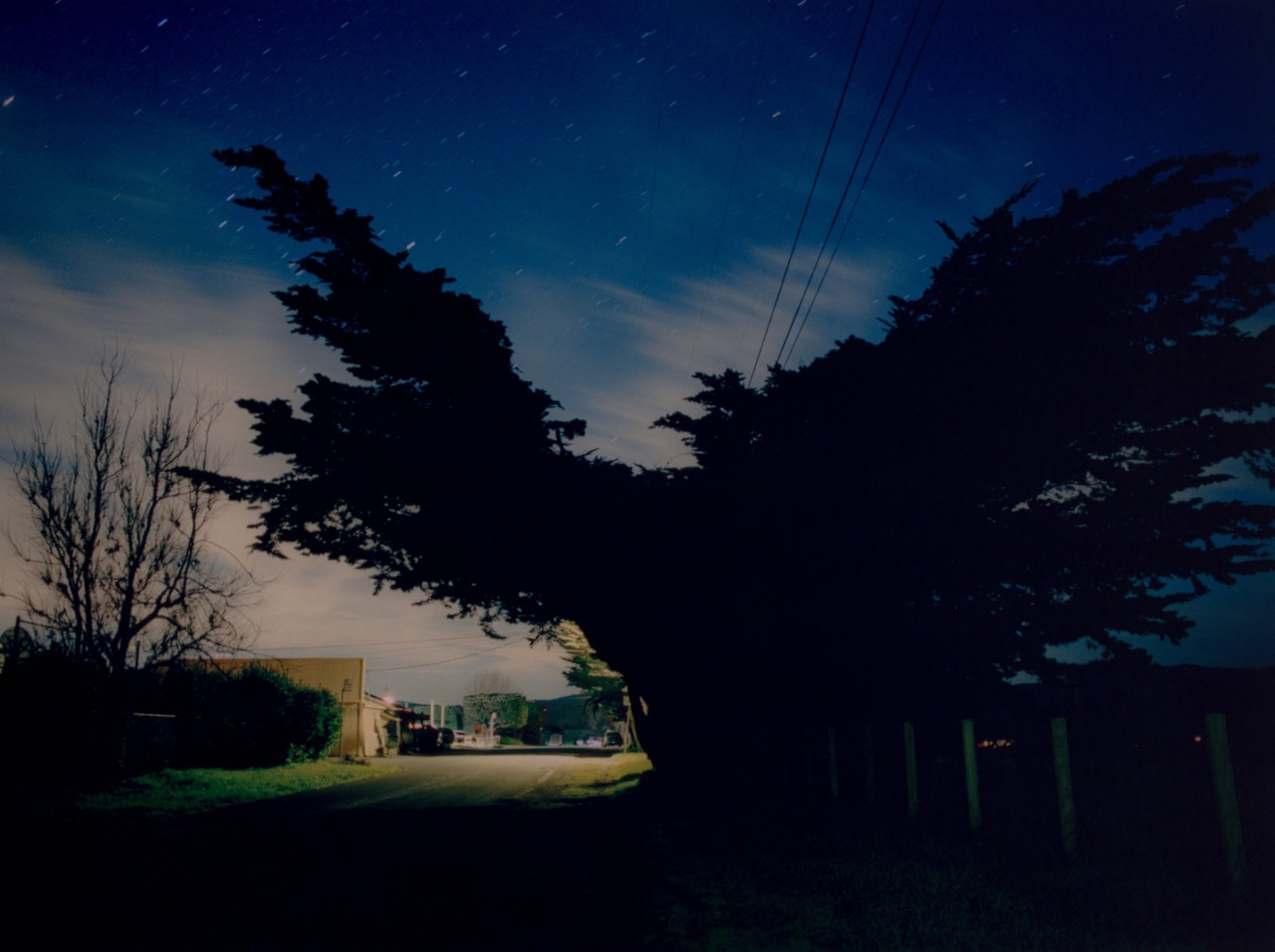
Point Reyes Station, Marin County, Calif.
Words by Jeremy Miller
Photographs by Andrew Friendly
Anna Kondolf spends most of her waking hours thinking about light—specifically, how to use less of it.
Kondolf is a Marin County-based lighting designer with a master’s degree in landscape architecture from the University of California, Berkeley. Over the course of her career, she has worked with hundreds of clients to rethink how they light their homes, inside and out.
The last few years have seen a growing awareness among interior lighting designers that light should be used sparingly and only where it is needed, she said. Advances in fixtures and electronic systems now allow designers to precisely control the direction and intensity of light. “Everything is on dimmer switches these days,” she said. “You only use light where you need it.”
When it comes to outdoor spaces, however, Kondolf said the same reckoning hasn’t occurred. She traces today’s default approach to exterior lighting—often designed to dramatize the landscape after dark—to the early 1990s release of The Landscape Lighting Book by lighting designer Janet Lennox Moyer, which codified principles that still dominate exterior lighting in the United States. “In California, everyone had to up-light their oak trees,” she said. “They wanted these very bright lights pointed up into the trees and into the air.”
Early in her career, Kondolf followed those principles herself. That changed while she was working on the home of a particularly wealthy client. “It was a huge property with giant oak trees,” she said. By then, she had begun pushing back against requests for bright lights aimed skyward, suspecting they were not only a public nuisance, but also environmentally harmful. The client persisted, however, and she eventually acquiesced, installing several powerful lights beneath the trees.
When she turned them on, her suspicions were confirmed. Dozens of eyes glinted in the canopy, staring back at her. “I almost wept,” she said. “It was in the spring, and all these birds were nesting. It was this turning point where it was just like, ‘I am not doing this ever again.’”
Kondolf’s experience reflects a growing scientific consensus that stray light is far more than an aesthetic concern. It is a form of waste that is reshaping ecosystems and altering the rhythms of life across the planet.
Like a glittering tide, light pollution—also known as ALAN, or “artificial light at night”—is spreading across the globe, brightening even the planet’s remaining dark corners.
From space, cities resemble iridescent amoebae, their luminous tendrils pushing outward into rural landscapes. On the ground, that expansion is even more dramatic. Data collected by citizen scientists analyzed by German and American researchers suggest that sky glow has increased by roughly 10% annually between 2011 and 2022, doubling in brightness every eight years. That pace is far faster than what satellites alone have typically captured, and it helps explain why more than 80% of the world’s population, and more than 99% of people in the United States and Europe, now live under light-polluted skies, with the Milky Way hidden from more than a third of humanity.
Artificial light disrupts plants and many nocturnal and migratory species, interfering with feeding, breeding, and navigation. Humans are not immune. ALAN suppresses melatonin production, disrupts circadian rhythms, and has been linked to cardiovascular disease and metabolic disorders. One study found that female nurses who worked night shifts faced a 58% greater risk of developing breast cancer—and though causality is difficult to pin down, researchers cautioned that prolonged exposure to blue-tinged light late at night could have something to do with it.
Light pollution is also a powerful proxy for greenhouse gas emissions. Lighting accounts for 15% to 20% of global electricity use, according to the United Nations Environment Programme. The International Energy Agency reported in 2024 that 60% of the world’s electricity was still generated by fossil-fuel power plants, meaning lighting alone contributes roughly 5% to 10% of global carbon emissions. Each flip of a light switch leaves a small but measurable mark on the atmosphere.
Light pollution may also be increasing carbon emissions in subtler ways. A study published in November by researchers at Cranfield University in the United Kingdom found that artificial light accelerates metabolism in individual organisms as well as across entire ecosystems. Using satellite data and sensitive instruments called eddy covariance flux towers that continuously track the movement of carbon dioxide between land and air, the researchers measured how much carbon dioxide ecosystems absorbed and released. “These towers allow us to separate carbon uptake by photosynthesis from carbon release through respiration over many years,” said Alice Johnston, a senior lecturer in environmental data science at Cranfield University.
Across dozens of sites in North America and Europe, the team found that brighter nights were associated with higher ecosystem respiration—higher carbon dioxide release—without a corresponding increase in photosynthesis, reducing overall carbon storage. That’s because ecosystems have metabolic rhythms similar to sleep cycles, Johnston explained. “Artificial light at night is similar to chronic sleep disruption—the system never fully powers down,” she said. “Over time, that elevates metabolism during these ‘resting’ periods, which can increase carbon release to the atmosphere.”
Despite the scale of the problem, there are signs of progress. Dozens of towns, cities, and states around the world have passed ordinances aimed at reducing light pollution. Since 2001, DarkSky International has certified more than 60 municipalities as dark sky communities, along with nearly 50 dark sky reserves and sanctuaries: places where the Milky Way remains visible in something close to its pre-ALAN splendor.
In Europe, where national governance of light pollution generally outpaces that of the United States, more than a dozen countries have laws on the books to curb ALAN. These policies are often tied to broader efforts to meet the European Union’s greenhouse gas reduction targets.
One of the most ambitious municipal efforts is underway in Lille, a mid-sized city in northeastern France near the Belgian border. Lille has worked since 2001 to implement lighting strategies that account for wildlife. In 2017, the city launched a plan known as LUCIOLE (Lumière Citadine Optimisée pour L’Environnement), which targets light pollution in a 40-hectare biodiversity zone in La Citadelle Park, home to several vulnerable bat species. During the bats’ hibernation period, from November to March, LED lights on motion sensors activate only when people or moving vehicles are present.
The broader goal of LUCIOLE is to create a “black corridor” linking the city to the confluence of the Deûle and Lys rivers, and allowing safer passage for wildlife and people. The effort operates within a national framework that requires storefronts to switch off window displays after 1 a.m. and restricts certain fixtures and bulbs.
“Stray light is far more than an aesthetic concern. It is a form of waste that is reshaping ecosystems and altering the rhythms of life across the planet.”
In the United States, Tucson, Arizona, is often held up as a leader in light pollution mitigation. The city adopted one of the nation’s earliest comprehensive lighting codes in 2012, largely in response to concerns raised by three nearby research observatories: Kitt Peak, the Fred Lawrence Whipple Observatory, and the Mount Graham International Observatory. Tucson’s lighting regulations, which govern brightness, color, and fixture direction, are intended to “minimize obtrusive and excessive outdoor lighting, safeguard the night sky for astronomical activities, and reduce energy waste, all while ensuring safety, security, and the enjoyment of nighttime activities,” according to the city’s official website.
Palo Alto late last year became the most recent American city to pass a sweeping set of ordinances requiring residences and businesses to turn off non-essential lighting after 11 p.m. Like Tucson’s rules, Palo Alto’s new law mandates replacing bright floodlights with dimmer bulbs and swapping unshielded fixtures with ones that direct light downward. The effort was led by Greer Stone, a city councilman and former mayor. Despite the Bay Area’s relentless glow, Stone sees Palo Alto as an ideal testing ground for regional change. “One of the things I’ve always loved most about Palo Alto is that we are a fairly dense urban environment that has found a way to incorporate the natural environment very organically into the city,” he said.
The ordinance could yield immediate benefits, according to Stone. “Better sleep quality, less annoyance, and higher quality of life in neighborhoods,” he said. Ecological gains matter, too. “We can help our local critters access our riparian corridors without excess light pouring in there.”
Reducing light pollution can also save cities large amounts of money. Interior and exterior lighting eats up between 20% and 40% of the average city’s energy budget, according to a report by the European Commission’s Smart Cities Marketplace. Installing smart lighting equipment could allow municipalities to cut those costs by as much as 70%.
Opponents of dimming or removing streetlights often argue that darkness compromises safety. But numerous studies have found little evidence that increased lighting reduces crime. A 2015 study in the Journal of Epidemiology and Community Health examined lighting reductions in England and Wales that were implemented to save money and cut carbon emissions. Researchers found no significant rise in crime or traffic accidents. Still, Stone acknowledges that the perception of safety matters. Palo Alto’s ordinance does not apply to building entrances, parking lots, driveways, or certain high-crime areas. “Somebody concerned about leaving their office late at night is going to be OK,” he said. “They’re going to be able to get to their car in a well-lit environment.”
Protecting darkness also means safeguarding land at the urban fringes, Stone said. He points to places like the Santa Cruz Mountains and the northern reaches of Marin County, where Dark Sky West Marin volunteers are working with residents to reduce light pollution in several communities adjacent to Point Reyes National Seashore as they seek dark sky community certification from DarkSky International. “Dark skies aren’t just about stargazing,” said Laura Arndt, a member of DarkSky West Marin’s board. “They’re essential for human health and critical for the survival of nocturnal wildlife, including insects, bees, bats, birds, and even plant species that depend on natural darkness to thrive. One of the benchmarks for Dark Sky designation is the ability to see the Milky Way with the naked eye, which requires genuine darkness that’s increasingly rare.”
That’s because enforcing dark sky regulations can be difficult, Stone admitted. “I think a lot of it is just going to take education. Most people don’t even know that the [Palo Alto] ordinance has passed.” To get the word out, the city plans to conduct outreach campaigns and distribute informational materials. “In the end, it will rely on neighbors being good neighbors,” he said.
Kondolf, too, is adamant that education remains the most powerful tool. Simple changes, she said, can dramatically reduce urban glow. “The most obvious thing is to use downward-facing lights and avoid uplighting or frosted glass globes,” she said, also urging homeowners to install dimmers, motion sensors, and “warmer” LEDs—2700K or lower—which emit amber light rather than blue. “You can actually see a lot better,” she added. “Our pupils dilate, and that actually allows you to see better in the dark.”
In practice, habit often matters more than technology. Even small changes, Kondolf emphasized, can go a long way. “Light pollution is the easiest form of pollution to do something about,” she said. “We can make a big difference by simply remembering to turn off the lights.”
Join our membership community. Support our work, receive a complimentary subscription to Atmos Magazine, and more.
Meet the People Protecting the Night Sky