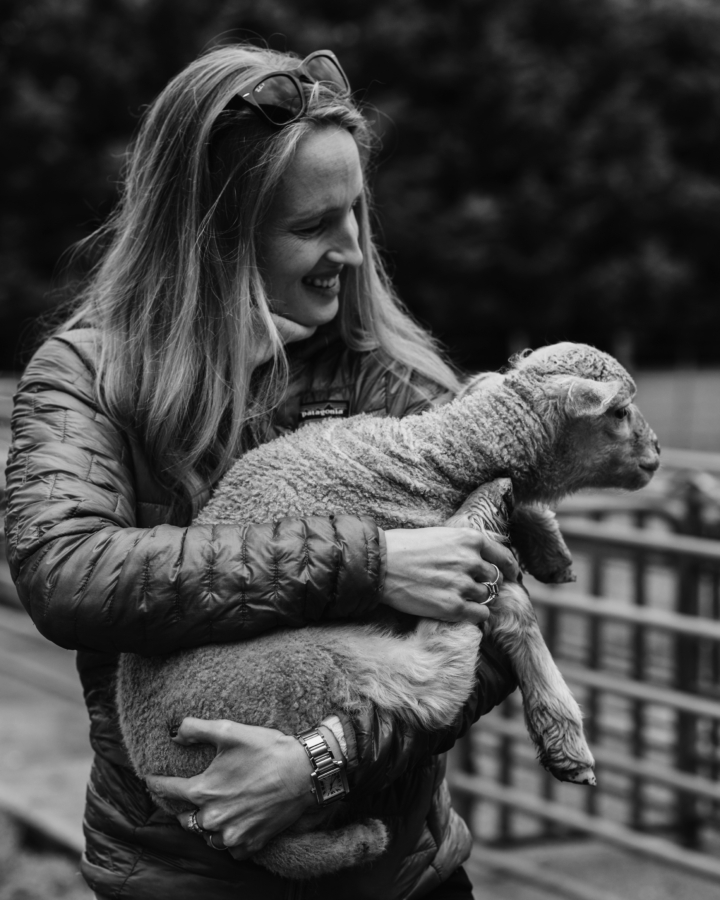
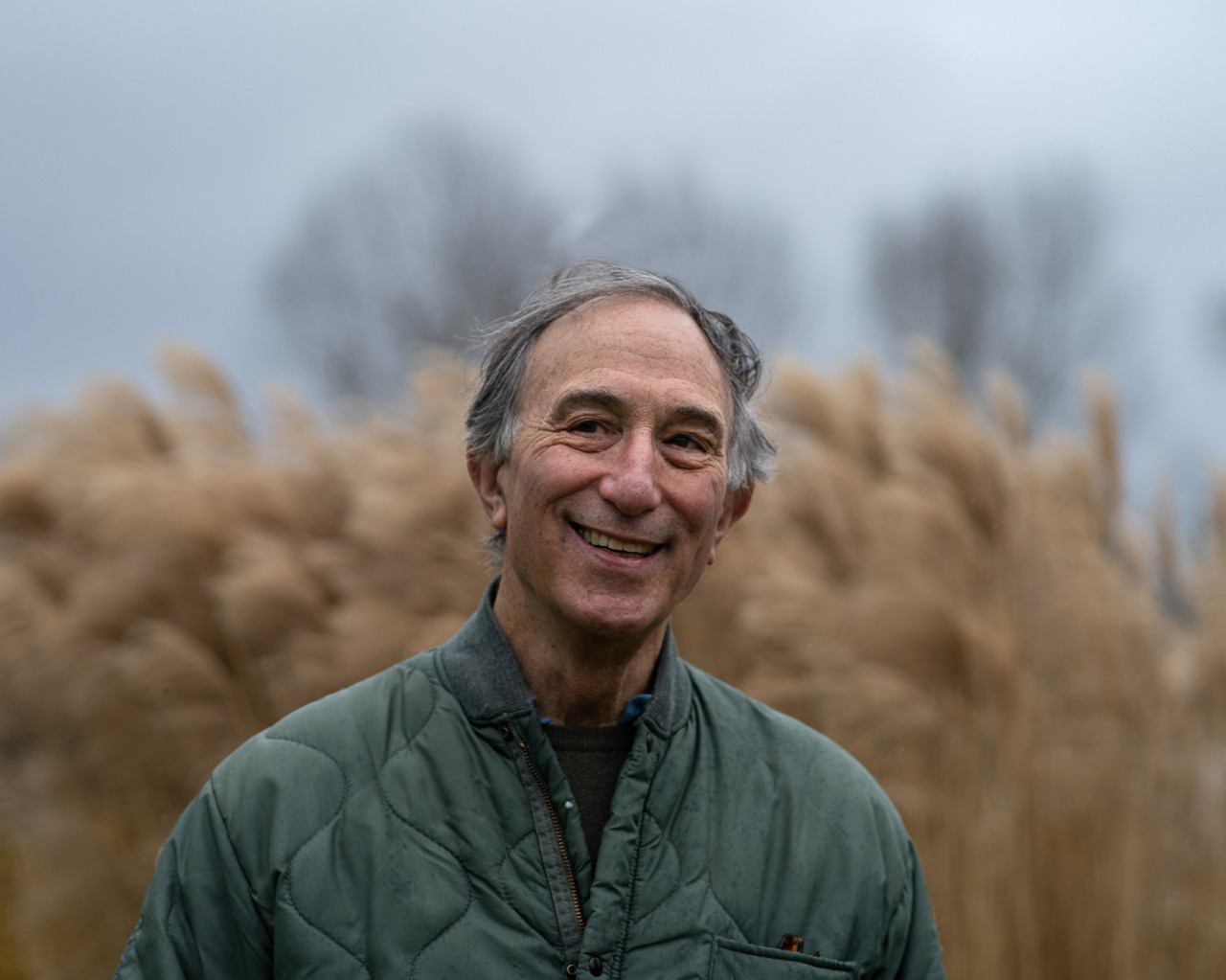
Photograph by Felipe Contreras
interview by theresa perez
I fortuitously met Peter Seligmann last September at a photography exhibition for Cristina Mittermeier and Paul Nicklen called Hope and Reverence. Cristina and Paul are dear friends of Atmos and had just participated in our Blue Renaissance event at Climate Week NYC. Peter spoke at another Climate Week event I attended, so I recognized him at the gallery. As soon as Cristina introduced us, I felt as if we were old friends. Peter shared openly about his passions for connecting with people at the level of their human needs and translating the protection of nature into scalable solutions. He shared about his recent projects, and we exchanged numbers. A few weeks later, he graciously agreed to this interview for Atmos’ new Long View series. Peter is a master at distilling the essence of a problem and finding novel ways to solve it. Hearing about his life’s choices and drive reinvigorated me to take a fresh look at the horizon of my own field of influence: How can I best utilize my skills and resources for the benefit of all? What magic is hidden in my relationships, waiting to reveal itself? How can I tune myself to discover that magic—the special stardust?
—Theresa Perez, Atmos executive director
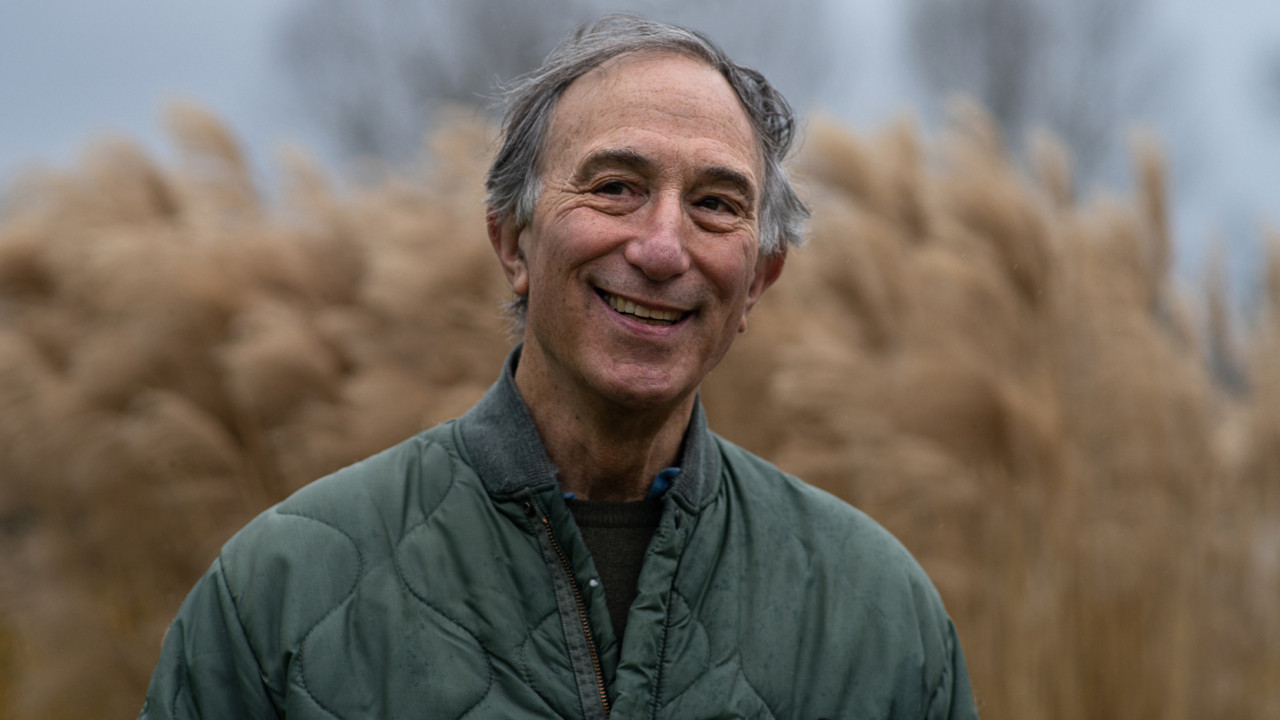
Peter Seligmann is the founder of Conservation International and a longtime architect of global conservation strategy. He has spent more than four decades helping to pioneer large-scale environmental initiatives, from debt-for-nature swaps and corporate supply chain reform to Indigenous-led conservation through Nia Tero. Today, he chairs Silvania, exploring how private capital might be mobilized to recognize nature as an investable asset class. Across Peter’s work runs a singular throughline: scaling solutions without losing sight of the human values that make them possible.
Theresa Perez
What struck me immediately when I met you is that you understand how to do impactful things at scale, which is rare. I’m super curious about that, and I think it would be a fun thing to unpack. There’s Silvania, there’s Conservation International, and Nia Tero—Feel free to start anywhere. What’s your secret sauce? What happens in your brain, where you can see the potential to get from A to Z?
Peter Seligmann
I think the first thing is understanding not just where we are, but where we come from and where that trajectory is going to take us. And if you do that honestly—without thinking if you click your heels everything becomes magically perfect—it becomes clear that we’ve got an accelerating issue that’s connected to our behavior: numbers of people, how we consume, what we think about, what’s important to us.
The social issues, the family issues have forced short-term decisions. The financial challenges and decisions are all short-term; quarterly. “I want to keep my job. I’ll do whatever it takes.” All this stuff. Somehow, I always start out by trying to understand what’s real.
The other piece is, I’ve always felt these challenges we’re facing are solvable. And it’s probably because … I think the chortle you hear from a baby is so pure and so good, and every one of us started that way. So there is something inside of us that is good, and then it’s kind of wrapped up in lots of crap, but I’ve always felt we’ve got to figure out how to get to what’s good. That’s kind of my hopefulness.
The other piece is, my family survived Nazi Germany—and not all of my family. So I have a sense, from a family experience, of resilience and recognizing that solving these big challenges is not easy. Quick solutions are not part of the game. So that’s part of it: a combination of a deep love of humanity, and a sense of hopefulness and recognizing that we need resilience and determination.
The other part is recognizing that what we’ve been doing hasn’t worked. And if it has not worked, why continue doing that? That forces you to think about what the true obstacles are to the progress we wanted to have and have not had. If you begin to look at those obstacles, then you can begin to think about what the solutions are.
So part of it, I guess, is that blend of intellect and heart, and how do you bring those together? For whatever reason, that’s my combo. That’s what is inside of me, and I can’t intellectually describe it. Who knows where it comes from—it’s just the way we are, right? It’s what you are. It’s a DNA story.
And there are a series of things I experienced from being a youngster to where I am now that kind of turned the light on for me. Experiences of doing things the way people told me to do them, seeing how that would not work, and trying to find a solution to that challenge.
“There is something inside of us that is good, and then it’s kind of wrapped up in lots of crap, but I’ve always felt we’ve got to figure out how to get to what’s good. That’s kind of my hopefulness.”
Theresa
Could you share an example?
Peter
One of the earliest experiences was being a land manager for The Nature Conservancy when I was 25, working at a preserve in Northern California called the McCloud River Preserve. And the policy of the Nature Conservancy was to keep everybody out. I tried to do that, and I was confronted by a community of people who wanted to fish in that place.
And I recognized that the only way we could actually protect that river was if these folks loved it—which they did—and got to fish it and became the stewards instead of the poachers. It was kind of a simple lesson. And it worked.
So it was a sense of needing to engage a community in a way that is good for them.
And then I ended up running The Nature Conservancy’s California program, and again ran into resistance within the Conservancy because they were focusing on individual species. I kept saying, “You need to protect ecological systems that are made up of species, not just the species.” They didn’t want to do that. So there was conflict. We tried it, and it worked. It was a large ecological-systems approach.
Then they asked me to create an international program for The Nature Conservancy. I started traveling in Central America. In particular, I went to Costa Rica during the Nicaraguan war. There were refugees all over the place, and it was obvious that the future of the environment was deeply connected to the future of communities and the health of families.
So I said to the conservancy, “You can’t just protect areas. We’ve got to design something where young people and families have a living—a healthy life—connected to the protection of nature.” But how do we do that?
That forced me to think about financing it. There were huge pressures at the time to log forests, driven by developing nations being forced to log their forests to pay off debt. Debt incurred by borrowing money from the United States and other places, from banks. They were paying off the debt by cutting the forests.
So I thought, that can’t work. We came up with an out-of-the-box idea to go into the marketplace and buy debt that was heavily discounted because the banks never expected the countries to pay it back. We started buying debt at eight cents on the dollar—called debt-for-nature—and then went to heads of state and said, “We’ll forgive the debt if you’ll set up a big protected area.” And they said, “God, we’d love to do it.” We did millions of acres of conservation that way.
But it didn’t address the poverty of the people there. So we started thinking: How do we generate income for communities that isn’t tied to logging?
We tried a lot of experiments. Some worked, some didn’t. And then I ran into Howard Schultz at Starbucks. I said to him, “You could actually grow coffee beneath the shade of a forest rather than what you’re doing now,” which was buying coffee that was grown in an area cleared of trees. Eventually, we worked that out until it worked, and we set up something that protected the forest, gave farmers equity in the coffee, and it was all shade-grown coffee. Now, most of Starbucks’ coffee is done in that way. It took 20 or 30 years, but they got into it, and they worked with us, and it was positive.
So all of these were just ideas. My thinking was always: Let’s innovate, let’s demonstrate, and then let’s amplify.
And the question of amplification was really important. If you got to innovation and you could demonstrate it worked, then amplification became: Who is the agent of change? If you get them to buy in, you can scale it big time. Who’s the partner that could take it and make it fly?
In this case, with coffee, it was Starbucks.
But then I got a call one day from a man named Rob Walton. And it all relates to relationships, right? Rob Walton had been talking to a financier named Jim Wolfensohn, who lived in Wyoming, and I knew him because he lived across the river from where I lived. He became president of the World Bank, and he knew me as a friend.
We designed programs at the World Bank to give money to communities rather than governments—as grants, not loans—and that still exists.
So Wolfensohn said to Rob, “If you’re interested in the environment, talk to Peter.” So I get this call from Rob Walton, [former] chairman of Walmart, saying, “I’m trying to figure out what my family can do with our wealth. The environment is so important to all of us, and we don’t know what to do. Would you talk to us about it?”
“It was the scale. It was looking for the global agent of change. Who do you have to catch to magnify what you’re doing?”
I said, “Sure, but come visit my office.” He came, loved it, and invited me to visit with his family. I did.
And one day, Rob and I were diving off the coast of Costa Rica. We were coming back from Cocos Island and we saw a ship—a Taiwanese fishing vessel—filled with shark fins.
And I said to Rob, “If you really want to make a difference in the world, it’s not about your family’s wealth. It’s about Walmart. You’ve got to change Walmart.”
His response was, “I can’t do that. I’m just a shareholder.” His son’s response was: “Come on, Dad. You’re the chair, and we’re the largest shareholders.”
So we end up going to Walmart. This is about youth, it’s generational, and it’s also about scale. Walmart had 100,000 suppliers and more than 2 million employees
—the largest private company in the world—and its reputation was under attack.
I said, “Introduce me to your CEO.” Rob takes me to visit his CEO in Bentonville, Arkansas. His name is Lee Scott. CEO of Walmart. Very successful.
I said to Lee, “This is a pound of salmon that I got from Walmart. You sell more salmon than any other supermarket in the world. The pink in this fish is an artificial dye, and where it was caught and farmed off the coast of Chile, it’s an ecological wasteland because of the way it’s caught.”
And his response—which was really beautiful, and it kind of captures why I think kids are so important—he said: “I had my first granddaughter last week. I don’t want to do that. What do we do differently?” Period.
He introduced me to his leadership team. And one guy raised his hand and said, “Lee Scott, are you telling us we can come out of the closet about being environmentalists?” Lee Scott says yes.
And all of a sudden, these youngsters inside Walmart—the buyers—are working with the companies to set standards, and literally 100,000 suppliers had to change how they behave, and it spread. That’s why we have this massive amount of sustainability officers now.
It was the scale. It was looking for the global agent of change. Who do you have to catch to magnify what you’re doing?
So that’s a long-winded way of saying that’s what I was always trying to figure out.
At one point, after being at CI [Conservation International] for 30 years, I said, “We need new leadership, and I want to do something different.” That’s how I got involved with Indigenous peoples.
As I was leaving CI, I asked some of our scientists to do the scientific assessment of Earth. My question was: We know the biodiversity crisis is real. We’re losing species at an accelerated pace. All the great work we’ve done—wonderful. All the lands we’ve succeeded in protecting—wonderful. But if you stretch that out over the last 25 or 30 years, the total amount of land we’ve protected is like a 20-mile strip wrapped around the equator. That’s it. Meanwhile, extinction rates accelerate, carbon skyrockets. So how do we connect climate and biodiversity?
They came back with a map showing where you had both: concentrations of carbon captured in forests, peat bogs, marshes, and mangroves—and biodiversity concentrations. They mapped it out, and I said, “Who owns those territories?” And the answer was, “Those healthy territories are the territories of Indigenous peoples.”
So I asked Indigenous leaders: “Are you getting support for the security of your territory?” And the answer was obviously no. “We’re fighting every single day to keep what we’ve got. We don’t have the governance, we don’t have sovereignty, we don’t have the rights. Everybody mines, they log, they assault, they murder.”
So I said, “Is there any organization that exists to help you?” They said no. So I thought, let’s start a new organization. That was the birth of Nia Tero.
And the idea was, let’s create a bridging organization—Indigenous peoples and non-Indigenous peoples—having tough conversations about how we learn to trust each other. What are the things about Indigeneity that we in the non-Indigenous world have to understand?
The most important lesson was reciprocity. The tree out there is made of the same stuff as my mother and my sister and my family. We have to see that as a relative, not as a commodity.
We now work with 300 different tribal peoples around the world supporting their efforts to secure their territories, and it’s growing. I stepped down as CEO as of January [2025], but the idea was—again—Indigenous partners can scale.
So these are the kinds of things I was trying to formulate. I started thinking: You cannot succeed just with economic arguments. There has to be a shift in our values. The Indigenous perspective of reciprocity needs to be the 11th commandment. It needs to be in our DNA.
And the way you do that is storytelling. That’s why what you’re doing is so important. You can’t succeed just intellectually, because if it’s intellect and dollars, there’s always going to be a better deal, and we’re always going to have financial need, and we’re going to say, “Well, I hate to do it, but I’m cutting it down.”
But you won’t cut down your mom.
So we have to get that value system readjusted. That’s why I got involved in storytelling, saying we need to tell stories because that’s how people learn.
And we need to understand that when you tell a story, we’re trained to have barriers—not to hear. We’re trained not to listen. We say, “Yeah, but …” We want to win an argument. We have to figure out how to break through.
What we say is not as important as what people hear.
“I’d like to see a biodiversity standard: a measurement of your currency going up or down depending upon whether the health of your ecological system is going up or down.”
Theresa
How does Silvania fit into the picture?
Peter
The reason I thought about Silvania was that the human condition is so challenged all over the world that we will never have enough money from philanthropy to take care of the Earth. And the political scene is so bad that we’re never going to have enough public support.
But the big flow of capital is the private capital of everybody who wants to get rich. And if you have essential resources that keep us alive, feed us, keep our climate stable, give us shelter and tourism and everything—and that’s nature—then nature should be an investable asset class.
People can say, “I don’t know exactly what it does, but I know I need it, and there’s fewer of them than there were. So I’m going to get a share, and that share is going to appreciate.”
That’s what we’re working on: trying to figure out if we can tap that private capital. If people invest in protecting the world and see how that’s good, then we have a chance in terms of financing, because we always run up against the huge cost of transition.
As you step back and think about it, the final piece is that it’s not a single solution, and it’s not something anybody does on their own. It’s really collective, and it’s scaling, and it’s core values.
That’s the journey I’ve been on and what I try to share when I have the opportunity.
Theresa
Wow. Thank you. Thank you so much.
OK—one closing question. You’re at this nexus with Silvania. Where are you at in terms of finding—the DNA part—what is that thing you need to find now with Silvania? Is it the investors, or what is the nexus to push that into scale? And if everything goes your ideal way, in 10 or 15 years, what does that look like?
Peter
You know what, Theresa, I don’t really have a clear answer yet. I’m in the learning process right now.
When I look at a nation—any nation—you recognize it’s the ecological characteristics of that place that have shaped its culture and given it its opportunity. It could be the fishery, it could be the soil, it could be the trees, it could be the shade, it could be the wind, it could be the water, it could be whatever it is. It could be biological diversity.
So what I think is that biodiversity—that ecological health—is really the foundation of every single nation. And rather than a gold standard, I’d like to see a biodiversity standard: a measurement of your currency going up or down depending upon whether the health of your ecological system is going up or down.
I’d like to see us recognize that our economies are directly connected to our environment. It’s the source of our supplies: what we eat, our provisions. It’s the source of the quality of the food we get. It’s the source of our water. It’s a source of our weather, our atmosphere, our carbon.
So I want us to be able to take things that are of great value—like what I’ve just described—and somehow connect their continuing health, or their scarcity, to an economy. And that’s really what we’re after.
We’re trying to explore everything we can.
Theresa
Is the thing that you’re putting money toward the infrastructure for measuring carbon removal, and then the infrastructure for selling the offsets?
Peter
Yeah. We believe it’s inevitable that carbon will have a value. Despite the headwinds, it will change. It’s got to change.
So we’re thinking: Let’s support nations in measuring how much carbon they’re capturing. And in exchange for us financing that, we will get a small percentage of the revenue when those carbon credits are sold.
We’re saying: Let’s look at biodiversity. Can you do biodiversity credits? Can you measure, for every pixel on the planet, the biodiversity that’s here? There’s no reason technologically they can’t.
Theresa
And does your initial financing help protect the area, or are we assuming these areas are already protected?
Peter
We’re assuming it’s in the enlightened interest of the government to protect it because they want to end up on the carbon market. If they destroy it, they lose that opportunity. So we’re saying, “We will finance this if, in the interim—until we have it sold—you protect it.”
But you know, they can make their own choices. Our financing is connected to the security of nature.
Think about the way banks work. Massive flows of trillions of dollars, constantly moving. And if you can just touch it for a second, you can make money.
We want nature to touch it for a second.
Probably most ideas won’t work. Something will work.
Theresa
Thank you so much, Peter.
Peter
If you look at the probability that we have these massive breakthroughs, it’s always quite slim. But you find the people you think have got some special stardust. You seem to have that. Let’s see what we can pull off, OK?
Read other editions of The Long View here.
Editor’s note: This interview has been edited for length and clarity.
Join our membership community. Support our work, receive a complimentary subscription to Atmos Magazine, and more.
Inside the Strategic Mind of a Heart-Led Visionary