









A thin haze veiled the pitch as the starting lineup took Virtue Field. The lingering smell was subtle but unmistakable: smoke, billowing from over 200 wildfires burning in Canada.
A sold-out crowd of more than 2,500 fans filled the bleachers that June evening to cheer on Vermont Green FC, Burlington’s semiprofessional United Soccer League 2 club. Supporters, ranging from toddlers to grandparents, donned green, wildflower-themed jerseys, their collective presence in the stands resembling a blooming meadow. The bleachers rumbled with the stomps of raucous spectators as kickoff approached.
Poor air quality from the wildfires—which are becoming more severe due to climate change and the burning of fossil fuels—wouldn’t stop these fans from supporting their team. To the contrary, it might further entrench their fandom. That’s because Vermont Green is no ordinary soccer team. It fights for climate justice. Its mission? To “be a powerful catalyst for a more environmentally sustainable and socially just world.”
To that end, several climate and environmental groups engaged attendees at stands behind the bleachers: 350Vermont, two solar energy companies, and the Vermont River Conservancy. Even the porta-potties boasted sustainability initiatives: They were operated by the company Wasted*, which turns human urine into fertilizer to be used by local farms. (“Thanks for the donation,” the door read. “Pee you soon.”)
Vermont Green FC’s leaders don’t claim to be climate experts. “Our real expertise is running a soccer team,” said team cofounder Patrick Infurna. “But being able to bring in the actual experts to go speak and use our platform, use our medium—that’s where we thrive as an environmental justice organization.”
Infurna knows that sports alone won’t save us from climate change, but he believes they can help. That’s because people are more inspired to take action when issues are attached to the things they love. “And for us,” he said, “that became soccer.”
And although Burlington—which has generated 100% of its electricity from renewable energy sources since 2014 and is the home of progressive Sen. Bernie Sanders—is uniquely predisposed to supporting this type of team, Infurna thinks the model is replicable. “Humbly,” he said, “we hope that we can be an inspiration for any community anywhere in this country.”
What if Infurna’s vision came to life? It’s arguable that with deep, systemic change, professional athletics could become a considerable force for climate good. After all, sports are one of the most trusted advertising channels, which some researchers and environmental organizers insist can—must—be harnessed for climate action. Integrating climate action into the missions of sports teams would tackle the industry’s considerable fossil fuel problem, too. It would likely mean minimizing carbon-polluting airfare, ending fossil fuel sponsorships, and reining in its considerable carbon emissions, activists and organizers say. The potential is endless.
Perhaps the biggest hurdle to a climate-healing sports world is that, unlike Vermont Green, most teams don’t have a mission to save the planet; they seek to put on a show—and to make money doing so. But Dr. Allen Hershkowitz—an environmental scientist who has advised the New York Yankees, the National Basketball Association, Major League Baseball, the National Hockey League, and more—said those missions share more in common than you think. Sustainability is “an essential corporate management obligation” for every team, he said. About 80 to 89% of the world wants stronger climate action, so negligence is a “branding liability.”
That’s not to mention the troubling impact of climate change on sports. According to a 2023 survey from World Athletics, over three-quarters of track-and-field athletes believe climate change negatively affects sports. And athletes have been increasingly sounding the alarm about the risk that rising temperatures pose to their professions.
Conversely, the climate world should care about sports, Hershkowitz added. Sports hold economic power. Their business affects every sector, from food and clothing to energy and transportation. “There are billions of dollars of advertising and market influence collectively that this sector influences,” Hershkowitz said.
Then, there’s the social power. About 70% of Americans are sports fans, according to a 2023 poll. By some measures, athletes rank behind only parents as kids’ most-admired role models. Fans emulate their idols on and off the court. What if they mimicked their sustainable behavior, too—for example, biking to work like LeBron James did during his stint with the Miami Heat or adopting a plant-based diet like Formula One driver Lewis Hamilton?
“If they advertise cars and pizza,” Hershkowitz asked, “why can’t they advertise environmental literacy?
The market influence of sports is, unfortunately, most evident when viewed through the lens of climate change’s biggest perpetrator: fossil fuels.
Fossil fuel companies currently spend an estimated $5.6 billion on sports sponsorships, from soccer and motorsports to badminton and handball, according to a 2024 report from the think tank New Weather Institute.
Petrostates are also big spenders: Saudi Arabia, the world’s second-biggest oil-producing country, spends billions of dollars on “sportswashing”—the use of sports to distract from human rights abuses and other bad practices that could contribute to an unsavory reputation. The nation pays Argentinian soccer legend Lionel Messi $25 million to be its tourism ambassador, and it is slated to host the 2034 FIFA World Cup.
It makes sense that powerful interests would pour their coffers into sports, said Freddie Daley, a political economy researcher at the University of Sussex and campaigner with the climate groups Badvertising and Cool Down—the Sport for Climate Action Network. Sporting events are one of the most trusted and effective advertising channels. Why not use them to move public opinion—or to sanitize tarnished reputations? Tobacco did it last century, and President Donald Trump appears to have done it in the 2024 election, jetting to Ultimate Fighting Championship events and brandishing endorsements from many professional athletes.
“Sport is like an advertiser’s and a marketer’s dream,” Daley said. “It’s got all the things that you want to be associated with, whether it’s peak physical performance, muscular bodies, human achievement, human flourishing—all these wonderful positive associations.”
“Sport has the power to change the world. It has the power to inspire. It has the power to unite people in a way that little else does. Sport can create hope where once there was only despair.”
That power doesn’t have to be wielded for the planet’s detriment, Daley said. He envisions a world where that marketing sway is used for climate action rather than planet-heating fossil fuels.
In fact, sports could be the very channel the climate world needs to engage one of its most reticent demographics: older, working-class, conservative-leaning men. This cohort has historically not been as deeply engaged with the climate movement, Daley said, and they are also a core constituency of the sports fanbase.
“Unfortunately, we’ve experienced the mass politicization of climate action…Actions that are deemed woke are slapped back,” Daley said. “I think sport is a really effective tool at cutting through that.”
Even for the climate-pilled, the pseudoreligious experience of fandom could combat one of climate action’s greatest hindrances: a false sense of isolation. Eighty-nine percent of people want stronger climate action, according to a study published last February. Yet they believe they’re part of the minority. Convincing climate-concerned folks that they’re in the majority could be a “powerful intervention,” those study authors write. What better way to unite the masses than through sports?
Indeed, a study measuring fan heart rates published this June found sporting events and the rituals associated with them foster “emotional synchrony,” or what scientists call “collective effervescence.” Sports, the authors write, “form and reinforce shared identities.”
Nelson Mandela observed this years ago. “Sport has the power to change the world. It has the power to inspire. It has the power to unite people in a way that little else does,” he said in a speech in 2000. “Sport can create hope where once there was only despair.”
It is, of course, impossible to discuss climate action in sports without addressing the elephant in the room: Professional athletic leagues are considerable greenhouse gas emitters.
A business-as-usual professional league involves long-distance flights; sponsorships from high-carbon businesses like airlines, fossil fuel companies, and cryptocurrencies; and the mass consumption and disposal of gear and merchandise. The global soccer industry alone has a carbon footprint equal to Austria, per a report by New Weather Institute published this year.
Put plainly, Hershkowitz said, the sports industry isn’t just a consumer—“it’s an amplifier of the consumption message.”
Dr. Jules Boykoff, a former professional soccer player who now studies sports and politics at Pacific University, said that sports must reduce their emissions if they are serious about galvanizing climate action. “All too often, there’s a customary chasm between word and deed,” Boykoff said, “between the claims around sustainability that teams and leagues make and the reality of their actual practices.”
Some athletes, like Kelvin Beachum, are calling on sports leagues to minimize their climate impact. The 13-year National Football League veteran recently joined the Ocean Conservancy’s Protect Where We Play initiative, which aims to propel environmental protection through sports, music, and the arts.
“I’m an offensive lineman, so I know protection better than most,” Beachum quipped.
Beachum sees a world where all teams incorporate sustainability into their day-to-day operations. He pointed to Climate Pledge Arena, home to the NHL’s Seattle Kraken, which is powered by 100% renewable energy, offers free local public transit with every ticket, and recycles rainwater to create the ice in its rink.
Scottish rugby player Jamie Farndale has also used his platform—and his master’s degree in sustainable leadership from Cambridge University—to advance climate action. The retired international captain’s graduate school thesis showed how low-carbon technologies could spread as “social contagions” through social collectives—sports fandoms being one of the largest of their kind in modern society. He’s now applying that research to his full-time work leading sustainability initiatives, including upending climate-polluting sponsorship models, for Hong Kong China Rugby. “If we want to spread uptake of these technologies that we need for net zero, that we’re not spreading fast enough, sport is the best connector,” Farndale said.

Farndale added that sports hold massive global influence. He pointed to Pantheon, a project started by researchers at the Massachusetts Institute of Technology, which catalogs influential people throughout history. About half of the database’s entries before 1600 were politicians, followed by religious figures and writers. But in the twenty-first century, sports professionals have made up nearly 83% of entries. It would be a dereliction of duty not to use that influence for the greater good: “I think sport has to be political,” Farndale said.
Boykoff praises the athletes and organizations taking stances on climate change. But he noted that louder and more obstructive powers can drown them out. Systems, structures, and the people that uphold them must change for these athletes to be heard. “It doesn’t matter how many [athletes] stand up and say, Conserve, baby, conserve, as long as you’ve got somebody in the White House saying, Drill, baby, drill,” Boykoff said.
Elected officials, experts in other sectors, and sports leaders need to join those athletes to translate activism into action at the necessary scale, Boykoff said: “We’re racing against time here. We’re racing against whipsaw climate change.”
Indeed, scaling is top of mind for Vermont Green FC. They’ve expanded and refined their operations for the 2025 season. Last year, the Green started a women’s team coached by American World Cup champion Sam Mewis. Team leaders have been discussing internally how they can translate their model into a fully professional, year-round team. (USL2 teams roster college players and play only in the summer.) “I don’t have the answer,” Infurna said, but the discussion is ongoing as the team eyes future growth.
Infurna imagines a world where Vermont Green’s model was scaled to the high majors. Although some might see it as a pipe dream that NFL, NBA, or MLB teams could become significant forces for climate action, Infurna sees it differently: Not pursuing that goal is unfathomable. To illustrate, he pointed to the New York Jets’ and Giants’ MetLife Stadium, which seats some 82,500 fans.
“Eighty thousand people all wearing the same shirt, all on the same page, all believing in this thing,” he said. “As I get older and observe the world in this quite dire moment that we’re in, I’m just like, man, could you imagine gathering 80,000 people together that are all in this collective thought process and not using that for something a little bit more?”
That Vermont Green game in June ended in a 1–1 draw, bringing the team to a still-unbeaten 4-1-0 record on the season. The air was sucked out of the stadium as the opposing Boston Bolts equalized with under two minutes remaining in regulation.
The result could be seen as disappointing: The Green led for over 80 minutes and staunchly defended their goal down a player after the referee issued a red card. But Infurna doesn’t see things that way—at least not entirely. When the team’s mission is to advance climate justice, packing 2,500 people into the stands to engage with the issue is a victory.
“If you’re the type of person that’s going to get your whole mood derailed by a sports result, there’s always something to fall back on if your team has more meaning to it,” Infurna said.
It’s hard to say how many Vermont Green attendees will install solar, canvas for 350Vermont, or attend a river cleanup. But it’s undeniable that every fan was engaged in community. “Just being together is, unfortunately, a bit radical these days,” Infurna said. “This world wants to isolate us, and sports can be a counter to that.”
It’s also undeniable that the fans had a good time. Daley, for his part, sees value in this. Climate action needn’t be a burden or sacrifice. To the contrary. “Sport is fun,” he said, “and I think climate action should be fun, too.”
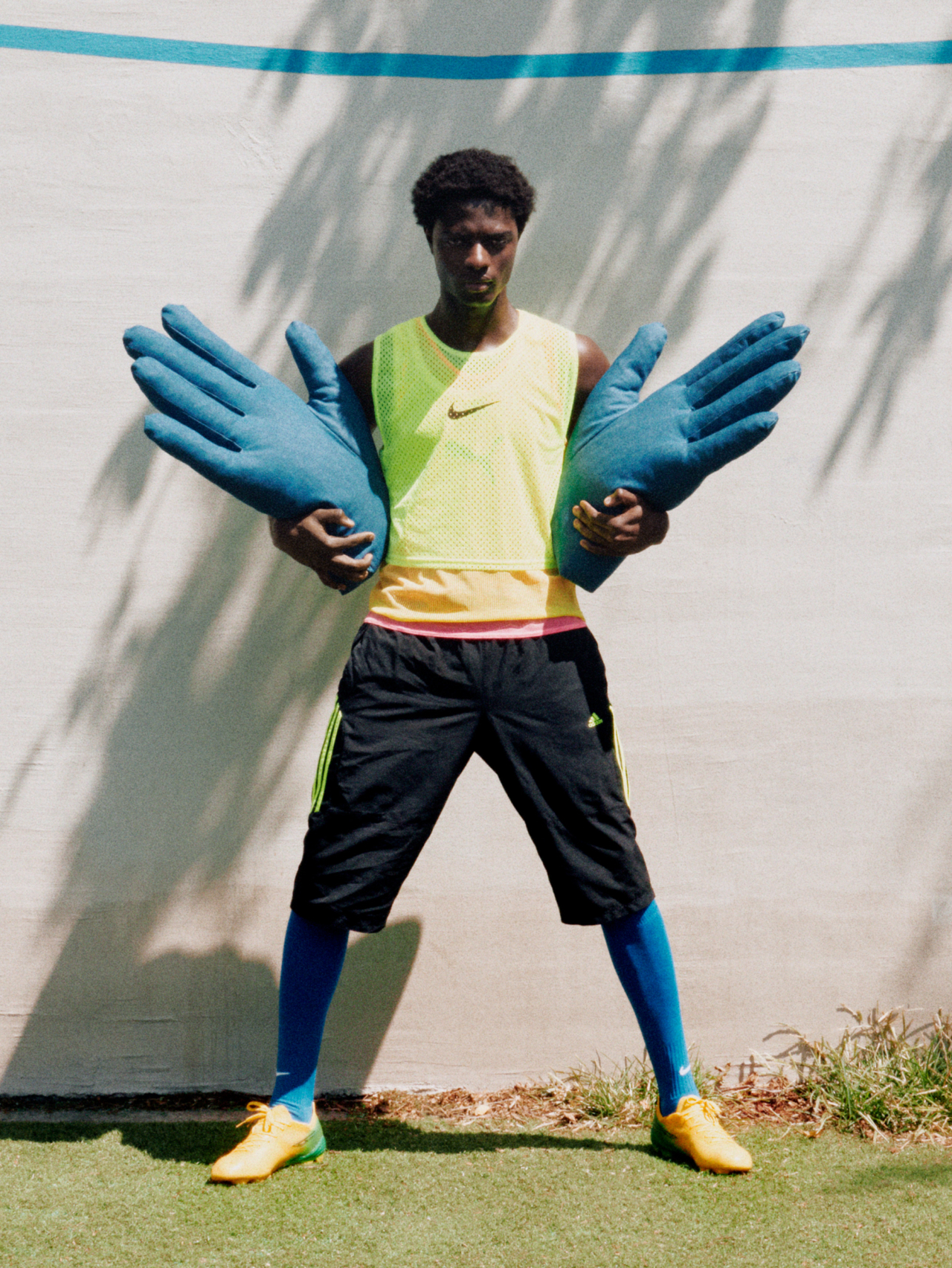
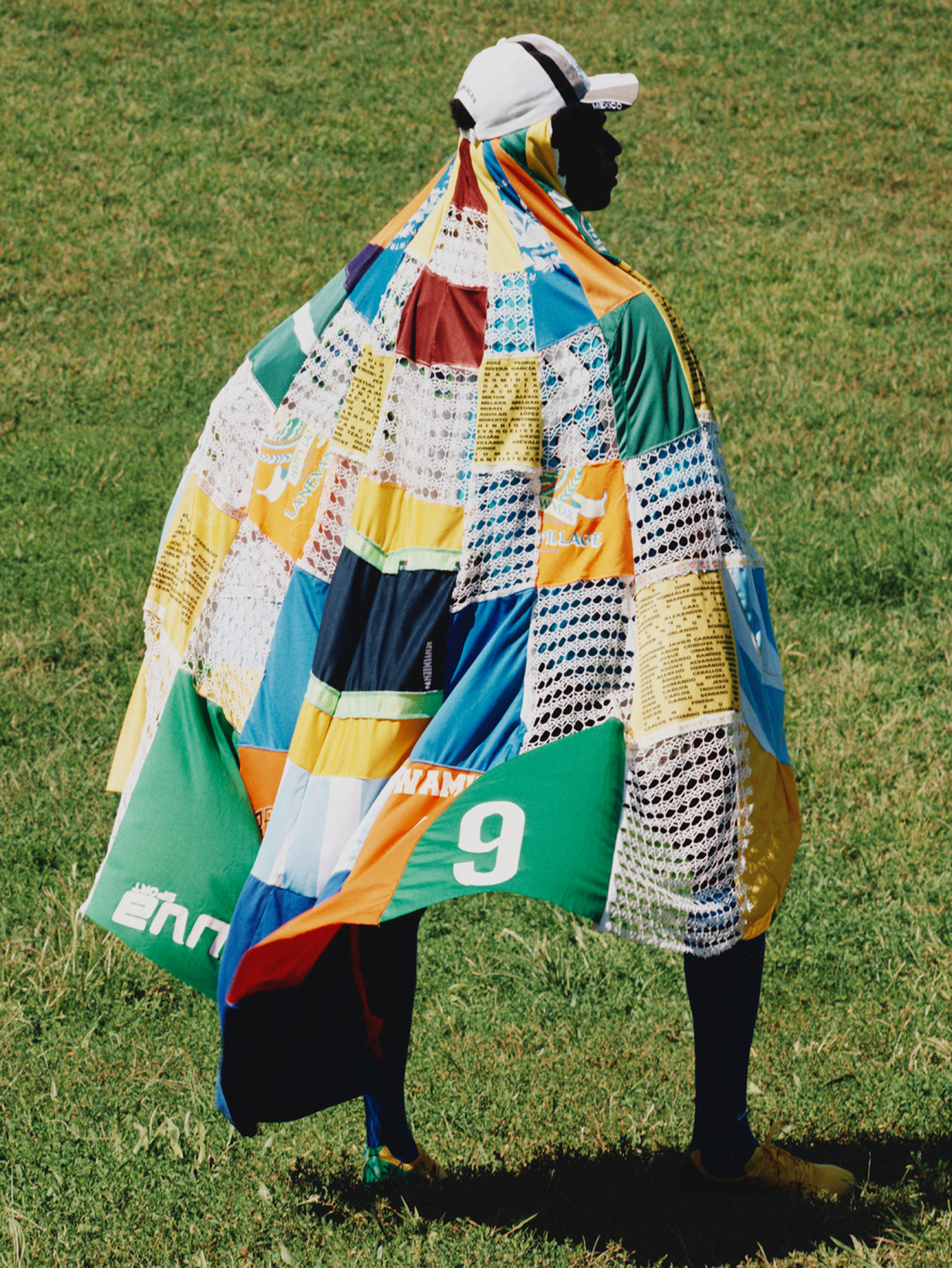
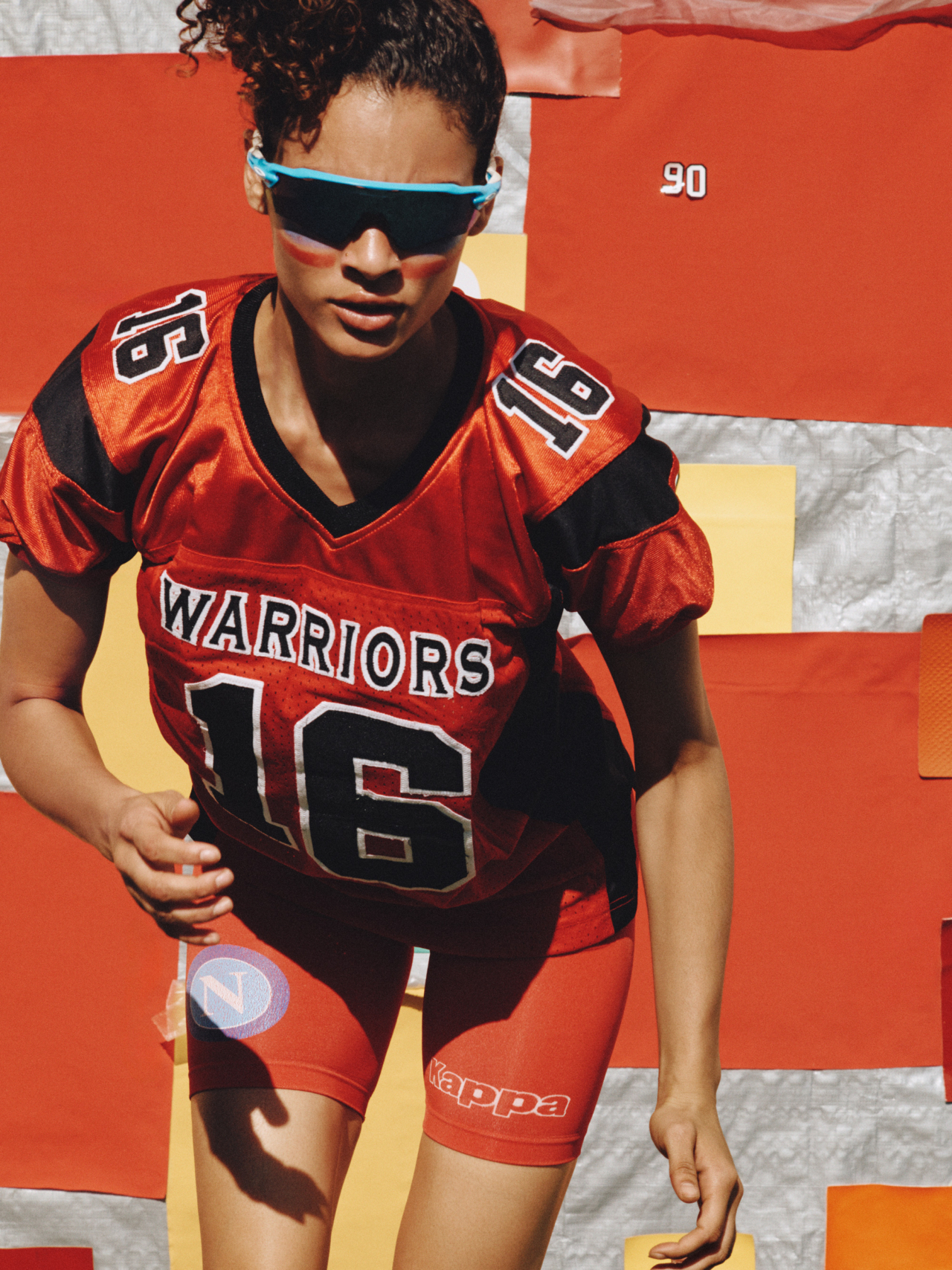
Talent Samuel Atewogboye, Aliza Jarmon, Thursday Makeup Nolan Eakin Hair Nero Set Design Javier Irigoyen Casting Arielle Berman Production COUNSEL Photography Assistant Ryusei Kishi Styling Assistant Annelise Pizzitola Post Production Grain Post Production
This story first appeared in Atmos Volume 12: Pollinate with the headline, “Playing for the Planet.”
A collection of bold ideas and imaginative solutions for a thriving future. In an era defined by urgency and possibility, our planet depends on visions for progress that are actionable, daring, and transformative. Because a single idea, like a grain of pollen, can travel great distances—and catalyze new life.
How Sports Teams Are Turning Fans Into Eco Allies