


Words by Whitney Bauck
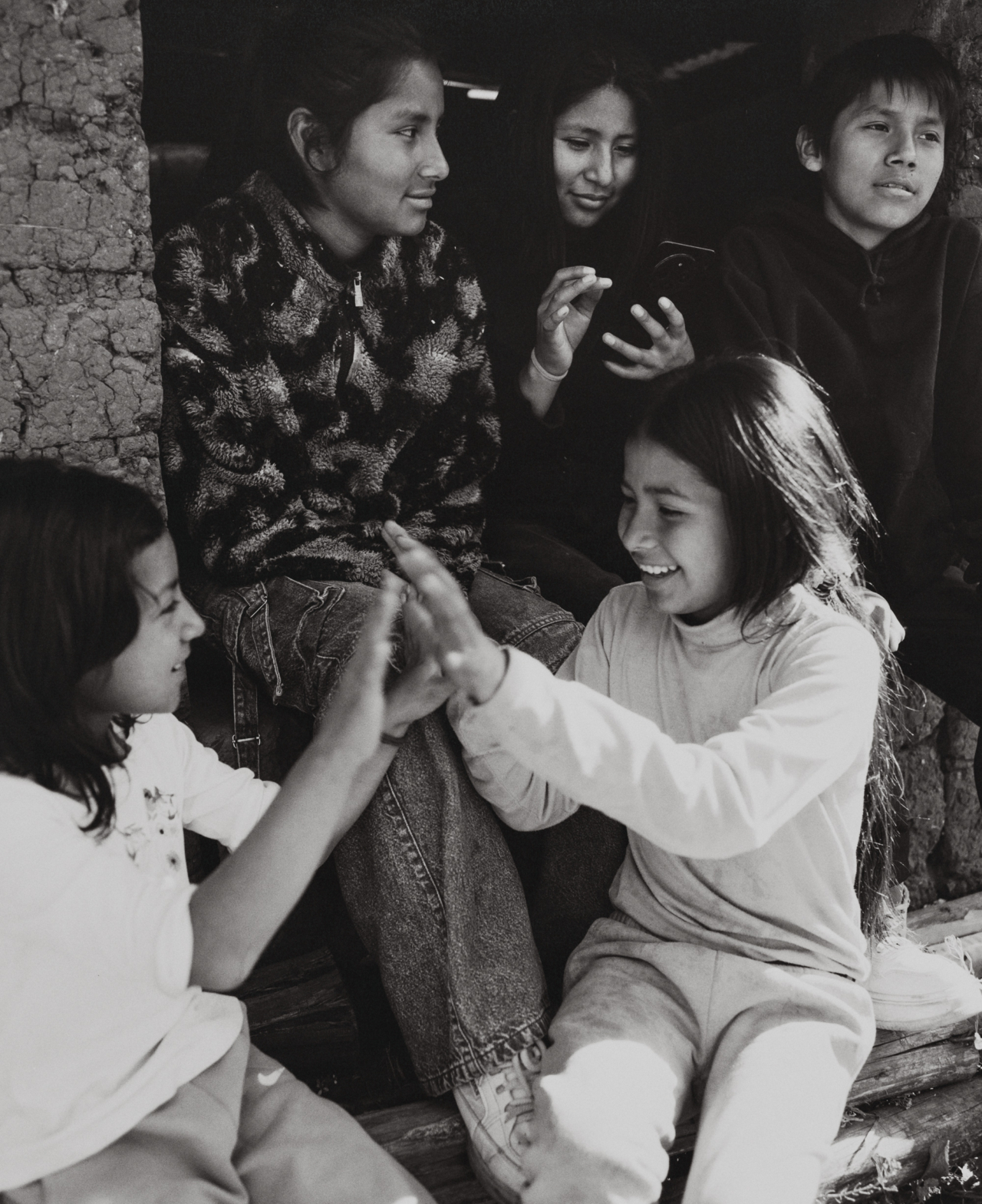
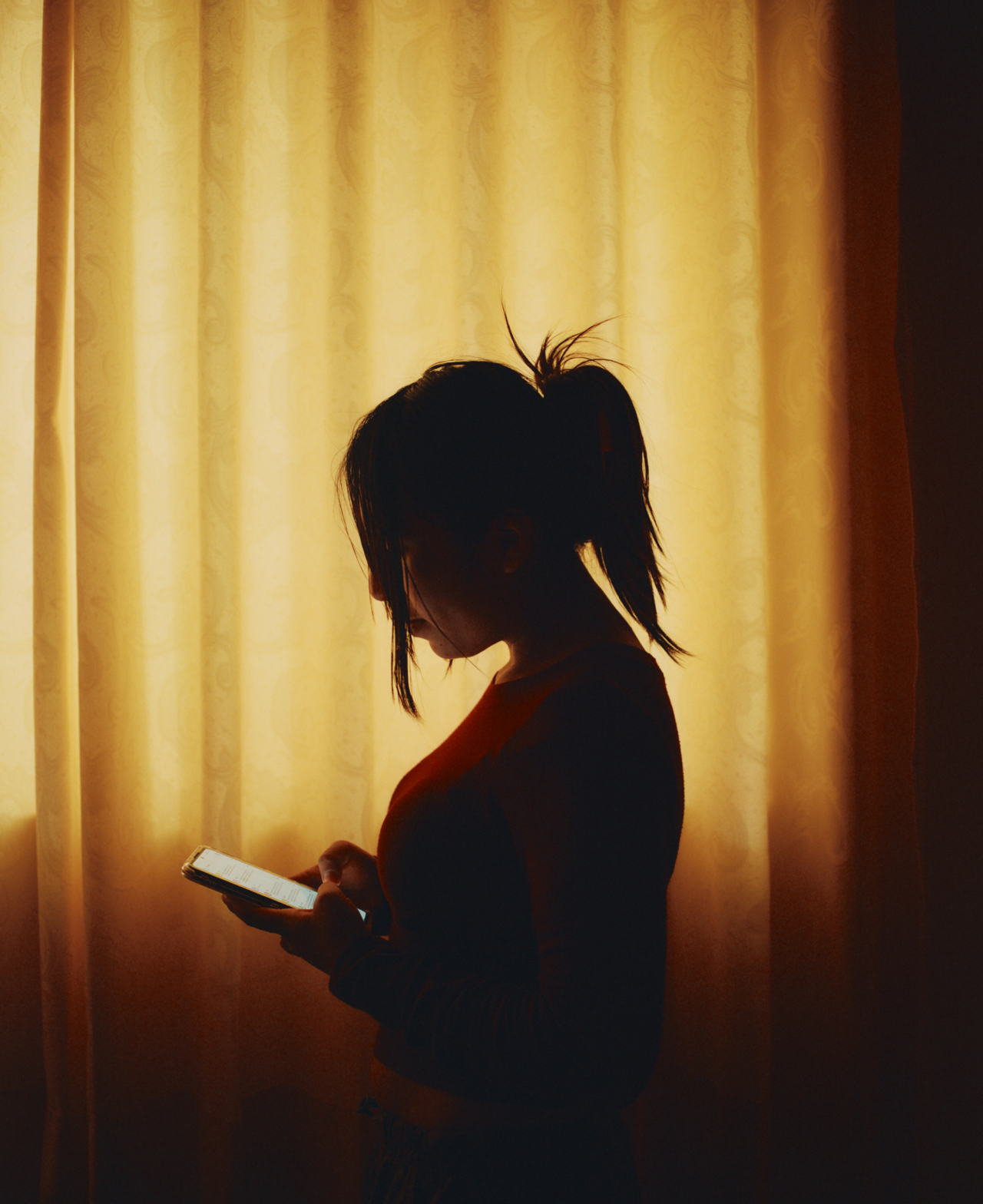
Photographs by Diego Vourakis
Social media, in the beginning, seemed innocuous. It was the kind of thing that showed you pictures of your friend’s new puppy or 140 characters about a movie star’s breakfast of choice; more of a toy than a weapon. But it wasn’t long before these online networks had proven themselves to be far more powerful—and at times, nefarious—than those early days of sepia filters might have led you to believe.
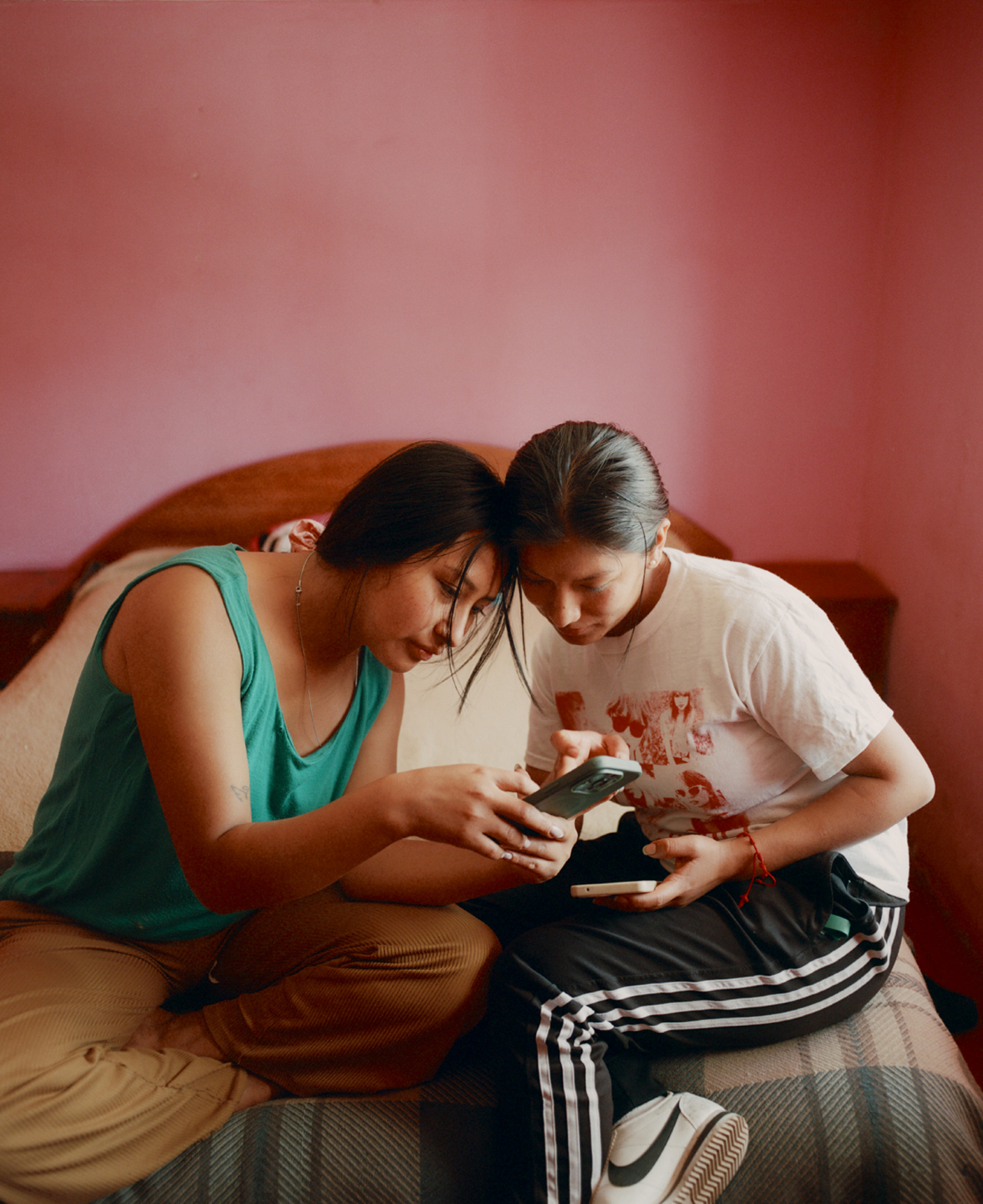
Today, social media has become so ubiquitous and has rewired our information ecosystem so thoroughly that it’s reshaping the way we see and interact with the world. In the U.S., about three quarters of the population uses social media. Nearly half of teens say they’re online “almost constantly.” And while the desire to stay connected with our friends and family is often what gets us hooked at the beginning, we’re increasingly letting social media shape how we understand the wider world beyond our social circles, too: More than half of U.S. adults get at least some of their news from social media.
That means that social media sites have an increasingly outsized influence over how the public understands what’s happening, without any real accountability for the algorithms or tech billionaires that shape them. The negative consequences of this arrangement span from the personally painful—like being on the receiving end of hate speech from a stranger on the internet—to the downright bone-chilling, as in the case of a genocide in Myanmar sparked by Facebook posts or waves of disinformation that have tipped political scales in favor of white nationalism and totalitarian leaders.
The implications for our climate, in particular, are troubling: Recent reports have found that climate misinformation is being supercharged by online bots and trolls from groups trying to discredit viable climate solutions. Meanwhile, a whopping 92% of land and environmental defenders say they’ve faced online abuse, and nearly half of climate scientists who have published more than 10 papers have faced online harassment for their work, according to Global Witness.
“When you want to rip the heart out of a democracy, you go after the facts,” said Maria Ressa, the Nobel Prize-winning Filipina-American journalist who’s written about how social media fueled the rise of dictatorship in the Philippines, in a 2021 lecture. “That’s what modern authoritarians do.”


To address the deafening crescendo of climate catastrophe, fascist politics, genocide, and planetary destruction, we need better, more functional democracies accountable to the will of the people, and to maintain those kinds of political systems, we need a better, more functional information ecosystem. What if our ability to connect and share information wasn’t controlled by tech oligarchs—what if, instead, that flow of connection and information was built and maintained by the public, for the public?
What if, just as we have public libraries or public transit, we had a public option for social media?
When the much-lauded science fiction writer Kim Stanley Robinson set out to write The Ministry for the Future, a 2020 climate fiction novel focused on solutions, he wanted to approach the subject comprehensively and realistically, to paint a picture of what it might look like if we get things right without resorting to a utopian vision that glosses over the consequences of actions already taken. The result is a wide-ranging doorstop of a book that delves into everything from low-carbon transport to economics, painting a sometimes harrowing but ultimately hopeful vision of how we might stave off some of climate change’s worst impacts.
Nestled among these visions of high-speed rail and better governance structures is a short passage imagining a publicly owned social media network. It might at first seem an odd inclusion in a book focused on how we fix the climate. But if you understand that fixing the climate requires some level of fixing our society and politics, it starts to make sense.
The “global village” built by people from around the world connecting with each other online “should be a public space, a commons,” Robinson told me on a phone call. But “anytime there’s a commons, there’s enclosure, and anytime there’s enclosure, there’s privatization and inequality and exploitation of other people.” That, in his estimation, is exactly what’s happened with social media.
In Robinson’s alternative vision for a better future, social media isn’t made up of platforms owned by tech oligarchs who censor what they like and make money in part by selling your private data. Instead, it’s “a public amenity owned by the people, which is to say the government,” he said, “and then, if your data were used, and that could be tracked, and you got a micro royalty every time your data was used, then you might have an income that was not insignificant.” In his imaginary arrangement, data harvesting is voluntary and essentially translates into something like a universal basic income.


Thinking back on his framing of the solution five years after the book was published, Robinson is quick to say there are holes in this vision. He admits to not even using social networks himself, and he said he deeply respects the critiques that friends like the writer and thinker Cory Doctorow have made of his approach in the book. But his thought experiment about managing social media as a commons for the public good stuck with me nonetheless. I called up Doctorow, who is perhaps best known for coining the term “enshittification,” which describes the gradual decline in the quality of online platforms as companies seek to serve advertisers over their users, to discuss it.
From Doctorow’s perspective, fixing social media isn’t quite as simple as giving people more control over their data or turning the control over from one set of elite leaders, like tech CEOs, to another, like government officials.
But public support for public goods doesn’t have to look like swapping out Mark Zuckerberg for Donald Trump as supreme decision-maker. Instead, it could look like public ownership of or investment in the infrastructure that allows a public good to exist, rather than direct government control of it, Doctorow said.
Take reading, which many think of as a public good. “There’s a lot of infrastructure of reading that is shouldered by governments at various levels, starting with going to kindergarten and learning your ABCs,” he said, also citing public libraries and literacy programs. “All of that stuff that is provided by the state and by various public entities makes reading into a public good that you can more or less take for granted.”
It can be a bit hard to parse for anyone who’s not a computer and networking systems nerd, but the same could be true for social media, he said. There are ways for the government to support infrastructure, in the form of servers and the right kinds of regulation, that could make it possible for public and private players alike to build their own social media outfits on the backs of that infrastructure.
“Managing social media from a public health perspective doesn’t mean having to wrest away massive amounts of control from tech companies. It just means imposing limits on what they can and can’t do, much like we regulate other industries with the capacity to harm.”
One key element of that, he noted, would be regulation that mandates interoperability—meaning, if you got started on Twitter and built a huge following, and then decided you wanted to leave because the Nazi comments or climate denial were getting out of control, you could take your followers with you when you left and still communicate with users on Twitter even if you were now using a new site. (“In the same way that if you leave T-Mobile and go to Google Fi, you can still phone all the people you used to call when you were on T-Mobile,” Doctorow explained.)
“The approach of tech regulation for 20 years has been to encourage the responsible use of corporate power. Like, Mark Zuckerberg should end hate speech on his platform—which is to say, Mark Zuckerberg should exercise more control over the users on his platform,” Doctorow went on. “What we haven’t seen is things that actually just reduce Mark Zuckerberg’s control and power.”
With interoperability, built on publicly supported infrastructure, you wouldn’t have to worry about “finding the right person to be the unelected social media czar-for-life of three billion people,” he said. “Instead, you can just go somewhere where they treat you better.”
Where Doctorow uses the metaphors of reading infrastructure or cell phone carriers to make sense of the changes needed in our current social media system, Nathaniel Lubin relies on the metaphor of public health. Lubin was the director of digital strategy in the Obama White House, and he has since spent his time working on internet and society issues through fellowships at Harvard and Cornell, among other projects.
Lubin started thinking about the harms and fixes for social media through a public health lens in part inspired by twentieth-century environmental figures like Rachel Carson. When rampant use of chemicals was harming ecosystems, animals, and people alike, Carson and the movement she helped spark with her groundbreaking book Silent Spring were able to make the case for action not by focusing on individual harms to one bird or one person, but by demonstrating that unchecked chemical usage was bad for society and ecosystem health as a whole.
Lubin thinks that focusing too much on moderation of individual posts on social media is likewise ineffective at combatting the harms of these platforms, just as treating one individual person for COVID would be far less effective than adopting society-wide measures like masks or social distancing to keep everyone safe. “Most individual posts [on social media] might be acceptable as individual posts, but the aggregate effect of the context in which users experience repeated exposures is actually the effect,” he said. “It’s no longer an individual case; it is a population effect happening in aggregate.”
From Lubin’s point of view, managing social media from a public health perspective doesn’t mean having to wrest away massive amounts of control from tech companies. It just means imposing limits on what they can and can’t do, much like we regulate other industries with the capacity to harm, like auto makers or tobacco companies.
“I think it’s good for private enterprise to be able to do what they want. But in every other space, we have constraints on that, right? We have rules that say you do what you want, as long as these bad things don’t happen,” he said. In his mind, public health should be the limiting factor—so social media companies should be able to operate as long as they don’t do things like incite genocide or degrade public trust to the point that democracy can’t function. With those constraints defined and enforced by the law, it would then be up to the companies to decide how they get there. “They know their products better than anybody does. They should have that power, but they should be held to external effect standards,” he said.
Robinson, Doctorow, and Lubin may use different metaphors, but they each point to the power of reimagining social media so that the networks we use to connect and communicate online operate less like private companies bent on exploiting their users and function more as entities that exist to serve the public good.
Creating that kind of reality isn’t a task that will be accomplished overnight, and there’s no exact formula for how we get there. But both Lubin and Doctorow imagine it will require some kind of regulation beyond what currently exists. While that’s certainly challenging in this political climate, Lubin pointed out that state-level legislation dealing with some of these issues is already starting to surface everywhere from Utah to California. The momentum of that kind of legislation coming from both red and blue states could help pave the way for regulation that meaningfully reshapes the social media landscape for the better.
Whatever happens next, Robinson’s science fiction reminds us that a better future, for social media and the planet that’s so shaped by it, is worth imagining. And if we take to heart adrienne maree brown’s adage that “all organizing is science fiction,” maybe we can begin to organize and imagine our way toward a future in which the story we tell about social media has a happy ending.
Production Rodrigo Saqra Durand Rigamontti Casting REC Talent Nabel, Clarinet Moscoso Vasquez, Marilyn Liliana Giraldo Quispe, Luz Clarita, Mijael Moscoso Vasquez, Milagros
This story first appeared in Atmos Volume 12: Pollinate with the headline, “A Public Option for Social Media.”
A collection of bold ideas and imaginative solutions for a thriving future. In an era defined by urgency and possibility, our planet depends on visions for progress that are actionable, daring, and transformative. Because a single idea, like a grain of pollen, can travel great distances—and catalyze new life.
Could Social Media Serve the People Instead of Profits?