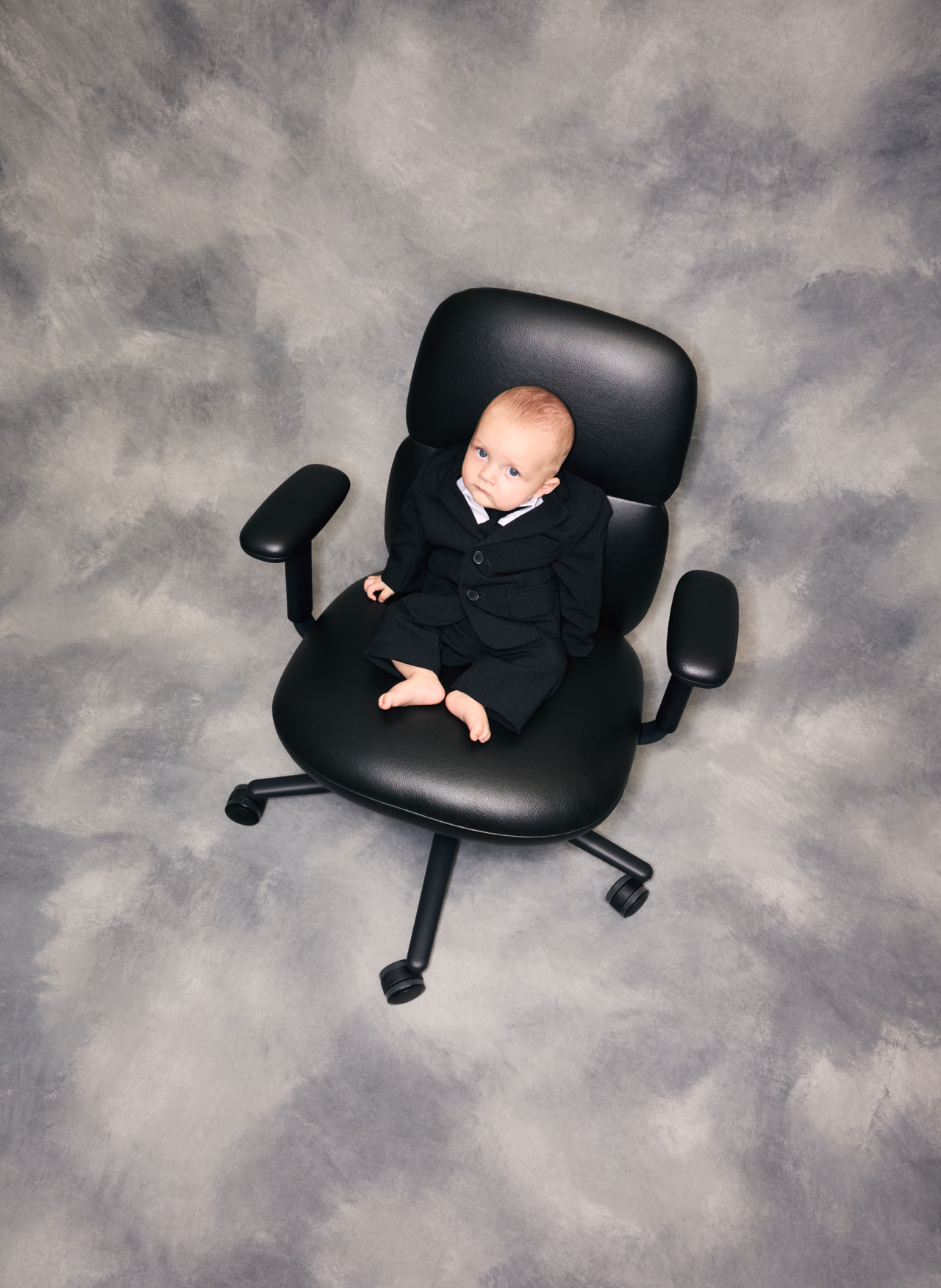
Words by Amy Westervelt
Photographs by Charlie Engman
Today, the same law firm that argued and won the landmark Citizens United case, which opened up the floodgates to dark money in politics, is arguing in several climate cases that anything oil companies have ever said about climate change was political speech, and thus protected by the First Amendment.
Citizens United was a weird case, brought by the producers of a “documentary” called Hillary: The Movie—a film that was part of the campaign against Hillary Clinton’s election and which was funded by Clinton’s political opponents. The Federal Election Committee declared the film to be “electioneering,” which limited where it could secure distribution. The producers argued that this violated their free speech rights. Their lawyers extrapolated to make the argument that money is a form of speech, and that any group of people—from a corporation to a labor union—should have the same legal rights as a single citizen. As a result, tens of millions of dollars of dark money now warp every U.S. election.
Campaigners and politicians have been working to overturn the ruling since it came down in 2010. But what if we went further? What if there were a constitutional amendment that made it explicit that the First Amendment applies only to humans, not artificial structures like corporations? And is that really any more radical than imbuing corporations with rights in the first place, equating the free speech rights of a corporation—that possesses 100 times the spending power to shout over the voices of individual citizens—with those of the average person?
That disparity has been a huge obstacle against climate action over the past 15 years, with corporations and industry trade groups able to outspend environmental nonprofits 10 to 1 on lobbying—and then throw tens of millions of dollars into ads that mislead people not only on the problem of climate change, but also on the ability of industry-backed solutions like carbon capture to solve it.
Because the ruling effectively equated money and speech, there have been arguments against things like transparency policies that would require academic researchers to disclose when a particular study has been funded by a fossil fuel company. Never mind your right to know who’s behind the information you’re getting.
“It gives corporations basically a loudspeaker to amplify their voice above everybody else’s,” Dr. Robert Brulle, an environmental sociologist at Brown University, said of the current legal structure protecting corporate speech. “And in a media environment where there’s many, many competing voices, the ability to get your message out repeatedly, in opposition to other voices, is enormously influential in getting your viewpoint to be part of the public discussion and eventually become part of the taken-for-granted worldview.”
Then there’s the fact that corporations can not only put unlimited money into black box political action committees, but they can also spend directly from their coffers on politics.
“A lot of people at first will say, well, I think corporations should have a right to speak,” says Dr. Robert Kerr, an expert on the corporate free speech movement and dean of the journalism school at University of Oklahoma. “And then when I’ll say, okay, but if you’ve invested in a corporation, should they have a right to spend your investment for political purposes? And they almost always say no—almost everybody, whether they call themselves liberal or conservative. Because when people think about it, they realize…that if a corporation can spend the stockholders’ money, they might spend it for something you support, but they could very well spend it for something you don’t.”
No one wants to make it illegal for corporations to speak, but no one voted to give them unlimited power over the public square either. Kicking corporations out of the First Amendment makes even more sense when you understand how they worked to weasel their way into it in the first place.
In 1970, Mobil Oil worked with the New York Times to invent the advertorial, what we often call sponsored content or branded content today. The company was a pioneer in the realm of “issue advertising,” driven by its CEO Rawleigh Warner and head flak, Herb Schmertz. The two crafted a personality for Mobil—smart, cultured, responsible, the “thinking man’s oil company,” as they described it—and began expanding beyond just advertising Mobil’s gas and gas stations to push its ideas and policy proposals, too. Placing weekly op-eds in the Times was part of that strategy, but so was sponsoring Masterpiece Theatre, creating the Pegasus literary prize, and subsidizing loads of documentaries and TV shows.
“What if there were a constitutional amendment that made it explicit that the First Amendment applies only to humans, not artificial structures like corporations?”
It was a wildly successful strategy, but in 1974 Schmertz hit a roadblock. Schmertz had commissioned a few editorial-style TV ads on things like whether the government’s moratorium on offshore drilling was good or bad for the country, and set about placing them on the big three networks of the day: ABC, CBS, and NBC.
He had not anticipated that broadcast television would have a tighter ethical filter than any newspaper in the country. ABC and CBS’s flat-out refusal to run these ads lest they be accused of airing propaganda, and NBC’s insistence that they could only run them if they were edited to be less one-sided, shocked and worried him. What if the newspapers suddenly started rethinking their approach?
Schmertz and Warner immediately went on the attack. They used their weekly NYT spot to run ads calling the big three out for censorship, appeared as guests on any talk show that would have them, and started writing and speaking about the importance of protecting “corporate free speech rights” every chance they got. And perhaps most importantly, they started to look into how those rights might be better protected legally.
“Over the course of the 1970s, Mobil contributed more than any other player to the construction of an ideology of corporate citizenship,” Kerr writes in his book The Corporate Free Speech Movement.
Lucky for Mobil, a longtime tobacco lobbyist who had made similar arguments about the tobacco industry’s voice being “censored” just happened to have been appointed a Supreme Court justice. As a justice, Lewis F. Powell got the court to take on a landmark case, First National Bank v. Bellotti, that moved the argument for giving corporations First Amendment rights forward in a big way.
“[Powell] wrote the opinion very carefully to avoid the question of whether corporations have First Amendment rights. He could tell he would lose on that, so he wrote it more, Does the First Amendment allow government to restrict spending on these ideas that the corporation wants to get out to the public?,” Kerr said.
Schmertz and Warner followed that case closely and publicly supported it, writing on its significance to the health of not just American business, but American democracy. Following Bellotti, several other cases chipped away at the legalities separating the speech of actual human citizens and the spin of corporations, and Mobil filed amicus briefs in several of them.
“Now suddenly corporations could use their budgets, which are many times larger than individuals’, to advocate their position in the public space,” said Brulle. “[This] allowed for a systematic distortion of the public space.”
In 2003, ExxonMobil, the company formed after Exxon acquired Mobil in 1999, filed a brief in a case called Nike v. Kasky. Nike had claimed in ads and media stories that it was committed to fair wages and labor practices all over the world. A California activist named Mark Kasky said that was clearly a lie, based on news reports of Nike-run sweatshops in Southeast Asia, and filed a complaint invoking California’s false advertising laws. In response, Nike argued that since its videos and ads on this subject were not “commercial speech,” but rather what the courts call “petitioning speech,” or political speech, it did not fall under advertising laws and was protected by the First Amendment.
ExxonMobil’s lawyers filed an amicus brief in support of Nike cosigned by Microsoft, Morgan Stanley, and GlaxoSmithKline. In it, they wrote:
“Like virtually every other large corporate enterprise in the United States, amici regularly speak out on issues of public concern and in so doing place before the public facts about their products, services, or business operations and practices. Such issues range from human rights abroad; global climate change; environmental effects of business operations…Such speech by a corporation merits the highest level of First Amendment protection and is entitled to the same “breathing space” as speech on matters of public concern by other speakers.”
This was 2003, and they were already laying the groundwork to protect whatever they said about “global climate change” as free speech. It was a continuation of the sorts of arguments Schmertz was making back in the ’70s and ’80s about corporations being people too and having important ideas to share. And it echoed Powell’s 1978 Bellotti ruling and the idea that the public might miss out on important information and ideas if we curtail corporate speech too much. None of this, however, takes into account the fact that corporations’ outsized budgets and influence give them far more space and power in the public square, making it reasonable to expect them to exercise more responsibility.
The best-known corporate free speech case, Citizens United v. Federal Election Commission, was brought by the producers of an anti-Hillary Clinton documentary entirely funded by Clinton’s political opponents. While the producers didn’t win all of their arguments, they won one really big one: the idea that money is effectively speech, and as such, limiting it is akin to limiting free speech.
Not only did Justice Anthony Kennedy, in his opinion for the majority, use Bellotti to justify his ruling in Citizens United, he “ just completely redefine[d] it,” Kerr says. “And basically [said] that from now on, corporations can spend directly from their treasuries. That opens up this incalculable pool of money.”
Today, we find ourselves in a position Herb Schmertz could have only dreamed of, where corporations actually have more free speech rights than citizens. Gibson Dunn, the same firm that argued and won Citizens United, won a recent victory for the pipeline company Energy Transfer, in which it sought hundreds of millions of dollars in damages from Greenpeace for the role it played in the 2016 and 2017 Standing Rock protests. One of the claims in the case was that in affirming the Standing Rock Sioux Tribe’s claim that Energy Transfer had destroyed sacred sites while constructing its pipeline, Greenpeace had “defamed” the energy company. The verdict requires Greenpeace to pay more than $600 million to the pipeline company. Marty Garbus, a legendary First Amendment attorney who was part of a group of lawyers monitoring the trial declared it “one of the worst First Amendment decisions” he’d ever seen.
Today, people are afraid to protest in the U.S. lest they be jailed or sued into oblivion, while universities and other civil society groups are afraid to put limits on corporate funding or to put labels on misinformation, lest they be accused of censorship or taken to court.
“No one wants to make it illegal for corporations to speak, but no one voted to give them unlimited power over the public square either.”
This is the opposite of what the First Amendment was written to protect, and it’s time we humans take it back. Doing so could level the political playing field on climate, enabling the passage of political spending limits as well as transparency around who is funding what. It would turn off the tap on the absolute flood of oil-backed dark money in politics, which has super-charged not only climate denial but also anti-renewables campaigns in recent years.
So what would it actually look like to turn the tide? To begin with, there’s the push to overturn Citizens United. In March 2025, U.S. Senator Jeanne Shaheen (D-NH) reintroduced a constitutional amendment, called the Democracy for All Amendment, to do just that. Thirty-nine other Democratic senators joined her; and though they don’t have the votes to pass it right now, that may not always be the case.
For years, pro-democracy groups have talked about the sort of case that might convince the Supreme Court to reverse itself on this decision. These days it would probably require something counterintuitive, given the makeup of the bench. Ruth Bader Ginsburg famously won a key ruling protecting equal rights for women in the workplace by arguing on behalf of a man who needed care leave. Could some corporate entity be so aggressively “woke” as to trigger the court to take back blanket protections? Might be fun to see them try!
Ben Franta, a climate and law researcher and head of Oxford University’s Climate Litigation Lab, suggests a special form of oversight, either court-ordered or legislative, for companies caught routinely lying to the public, as fossil fuel companies have. In the same way that a company that routinely defaults on its bills would be put into receivership until it can prove that it can be trusted to be financially responsible, Franta explains, companies could have to prove that they are worthy of the public’s trust before being given carte blanche to shout into the public square.
“I think that their past actions provide justification for holding them to a higher standard than you would normally hold a company,” he says. “They need to come under some level of special scrutiny, something that goes beyond mere transparency, that goes beyond disclosure. It’s almost like an information receivership.”
Granting corporations “personhood” and First Amendment rights has been disastrous for politics, and the climate. It’s time to return this law to the things it was meant to protect—society, humanity, and, by extension, the livable planet required to keep both alive.
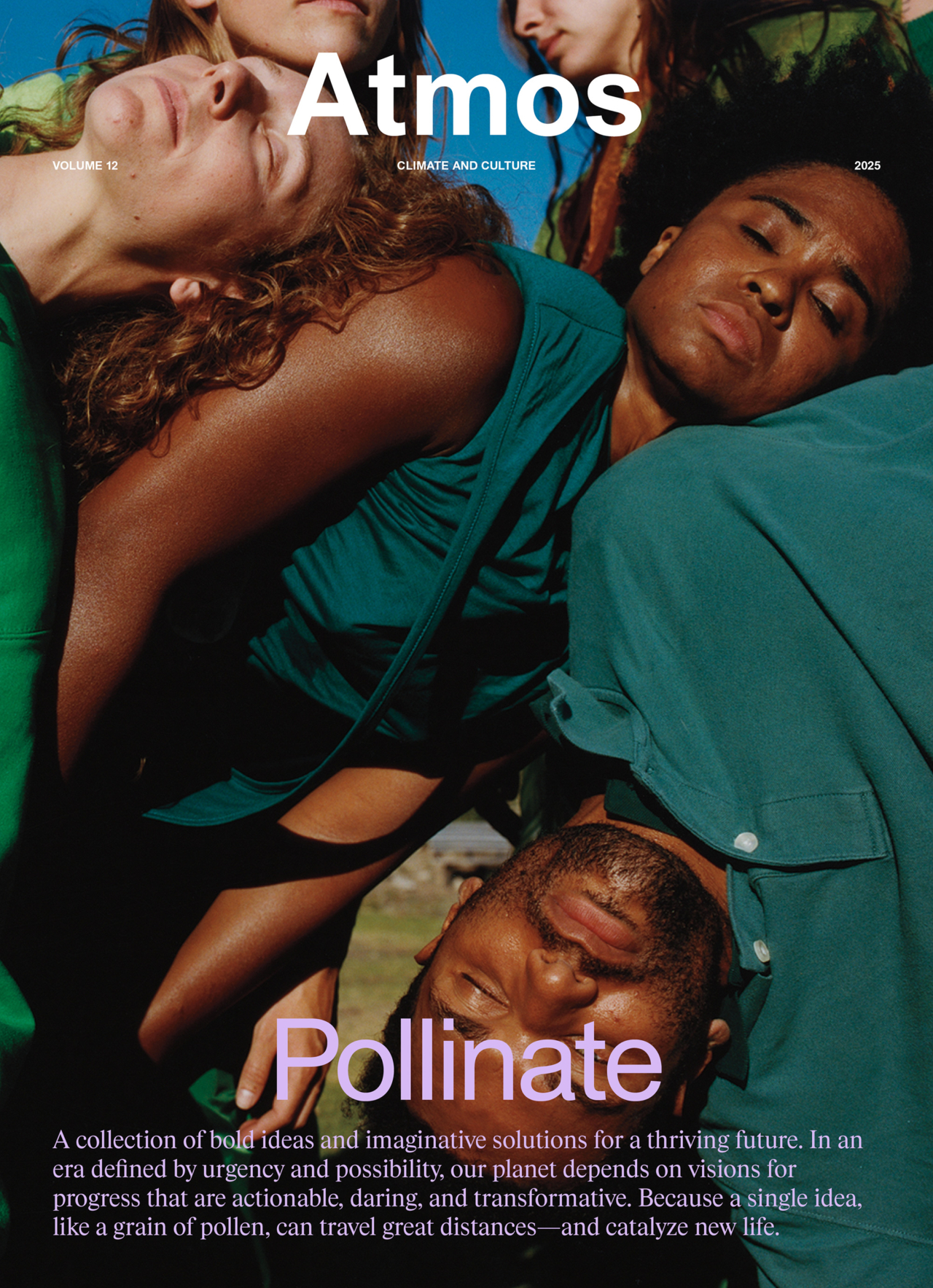
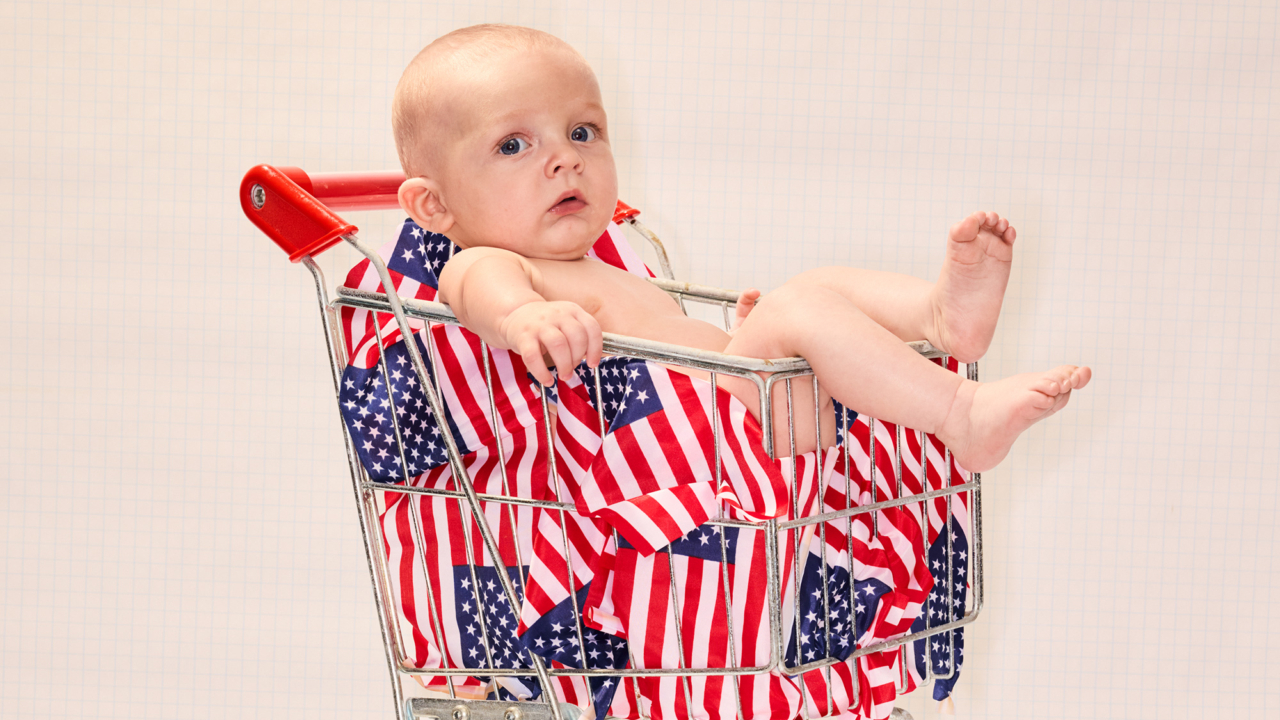
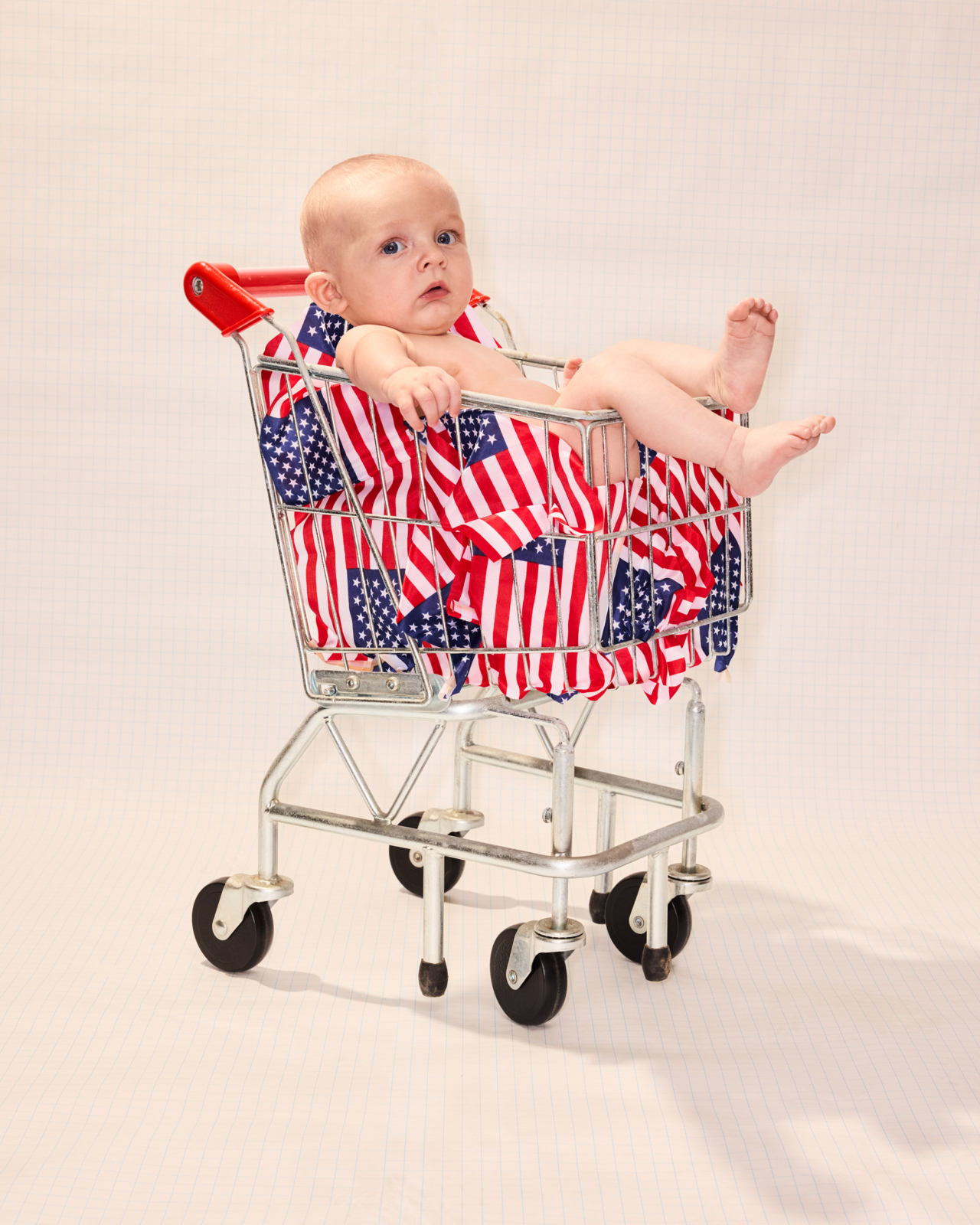
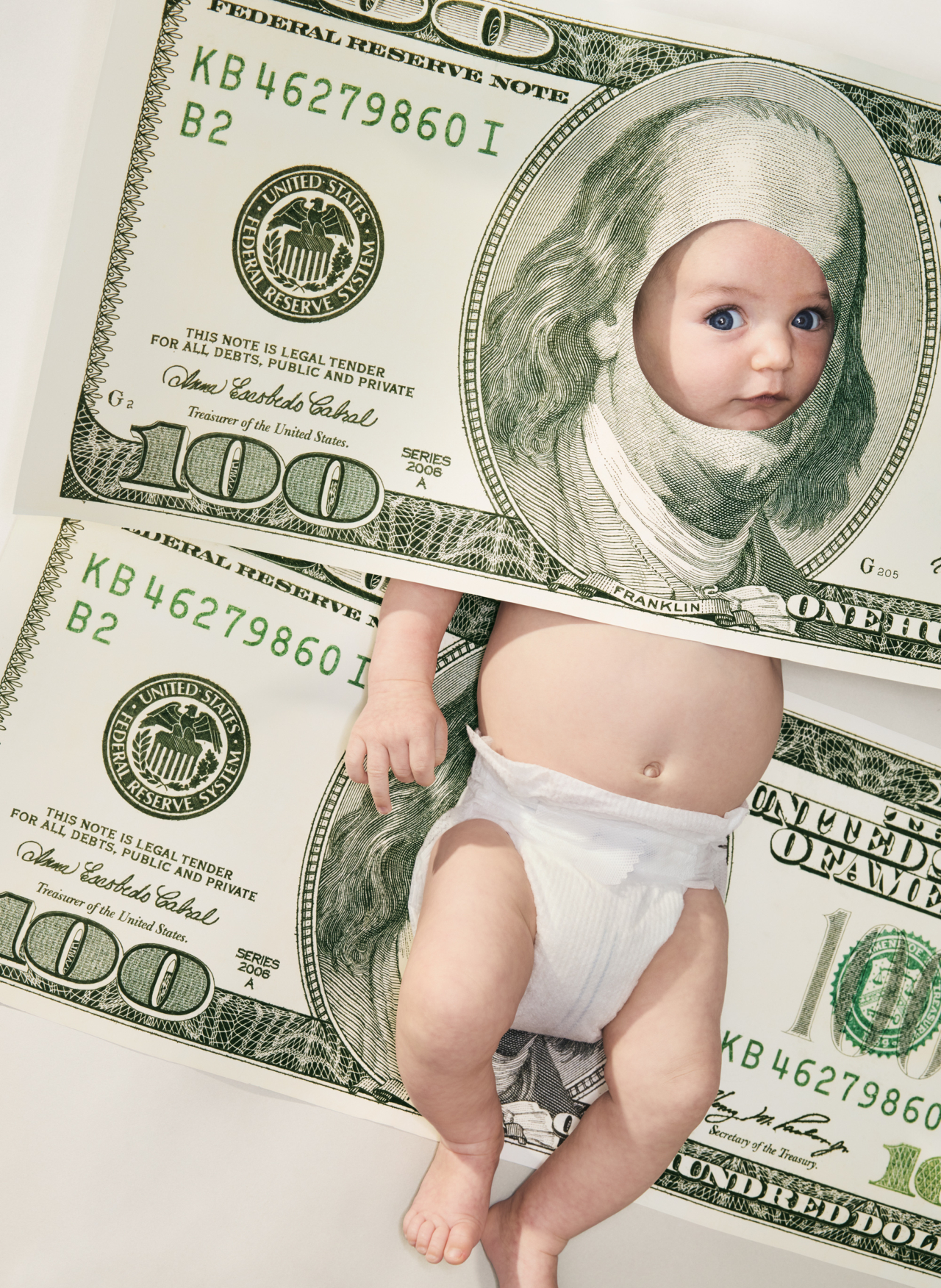
Talent Silas, Mira, Luca Set design Lane Vineyard Set design assistant Gabrielle Arriaga Lighting assistant Henry Lopez
This story first appeared in Atmos Volume 12: Pollinate with the headline, “It’s Time to Kill Corporate Personhood.”
A collection of bold ideas and imaginative solutions for a thriving future. In an era defined by urgency and possibility, our planet depends on visions for progress that are actionable, daring, and transformative. Because a single idea, like a grain of pollen, can travel great distances—and catalyze new life.
Amy Westervelt: It’s Time We Stopped Treating Corporations As People