Words by Daphne Chouliaraki Milner
Photographs by Max Attila Bartsch
The world’s environmental alarms grow louder and more insistent with each passing moment.
Nearly half of the world’s flower species are in decline. Global pesticide use is up, despite the hazardous effects of these chemicals on water, biodiversity, soil, and human health. Increased heat and drought stress crops, while living systems lose their complexity and extreme weather events strain natural and manufactured habitats. Against this backdrop, How Flowers Made Our World by revered biologist and bestselling author David George Haskell urges us to learn from the organisms holding our ecosystems together. Flowers, he writes, are the engineers of habitats, architects of food webs, and the biological infrastructure behind much of what humans eat, build, and call “nature.” What better place to start?
In the book, Haskell—a two-time Pulitzer Prize finalist—traces how flowering plants revolutionized the planet after arriving late in Earth’s history, evolving and spreading while dinosaurs still roamed. They reshaped landscapes and formed tight partnerships with insects, birds, and mammals. The result is a sweeping account of interdependence, moving between deep time, evolutionary history, and the present-day climate crisis.
The argument lands with particular force now, when the systems that flowers helped create are being stressed by human activity. Below, Haskell speaks with Atmos about flowers as evolutionary agents, why it matters to understand how flowers made the world, and what it would take to keep from unmaking it.
Daphne Chouliaraki Milner
What was the starting point for How Flowers Made Our World?
David George Haskell
My background is in biology, but for the last 15 years, I’ve mostly been writing books and essays that integrate biological knowledge with ethics and culture and sharing those stories with people who aren’t specialists. Again and again, I kept running up against flowers as central players in Earth’s story, both in the past, but also in the present, and most likely in the future.
And yet that story was only told in fragments. There was no book I’d found that really celebrated and honored flowers—not just for their beauty or the way they lift our spirits, but for their world-changing power. Once that idea formed, the way I experienced and saw the world transformed.
I really think we live on a floral planet. As I go through my day—thinking about what I’m eating, or thinking about the places I’m walking in a city or out in the countryside—I see the creative capacity of flowers everywhere. And I see how our actions sometimes help flowers, but often we’re not particularly helpful cooperators. To me, the central story is putting flowers back where they belong, which is at the center of the narrative of how the modern world came to be.
Daphne
I love that framing—living on a floral planet. In the book, you position flowers as revolutionary actors. For readers who haven’t read it yet, can you explain what flowers changed about life on Earth, and why they’re so instrumental in the evolution of our planet?
David
Flowers are late arrivals in the drama of life on Earth. They appeared maybe 130 million years ago, maybe a little before that, but that’s hundreds of millions of years after complex plants and animals. Despite them being latecomers, within a few million years of their appearance, almost every habitat was transformed. Flowering plants essentially took over.
They built rainforests. There were no rainforests as we know them today before flowering plants. There were no prairies, no mangroves, no seagrass meadows. Name an important habitat today, and flowering plants are very likely either at its center or deeply involved. Of course, there are places like spruce forests where other plants are important, and I don’t want to dismiss that. But ecologically, flowers run the show.
And for humans, they absolutely run the show because almost all of human agriculture is based on flowering plants. Two-thirds to three-quarters of the calories we eat come from grasses, like maize, wheat, rice, sugarcane, and more. We are a floral species—really, a grassland-dependent species.
I mean that flowers are “revolutionary” literally. It’s not a metaphor. Once flowers arrived, there was an overthrow of the old order, and flowering plants became central to ecosystem function in ways that benefited other creatures. Rainforest animals wouldn’t exist without flowers. Butterflies and bees evolved in relation to flowers. Grazing mammals; many birds, including fruit-dispersing and pollinating birds. And the human species wouldn’t have evolved without them.
There are other revolutions, too. Genetic innovations within flowering plants that helped them take over, and a revolution in human culture. Flowers were important in the foundation of modern biology, in agriculture, and in the ways we express individuality and cultural identity through perfume, decorative arts, religious rituals, burials, weddings. Flowers sit at the center of many important cultural rituals.
The book’s title might sound grandiose—How Flowers Made Our World—but I really mean it. Without flowers, we’d be on an entirely different planet. Wondrous in its own way, but much less productive, less diverse, and missing many of the dominant creatures we have today.
Daphne
Could you talk about one or two “deals” that flowers struck with insects, birds, or mammals that helped facilitate these big changes?
David
The classic one is pollination. Before flowers, insects were basically pests; leaf eaters, sap suckers, and so on. They were a big problem for most plants. Flowering plants flipped the narrative and turned some former enemies into cooperative partners. It makes for an interesting story because anytime you turn enemies into friends, you have questions of how and why, and what the consequences were. Flowers did that.
What astonishes me is that they mainly did it by speaking directly to animal senses in the language of beauty and desire and sensory connection. When a flower releases aromatic chemicals, those drift through the air and bind to nerve endings on insect antennae or in the noses of mammals or birds, stimulating the brain in a way that elicits attraction and desire. That brings the animal into alignment with the plant’s intentions.
This is cooperation mediated by aesthetic experiences. And it’s not just through aroma, it’s also through colors, shapes, even the electric field around a specific flower. Every flower has a unique electrical field we can’t see, but bees and hoverflies can detect it with small hairs on their bodies. These are ways flowers “speak” to animals—and, of course, I’m using that analogy loosely. Flower language is not exactly the same as human language. But there is a communicative element to this. From there, pollen transfer was made much more efficient, and allowed flowering plants to inhabit habitats other species could not.
They also expanded cooperation into fruit dispersal. Fruit is an underappreciated aspect of floral innovation. Before flowers, seeds were largely on their own. Other plants, like conifers, make a seed, maybe enclose it in a cone, then throw it out and the little baby is left on its own. Flowering plants wrap seeds in fruits that can be nutritious or protective, or shaped for dispersal, like the “helicopters” of maple and ash. Only flowering plants produce fruits, and many fruits also “speak” to animals, linking plants and animals into cooperative, sometimes coevolutionary relationships. Seeds are dispersed by birds, but also by ants and many other creatures.
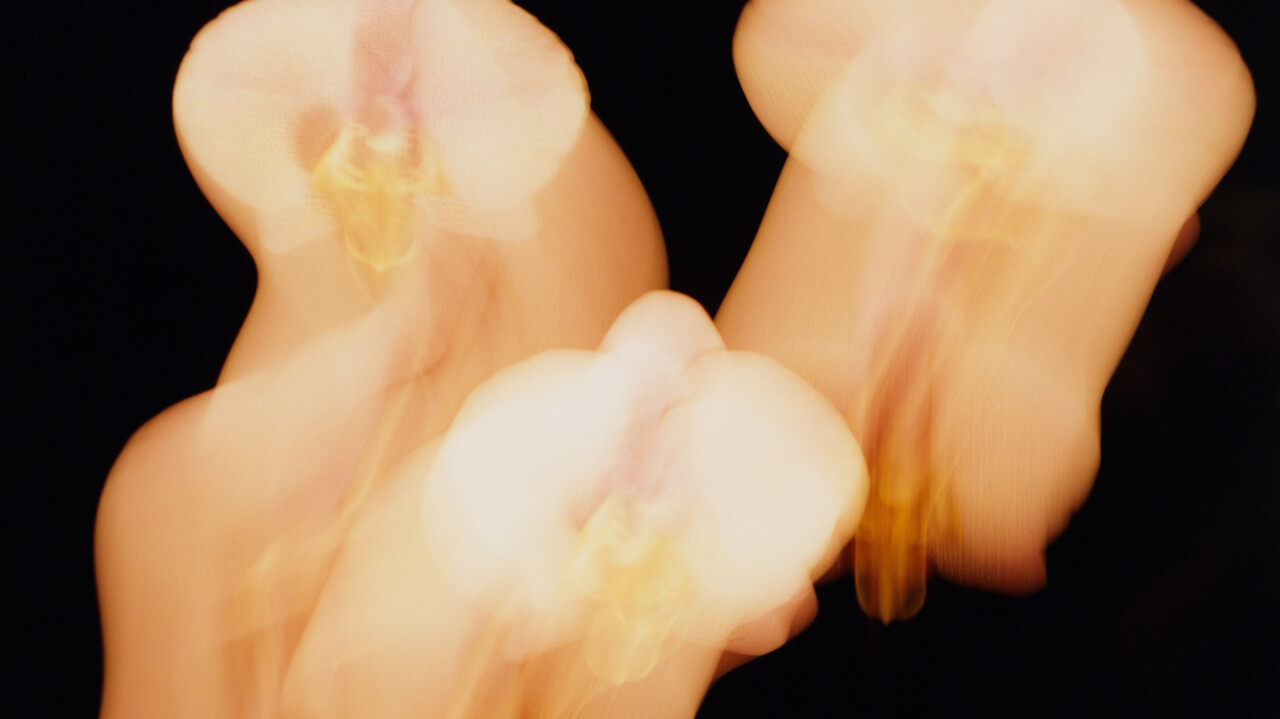
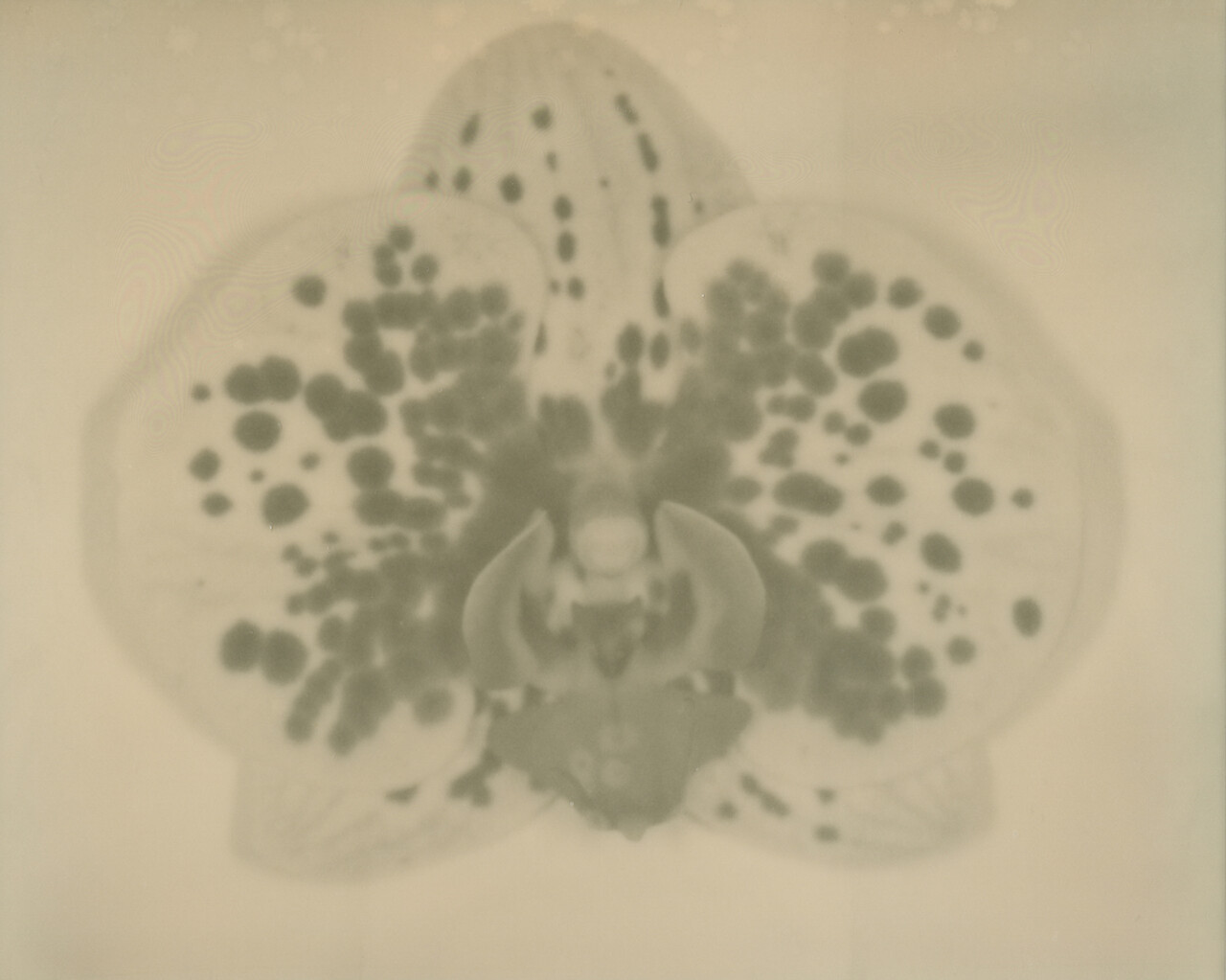
But this relationship isn’t always purely cooperative. Flowering plants can be sneaky and deceptive. Many orchids have a puff of yellow pigment that looks like pollen but offers no food. Some grow spurs that look full of nectar but contain none.
And some are even more devious. An orchid flower can look and smell, and even feel in texture, like a female wasp or another kind of insect. Males emerge in spring and try to mate with the flower, wasting their time, while the orchid places pollen on their heads. The wasps are then enlisted as pollinators. Other flowers can kill their pollinators. For example, after an insect delivers pollen from a male to a female flower, the female flower offers no exit, and the pollinator dies there.
So yes, there’s much to celebrate and learn from in floral cooperation, but evolution can be crafty. Flowers are part of that coevolutionary melodrama, if you like.
“To me, the central story is putting flowers back where they belong, which is at the center of the narrative of how the modern world came to be.”
Daphne
As you’ve already touched on, much of what you’re describing underpins human civilization and agriculture. To what extent would you describe human civilization as a by-product of botanical innovation?
David
Oh, 100%. Long before humans evolved, our pre-human hominid ancestors came down from trees in the African tropics about 6 million years ago. They eventually evolved bipedalism on grasslands and savannas. Grasses are a specialized kind of flowering plant. Our ancestors evolved to live and thrive in an ecosystem built entirely by one kind of flowering plant, and those are grasses.
A lot of people don’t even think of grasses as flowers. They think, “That’s just a lawn.” And lawns are strange because we mow them to remove any sign of sex or death. And it hides from us an essential truth that, like all flowers, grasses are sexual beings, and when they form seeds, those seeds are packed with food. Grass seeds are actually way more loaded with food than many other kinds of seeds and fruits out there.
We, humans, evolved to take advantage of that and to eat the animals that were eating the grasses. When our ancestors hunted wildebeest-like animals, we were indirectly eating grasses, even if we were eating barbecue.
Then, with the agricultural revolution, that relationship with grasses and with other flowering plants, including those relying on insects for pollination, intensified. Human agriculture is founded on the productivity and innovations of flowering plants combined with human creativity. Let’s give our ancestors some credit. Those clever people worked with teosinte to produce modern maize; with wild rice to produce domesticated rice; with wheat and barley and oats. There’s a lot of human creativity that effectively merged with botanical productivity to produce modern agriculture.
It remains astonishingly productive, even as we’ve caused soil erosion and other environmental problems. Grain harvests have continued to rise overall. The war in Ukraine has affected that recently, because Ukraine is a major wheat-growing region, but by and large, wheat and grain production have increased.
Malthusian predictions from the 19th century, and again in the late 20th century, that Earth would run out of food and that more and more humans would starve have utterly failed to come true, mostly because of the productivity of grasses. There will be a limit. There’s a finite amount of farmland on the planet, and climate change and emerging diseases affect yields. But so far, humans and plants have worked together in clever ways to avoid those predictions of calamity, which to me is as much a story about flowering plants as it is about humans. Grasses have been remaking the planet for tens of millions of years before humans came along.
Daphne
We hear a lot about soil erosion, insect decline, and the sixth extinction. How has industrial farming disrupted the reciprocal relationship humans and floral creativity have nurtured?
David
With industrial farming, there’s a duality in our relationship with flowers. On one hand, you could see industrial farming as the apex of human symbiosis with flowering plants. I live in the U.S., and the yields farmers get from corn now—compared with 10 or 20 years ago, and especially compared with a century ago—are staggering. People understand the needs of specific corn genotypes and can produce prodigious amounts of food. In that sense, it’s almost a marvel.
The other side of this duality is that it’s also fragile and deeply damaging. It’s fragile because that productivity works only within a narrow set of conditions. A year with excess heat, a bit more drought, or a new fungal disease, and the productivity disappears. More diverse forms of agriculture, where you’re not growing one genotype of corn across huge areas, can become more productive under stress.
The damaging part of industrial agriculture is well known. Massive applications of herbicides, fungicides, and pesticides contribute to the collapse of pollinating insects. Those impacts reach beyond agricultural fields into so-called “wild” areas—whatever “wild” means today.
There’s a terrible cost to this extreme specialization and extreme symbiosis we have engaged in. In good conditions, we can thrive. But that era will come to an end, because climate projections suggest shrinking areas suitable for growing some crops, and disease, fertilizer runoff, and extreme heat will reduce yields. We’re already seeing that in years with extreme heat waves.
Daphne
As you rightly say, monocropping simplifies landscapes and also concentrates the risk. If flowers are architects of biodiversity, what would it mean to design agriculture in ways that support their evolutionary work?
David
Flowering plants have been dealing with environmental upheaval for over 100 million years. They came through the end of the Cretaceous; they’ve dealt with continents splitting apart; they’ve been through climate change more extreme than even the most extreme projections of what we’re causing now. How have they done that? There’s no single answer, but one general principle is diversity. Genetic diversity is the foundation of innovation and resilience.
This is one core problem with industrial agriculture. If you put all your investment into one genotype, when it fails, you’re in trouble. Experiments show that more species-diverse ecosystems, and populations with more genetic diversity, are able to cope better with extreme swings in temperature, disease, climate, and other challenges.
Where does that diversity live? Often in unmanaged or protected areas, and in traditional forms of agriculture, like corn tended in Central and South America for thousands of years. There are literally tens of thousands of genotypes of corn or maize maintained in Indigenous cultures and traditional farming systems. Agriculture that includes a multiplicity of species and genotypes is generally more resilient.
There are also people working with that idea in research and farming today, like the Breadlab at Washington State University and the Land Institute in Salina, Kansas. They are working with genetic diversity in grain plants; some of them are traditional grain plants like wheat, others are newly domesticated grain plants. They are not trying to pick a single “best” genotype, but working with the diversity of these plants to find climate-resilient ways of feeding humans without degrading the rest of life.
It’s also about how we arrange agricultural landscapes. Part of the answer has to be that we need more edges, hedgerows, and spaces where other species can live away from intensively managed areas. A certain amount of messiness at field edges does an enormous amount of good for biodiversity.
I remember my grandfather, who grew up in the Northwest of England near Carlisle in the 1930s, describing how many birds you would hear when walking through fields. It was mind-blowing. He told me that in the 1970s, when I was a young boy, by which point many birds had actually already disappeared. From the 1970s to the present, you go to agricultural fields and most of those birds are gone. In the UK, and particularly in England, the crash in biodiversity on managed farmlands has been extraordinary across just a couple of lifetimes.
The good news is we know how to fix much of this. And fixing the problem actually involves reconnecting with our culture—and how people tended fields and fed themselves in the past. Not that we have to go back exactly, but can we bring some forms of modern agriculture into relationship with approaches that leave space for birds, butterflies, and other species that are part of a place’s natural heritage?
And something that I find is often left out of the conversation is that this is all a source of joy. We only get a few decades each on this planet. Why wouldn’t we want a world that gives us the joy of flowering plants in hedgerows, butterflies, birds? For me, that’s extremely motivating. The joy of connecting to life’s diversity is part of what we can do by bringing back agriculture that feeds humans and supports the wider community of life.
Daphne
I’d kick myself if I didn’t ask: after all your research for this book, do you have a favorite flowering plant?
David
If I can have two—
Daphne
Two is fine.
David
The flowering plant that taught me the most—the one that blew my mind—is the most boring-looking: seagrasses. These are underwater flowering plants that look like grass or seaweed. They live in mud and sand around the coasts of Western Europe, North America, Australia—anywhere with muddy, sandy coasts. Until recently, biologists knew very little about them, but they’re ancient flowering plants that flower underwater, which is insane to me. Right? There’s a flower in the sea.
And even better, they are also hotspots for biodiversity. Seagrass meadows are full of spawning fish and little invertebrates. Birds and seabirds feed there. And they store carbon. In fact, they store carbon 35 times faster than the most carbon-rich forest on land.
And then, magnolia flowers. They’re big and exuberant, and they descend from some of the first flowering plants on Earth. I love their aroma. If I could be resurrected as a magnolia flower, that would be wonderful.
Order How Flowers Made Our World by David George Haskell here.
Join our membership community. Support our work, receive a complimentary subscription to Atmos Magazine, and more.
In His Latest Book, David George Haskell Shows How Flowers Made Our World