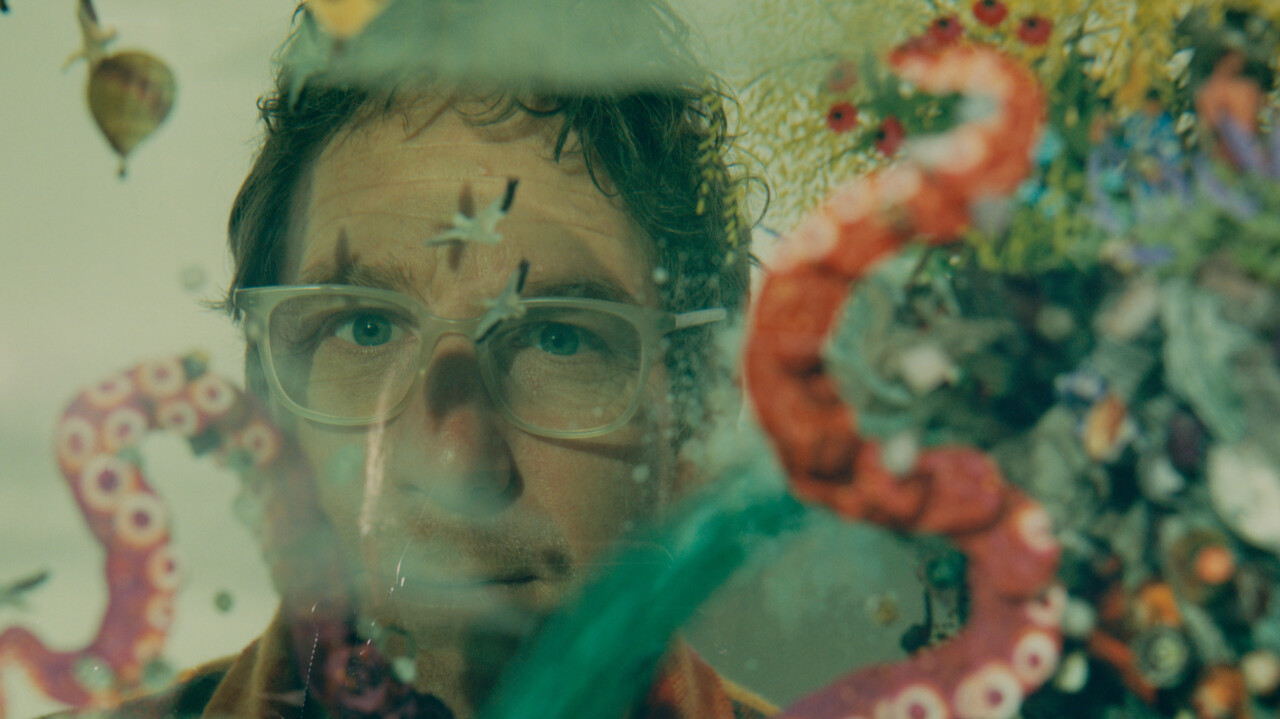
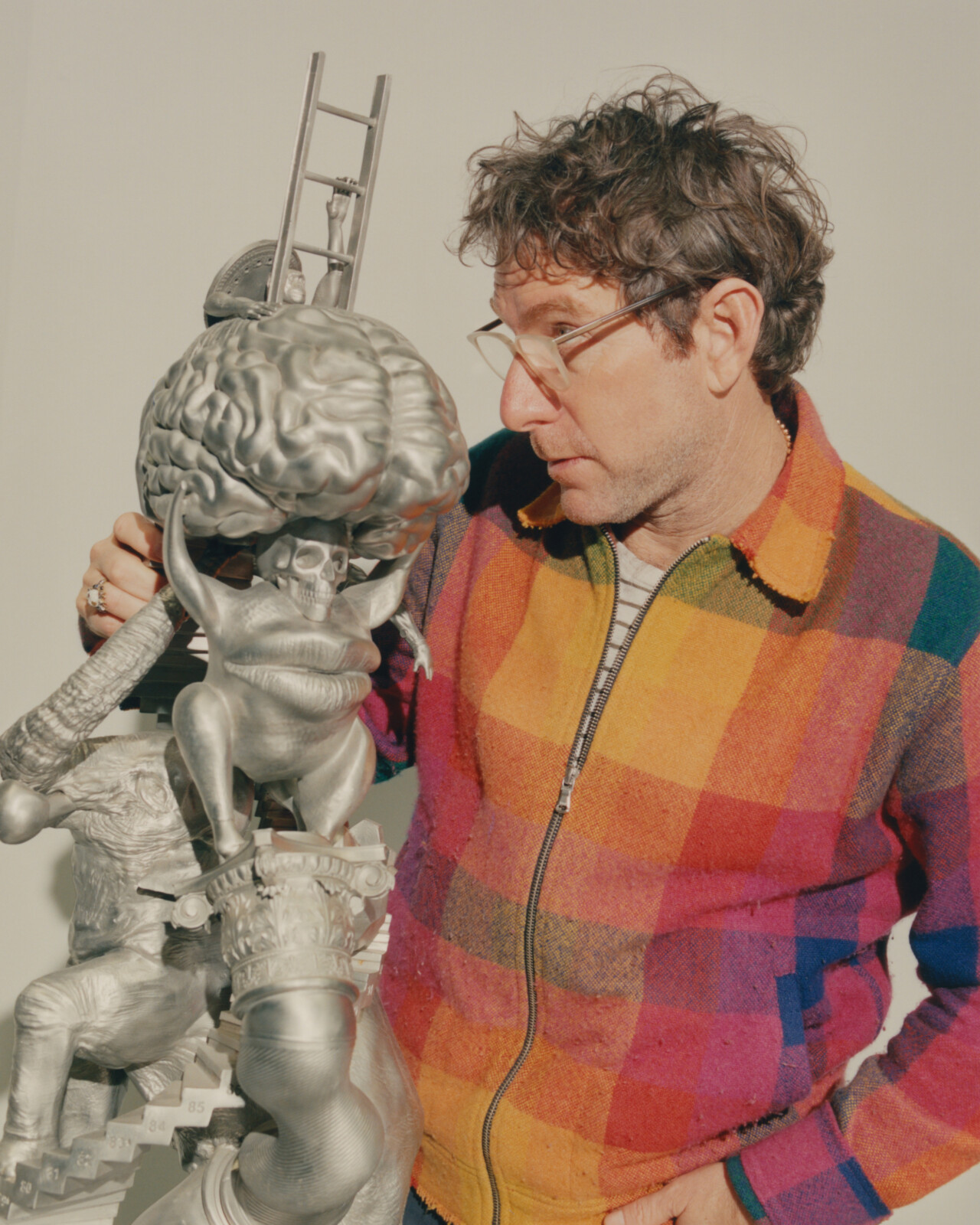
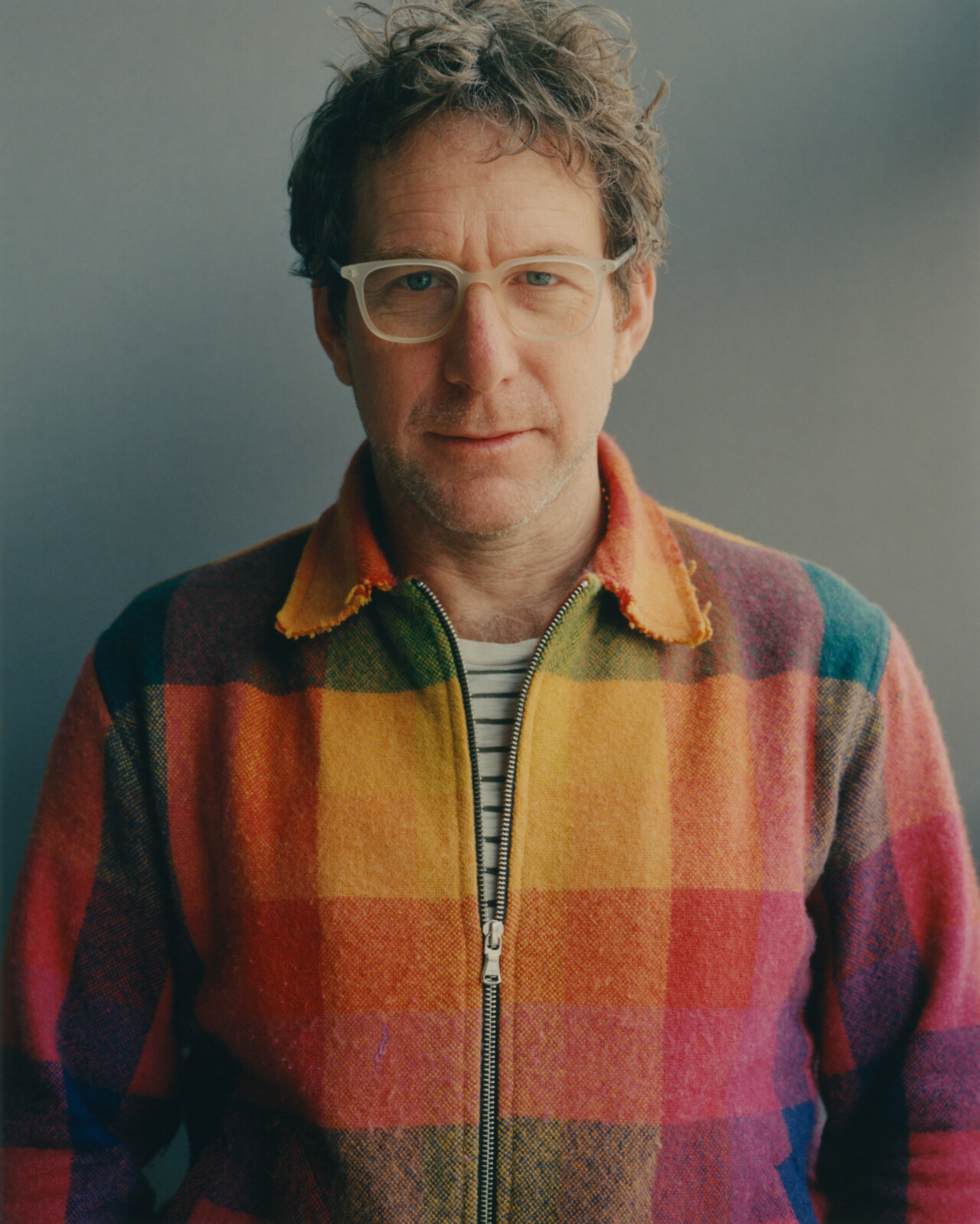
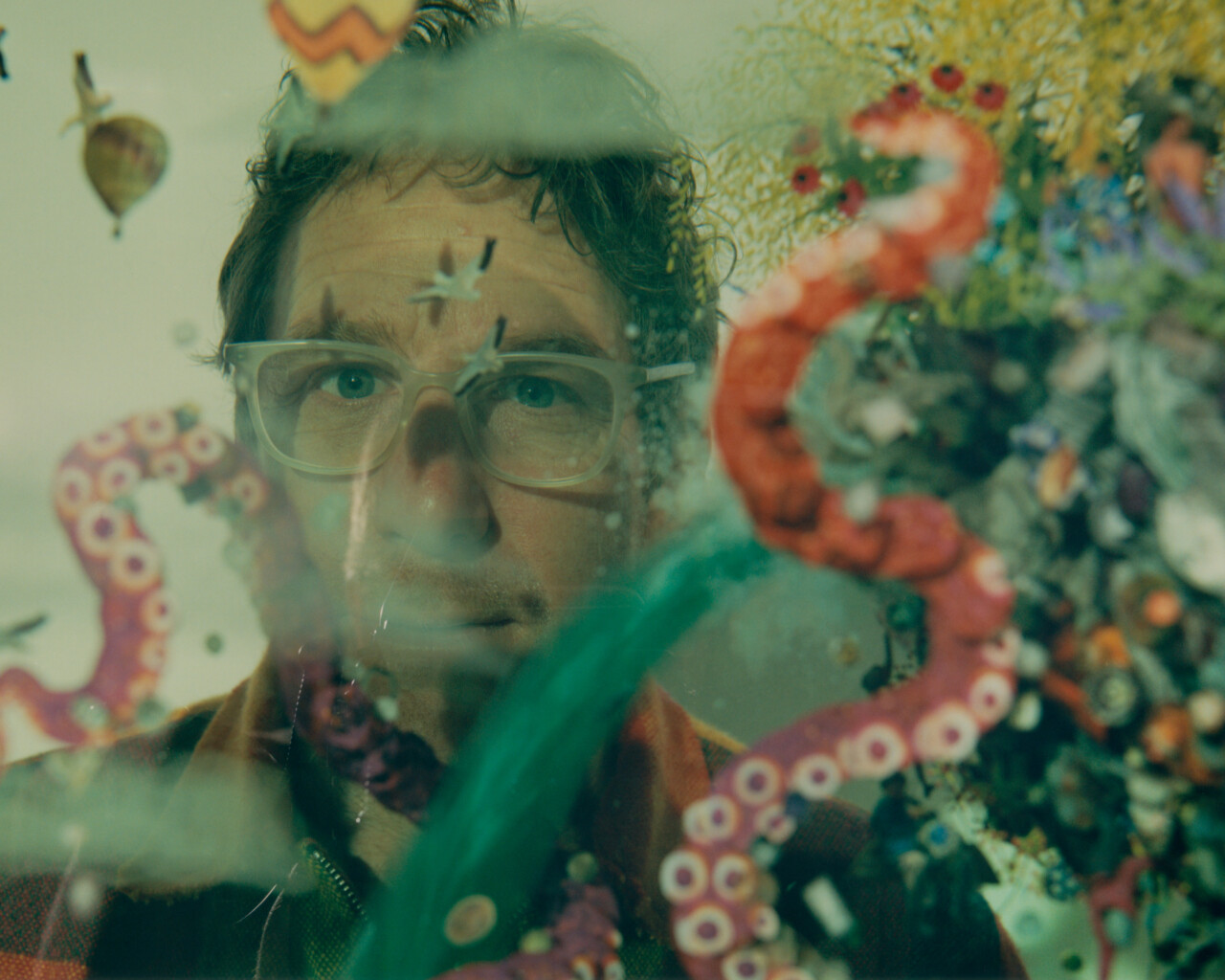
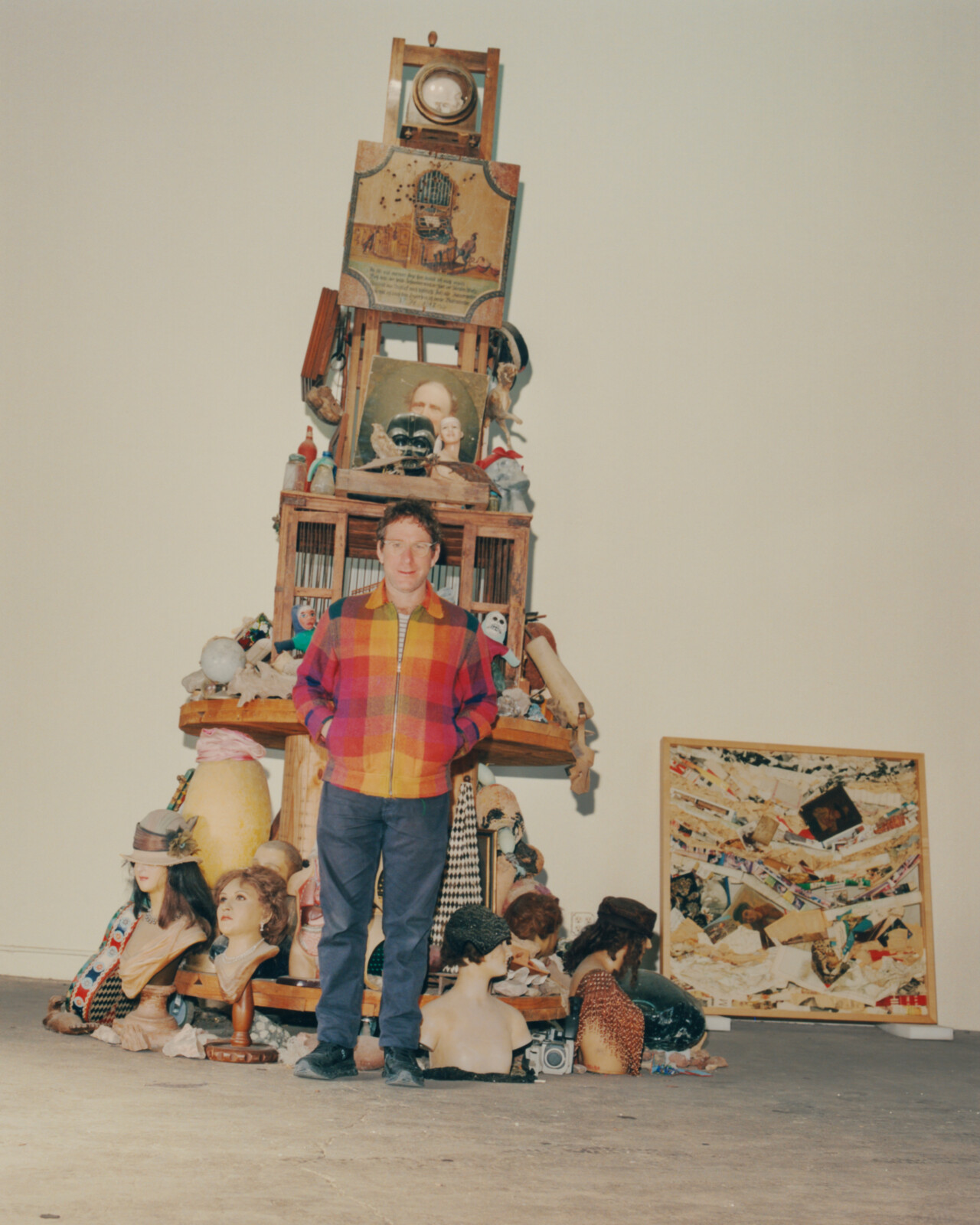
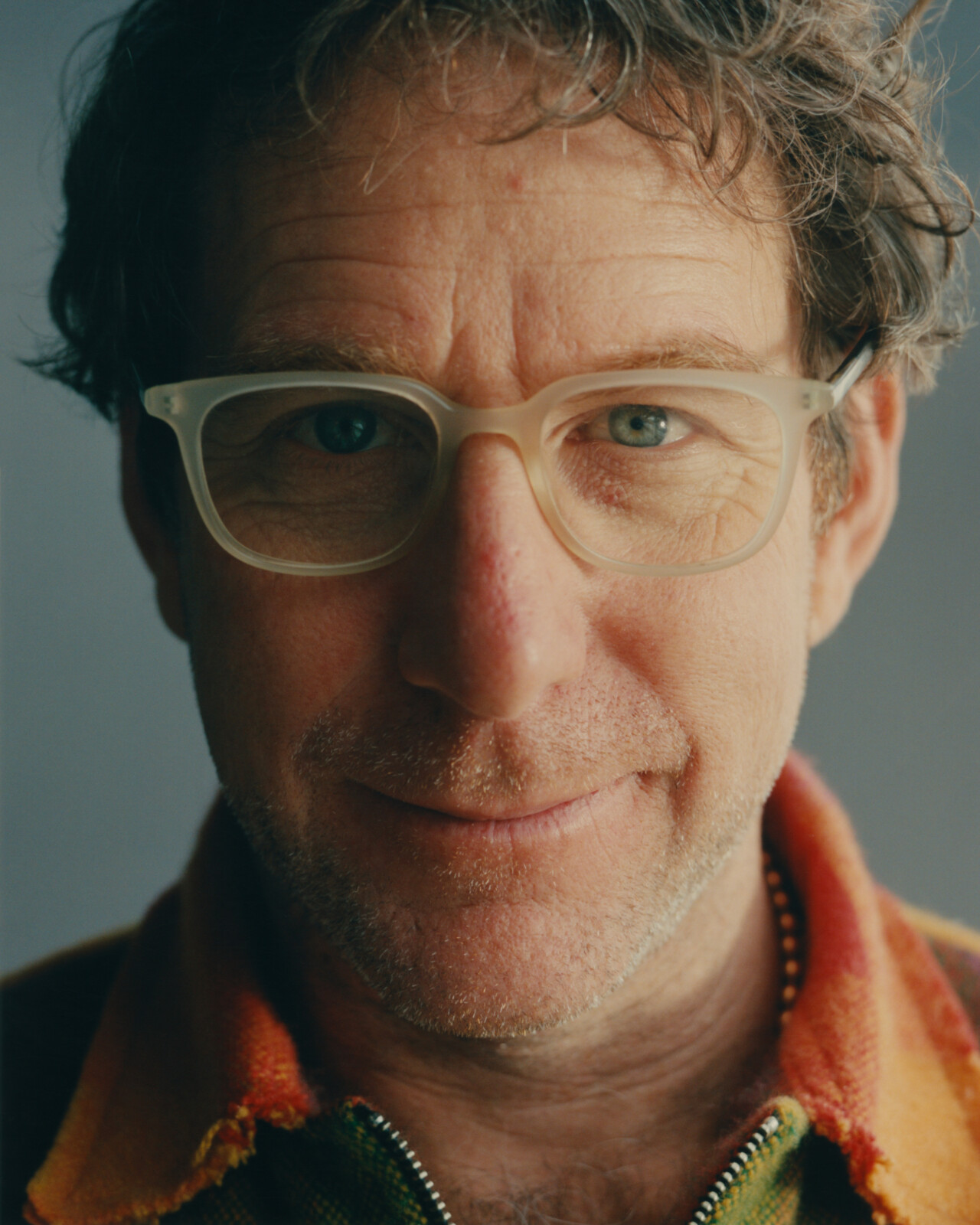
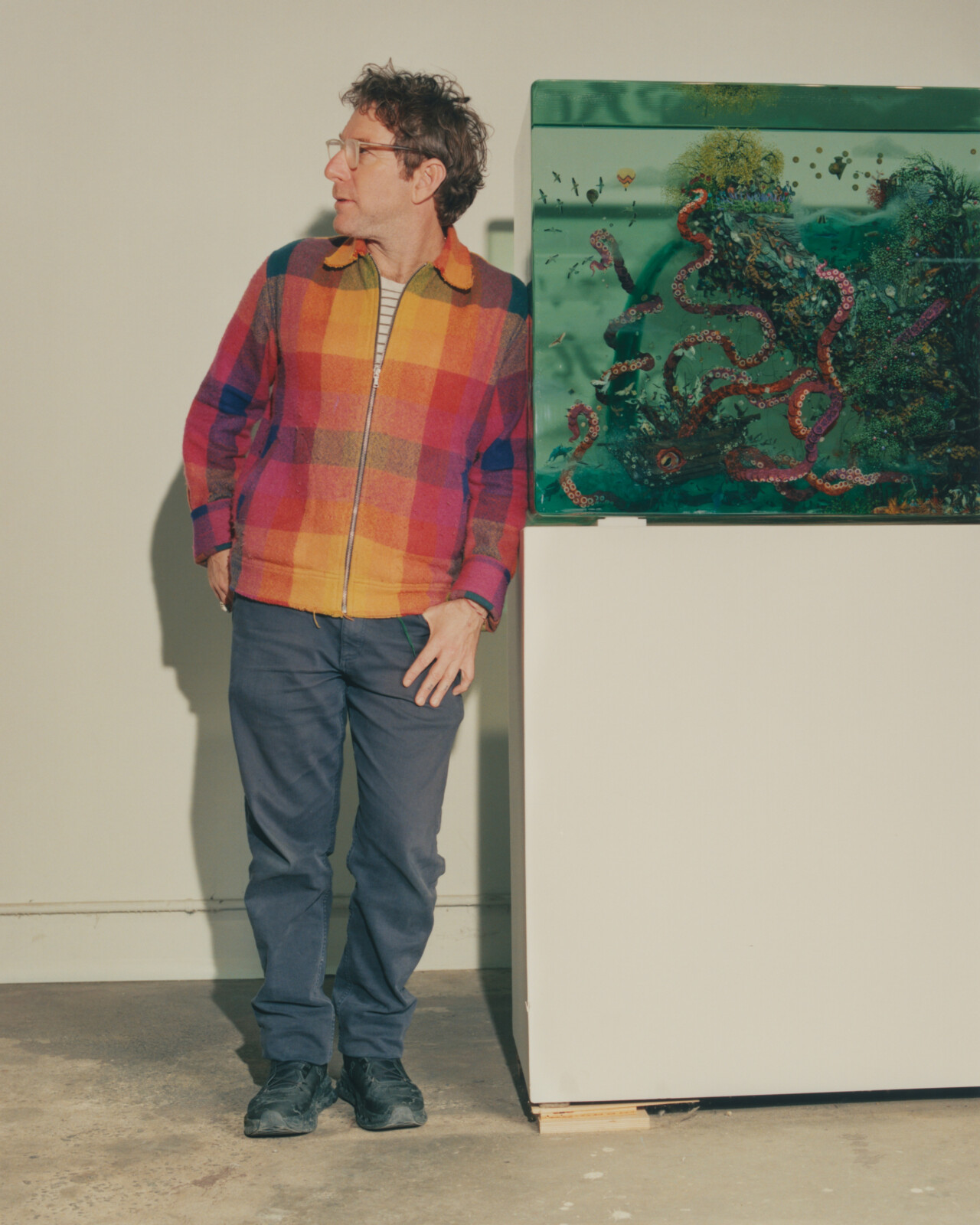
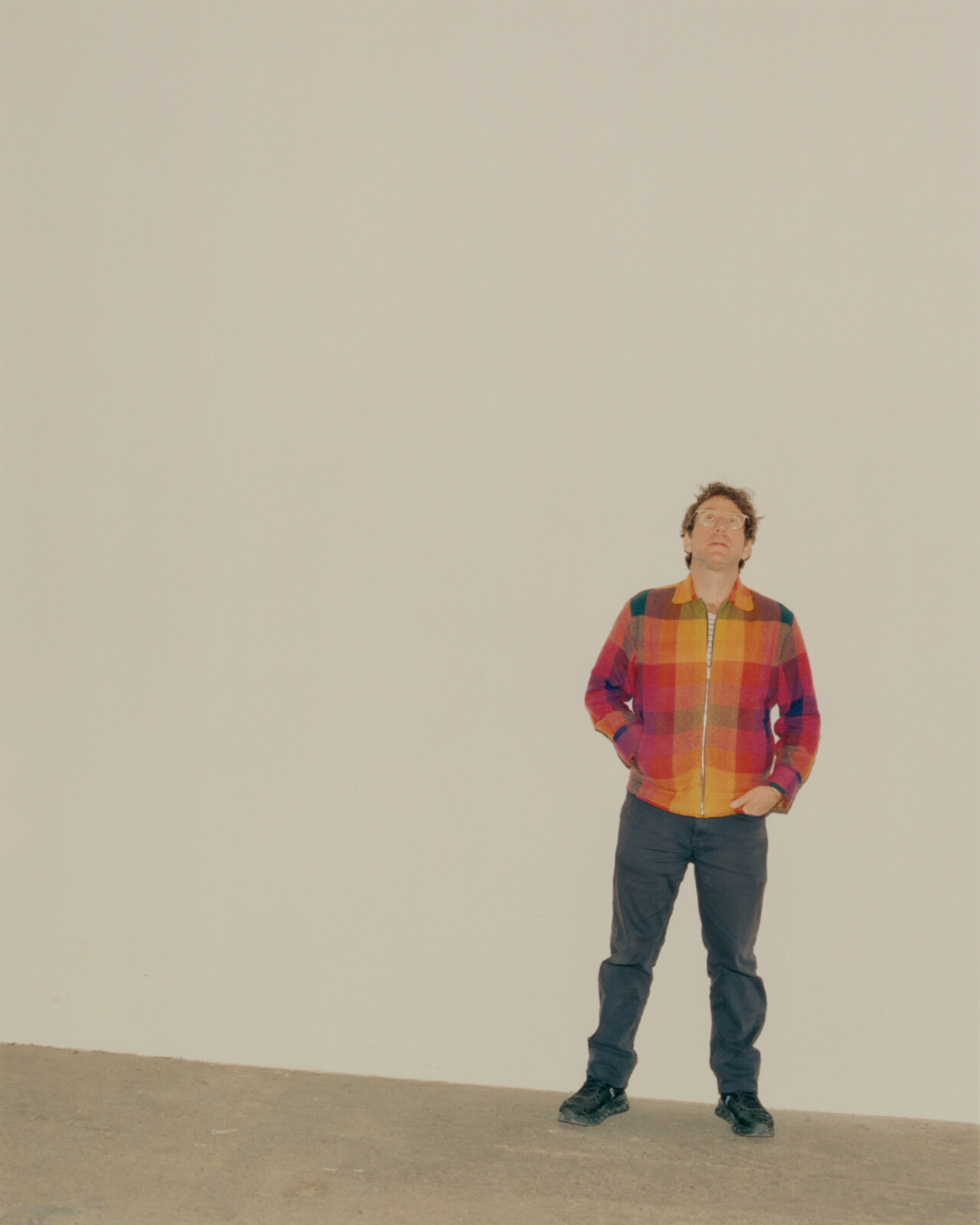
Dustin stands next to his art piece, “Emergence (Leg Fragment)” (2022)
interview by theresa perez
Photographs by Wade Schaul
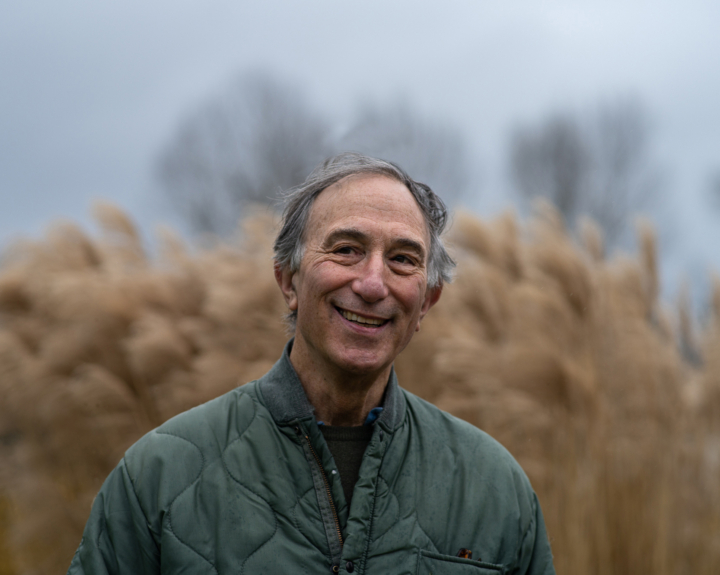
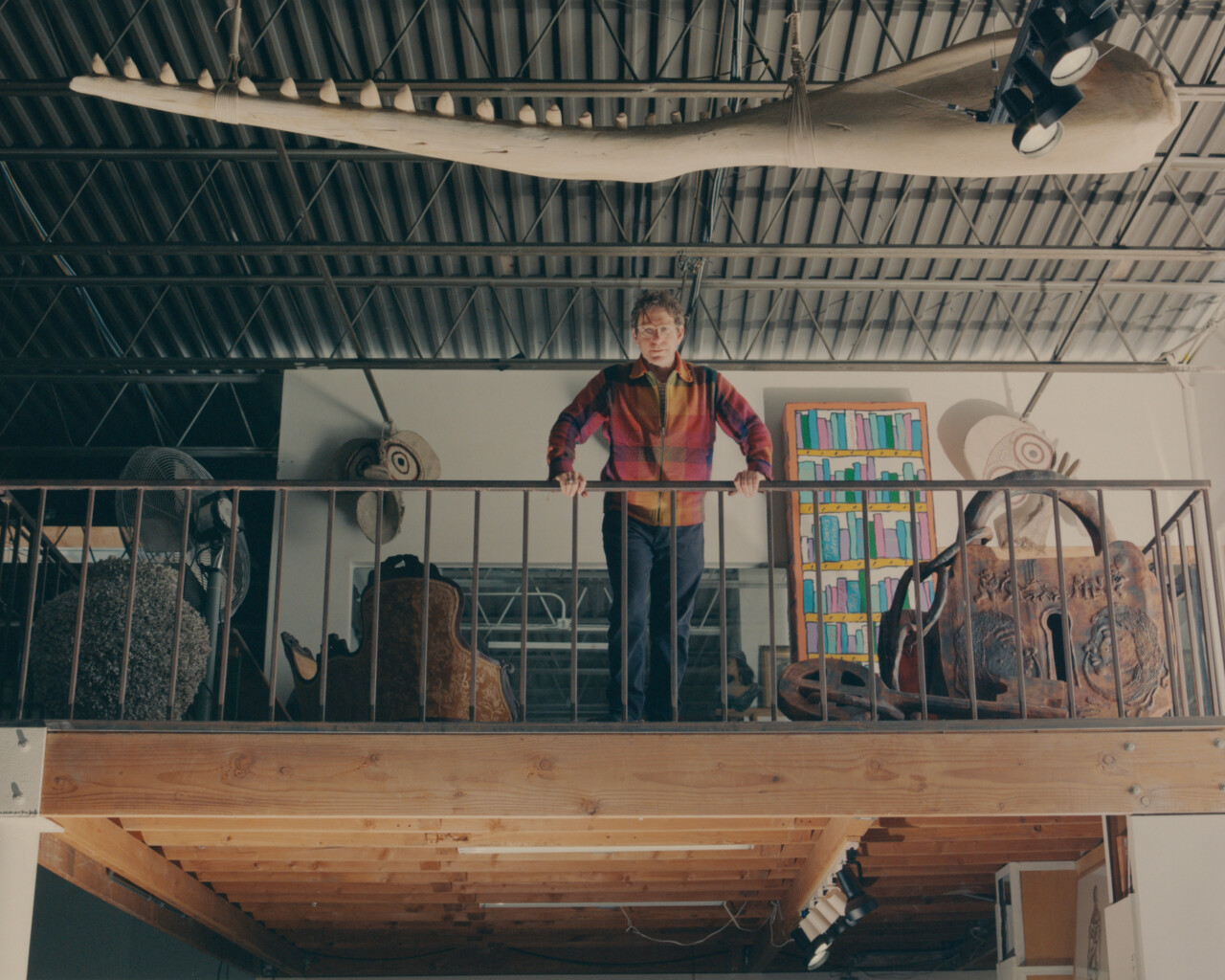
The first time I met Dustin Yellin was backstage at a jazz concert. I was struck by how sincerely he conveyed his appreciation to the musician who had performed. A decade later, I ran into him twice in the same week. Upon our third encounter, Dustin generously offered to give me a tour of his incredible studio in Brooklyn, New York. Walking through the space and seeing the scale and intricacy of what he’s built there, I knew I wanted him to be part of The Long View series.
Over the coming weeks, I got the impression that Dustin packs a lot into his days and doesn’t waste much time. This isn’t really surprising, given he is a world-renowned artist and founder of the nonprofit and multidisciplinary cultural center called Pioneer Works in Brooklyn’s Red Hook neighborhood. When we finally connected one cold December day by video for this interview, we skipped formalities and jumped right into our conversation.
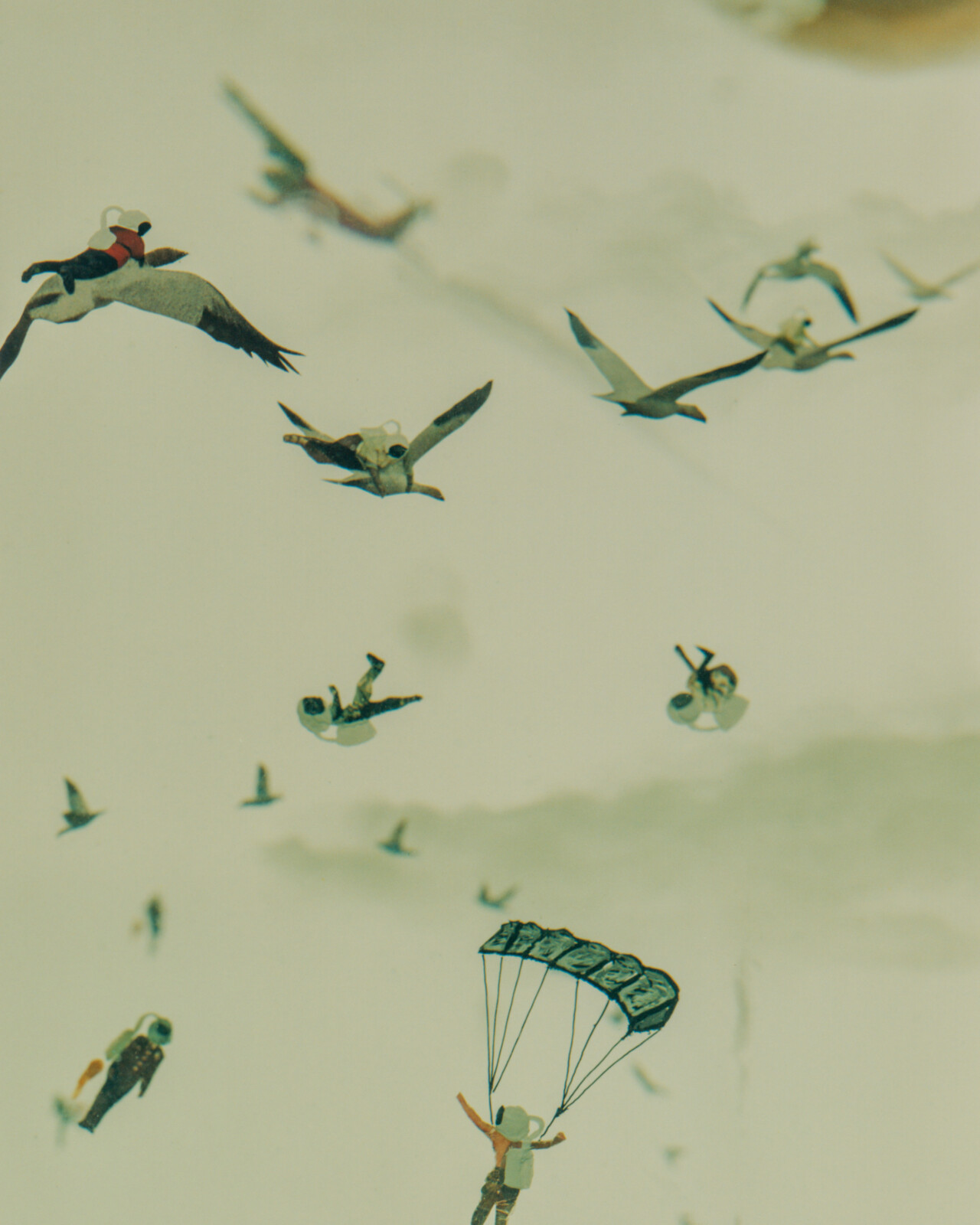
Dustin Yellin is a contemporary artist based in Brooklyn known for his glass psychogeographies: human sculptures incorporating thousands of slivered images cut from magazines, art books, and cultural debris and suspended in layers of resin and glass. The figures resemble ecosystems and illustrate the convergence of memory, culture, nature, and technology. Dustin’s cultural center, Pioneer Works, is the social extension of that same impulse. What began as an experiment 10 years ago has evolved into one of the most vital cross-disciplinary spaces in the country. Artists work alongside astronomers, scientists collaborate with musicians, and boundaries between fields dissolve into possibility. Yellin rightfully describes the institution as a “social sculpture”: The building behaves like one of his glass worlds, a structure designed for collision, transparency, and emergent meaning.
Theresa Perez
What are you currently working on? You mentioned earlier that there are many projects in motion.
Dustin Yellin
I’m always working on navigating consciousness. That’s really the through line for everything I make. Ideas come out in different forms. Lately, I’ve been creating these invented biological specimens: imagining proteins arriving from other worlds and creating life, and then depicting that life. Some of the paintings explore that. I’m also translating a Bruegel painting into one of my sculptures, so I’m spending a lot of time with 16th-century landscape painters—Patinir, Bosch, Bruegel, Herri met de Bles. Synthesizing art history is something I’m always in the middle of.
Theresa
When you said you’re “navigating consciousness,” it really struck me. What do you mean by that?
Dustin
I’m always trying to assimilate deep time—thousands of years of art history alongside billions of years of geological history—and then trying to ask: What does it mean to be human inside all of that? Especially now, as humans and machines are merging, how does that change consciousness? How does it change what it means to be human? These are the big questions I keep circling.
Theresa
Has your personal sense of what it means to be human shifted with technology?
Dustin
I’m not sure yet. But I do think our experience of reality has changed. We communicate through screens, rely on satellites, live inside the internet. These tools shape how we perceive the world. So yes—something is shifting.
Theresa
In one of your exhibitions, you asked, If a bird’s nest is nature, what is a house? I’d love to hear more. What do you think of as “nature”?
Dustin
I’m wondering whether technology is another form of nature—and whether nature itself is a kind of technology. Is the human-built environment fundamentally different from the structures animals build? Where do those lines begin and end? I think that border is moving.
Theresa
How does that perspective shape how you think about the warming world and ecological crises?
Dustin
Everything is linked: the warming planet, new technologies, inequity, nuclear weapons, the species’ ability to annihilate itself—which didn’t exist a couple of hundred years ago. What people call the polycrisis isn’t separate issues; it’s one interconnected situation. Climate change, food security, artificial intelligence—all tied together. Navigating the next five, 10, 50, 100 years will require connecting those thoughts and creating new systems of collaboration, exchange, and governance.
Theresa
The way you talk about interconnection reminds me of both your work—with fragments held together in glass—and Pioneer Works, with all its different programs and disciplines. Is that intentional?
Dustin
Yes. Pioneer Works is a response to the siloing of knowledge in our society. In school, the art department doesn’t talk to computer science. Architecture doesn’t talk to music. Biology doesn’t talk to film. That separation slows down human progress. We need a more holistic approach to synthesizing knowledge.
Theresa
And you’ve built that through Pioneer Works. Is that your personal mission?
Dustin
Pioneer Works is an urban earthwork—a social artwork in service to the community. I think a lot about how to bring collaboration into society. Culture—meaning the arts and sciences—has an incredible ability to bring people together in a divided world. If people can agree on loving jazz or Renaissance painting, maybe they can then have a harder conversation about something else.
Theresa
Do you see Pioneer Works bringing people with different mindsets together?
Dustin
All the time. Someone might come for a concert and return to learn about quantum mechanics. Curiosity is a gateway.
Theresa
Last time I visited, you showed me the giant telescope. You’re working toward a public observatory?
Dustin
Yes—the first free public observatory in New York City. The goal is to bring people closer to the cosmos. To let kids look at the sun or witness a supernova, and to do that within an art and music space. That complexity enriches the learning.
Theresa
For those unfamiliar with the concept, what is “deep time,” and why does it matter to you?
Dustin
Meteorites called chondrites are older than the Earth and the Sun. They contain proteins. There’s a theory that early collisions with chondrites jump-started life on Earth. So life may have been out there long before us. That gives me hope—because it suggests there’s so much we don’t know, and so much we will learn in the next 100 years about the universe, about where we came from, maybe about those who came before us.
Theresa
You speak fluidly across science and art—as if they’re not separate for you.
Dustin
They’re not. There’s just reality—whatever we perceive it to be—and many ways of trying to understand it. Sometimes through myth-making, sometimes through empirical research. They’re two sides of the same coin.
“You have to be a duck. You can’t get dragged down by failure. You need to hold your vision and move toward it at any cost, finding your signal in the noise. Perseverance is the closest thing to a formula I know.”
Theresa
Many readers look up to you and wonder how they could ever create something like Pioneer Works. I imagine it required risk, experimentation—even failure.
Dustin
You have to be a duck. You can’t get dragged down by failure. You need to hold your vision and move toward it at any cost, finding your signal in the noise. Perseverance is the closest thing to a formula I know.
Theresa
Where does that perseverance come from?
Dustin
Devotion to the vision. That’s it.
Theresa
Pioneer Works attracts such an incredible mix of artists, scientists, thinkers—even celebrities. How do you bring people together?
Dustin
I talk to everyone. I smile at people on the street. I’ve spent my life bringing people into this proverbial house. If I talk to someone and immediately want to introduce them to a friend, I know something’s there. You build a round table you don’t need to sit at. The magic happens between other people.
Theresa
I came across something you once said: Obsolescence is success. Is your long-term goal for Pioneer Works to function without you?
Dustin
Absolutely. You don’t want anything to depend on one person. You want a community that supports everyone in it, regardless of who’s at the wheel at a given moment.
Theresa
What’s your vision for the next five to 10 years—for both your art and Pioneer Works?
Dustin
It’s all the same. In the studio, I’m making new work and discovering new inquiries. At Pioneer Works, it’s about growing the programs organically: publishing more books, expanding support, building an endowment, building the observatory and a music department, bringing more incredible people into the doors, increasing impact for students. Just continuing the natural course we’re already on.
Theresa
And if you could crystallize one dream for the next decade?
Dustin
I’m not a one-dream kind of guy. I’m mostly aiming not to die [laughs]. Stability for the institution. An endowment. Increasing our ability to offer programming for free and support all the practitioners we serve. That’s the dream.
Theresa
Let’s imagine it’s 100 years from now. Pioneer Works is still standing. You’re somewhere in the meteorites. What thread do you hope future generations will keep pulling forward?
Dustin
A comprehensive view of reality. A sense of curiosity and excitement about learning. A lack of fear—of the unknown, of other people, of new ideas. A desire to build the world they want to live in, together.
Theresa
Is there anything else you’d like to share?
Dustin
Maybe just this: Lead with love instead of fear. It sounds cliché, but it’s true. We need to help each other and not be bound by outdated structures. I’ve always thought religion should move into the art department—into storytelling and myth. We need a more holistic view of the world and each other.
Read other editions of The Long View here.
Editor’s note: This interview has been edited for length and clarity.
Join our membership community. Support our work, receive a complimentary subscription to Atmos Magazine, and more.
Artist Dustin Yellin on What It Means to Be Human